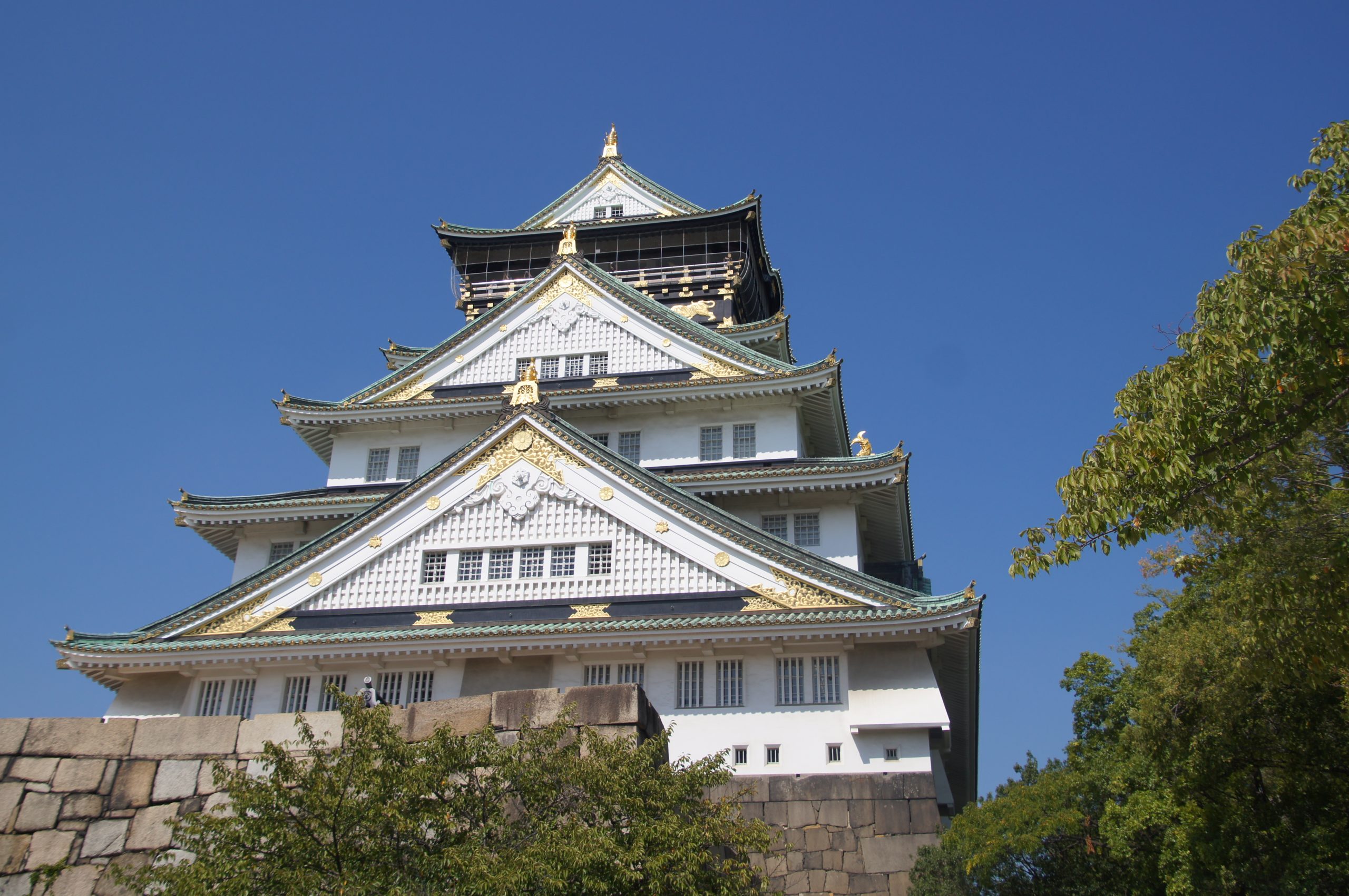
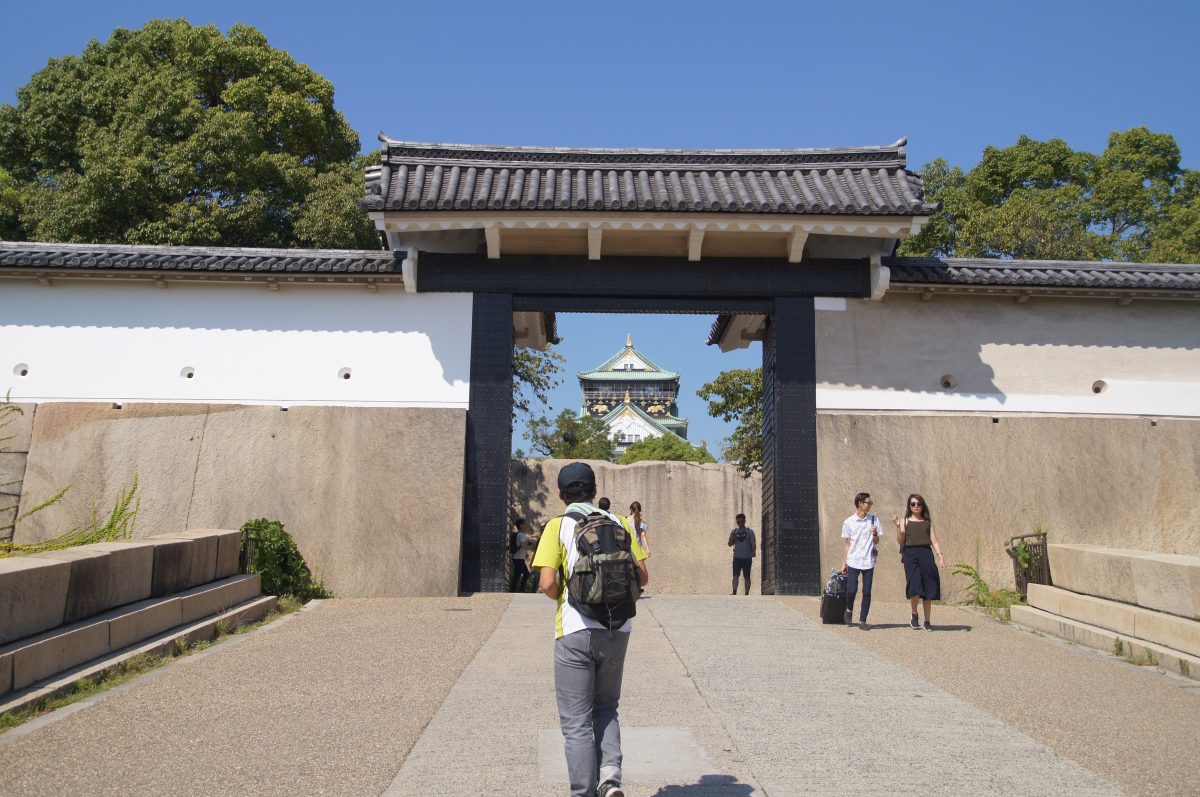
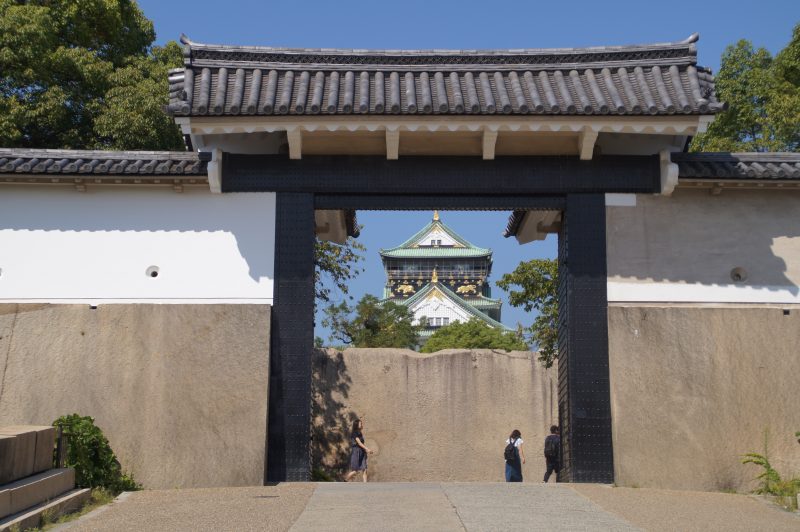
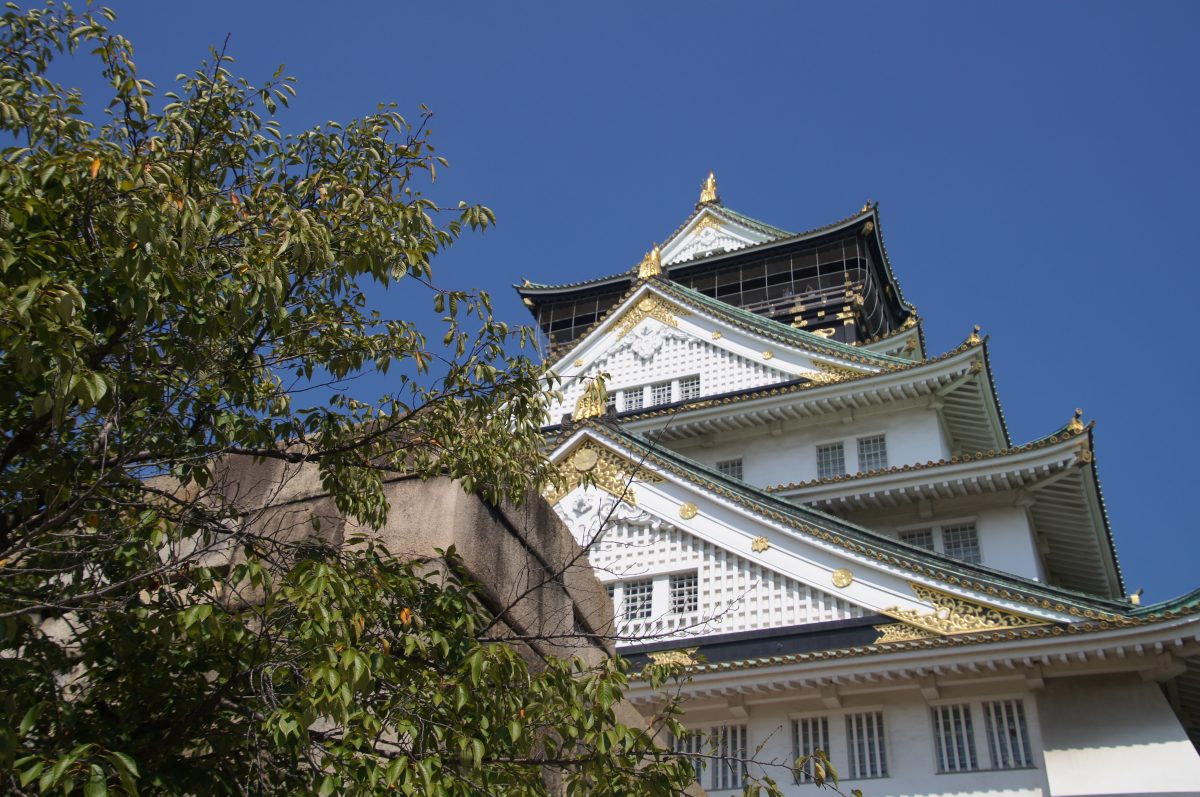
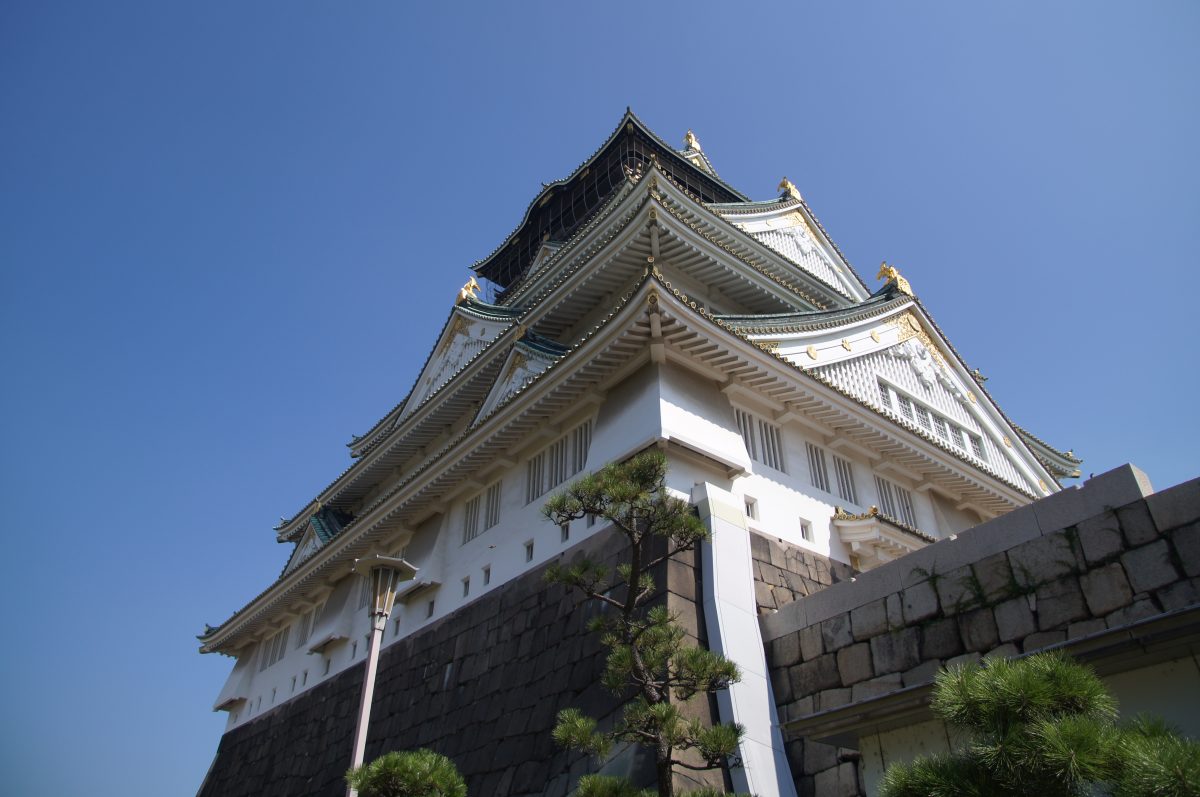
Osaka Castle (Osaka-jō) had me fooled from the outside. White walls, green roofs, gold decoration, huge stone ramparts: it looked exactly like the grand old fortress I had come to see.
Then we stepped inside and found lifts, polished floors and a modern museum.
That is not necessarily a bad thing. But it is something you should know before buying a ticket, particularly if the words “Japanese castle” have placed creaking timber, steep stairs and several centuries of atmospheric gloom in your head.
So, is Osaka Castle worth visiting? The grounds and exterior are an easy yes. The museum inside is worth paying for if you want the history, exhibits and view; it is less convincing if you mainly want an original castle interior. We enjoyed it, although the surprise was considerable. Apparently I can research an entire Japan trip and still miss the small matter of a castle being made from reinforced concrete.
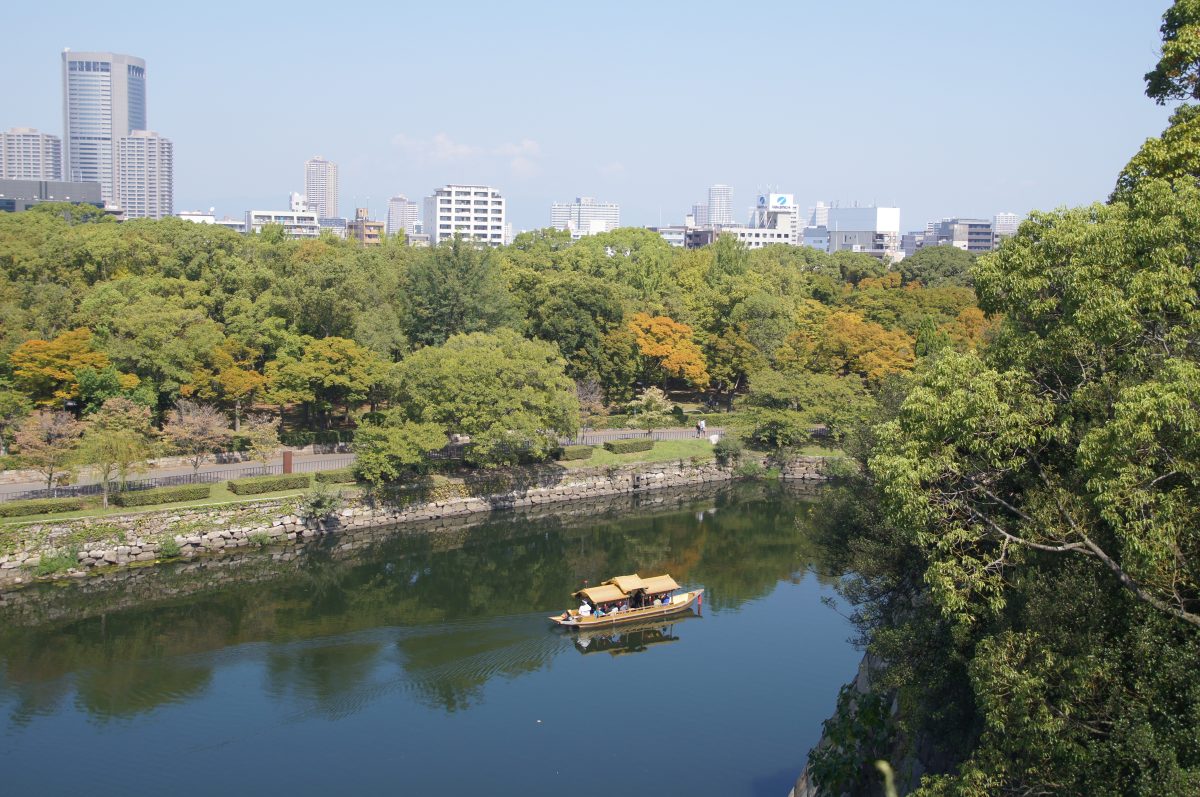
Osaka Castle at a glance
| Question | Our answer |
|---|---|
| Is Osaka Castle worth visiting? | Yes. The park, moats, stone walls and exterior are worth seeing even if you skip the museum. Go inside for the history displays and the view, not for a preserved wooden keep. |
| Is it original? | No. The current main tower is a 1931 reconstruction and the interior is a modern museum. |
| How long do you need? | Allow roughly two to three hours for the tower and a useful walk through the grounds. Add more if you visit another museum or garden nearby. |
| Is the park free? | Yes. You can explore Osaka Castle Park and see the main tower from outside without buying a museum ticket. Some individual attractions charge separately. |
| What does entry cost? | As checked in September 2026, adult admission is ¥1,200; university and high-school students pay ¥600 with ID; junior-high-school pupils and younger children enter free with proof of age. The ticket also covers the Toyotomi Stone Wall Museum. |
| Best for | Osaka history, an accessible museum, city views and the castle’s impressive exterior. |
| Think twice if | You only want an original feudal keep or have already allocated a full day to Himeji Castle. |
We visited on 26 September 2017. The personal experience in this article comes from that trip; current practical details were checked against official information on 24 September 2026. Admission and opening times change, so confirm them on the official Osaka tourism listing for Osaka Castle before your visit.
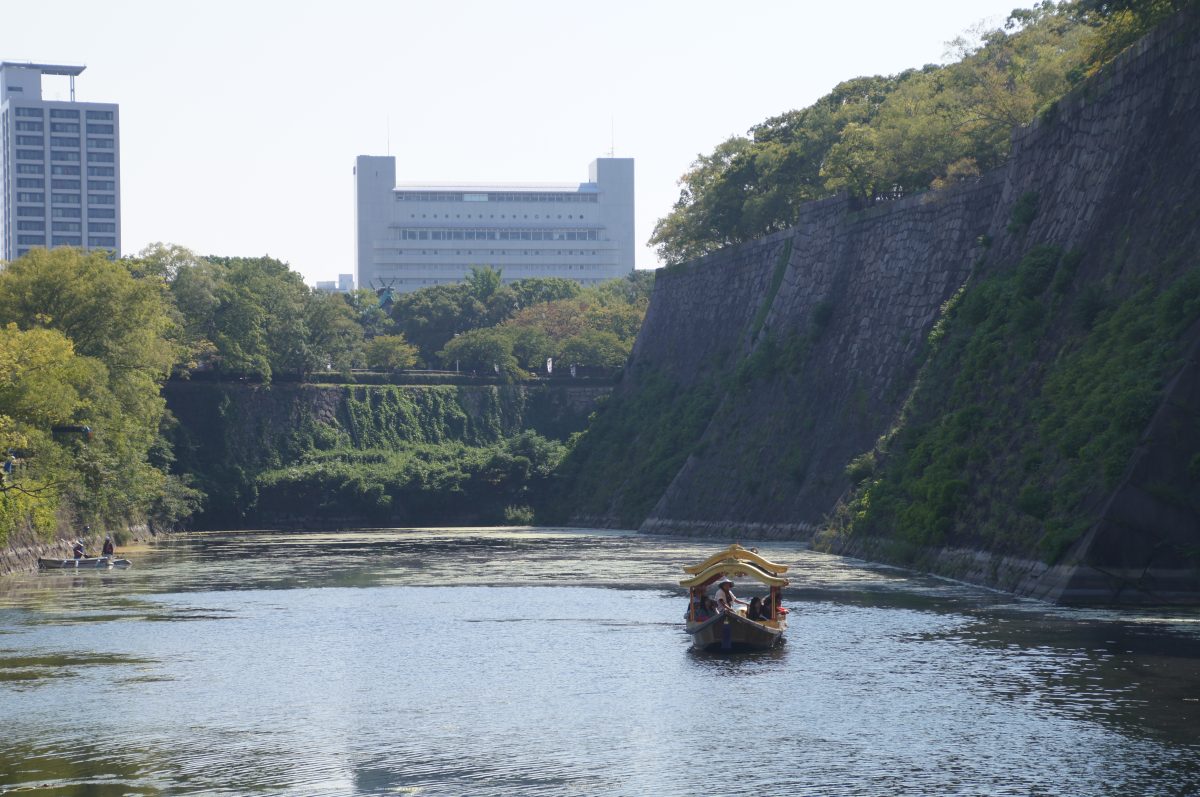
What has changed since our Osaka Castle visit?
Quite a lot, inconveniently for anyone attempting to write an evergreen travel article. Since 1 April 2025, adult admission has been ¥1,200. University and high-school students pay ¥600 with valid ID, while junior-high-school pupils and younger children enter free with proof of age.
Your ticket now covers both the main tower and the Osaka Castle Toyotomi Stone Wall Museum, which opened in 2025. This separate underground museum displays part of a Toyotomi-period stone wall discovered during excavations in 1984. The Tokugawa shogunate buried the earlier castle beneath deep layers of earth when it rebuilt the site, so this is a rare chance to see something that genuinely belonged to Hideyoshi’s Osaka Castle.
We have not visited the new museum, so I cannot review it from personal experience. But it does make the current ticket better value than a straight comparison with what we saw in 2017 would suggest.
As checked in September 2026, the museums open from 9am to 6pm, with last admission at 5.30pm, and close from 28 December to 1 January. Web tickets are available through the official site. Treat those details as a dated update rather than sacred text carved into one of the ramparts.
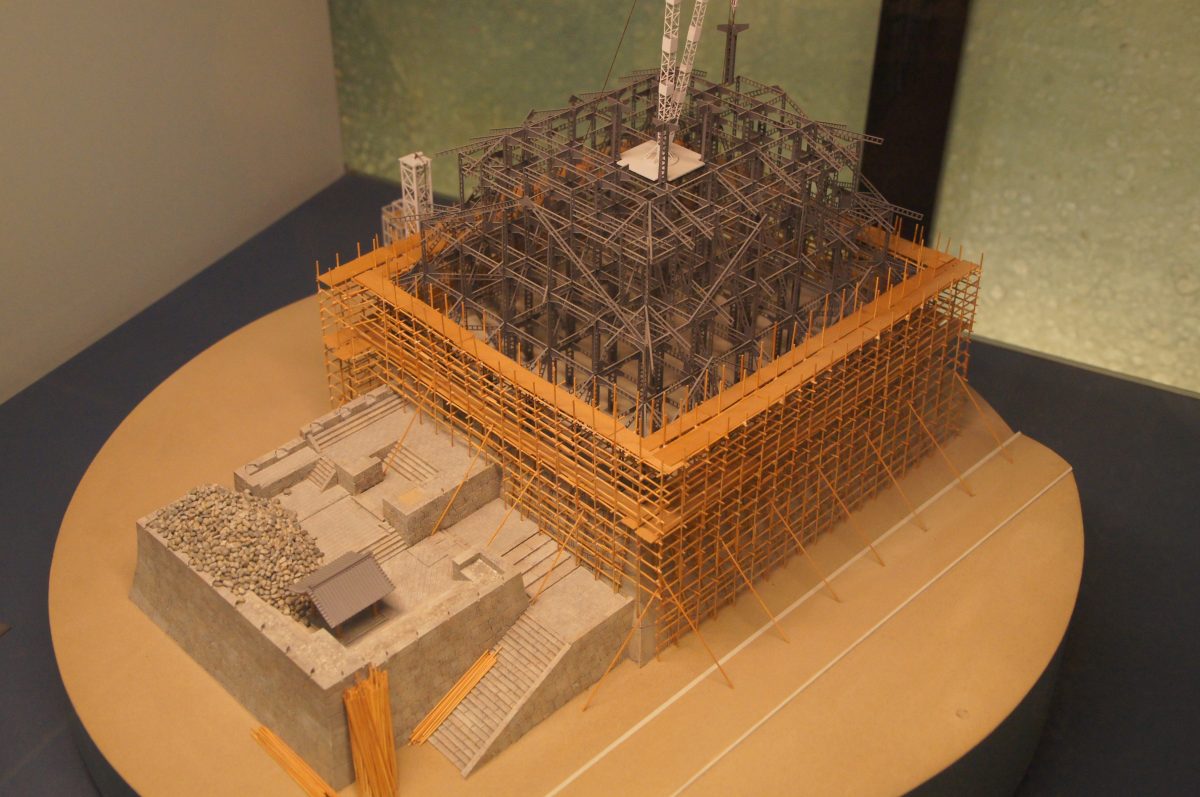
Is Osaka Castle worth visiting?
For most first-time visitors, yes. Osaka Castle is one of those places where the wider setting matters as much as the building. You approach across water and formidable stonework, then watch the white-and-green tower gradually take over the view. Even if museums make you feel an urgent need to inspect the café instead, the exterior earns its place in an Osaka itinerary.
The paid interior is a more personal decision. It does not preserve the rooms of a feudal ruler. It explains the castle’s history, Toyotomi Hideyoshi and the battles that shaped the site through displays, models and historical objects. We found the exhibition interesting. But if what you want is old timber beneath your feet and defensive architecture around you, take a day trip from Osaka to Himeji Castle instead.
You can also split the difference: visit Osaka Castle Park, admire the keep from outside and continue with the city. That costs nothing and gives you the most photogenic part of the experience.
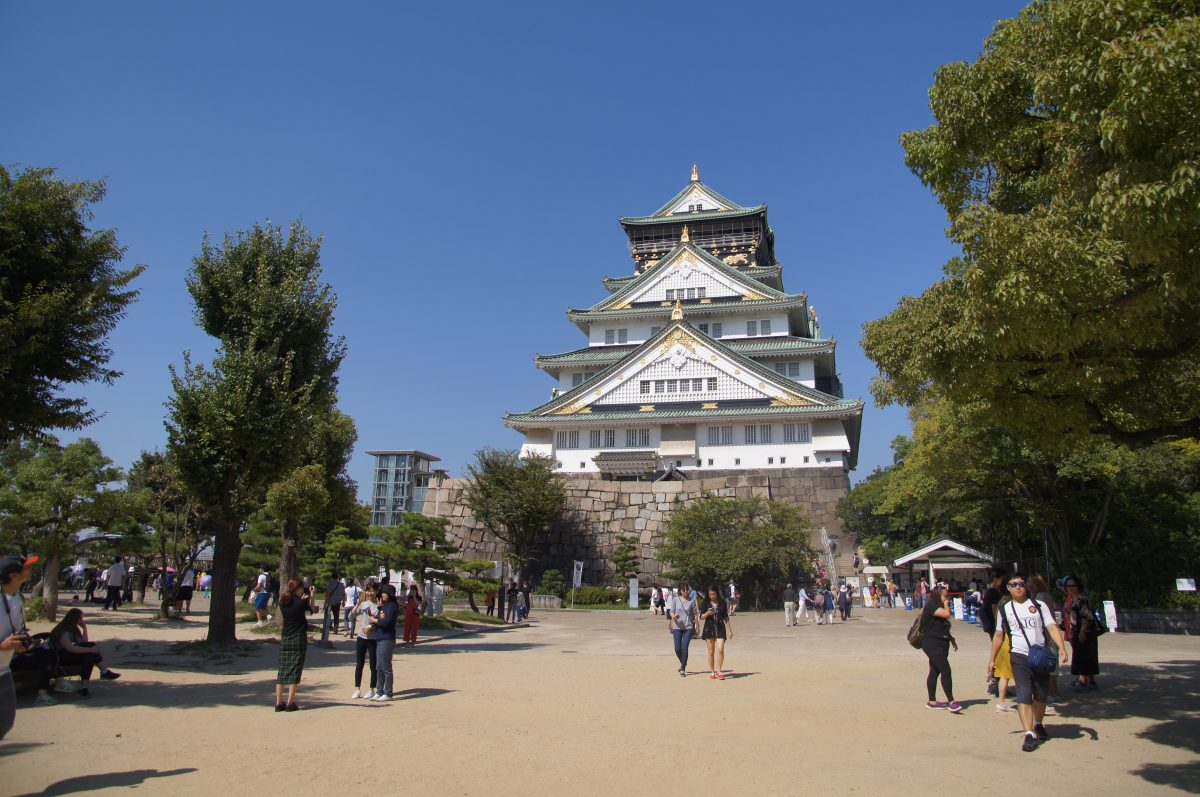
Our visit to Osaka Castle
We began our main Osaka sightseeing day at the castle, then continued to Shinsaibashi, Dotonbori, Kuromon Market and Den Den Town. It was an ambitious route. I had apparently looked at the map and decided our feet were an unlimited natural resource.
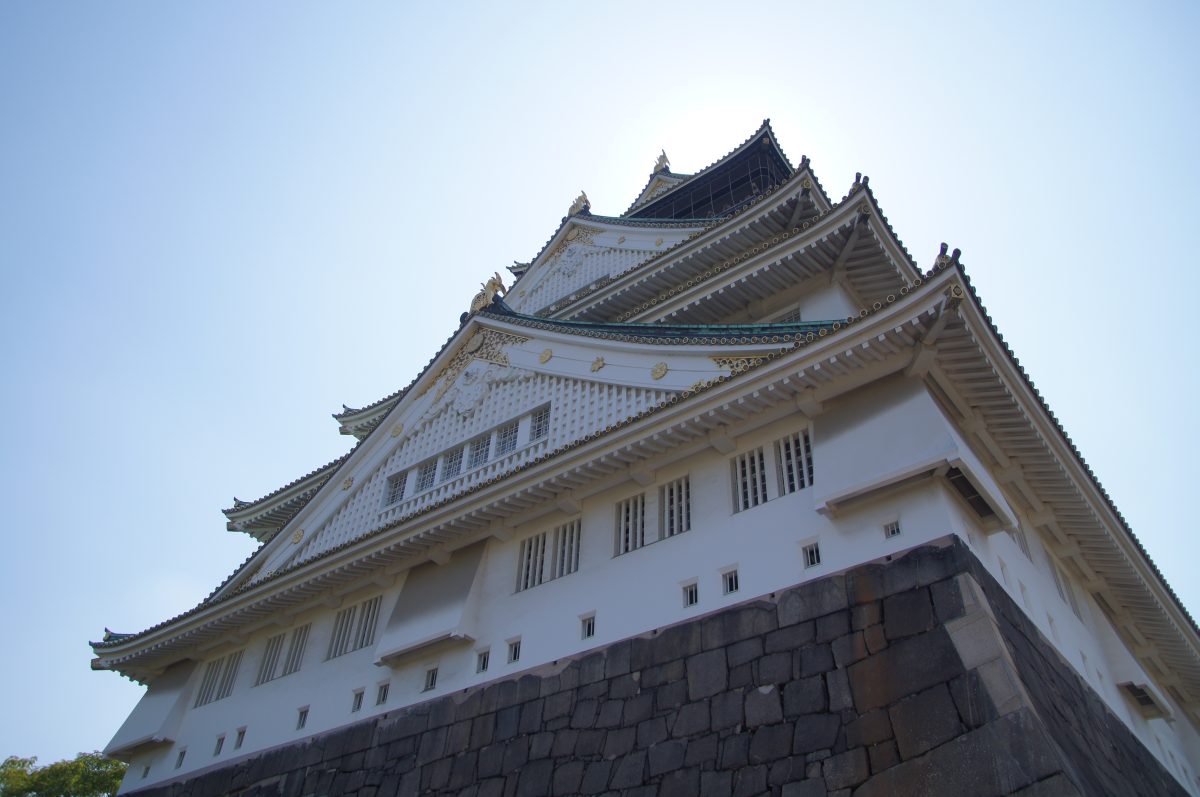
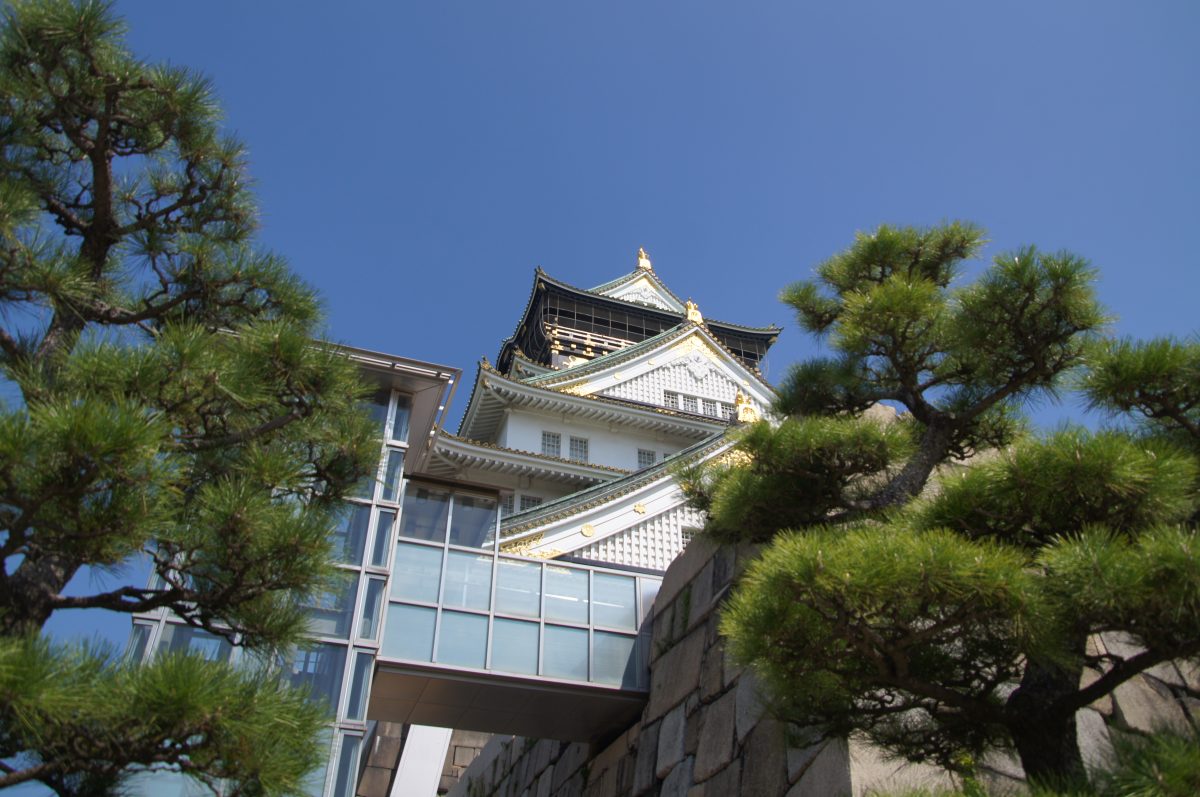
The approach did its job. Across the moat, the keep looked richly historic: crisp white walls, green copper roofs and gold details above enormous blocks of stone. It’s grand without being delicate. From outside, you would have little reason to suspect that the tower contains a lift and a modern museum spread through the building.
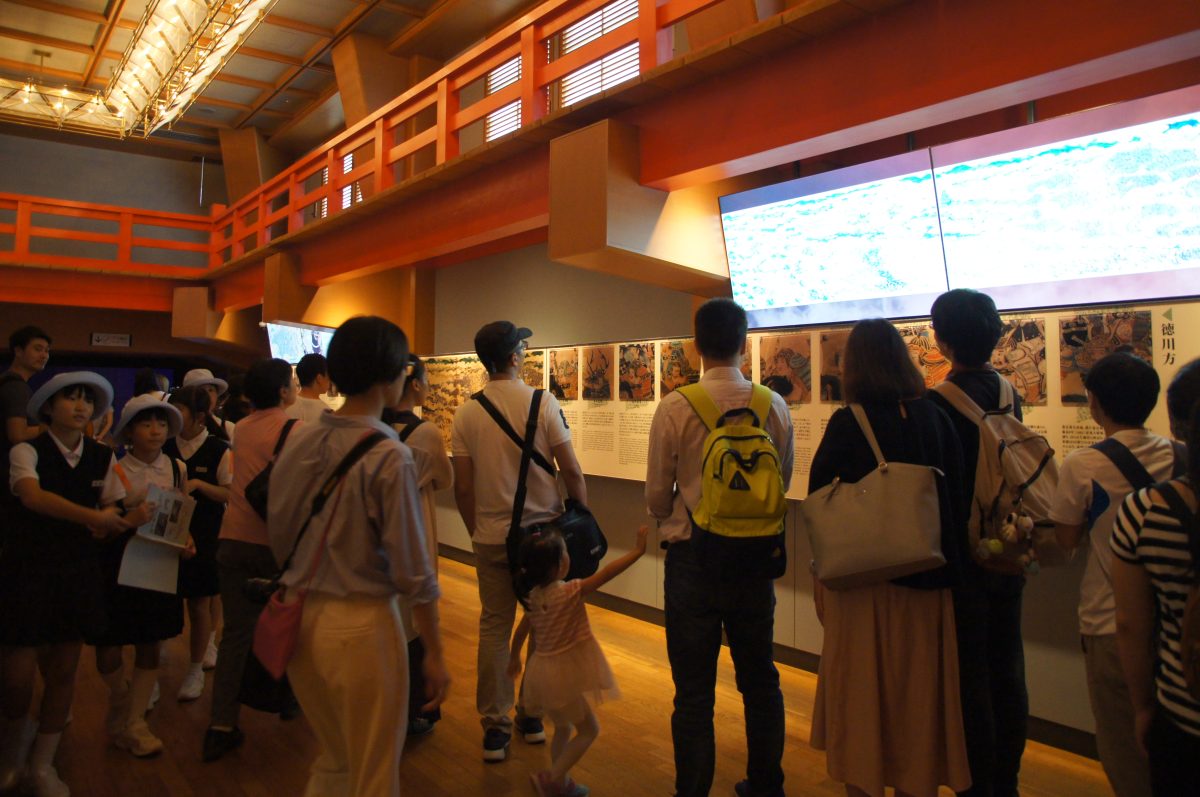
Inside, the illusion stops rather abruptly. This feels like a museum installed inside a castle-shaped building, because that is essentially what it is. I was initially disappointed. Then the exhibition began to win me over.
The older artefacts were the most interesting part for me, and photography was prohibited around them on the third and fourth floors. I remember being mildly aggrieved at the time because my camera and I had been documenting Japan with the restraint of an overexcited archivist. Still, putting it down meant I actually looked at the objects. A novel concept!
By the time we left, I was glad we had gone inside. I simply would have enjoyed it more from the beginning if I had understood what we were paying to see.
Is Osaka Castle original?
No. Toyotomi Hideyoshi began building Osaka Castle in 1583, intending it to stand at the centre of his rule. That first castle fell during the Siege of Osaka in 1615. The Tokugawa shogunate rebuilt the fortress, but its main tower was destroyed by lightning in 1665.
The tower you see now was completed in 1931 using donations from Osaka’s citizens. It’s the third main tower on the site. Its historical importance is not that it survived from the samurai period; it did not. Rather, it is an early twentieth-century reconstruction that became a landmark in its own right.
That distinction matters because “reconstructed” can make the entire site sound fake. It isn’t. The wider complex includes Tokugawa-era and later stone walls, moats, gates and turrets, while the main keep deliberately combines a historic-looking exterior with a museum interior. Come for the right version of history and it makes much more sense.
What is inside Osaka Castle?
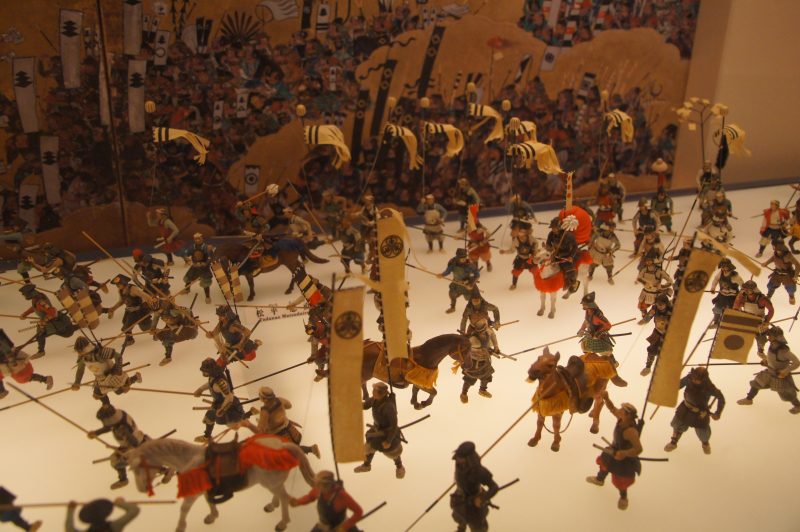
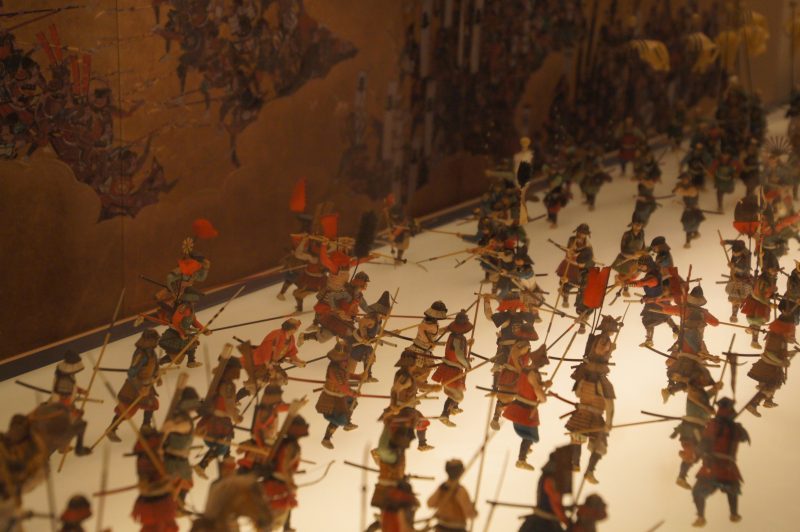
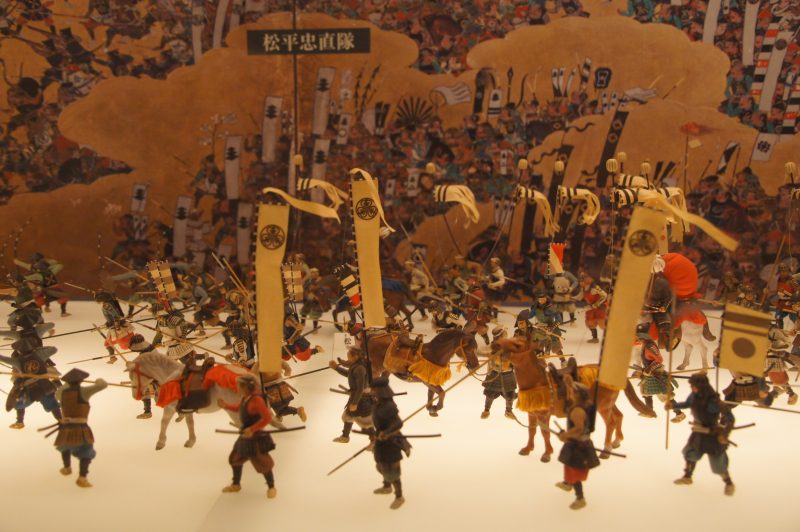
The reconstructed main tower has eight storeys, although not every level is a public exhibition floor. Displays throughout the accessible floors cover Osaka Castle and Toyotomi Hideyoshi, using architectural models, armour, documents, screens and material about the battles between the Toyotomi and Tokugawa forces.
The third and fourth floors display important cultural objects and do not allow photography. That rule applied during our visit, and the castle’s current 2026 English leaflet still states that photography is prohibited on those two floors. Elsewhere, follow the signs because temporary exhibitions and restricted areas can change.
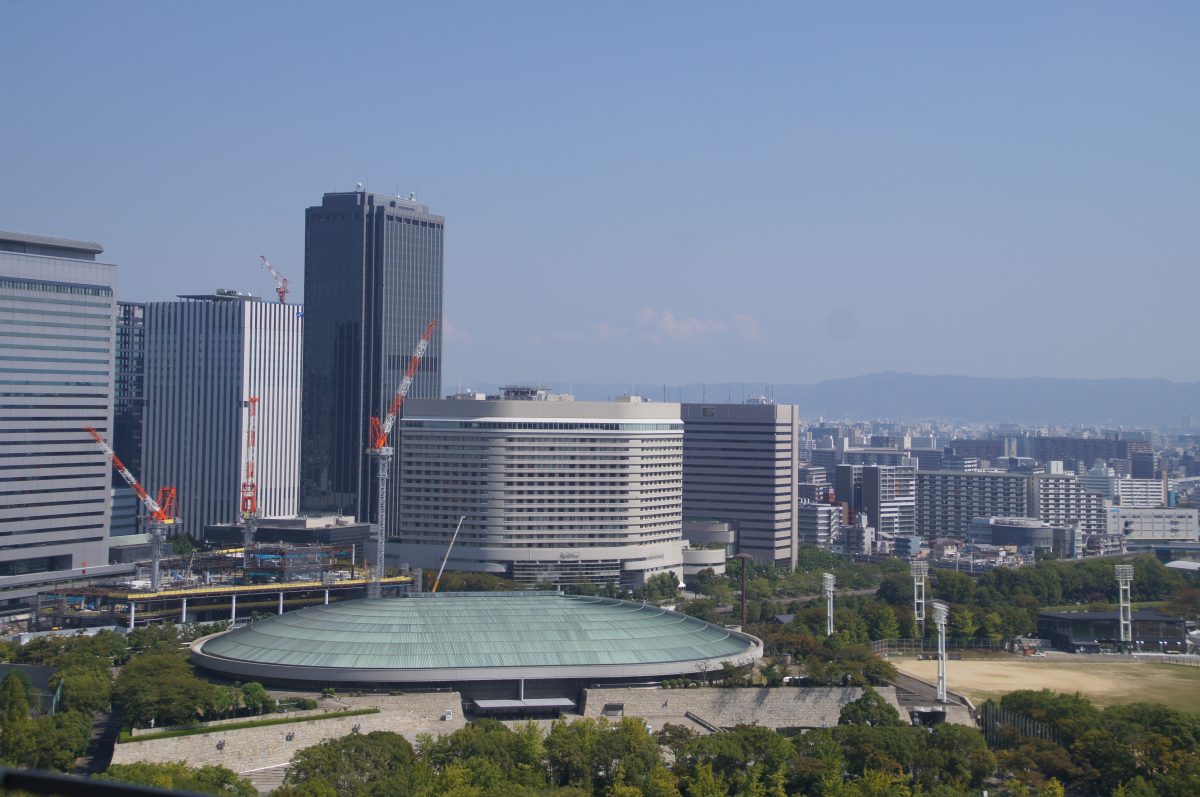
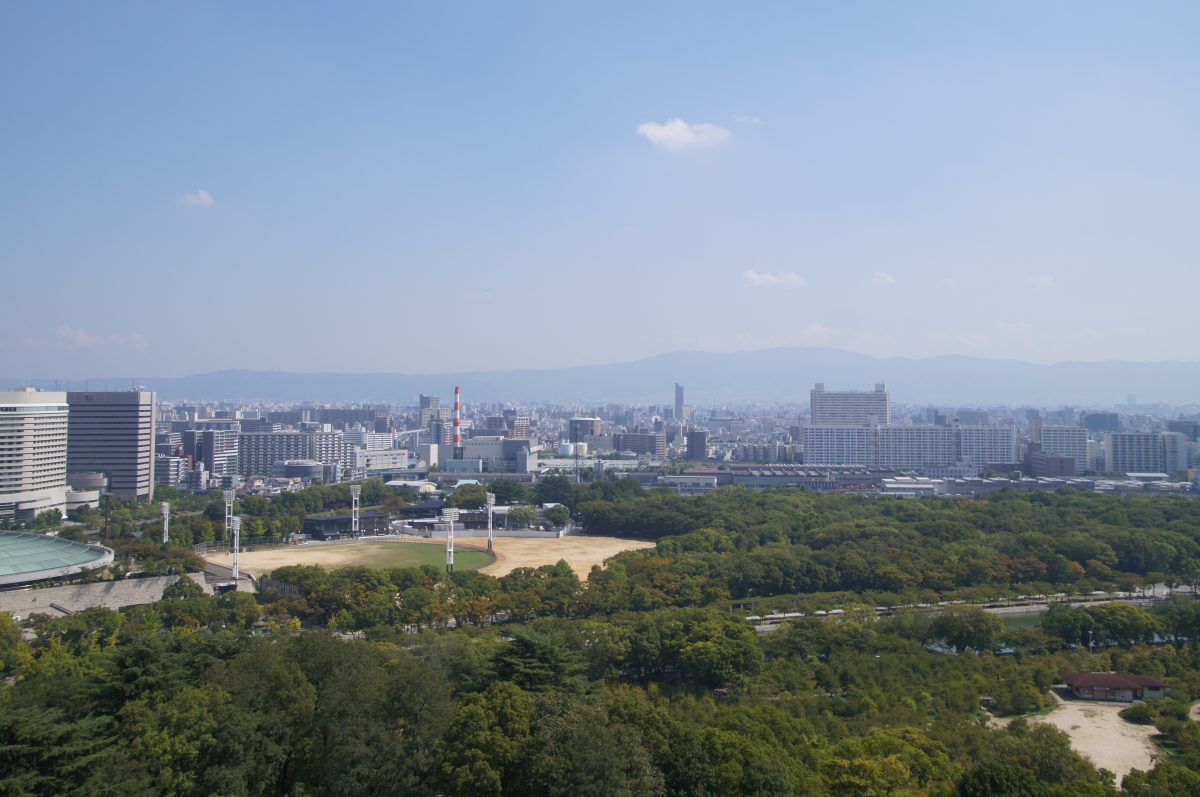
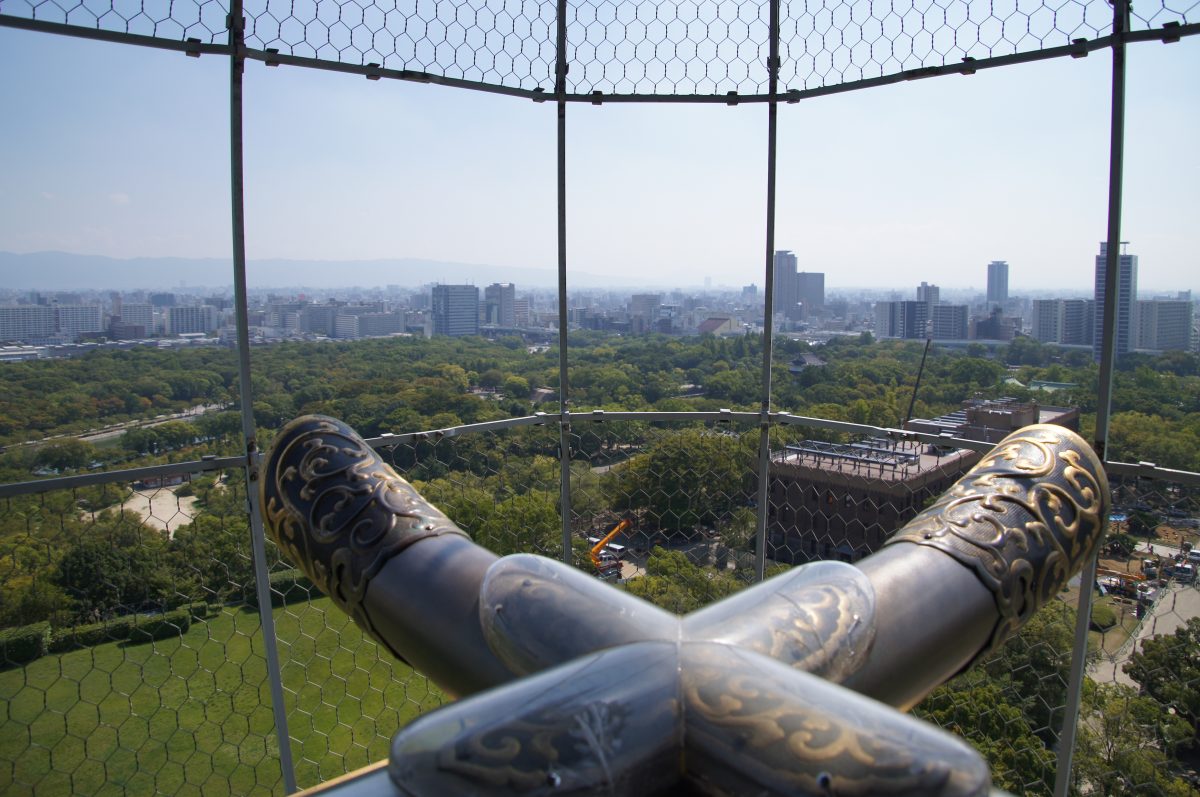
At the top is an open observation deck looking across the park and modern Osaka. The contrast is rather fitting: you stand on a twentieth-century reconstruction, looking over a twenty-first-century city, while thinking about battles fought on the same ground centuries earlier.
The lift is one practical advantage of the modern building. Official visitor information describes step-free routes and staff-assisted lift access for wheelchair users, making the museum easier to navigate than the steep, narrow interiors of surviving castles such as Himeji and Matsumoto Castle. It also removes any final possibility of pretending you have wandered into the sixteenth century.
How much does Osaka Castle cost?
Adult admission was ¥1,200 when checked in September 2026. University and high-school students paid ¥600 with valid ID, while junior-high-school pupils and younger children entered free with proof of age. One ticket covered the main tower and the Toyotomi Stone Wall Museum.
When we visited in 2017, the published adult price was ¥600. I cannot find our ticket receipt, so that is a historical published figure rather than a claim that I remember the exact transaction. Sadly, I retained several photographs of gift-shop items and not the useful little rectangle with the amount printed on it.
The park itself is free. You only need a ticket for the museum inside the main tower and for certain separate attractions or gardens. If you are unsure about the reconstruction, explore the grounds first and decide whether the exhibition still appeals.
Prices and opening arrangements can change. Check the official Osaka Castle visitor guide before relying on the September 2026 figures above.
When is the best time to visit Osaka Castle?
If crowds bother you, go earlier in the day and avoid peak blossom periods if your dates are flexible. Both older and more recent first-hand accounts describe the main keep and observation deck becoming particularly busy in spring. The park has room to absorb people. The museum has rather less.
I did not record our exact arrival time, so I cannot offer a supposedly magical quiet hour based on our visit. Also, cherry blossom season presents the usual travel bargain: prettier photographs in exchange for rather more people.
How long do you need at Osaka Castle?
Allow roughly two to three hours for the museum and a sensible walk through the grounds. About 50–90 minutes inside is realistic, depending on how thoroughly you read the displays; the rest disappears into the approach, photographs and the realisation that the nearest station was not, in fact, directly beneath the keep.
You can shorten the visit to around an hour if you only want the park and exterior. Give it half a day if you also plan to visit Nishinomaru Garden, the Osaka Museum of History or several surviving structures around the complex.
We used the castle as the start of a much broader day. Our two-day Osaka itinerary continues from here to Shinsaibashi, Dotonbori, Kuromon Market and Den Den Town. It works. But wear shoes that are already on speaking terms with your feet.
How do you get to Osaka Castle?
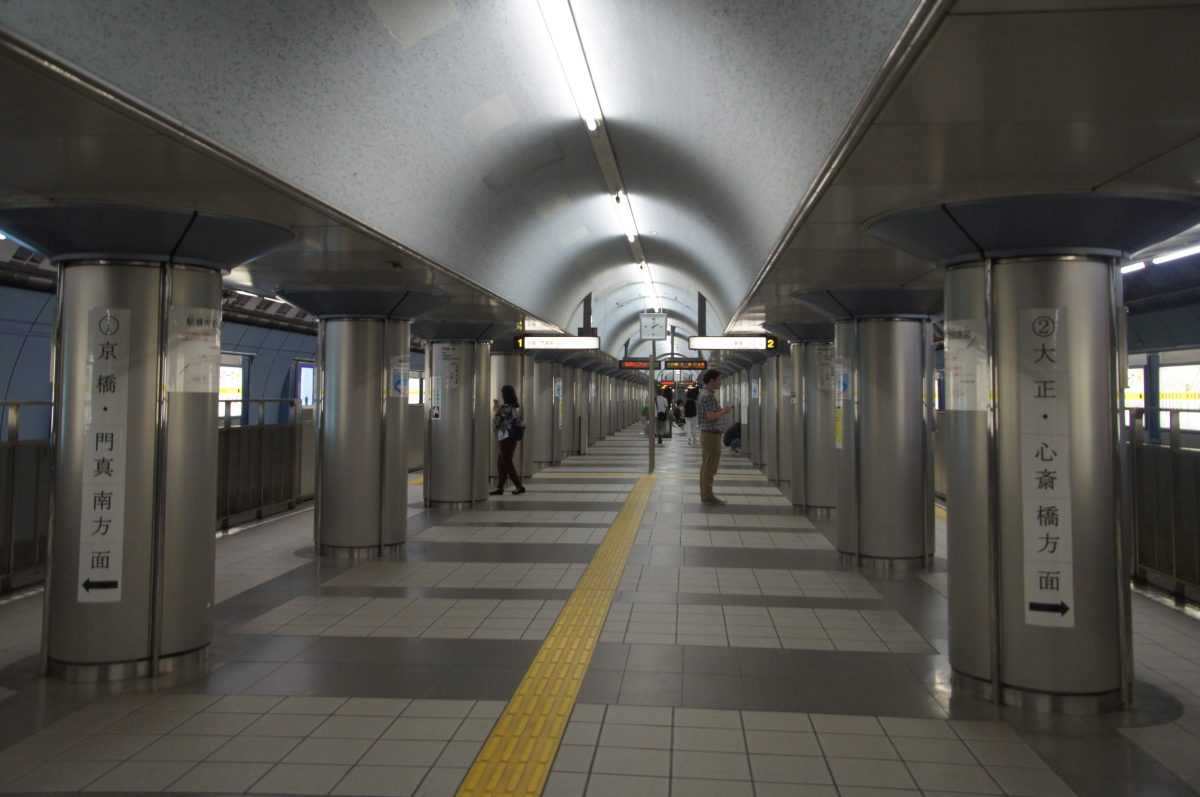
Osaka Castle Park has several useful stations because the grounds are large. Tanimachi 4-chome gives you a good approach from the south-west through Otemon Gate. Morinomiya and Osakajokoen serve the eastern side of the park, with JR and metro options depending on your starting point.
Allow roughly 15–25 minutes to walk from a station to the main tower, depending on your route and pace. The castle is visible before you reach it, which creates the dangerous impression that you are nearly there. You are not. You are simply being visually encouraged.
Use the official Osaka Castle Park access information to choose the entrance that suits the rest of your route.
Osaka Castle or Himeji Castle: which should you visit?
If you care most about historic architecture, choose Himeji. Its main keep survives from the early seventeenth century, and moving through the wooden structure is part of the experience. The stairs are steep, the route is defensive and the building itself tells the story.
Choose Osaka Castle if you want a city landmark, a museum about Hideyoshi and the castle’s history, an easier interior route and a visit that fits into a wider Osaka day. Its exterior is splendid. Also, it does not turn the day into a separate rail trip.
| Choose Osaka Castle for… | Choose Himeji Castle for… |
|---|---|
| A modern history museum | An original wooden keep |
| Lift access and an easier interior | Steep stairs and defensive architecture |
| A two- or three-hour city attraction | A dedicated half- or full-day trip |
| Views across Osaka | A preserved castle complex and Koko-en |
| Pairing with Dotonbori and central Osaka | A separate rail trip from Osaka or Kyoto |
We visited both on consecutive days. Osaka Castle gave us the history lesson; Himeji gave us the castle interior I had imagined. The weather gave Himeji persistent rain, just to ensure no comparison became too straightforward.
Who should visit Osaka Castle — and who should skip the museum?
Visit the museum if…
- You want to understand why this site mattered to Toyotomi Hideyoshi and the unification of Japan.
- You enjoy historical objects, models and battle displays.
- You want the observation-deck view across Osaka.
- A lift and a more accessible route make a castle visit easier for you.
Skip the museum if…
- You expect original rooms, timber construction and a feudal atmosphere.
- You have limited time and would rather concentrate on Osaka’s streets and food.
- You are already visiting Himeji or Matsumoto and do not need another castle exhibition.
- Queues are long and the view is not important to you. The free exterior may be enough.
Practical tips for visiting Osaka Castle
- Know what the keep is. It is a reconstructed tower containing a museum, not a preserved feudal interior.
- Start with the park if you are undecided. The grounds and exterior are free, so you can make the ticket decision after seeing them.
- Allow for the walk. The park is large and the main tower is not immediately beside any station.
- Respect the photography signs. The third and fourth floors have displayed important objects that cannot be photographed.
- Use the lift if you need it. Accessibility is one genuine benefit of the modern reconstruction.
- Check official information. Prices, hours, exhibitions and ticket arrangements can change.
For a broader choice, our comparison of six Japanese castles places Osaka’s modern museum beside the original keeps at Himeji and Matsumoto, Kanazawa’s timber reconstruction and two very different Okinawan sites.
Our honest Osaka Castle verdict
Osaka Castle is worth visiting. The free park and exterior are the uncomplicated part of that recommendation: the moats, walls and decorated tower make a powerful first impression.
The museum is worth entering if the history interests you. We liked the exhibition, particularly the older objects we were not allowed to photograph. But the modern interior will disappoint you if nobody has warned you about it. Consider yourself warned.
Would I choose Osaka over Himeji for the experience of being inside a Japanese castle? No. Would I remove it from our Osaka day? Also no. They do different jobs, and Osaka Castle makes much more sense once you stop asking it to be Himeji. For a reconstruction that foregrounds traditional timber methods instead, see our Kanazawa Castle guide.
For the rest of the route, use our complete Osaka itinerary. Our Grand Front Osaka guide covers an easier Umeda stop for your arrival day. If you are building a longer trip, continue with our two-week Japan itinerary and Japan travel guide. You can also read our honest Osaka Aquarium Kaiyukan review for the other major attraction we visited during the same stay. For a very different castle experience, our Zakimi Castle Ruins guide covers Okinawa’s curved stone fortifications.
Osaka Castle FAQs
Is Osaka Castle worth visiting?
Yes. The park, moats, stone walls and castle exterior are worth visiting even if you skip the paid museum. Go inside if you want the historical exhibition and observation-deck view.
Is Osaka Castle original?
No. The current main tower was completed in 1931 and is the third keep built on the site. Its exterior recalls the historic castle, while the inside is a modern museum.
Is Osaka Castle free to visit?
Osaka Castle Park and views of the main tower from outside are free. Entry to the museum inside the keep requires a ticket, and some separate gardens or attractions also charge admission.
How much does Osaka Castle cost?
As checked in September 2026, adults pay ¥1,200; university and high-school students pay ¥600 with valid ID; junior-high-school pupils and younger children enter free with proof of age. The ticket covers the main tower and the Toyotomi Stone Wall Museum.
What is inside Osaka Castle?
The reconstructed tower has eight storeys, with museum displays across its public floors covering Osaka Castle, Toyotomi Hideyoshi and the battles associated with the site. The top floor has an outdoor observation deck.
How long do you need at Osaka Castle?
Allow roughly two to three hours for the museum and a useful walk through the park. An exterior-only visit can be shortened to around an hour.
Which is better: Osaka Castle or Himeji Castle?
Choose Himeji for an original wooden keep and defensive architecture. Choose Osaka Castle for a modern history museum, easier access and a visit that fits into a wider Osaka sightseeing day.
Can you take photographs inside Osaka Castle?
Photography is generally permitted in much of the museum, but it is prohibited on the third and fourth floors where important cultural objects are displayed. Follow the signs because exhibitions and rules can change.