Gary and I did not set out to collect Japanese castles. We simply kept putting them into the itinerary until, several train journeys and one Okinawa road trip later, we had visited six sites that barely belonged in the same comparison.
Himeji and Matsumoto have surviving timber keeps. Osaka wraps a very modern museum in a convincing castle exterior. Kanazawa mixes old gates and stonework with careful timber reconstruction. Shuri was the red royal heart of the Ryukyu Kingdom. Zakimi is a roofless gusuku ruin with curved limestone walls.
So, which is the best castle in Japan? Of the six we have visited, Himeji is the strongest all-round castle experience. It’s the one I would choose for most first-time visitors. Matsumoto is my pick for an original keep that feels intimate and unmistakably old inside. But Shuri was the one that surprised me most, and one of my favourites. It looked and felt unlike the mainland castles we had already seen.
This is not a ranking of every castle in Japan. We have not visited all twelve original keeps, and I refuse to award imaginary points to buildings I have only met through a screen. It is an honest comparison of the six we actually explored, including what each visit felt like, what it costs now and which one makes sense for your route.
We visited the four mainland castles in September 2017 and the two Okinawan sites in May 2019. Prices, access information and reconstruction details were checked against official sources on 25 September 2026.
Japanese castles: the quick answer
- Best overall: Himeji Castle
- Best original keep: Matsumoto Castle
- Most distinctive: Shuri Castle
- Best for architecture and reconstruction: Kanazawa Castle
- Best museum: Osaka Castle
- Best short road-trip stop: Zakimi Castle Ruins
If you can visit only one: choose Himeji if you are based in Osaka or Kyoto, or Matsumoto if your route crosses the Japanese Alps. In Okinawa, choose Shuri for the fuller historical story and Zakimi for a short, quiet encounter with Ryukyuan stonework.
Our Japanese castle comparison at a glance
The prices below are the standard adult rates. They are current at the time of checking, but castle fees have changed rather enthusiastically in 2025 and 2026. Follow the linked individual guides—and the official sources cited in them—before you travel.
| Castle | What you are visiting | Adult price | Allow | Best for |
|---|---|---|---|---|
| Himeji | Surviving early-17th-century keep and extensive defensive complex | ¥2,500; ¥2,600 with Koko-en | 1½–2 hours for the castle | The best all-round experience |
| Matsumoto | Original timber keep with six internal floors | ¥1,200 e-ticket; ¥1,300 paper ticket | 1½–2 hours, plus the walk from the station | Original interiors and atmosphere |
| Osaka | 1931 reinforced-concrete reconstruction containing a museum | ¥1,200; park free | 2–3 hours with the grounds | History displays and easier access |
| Kanazawa | Surviving gates and walls plus traditional timber reconstructions | Park free; paid buildings ¥320 | 45 minutes–2 hours | Construction techniques and a flexible visit |
| Shuri | Ryukyuan royal castle, rebuilt after earlier destruction and again after the 2019 fire | ¥400 until 22 Nov 2026; ¥1,000 from 23 Nov | 2–3 hours | Ryukyuan history and the greatest contrast |
| Zakimi | 15th-century gusuku ruins with restored curved stone walls | Ruins free; museum ¥500 | 30–45 minutes | A short Okinawa road-trip stop |
Original, reconstructed or ruined: why the label matters
Japan has only twelve surviving original castle keeps. “Original” does not mean that every tile, gate and plank escaped four centuries without repair. It means the keep survived from the feudal period rather than being wholly rebuilt in modern times. Himeji and Matsumoto belong to that group.
That difference is obvious once you go inside. Shoes come off. Timber stairs become alarmingly steep, the rooms are sparse and accessibility is limited. You feel the structure rather than walking through a museum exhibition about it.
But “reconstructed” is not one single category either. Osaka’s main tower was rebuilt in reinforced concrete in 1931 and works as a modern museum. Kanazawa has recreated several lost buildings in timber using traditional methods, while preserving surviving gates and varied stone walls. Shuri is different again: it was a Ryukyuan royal centre, not a mainland samurai keep, and repeated reconstruction is part of its modern story.
Zakimi has no grand interior to climb. Its strength lies in the curve of its limestone ramparts, the arched gateway and the landscape around them. If you arrive expecting six versions of Himeji, at least five castles are going to disappoint you. That seems rather unfair on the castles.
1. Himeji Castle: best overall
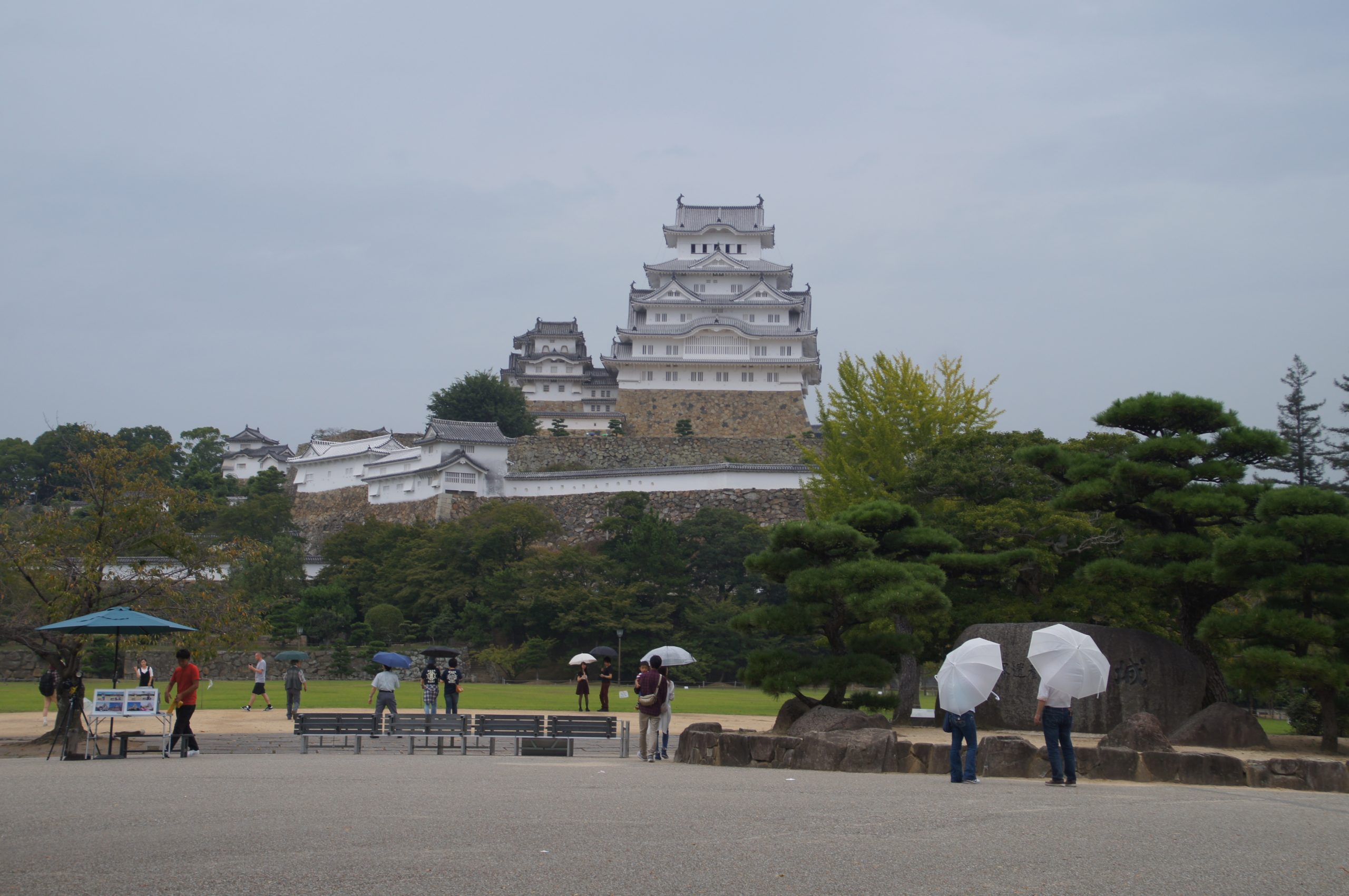
Choose Himeji if you want the fullest traditional castle experience from these six. It’s much more than the white keep at its centre. The route passes through gates, baileys and defensive turns before you climb the surviving timber interior, and the scale makes the whole complex feel more substantial than Matsumoto.
We visited as a day trip from Osaka. It rained, because apparently the weather had reviewed our plans and wanted editorial control. But we still enjoyed it. The keep was absorbing, the castle remained imposing rather than merely photogenic, and nearby Koko-en gave the afternoon a much gentler finish.
Himeji’s drawback is effort. There are steep wooden stairs, no lift in the main keep and busy periods can bring queues. The general adult ticket also rose to ¥2,500 in March 2026, so older guides still quoting ¥1,000 are now wrong. If you can spare the extra ¥100, the ¥2,600 combination ticket with Koko-en is the sensible choice.
Best for: first-time visitors who want one memorable castle, original architecture and a straightforward day trip from Osaka.
Read our full Himeji day trip from Osaka for train options, current prices, Koko-en and the route we followed.
2. Matsumoto Castle: best original keep
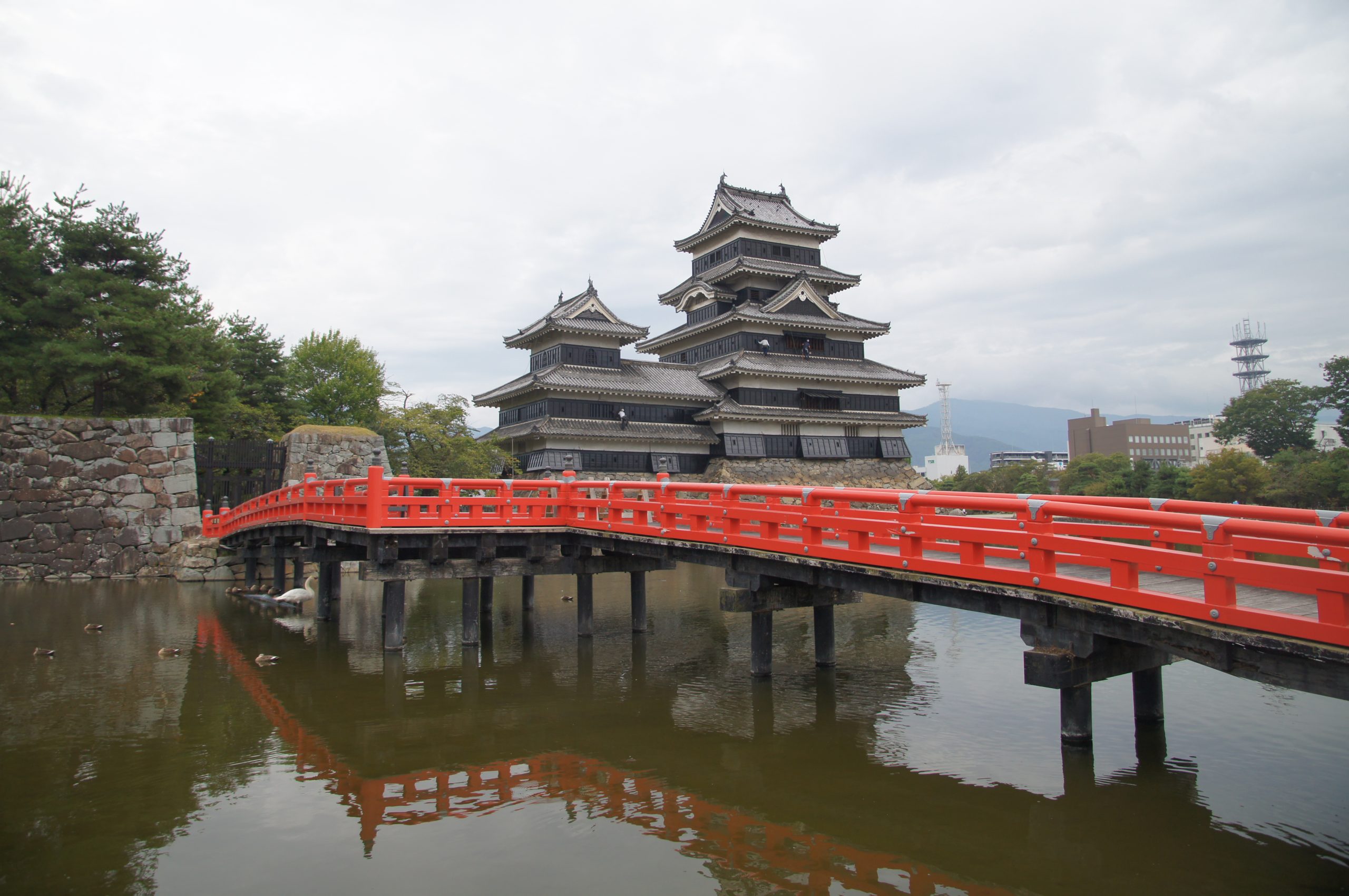
Choose Matsumoto for a more compact encounter with an original wooden keep. Its black cladding, moat reflections and smaller scale give it a completely different mood from Himeji. Outside, it is dramatic. Inside, it is all polished timber, weapon displays and stairs that gradually abandon any pretence of being civilised.
Those stairs reach a maximum angle of 61 degrees and feel closer to ladders. There is no lift. I loved the building details and the view from the upper levels, although I am an architect and can become interested in a large piece of joinery for longer than is socially useful. Your tolerance may vary.
We fitted Matsumoto into a travel day between Tokyo and Kanazawa. It was a long day, but the castle gave the stop a purpose beyond rearranging luggage and admiring railway punctuality. The centre is compact enough to manage without staying overnight, provided you leave your bags at the station and do not inflate a stopover into a heroic city tour.
Best for: original interiors, architectural detail and travellers already crossing the Japanese Alps.
Our one-day Matsumoto guide explains the stopover, luggage options and onward route. You can also place it within our seven-day Japanese Alps itinerary.
3. Osaka Castle: best museum
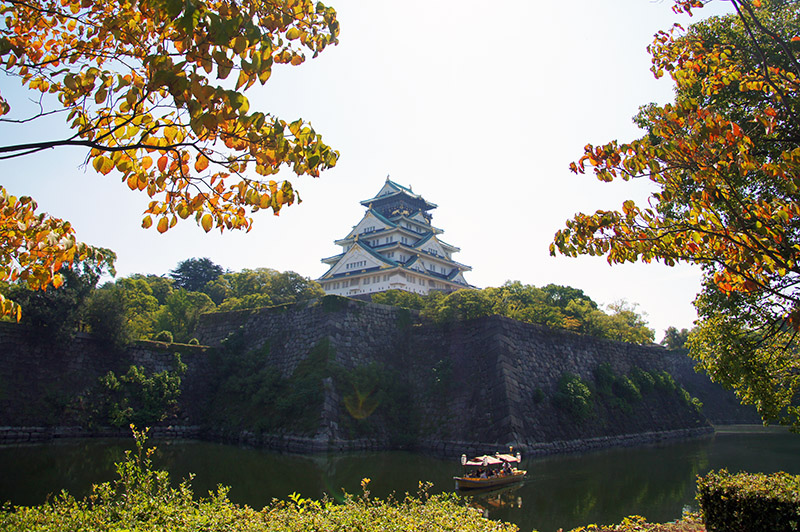
Choose Osaka Castle if you want a history museum, city views and a visit that fits easily into an Osaka sightseeing day. The present main tower is a 1931 reinforced-concrete reconstruction. It looks the part from across the moat, but the interior has exhibition floors, modern stairs and a lift.
I had somehow researched an entire Japan trip without noticing that last detail. Walking inside and finding a contemporary museum was therefore a small surprise. Not a bad one. The exhibition was interesting, but it was not the creaking wooden interior I had invented in my head.
The surrounding park, moats and immense stone walls are free, so you can enjoy the exterior without buying a ticket. Adult admission to the tower is now ¥1,200 and also covers the Toyotomi Stone Wall Museum, which opened in 2025. It’s a useful addition, but we have not visited it, so I will not pretend to review it.
Best for: Osaka history, museum displays, an observation deck and visitors who need an accessible alternative to original wooden keeps.
See our honest Osaka Castle review for the museum-versus-exterior decision, then continue with our two-day Osaka itinerary.
4. Kanazawa Castle: best for reconstruction and building craft
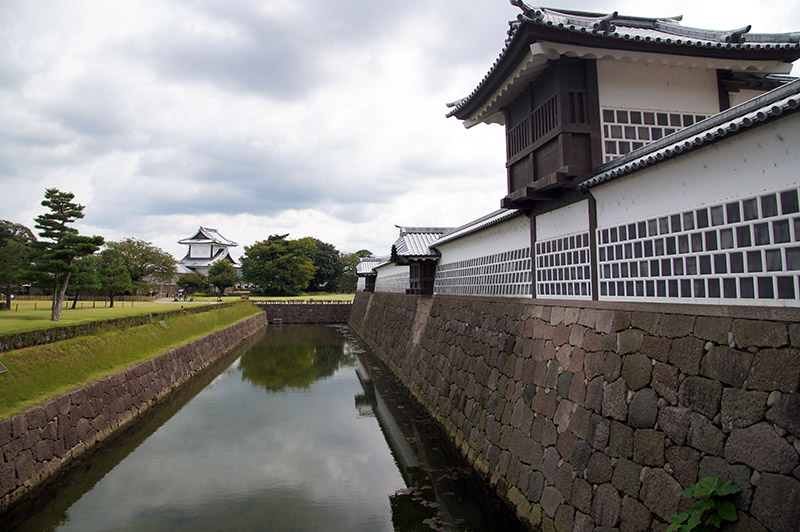
Choose Kanazawa if you are interested in how historic buildings are reconstructed. The original keep disappeared centuries ago, but the site still has surviving gates, storehouses and layers of stonework. Later buildings have been recreated in timber, with displays explaining the construction methods.
That was exactly the material I wanted. The castle was large, calm and interesting without requiring the concentration of a full museum afternoon. In my notes I described Kanazawa as relaxing, but not so relaxing that I became bored. A niche compliment, perhaps, but an accurate one.
The park is free, while the main paid group of reconstructed buildings costs ¥320. That makes Kanazawa the easiest visit to adjust around your time and budget. Walk through the grounds in 45–60 minutes, or pay for the interiors and allow up to two hours. Also, Kenroku-en is directly beside it, which removes any need for elaborate route planning. I am always grateful when a city does not invite me to create unnecessary transport problems.
Best for: timber construction, stone walls, gardens and travellers who want a rewarding castle stop without a large admission fee.
Our detailed Kanazawa Castle guide covers the free and paid areas, while the Kanazawa one-day itinerary links it with Kenroku-en and the historic districts.
5. Shuri Castle: most distinctive
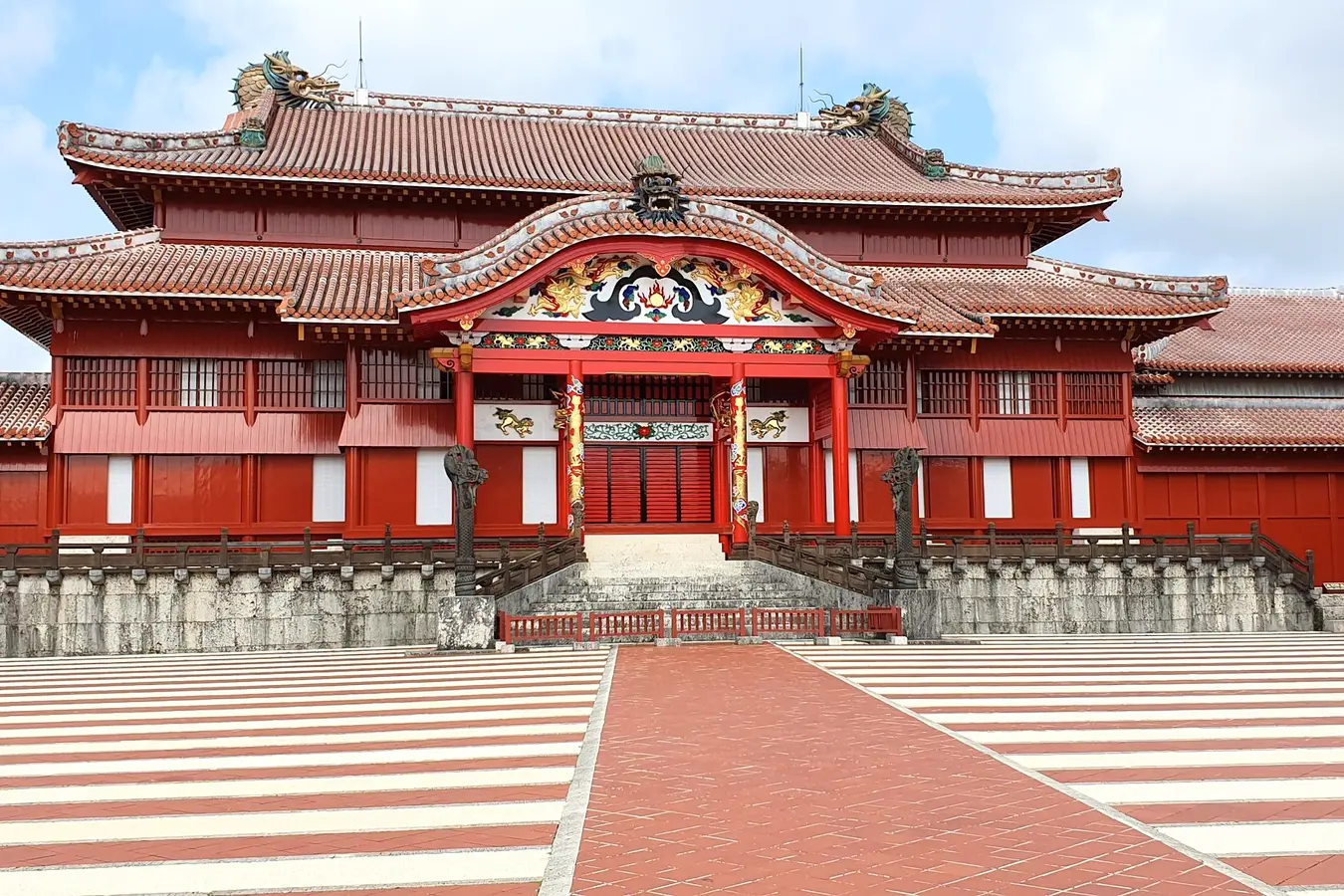
Choose Shuri if you want to understand why Okinawa does not feel like a warmer version of mainland Japan. This was the political and royal centre of the Ryukyu Kingdom. Its vivid red architecture, ceremonial courtyard and decorative interiors reflected a history shaped by contact with China, Japan, Korea and Southeast Asia.
We visited during our Okinawa honeymoon in May 2019, before the fire that destroyed the main hall and several surrounding buildings that October. The scale impressed me, but so did the colour and intricacy of the rooms. We also watched a Ryukyuan dance performance. After several sombre timber keeps, Shuri felt gloriously different.
The current experience is not the one we had. Reconstruction has been taking place in public view, and the restored Seiden is due to open on 23 November 2026. Until 22 November, adult admission to the paid area is ¥400. From 23 November it rises to ¥1,000, and entry inside the Seiden requires a timed reservation. You can still enter the rest of the paid area without booking.
Best for: Ryukyuan history, palace architecture and travellers willing to treat reconstruction as part of the story rather than an inconvenience standing in front of it.
Read our Shuri Castle guide for what we saw before the fire and what you can expect now. It fits naturally into our Naha itinerary without a car.
6. Zakimi Castle Ruins: best short road-trip stop
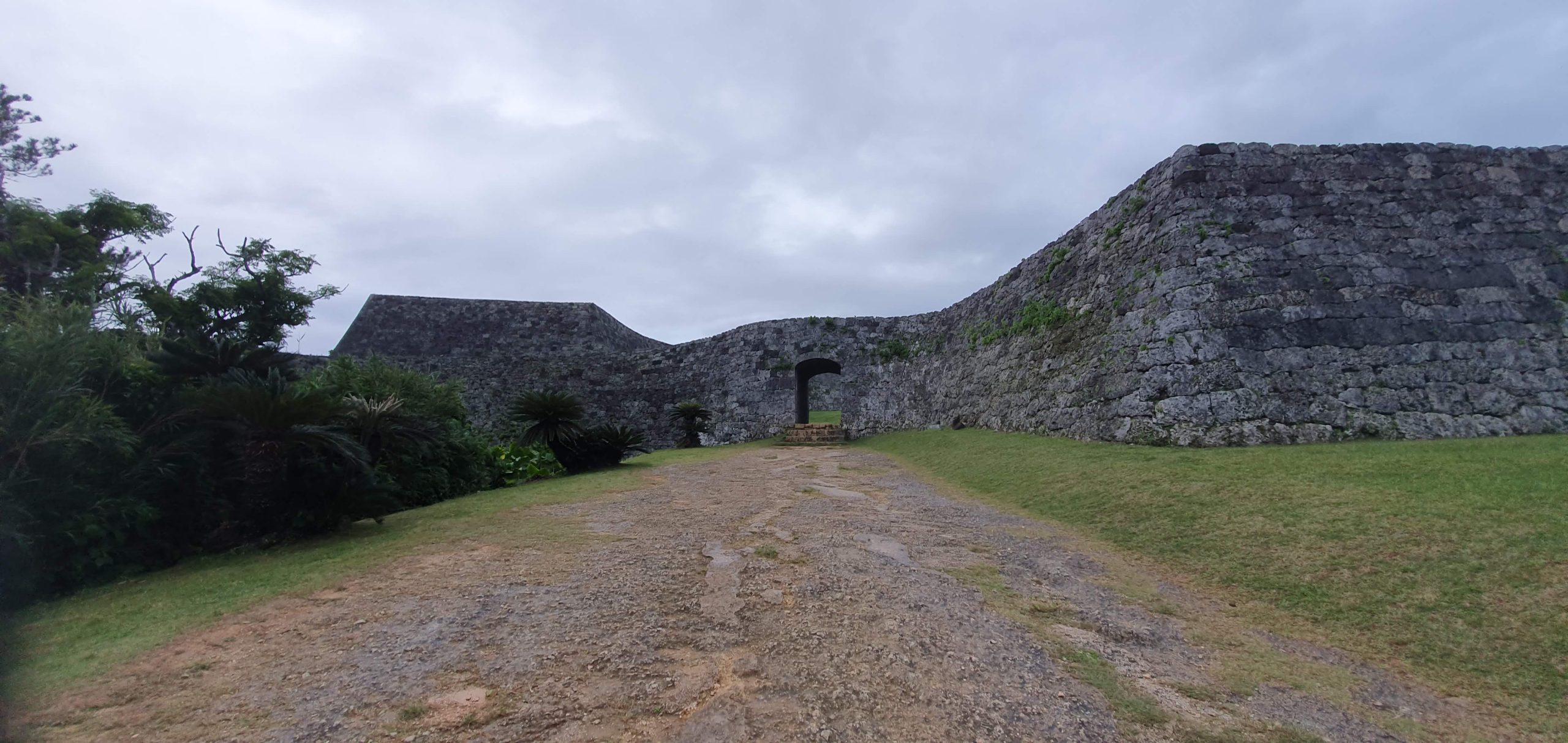
Choose Zakimi when you are already driving through Yomitan and want a short, free historical stop. This is a gusuku ruin rather than a complete castle. Its interest lies in the beautifully shaped limestone walls, old stone arch and views from the elevated site.
We reached it near the end of an overfilled Okinawa road-trip day, after Churaumi Aquarium, lunch, Cape Manzamo and Ryukyu Mura. It was very much a final-look-before-dinner visit! Fortunately, Zakimi does not require a solemn half-day commitment. Thirty to 45 minutes is enough for the ruins.
The outdoor site is free and always open. The adjacent Yuntanza Museum currently charges ¥500 for visitors of high-school age and above who live outside Yomitan. I would not travel slowly from Naha solely for Zakimi, but it works extremely well as part of a wider central or northern Okinawa drive.
Best for: Ryukyuan stonework, views and people who enjoy ruins without needing a furnished interior to validate the stop.
Use our Zakimi Castle Ruins guide for transport and museum details, or slot it into our Okinawa main-island road trip.
Which Japanese castle should you visit?
- If you want the most impressive complete experience: Himeji.
- If you want a dark original keep and a smaller city: Matsumoto.
- If you prefer exhibitions, lifts and urban convenience: Osaka.
- If building craft interests you more than a dramatic keep: Kanazawa.
- If you are visiting Okinawa for the first time: Shuri.
- If you have a hire car and 45 minutes in Yomitan: Zakimi.
For many first-time Japan itineraries, the practical decision is Himeji versus Osaka. Pick Himeji for original timber, defensive design and a day devoted to the castle. Pick Osaka when you want the museum, the park and enough time left for markets, neighbourhoods and dinner elsewhere in the city.
Himeji versus Matsumoto is closer. Himeji is larger and more complete; Matsumoto feels more compact and atmospheric. I would not cross the country to see both on a short first trip, but they make sense on different routes. Himeji sits between Osaka and Hiroshima. Matsumoto belongs naturally between Tokyo, Nagano, Kanazawa and the Alps.
How to fit these castles into a Japan itinerary
You can connect the four mainland castles by train, but there is no prize for squeezing all of them into one fortnight. Our two-week Japan itinerary by train shows how Matsumoto, Kanazawa, Osaka and Himeji fitted into a wider route. It worked, although Matsumoto made one travel day considerably longer.
A sensible castle thread would be:
- Tokyo to Matsumoto: visit the original black keep, then continue through Nagano towards Kanazawa.
- Kanazawa: pair the castle park with Kenroku-en during a city stay.
- Osaka: see the castle and museum as part of a broader sightseeing day.
- Himeji: make a day trip from Osaka or stop on the way west towards Hiroshima.
Shuri and Zakimi belong to a separate Okinawa itinerary. Shuri is accessible from Naha by monorail plus a walk or bus. Zakimi is much easier with a car and pairs well with other stops around Yomitan and the island’s west coast.
What to know before visiting castles in Japan
- Check what is original before you go. A reconstructed museum is not automatically inferior, but it is a different experience.
- Wear shoes you can remove easily. Original keeps often require you to take them off and carry them in a bag.
- Take the stairs seriously. Himeji and Matsumoto have steep historic staircases and no lift to the upper floors.
- Arrive early at Himeji. Crowds and timed entry controls can slow the keep, especially during blossom season and holidays.
- Look beyond the tower. Moats, gates, stone walls, gardens and approach routes often contain more original material than a reconstructed keep.
- Recheck prices. Three of these castles changed or announced major fee changes within a short period. The internet has not caught up.
Best castles in Japan FAQ
What is the best castle to visit in Japan?
Himeji is the best all-round choice from the six castles we have visited. It combines a surviving original keep with extensive defensive grounds and is easy to reach from Osaka. Matsumoto is a strong alternative if your route passes through the Japanese Alps.
Which of these Japanese castles are original?
Himeji and Matsumoto have two of Japan’s twelve surviving original castle keeps. Osaka’s tower is a 1931 concrete reconstruction. Kanazawa combines surviving structures and stonework with later timber reconstructions. Shuri is a reconstructed Ryukyuan royal castle, while Zakimi is a gusuku ruin.
Is Himeji or Matsumoto Castle better?
Choose Himeji for the larger, more complete castle complex. Choose Matsumoto for a compact original keep, dark exterior and a route through Nagano or the Japanese Alps. Both have steep wooden stairs and historic interiors.
Is Osaka Castle worth visiting after Himeji?
Yes, if you want the museum, park and Osaka history. The experiences do not duplicate one another: Himeji is an original timber castle, while Osaka’s reconstructed tower contains modern exhibitions and an observation deck. If time is tight and original architecture is your priority, choose Himeji.
Which castle should I visit in Okinawa?
Choose Shuri Castle for the fullest introduction to the Ryukyu Kingdom and an easy trip from Naha. Choose Zakimi Castle Ruins for a free 30–45-minute stop during a Yomitan road trip. They complement one another, but they are not interchangeable.
How many Japanese castles should I visit in two weeks?
Two or three contrasting castles are usually enough for a first two-week trip. Pair an original keep such as Himeji or Matsumoto with a reconstruction such as Osaka or Kanazawa. Add more only when they fit your route or you are genuinely interested in castle architecture.
Our Japanese castle verdict
If I were choosing one castle for most first-time visitors, I would send you to Himeji. It has the scale, history and surviving architecture to justify a dedicated day. Matsumoto would be my second original keep, especially on an Alps route, and Shuri remains the most memorable contrast.
But I would not call Osaka, Kanazawa or Zakimi lesser versions of those places. Osaka works because it is a museum. Kanazawa explains reconstruction beautifully. Zakimi strips the experience back to walls, stone and landscape. They answer different questions.
That, rather inconveniently for anyone wanting a neat league table, is what made visiting all six worthwhile.
For the wider trip, browse our Japan Travel Guide or start with the two-week Japan rail itinerary.