
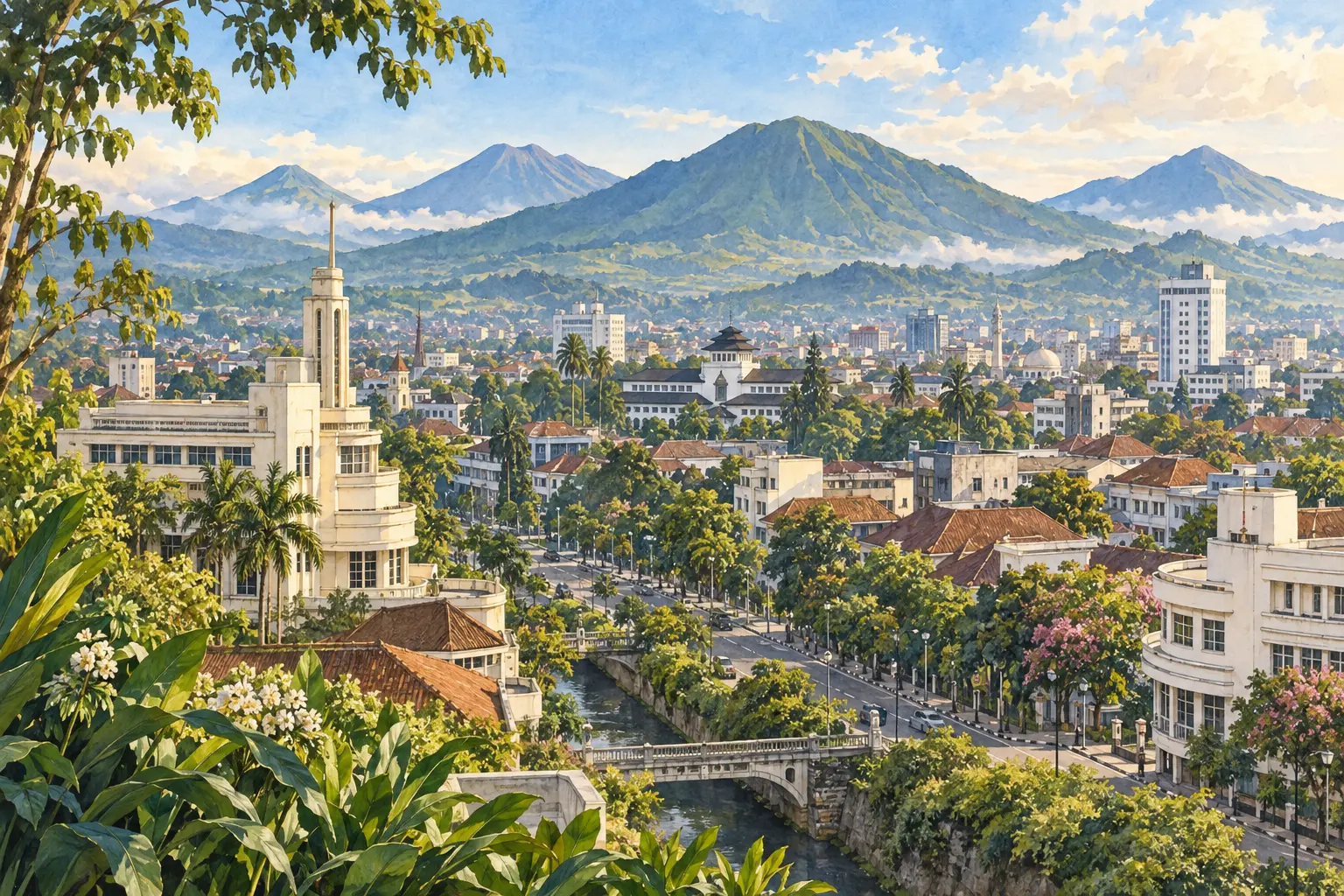
Bandung offers a very different side of Indonesia from the beaches and temples many first-time visitors picture. Set among the volcanic highlands of West Java, the city combines striking architecture, Sundanese culture, busy food markets and easy access to crater landscapes, forests and tea-covered hills.
I should be clear that I have not yet visited Bandung myself. This is a carefully researched planning guide rather than a first-hand account, based on the experiences I would prioritise on a future trip. Opening arrangements, prices and access can change, so check directly with each attraction before travelling.
Here are 11 of the best things to do in Bandung and the surrounding highlands.
1. Visit the Grand Mosque of Bandung
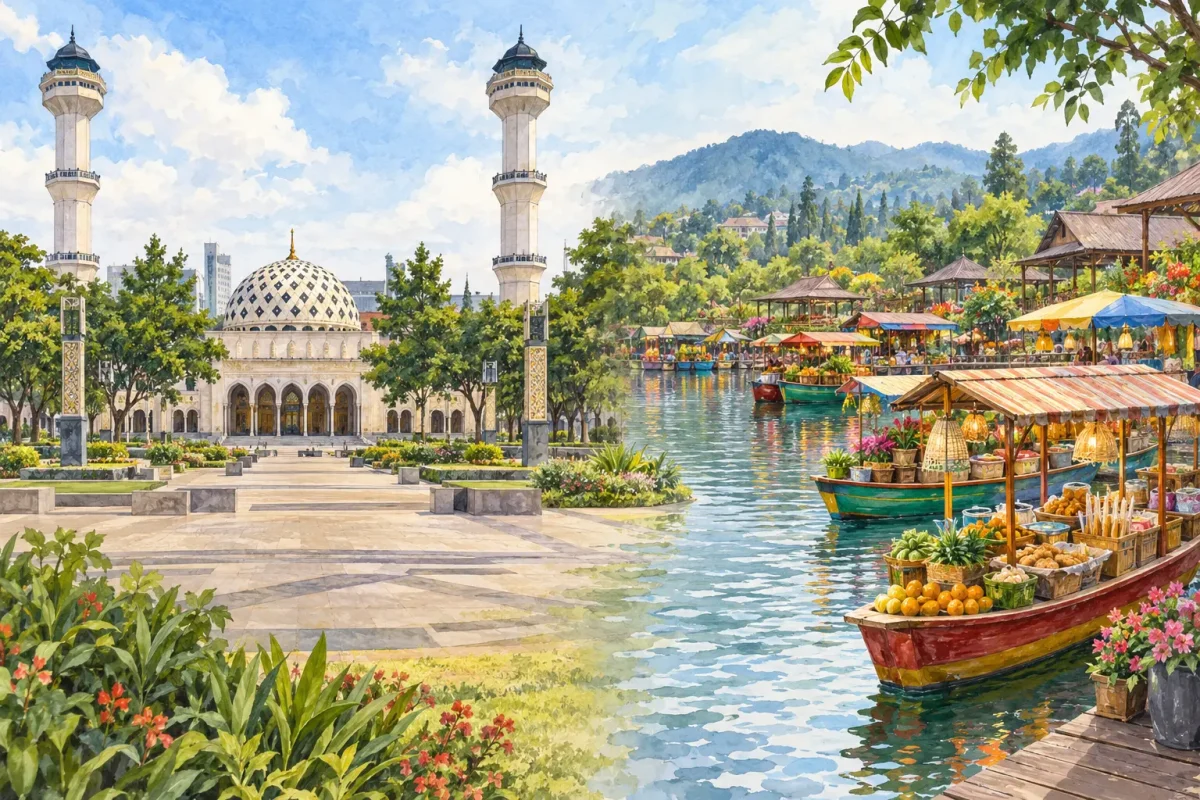
The Grand Mosque of Bandung, or Masjid Raya Bandung, stands beside the broad public space of Alun-Alun Bandung. A mosque has occupied this area since the early nineteenth century, although the building has been altered and expanded many times.
Its twin towers and large dome make it one of the city centre’s most recognisable landmarks. Visitors should dress modestly, avoid disrupting prayers and remember that access to particular areas may be restricted. Even if you do not enter, the mosque and surrounding square provide a useful starting point for exploring central Bandung.
2. Try West Javanese food at Lembang Floating Market
Lembang Floating Market is a landscaped leisure attraction north of Bandung rather than a traditional working market. Its food vendors serve from colourful boats beside the lake, creating a photogenic place to sample snacks and regional dishes.
The wider site has family activities and gardens, so it is best treated as a relaxed half-day outing rather than simply somewhere to buy lunch. Lembang traffic can be slow, especially at weekends and during public holidays, so allow considerably more time than the distance on a map suggests.
3. Learn about astronomy at Bosscha Observatory
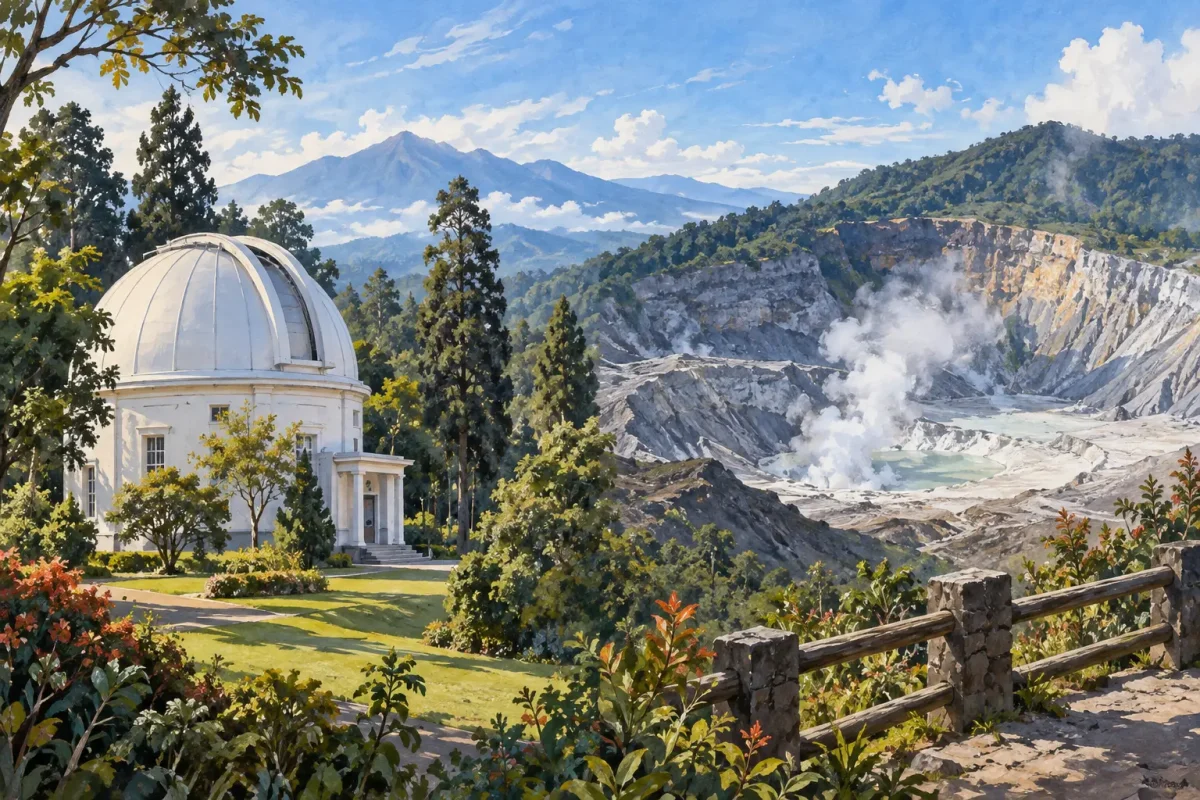
Founded during the Dutch colonial period in the 1920s, Bosscha Observatory is Indonesia’s oldest modern astronomical observatory. It later became part of Institut Teknologi Bandung and remains an important centre for astronomy, research and education.
The white-domed complex sits in the hills near Lembang. Public access has historically depended on scheduled programmes and advance registration, rather than visitors simply arriving to use a telescope. Check the observatory’s official information before planning your day; research work and weather can affect availability.
4. See the crater of Tangkuban Perahu
Tangkuban Perahu is an active stratovolcano north of Bandung, known for its broad crater views and its place in Sundanese folklore. Road access reaches the main visitor area, so seeing the crater does not necessarily require a long summit hike.
Conditions around an active volcano can change. Follow official safety instructions, respect any closures and do not leave designated areas. Sulphurous air, uneven ground, rain and cooler highland temperatures also make sensible footwear and an extra layer worthwhile.
5. Spend time among the bamboo landscapes of Dusun Bambu
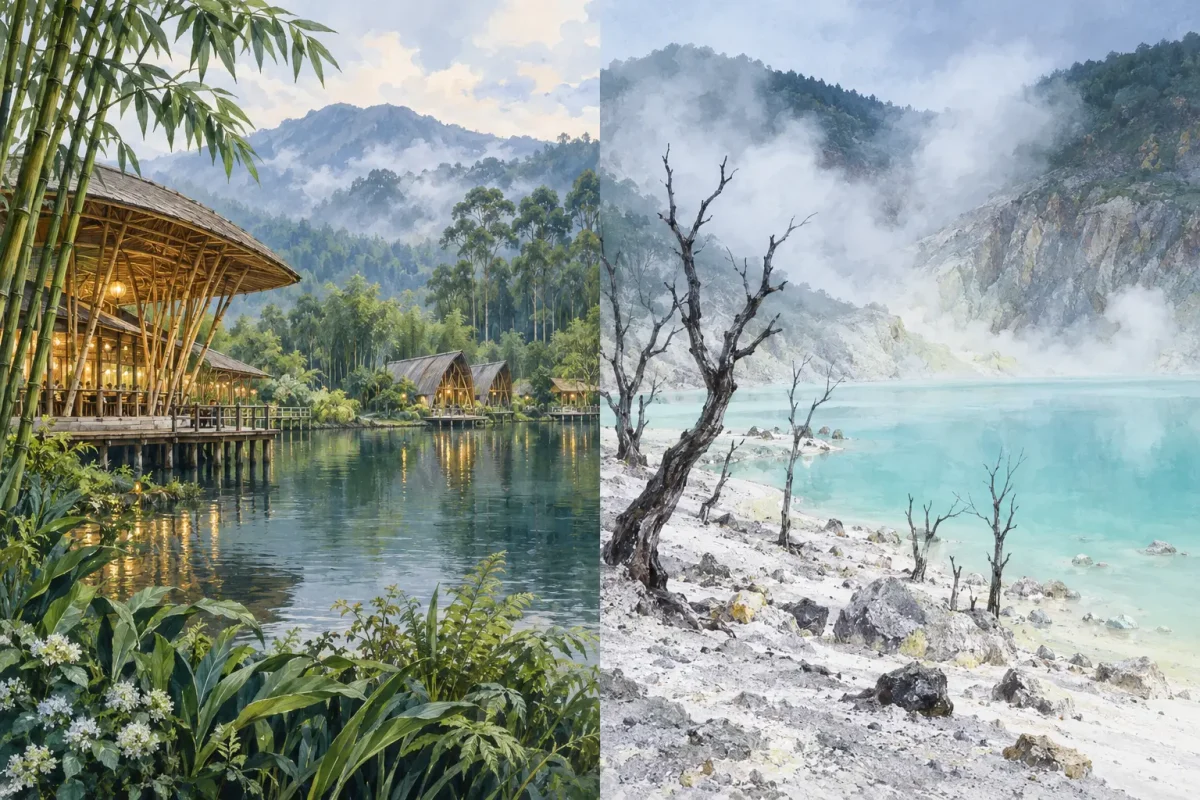
Dusun Bambu is a family-oriented leisure park in the highlands near Lembang. Bamboo architecture, landscaped gardens, water and mountain scenery are central to its appeal, with dining and accommodation forming part of the larger complex.
It is a deliberately designed attraction rather than an untouched rural village, but it can still provide a peaceful contrast to central Bandung. Check which facilities are operating before travelling, as individual activities and restaurants may change.
6. Experience the otherworldly landscape of Kawah Putih
South of Bandung, Kawah Putih is a volcanic crater lake on Mount Patuha. Minerals and changing conditions give the water its distinctive pale turquoise or greenish appearance, while the light-coloured shore and bare trees create an unusually dramatic landscape.
The area is high, cool and often misty. Sulphurous gases can become uncomfortable, so follow local limits on how long to remain near the lake and move away if you feel unwell. The journey from Bandung can take much longer than its distance implies, making Kawah Putih easier to combine with other sights around Ciwidey than with attractions north of the city.
7. Walk through a West Java tea plantation
The cool, fertile highlands around Bandung support extensive tea-growing landscapes. The neat rows following the slopes are beautiful, but these are also working agricultural areas rather than simply photographic backdrops.
Plantations around Ciwidey and Pangalengan are among the commonly visited areas. Use recognised entrances or guided routes, stay off restricted land and avoid damaging plants for photographs. Combining a plantation visit with Kawah Putih can make geographical sense because both lie south of Bandung.
8. Pick strawberries in the highlands
Strawberry farms around Lembang and Ciwidey offer a gentler family activity between Bandung’s larger natural sights. Some farms allow visitors to pick fruit and pay by weight, although availability naturally depends on the season and the crop.
This is one experience where checking shortly before travelling matters. Individual farms, prices and picking arrangements can change, and photographs or old recommendations may no longer reflect what is operating.

9. Explore Taman Hutan Raya Ir. H. Djuanda
Often shortened to Tahura Djuanda, this forest park lies close to northern Bandung and offers walking routes through upland woodland. Its attractions include waterfalls, viewpoints and historic tunnels, alongside the landscape for which most visitors come.
Some paths can be slippery or poorly lit, particularly around tunnels and after rain. Wear practical shoes, carry water and use local guidance for longer routes. Tebing Keraton, a well-known viewpoint in the wider area, is often associated with forest views and early-morning mist.
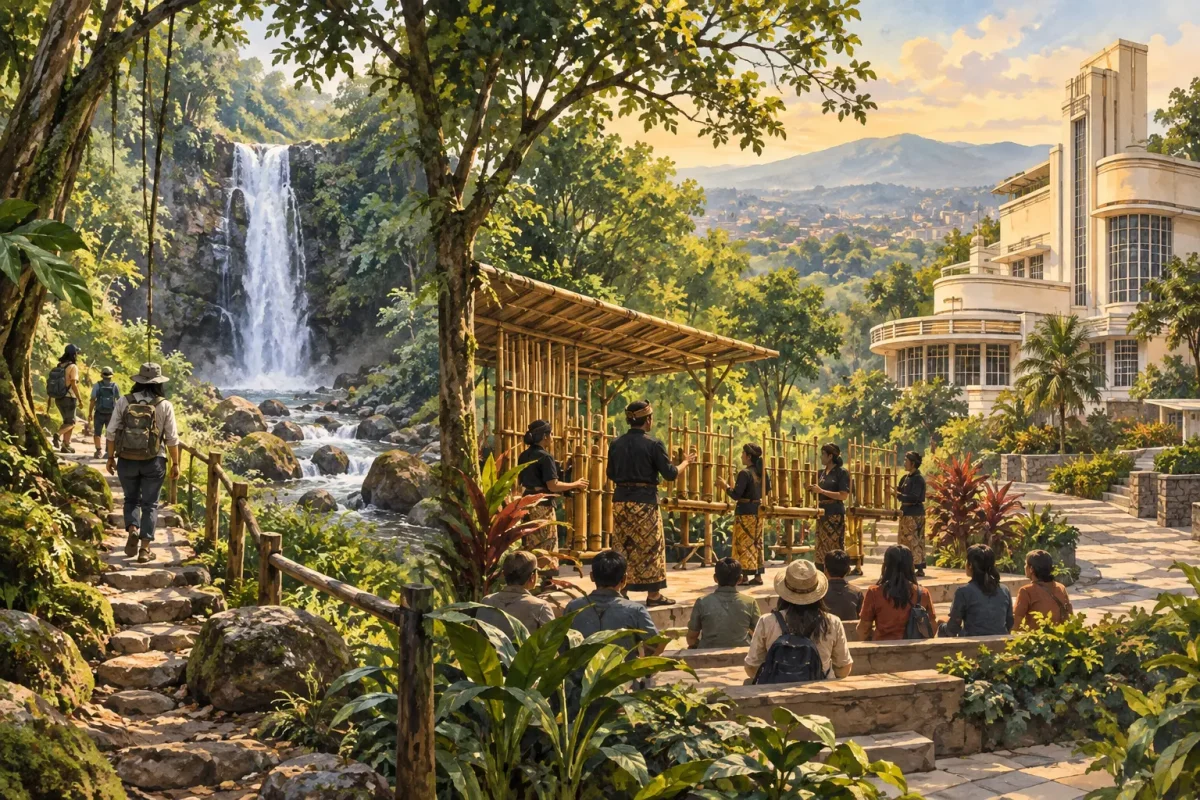
10. Hear an angklung performance at Saung Angklung Udjo
The angklung is a bamboo musical instrument strongly associated with Sundanese culture. Saung Angklung Udjo became one of Bandung’s best-known places to experience performances and learn how the instruments produce their distinctive sound.
A visit can provide cultural context that is missing from an itinerary focused only on scenery. Treat the performance as a cultural experience rather than merely a photo opportunity, and confirm programme times before arriving.
11. Discover Bandung’s Art Deco architecture
Bandung contains a notable collection of twentieth-century architecture dating from the Dutch colonial era. Buildings such as Gedung Sate and Villa Isola are frequently highlighted, alongside commercial streets including Braga.
The architecture is best understood with its colonial context rather than presented only as attractive decoration. A guided walk can help explain how the city developed, why particular European and tropical design ideas were combined, and how the buildings are used today.
How many days do you need in Bandung?
Three or four days would provide a sensible introduction: one day in central Bandung, one for Lembang and the northern highlands, and one for Kawah Putih and the landscapes south of the city. Adding another day creates more room for museums, food and slower travel.
Do not plan the northern and southern attractions as though they are close together. Congestion can make journey times unpredictable, and a shorter itinerary with geographically grouped stops is likely to be more enjoyable.
Planning a responsible Bandung trip
- Check official safety advice: volcanic access can change quickly.
- Confirm opening arrangements: observatory visits, performances and farm activities may require booking or operate only at particular times.
- Dress respectfully: especially at mosques and other religious sites.
- Group attractions by area: Lembang lies north of Bandung, while Kawah Putih and many tea landscapes lie to the south.
- Be honest about expectations: floating markets and bamboo parks are purpose-built visitor attractions, not untouched traditional settlements.
For more inspiration, browse our Asia travel guides, our wider destination guides, and our step-by-step itinerary-planning guide.
A simple Bandung itinerary
Bandung’s attractions spread across the city and two different highland areas, so the order of your itinerary matters. Trying to cross from Lembang in the north to Ciwidey in the south on the same sightseeing day can waste a substantial amount of time in traffic.
Day one: central Bandung
Begin around Alun-Alun Bandung and the Grand Mosque, then explore Braga and some of the city’s Art Deco architecture. This is also the best day to concentrate on local food, cafés and museums rather than adding a distant natural attraction.
Day two: Lembang and northern Bandung
Choose a manageable combination from Bosscha Observatory, Lembang Floating Market and Dusun Bambu. Tahura Djuanda can also fit into a northern itinerary, although walkers may prefer to give the forest more time. Tangkuban Perahu is farther north and deserves priority if the volcano is a major reason for visiting.
Day three: Ciwidey and southern Bandung
Make Kawah Putih the central stop, then add a recognised tea plantation, Situ Patenggang or a strawberry farm in the wider Ciwidey area. Leaving Bandung early helps, but journey times remain unpredictable.
Day four: culture and unhurried exploration
Use an additional day for Saung Angklung Udjo, neighbourhood food, shopping or anything missed because of traffic or weather. A fourth day also makes the trip feel less like a sequence of long car journeys.
Getting around Bandung
Bandung has rail connections with Jakarta and other cities on Java. Within Bandung, travellers commonly use taxis, ride-hailing services, hired cars with drivers and limited public transport. The practical choice depends on the area: central sights can be grouped together, while the volcanic highlands are easier with pre-arranged transport or an organised excursion.
Build flexibility into every day. A route that looks short on a map may take considerably longer during busy periods, and mountain weather can also alter plans. If you do not drive, booking a reputable driver or small tour for the northern and southern day trips is likely to be simpler than arranging a succession of individual journeys.
Where to stay in Bandung
Central Bandung is the most practical base for architecture, restaurants and onward transport. The Braga area suits travellers who want historic surroundings and evening activity, while northern districts provide easier access towards Dago and Lembang. Staying in the highlands can be peaceful, but it is less convenient if most of your plans are in the city or south of Bandung.
The original version of this article recommended one particular hotel through a commercial booking partner. I have removed that recommendation because it was not based on a personal stay and may no longer represent the best option. Compare recent independent reviews, location and cancellation terms before booking.
Frequently asked questions about Bandung
Is Bandung worth visiting?
Bandung is most likely to appeal to travellers interested in volcanic scenery, Sundanese culture, Indonesian food and twentieth-century architecture. It offers a cooler highland contrast to lower-lying cities, although congestion and long transfers need to be included in the plan.
How long should I spend in Bandung?
Three days is a reasonable minimum for central Bandung plus one northern and one southern excursion. Four days offers a more comfortable pace and provides some protection against traffic, rain or a temporarily unavailable attraction.
Can Bandung be visited as a day trip from Jakarta?
A day trip may be technically possible, particularly using the rail connection, but it leaves limited time once local travel is included. Staying for at least two nights makes it much easier to see both the city and one highland area.
What is Bandung best known for?
Bandung is known for its West Java highland setting, Sundanese culture and food, colonial-era and Art Deco architecture, fashion outlets, universities and access to volcanic landscapes. Visitors often use the city as a base for Lembang to the north or Ciwidey to the south.
Is Tangkuban Perahu safe to visit?
Tangkuban Perahu is an active volcano, so safety depends on official monitoring and restrictions at the time of the visit. Never rely on an old travel article for access information. Check Indonesian geological and local-authority advice, obey closures and remain within designated visitor areas.
Should I visit Kawah Putih or Tangkuban Perahu?
They offer different experiences. Kawah Putih is known for its pale crater lake and lies south of Bandung, while Tangkuban Perahu offers views into an active volcanic crater north of the city. Travellers with limited time should choose according to the other attractions in that day’s area instead of attempting both.
Final thoughts on the best things to do in Bandung
The strongest Bandung itinerary balances the city itself with the surrounding landscape. The architecture around Braga and central Bandung explains part of the city’s history; an angklung performance introduces Sundanese cultural traditions; and the forests, craters and plantations reveal why the West Java highlands feel so different from Indonesia’s coastal destinations.
I would resist trying to tick off every attraction. Choose one coherent northern day, one southern day and leave enough time to experience Bandung’s food and streets without watching the clock. That slower structure should make the journey more rewarding even when traffic or weather refuses to cooperate.
This article is a researched planning guide and not a first-hand account. Information was reviewed using established material available before January 2025. Opening times, prices, transport arrangements and volcanic safety restrictions require verification before travel. The accompanying replacement artwork is AI-generated editorial illustration, not documentary photography.



All theses places are just so beautiful, they just leave a person in awe. Very magical scenery.
I can’t believe that Bandung has such a fairy place like this. I still think Bandung has nothing to do, but now I have to change my thought. Maybe I will put 2 days into my itinerary if time is allowed. Thanks so much for your sharing!
Hello my famly member! I want to say that this post is awesome, nice written and
include almost all vital infos. I would like to peer more posts
lke this .