Our first afternoon in Osaka began with a plan to stop in Kyoto. It was a perfectly reasonable plan, right up until we arrived with our luggage and decided we would rather go to the hotel.
We expected to drop our bags and head back out. Instead, we stayed in Osaka, wandered around the modern shopping district by the station and took ourselves to Kaiyukan in the bay area. Kyoto could wait. Apparently, so could the itinerary I had spent rather longer creating than I care to admit.
This two-day Osaka itinerary follows what Gary and I actually did in September 2017: Osaka Aquarium Kaiyukan on our arrival day, then Osaka Castle, Shinsaibashi, Dotonbori, Kuromon Market and Den Den Town on the next. We slept in the city for three nights, but used the third day for Himeji. I have kept that as a separate trip rather than stretching two days of Osaka sightseeing into a suspiciously full three-day guide.
Admission prices, opening hours and practical details were rechecked against official sources on 24 September 2026. Our hotel cost is the amount on our 2017 booking confirmation, not a current quote.
My quick answer: two full days is enough for a useful first look at Osaka if you group the sights sensibly. Use one day for the bay and Kaiyukan, then another for Osaka Castle and the Minami neighbourhoods. Stay three nights if you also want a day trip to Himeji or Nara.
Is two days enough in Osaka?
Yes, two days is enough for Osaka’s headline sights, time to eat and wander through Dotonbori and several meals that make you question why you ever accepted a sandwich at your desk. It isn’t enough for Universal Studios Japan, multiple museums and every neighbourhood on the same trip.
I would give the city longer if food is a main reason for visiting, or if you want slow mornings and late nights. But on a wider Japan route, two city days plus three nights is a good compromise. Osaka also works well as a western base for day trips because the rail connections are so useful.
If you’re building a longer route, our two-week Japan itinerary by train shows how Osaka fits between Kyoto, Himeji and Hiroshima. Travelling down from central Japan? The final day of our Japanese Alps itinerary brings you west through Kanazawa towards Kyoto or Osaka.
Our two-day Osaka itinerary at a glance
| Day | Route | What it feels like |
|---|---|---|
| 1 | Arrive → Grand Front Osaka → Osaka Aquarium Kaiyukan | An easy arrival day with modern Osaka and the bay |
| 2 | Osaka Castle → Shinsaibashi → Dotonbori → Kuromon Market → Den Den Town | History first, then shopping, food and illuminated signs |
| Extra day | Himeji or Nara | A separate day trip, not another Osaka sightseeing day |
Our trip, quickly
- Visited: 25–28 September 2017
- Time in Osaka: two sightseeing days and three hotel nights
- Base: Hotel Cordia Osaka near Higobashi Station
- Best for: food, evening atmosphere, shopping and an efficient Kansai base
- Less suitable for: anyone trying to combine this route with Universal Studios Japan in the same two days
Day 1: Arrival, Grand Front Osaka and the aquarium
Let the arrival day remain an arrival day
We arrived in Osaka intending to leave our luggage and go straight to Kyoto. Once we had reached the hotel, the wisdom of travelling back out with a stopwatch hanging over the afternoon became less obvious. We changed the plan and kept Kyoto for our return.
That gave us time around Grand Front Osaka, the large contemporary complex beside Osaka Station. It’s polished, busy and very useful when you’ve just arrived, need food or want to browse without constructing a major expedition. I wouldn’t call a shopping centre the soul of Osaka. I would call it a mercifully easy first stop when you’re carrying the remains of a travel day in your face.
If you arrive later than we did, stop here. Move Kaiyukan to the next morning and shift the castle route accordingly. The aquarium deserves more than the final hour before closing.
Osaka Aquarium Kaiyukan
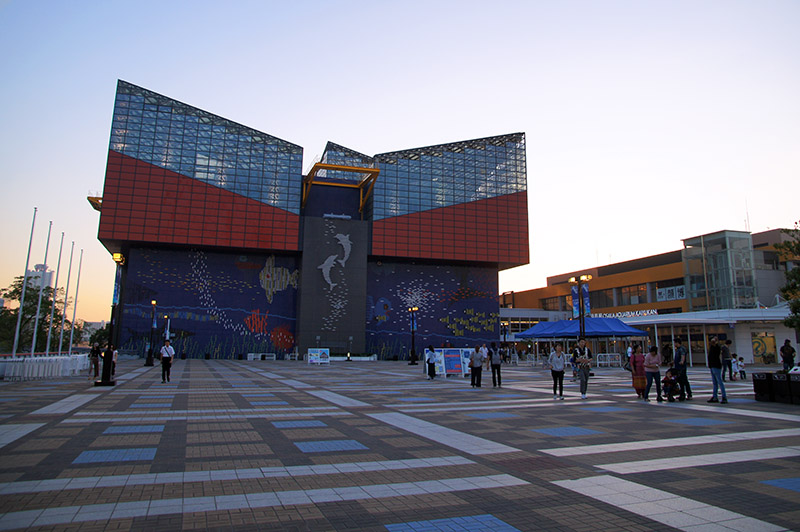
Kaiyukan is built around a vast central Pacific Ocean tank. The route winds gradually down through different marine habitats, which means you keep meeting the same tank from new angles. It’s dark, atmospheric and not especially forgiving if you’re trying to photograph moving fish. I produced an impressive collection of blue smudges. For the practical details and the questions the whale sharks raised for me, read our honest Osaka Aquarium Kaiyukan review.
Two whale sharks were the obvious stars during our visit. They were extraordinary to see, but I also found myself wondering whether even such a huge tank could be enough space for them. That unease has grown rather than disappeared with time. If captive whale sharks make you uncomfortable, I wouldn’t tell you to ignore that feeling simply because Kaiyukan is famous.
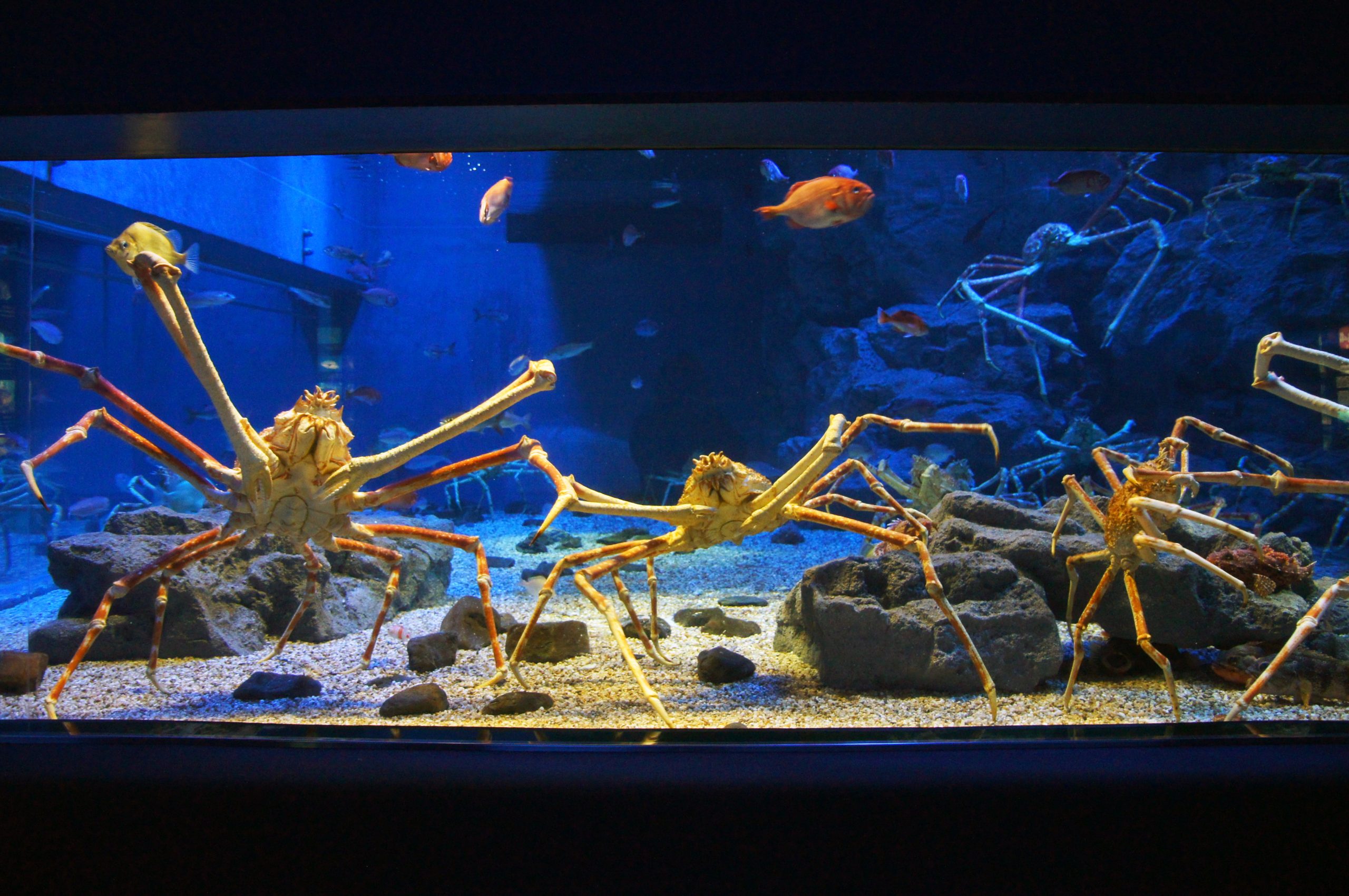
The giant crab display was my other highlight, if “highlight” can include creatures that appear to have been designed during an anxious fever. I loved it. I also backed away from the glass with considerable respect.
Kaiyukan uses variable admission prices and hours. When I checked the ticket calendar linked from the official Kaiyukan website on 24 September 2026, adult tickets on the displayed dates were ¥2,800 or ¥2,900, with opening at 9.30am or 10am and closing at 8pm. Final admission is normally one hour before closing. Check your actual date: the price and hours can change.
Day 2: Osaka Castle to Dotonbori
This is the main sightseeing day. It works because you begin at the castle and then move south into Shinsaibashi, Dotonbori, Kuromon Market and Den Den Town. The later stops benefit from being later: shuttered signs and an empty stomach would rather miss the point.
Start at Osaka Castle
If you’re weighing Osaka against Himeji or another castle elsewhere in the trip, start with our comparison of six Japanese castles we actually visited.
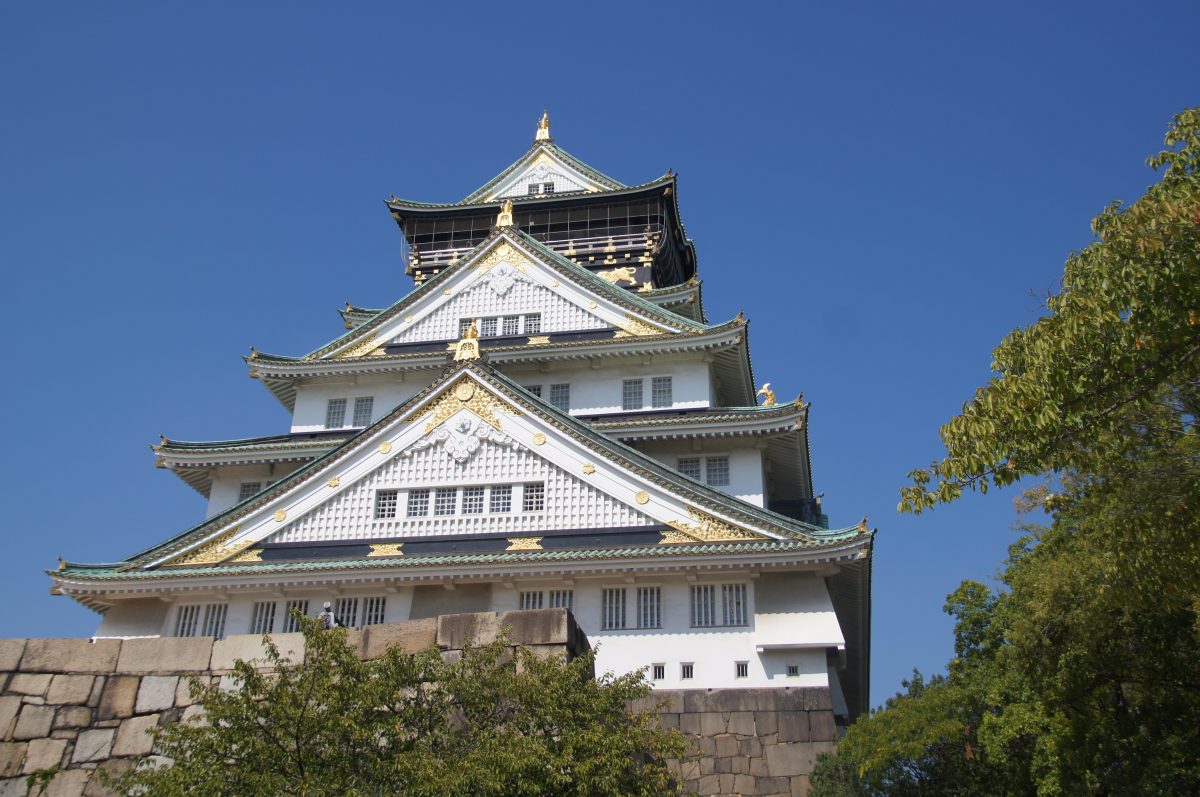
Osaka Castle is convincing from the outside: white walls, green roofs, gold details and massive stone defences. Inside, it becomes a modern museum. The present tower was rebuilt in 1931 and is the third main tower on the site, so you’re not walking through a surviving feudal keep.
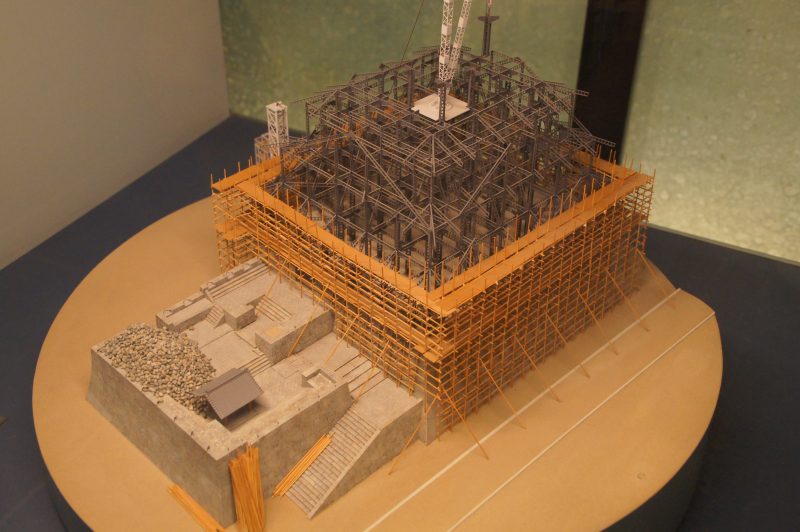
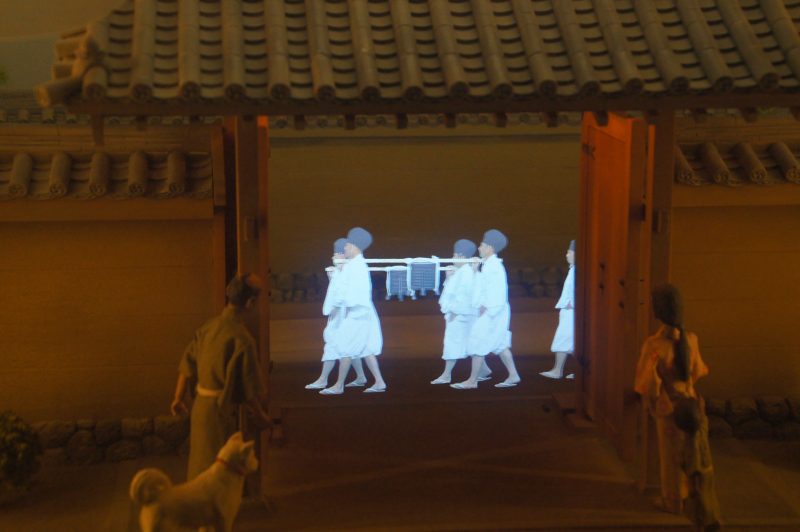
I still found the exhibition interesting. It explains Toyotomi Hideyoshi, the battles surrounding the castle and the building’s repeated destruction and reconstruction. But if your heart’s set on creaking timber, steep original stairs and the sensation of entering an old fortress, save that expectation for Matsumoto Castle or Himeji.
As of September 2026, the official Osaka Castle guide lists the museum tower as open from 9am to 6pm, with last admission at 5.30pm. Adult entry is ¥1,200; high-school and university students pay ¥600 with proof, while junior-high-school pupils and younger children enter free. It closes from 28 December to 1 January. Photography is restricted in some exhibition areas, so pay attention to the signs rather than following my enthusiastic camera instincts.
The tower has lifts, but they don’t make every part of the standard visitor route step-free. The official guide says wheelchair users and visitors who find stairs difficult may use the lift to all floors; ask staff for help. Five wheelchairs are available to borrow, subject to availability. Visitors with a disability certificate and one caregiver enter free.
Walk Shinsaibashi before dinner
From the castle area, take the metro towards Shinsaibashi. The covered shopping arcade runs for about 600 metres and has traded in some form for roughly 380 years. The shops are modern, though, and the crowd felt younger and more fashion-led than the castle visitors we had just left behind.
At the time, Shinsaibashi reminded me a little of Harajuku: fashion, people-watching and the sensation that somebody nearby understood trends far better than I did. That isn’t a difficult competition.
Eat in Dotonbori
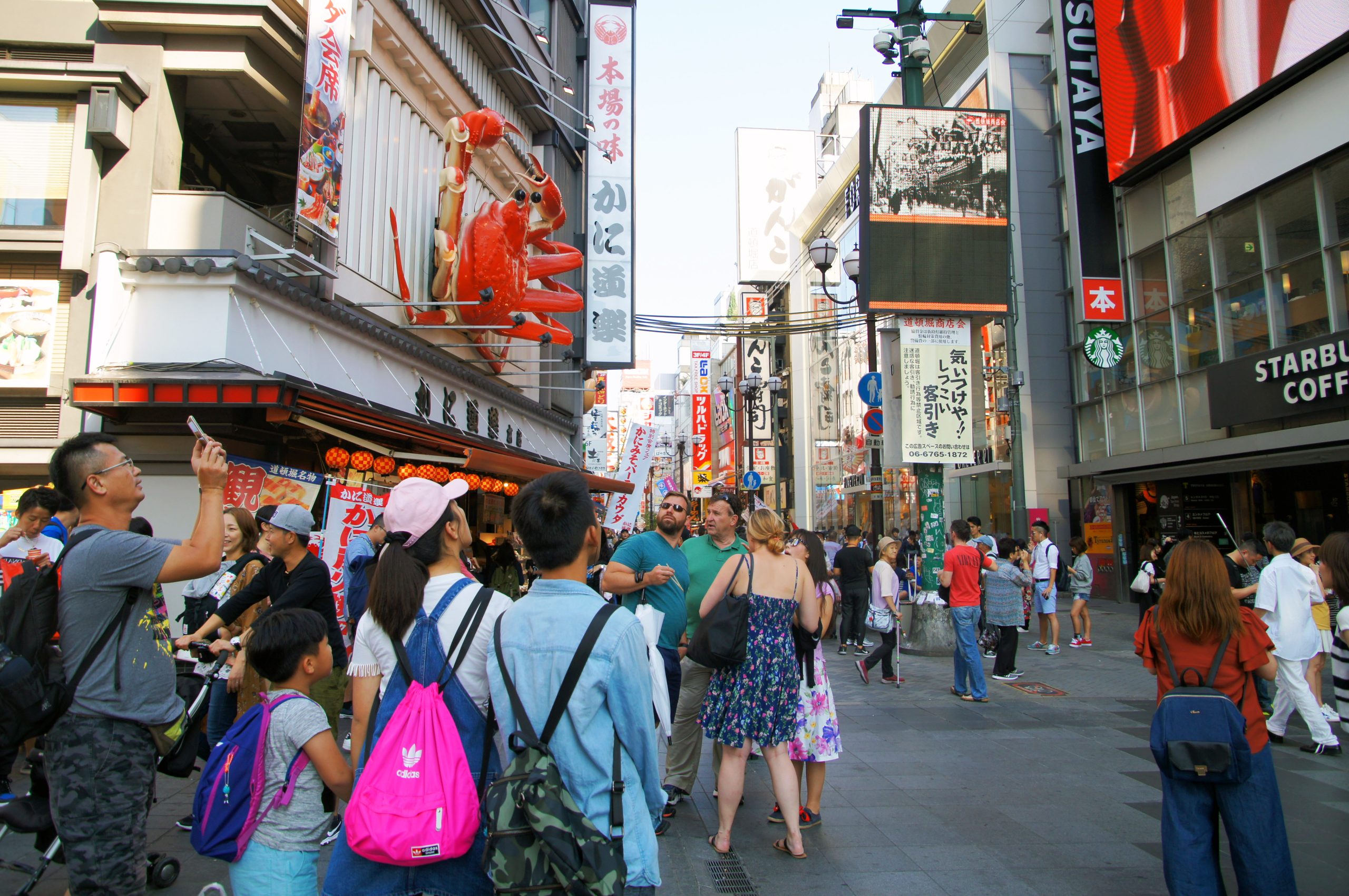
Dotonbori is the Osaka many first-time visitors have in their heads: huge mechanical signs, restaurants squeezed together, reflections on the canal and crowds stopping below the Glico runner. The giant crab sign isn’t subtle. Neither is the neighbourhood. Good!
It’s also the centre of the city’s food theatre, so what did we do? We ate, of course. Osaka is associated with takoyaki, okonomiyaki and the phrase kuidaore—roughly, eating until you ruin yourself. You don’t need to treat that as a financial instruction, but you should arrive hungry and choose somewhere busy rather than somewhere with a menu long enough to qualify as a novella.
We found the food delicious and the whole area gloriously excessive. Also, it’s much better after the signs light up. If your energy is failing, spend it here rather than forcing one more daytime attraction into the afternoon.
Continue through Kuromon Market to Den Den Town
Kuromon Ichiba is a covered food market stretching for about 580 metres, with roughly 150 shops selling seafood, produce, snacks and kitchen goods. Go earlier if you want the market at its most active. We passed through later as part of the walk south, which made it more of a browse than a full food expedition.
From there, continue to Nipponbashi Den Den Town. Its electronics, games, manga and anime shops are often compared with Akihabara in Tokyo. We made the same comparison and found Den Den Town less impressive. That doesn’t make it bad; it simply means I wouldn’t build an Osaka trip around it unless those shops are one of your main interests.
If your feet have submitted a formal complaint by Dotonbori, stop there. Kuromon and Den Den Town are easy additions, not moral obligations.
Where we stayed in Osaka
We booked a double room at Hotel Cordia Osaka for three nights, from 25 to 28 September 2017. Our confirmation shows a total of ¥35,640, excluding the local accommodation tax. That’s a historical price, not a promise that the hotel will politely ignore nine years of inflation.
The hotel is in Edobori, one minute on foot from Higobashi Station Exit 5A according to its current access page, and around five minutes from Yodoyabashi Station Exit 10. It’s quieter than staying beside Dotonbori and convenient for reaching both Umeda and Minami.
For a first trip, choose Namba if food and late evenings matter most, or Umeda if rail connections and day trips are the priority. Higobashi suited us because it sat between them and gave us a calmer place to return to. But it’s a practical base rather than the one you choose because neon pours through the bedroom window.
Getting around Osaka
Use the metro for the long gaps and walk within each neighbourhood. Kaiyukan is in the bay area, Osaka Castle sits east of the central shopping districts, and Dotonbori, Shinsaibashi, Kuromon and Den Den Town form the most walkable sequence.
Osaka Metro accepts major IC cards and contactless bank cards at supported gates. Day-pass prices and coverage change, so compare the current pass with the journeys you will actually make instead of buying one out of holiday instinct. We’ve all purchased a transport pass and then treated it like a challenge from a game show.
Don’t underestimate Osaka Station and Umeda Station. The connected complex is enormous, has several railway operators and can turn “meet by the exit” into the opening chapter of a missing-person enquiry. Use an exit number and pin the location.
Other Osaka places we didn’t visit
Several places appear repeatedly in two-day Osaka itineraries but weren’t part of our trip. I haven’t quietly promoted them into personal recommendations after the event. Instead, these are researched alternatives to consider if one suits you better than Kaiyukan, Den Den Town or a slower evening.
Shinsekai and Tsutenkaku
Shinsekai is the easiest addition to the route we followed because it lies south of Den Den Town. The area is known for its retro streets, kushikatsu restaurants and Tsutenkaku Tower. We didn’t continue that far, but it would make more geographical sense than crossing the city for another isolated sight. Check the official Osaka tourism information for Shinsekai before deciding whether to extend the day.
Namba Yasaka Shrine
Namba Yasaka Shrine is best known for its enormous lion-head stage. The official tourism guide places it around six minutes on foot from Namba Station, so it could fit before Shinsaibashi and Dotonbori without dismantling the whole route. We didn’t visit it, and I would treat it as a short additional stop rather than the reason to build a day around Namba.
Umeda Sky Building
The Floating Garden Observatory spans the 39th, 40th and rooftop levels of Umeda Sky Building. We didn’t go up, but this is the researched alternative I would pair with Grand Front Osaka on the arrival day, particularly if you skip the aquarium or reach the city too late to do it justice. Use the official Osaka tourism listing for current admission and opening hours.
Osaka Museum of History
The Osaka Museum of History is the most natural researched addition after the castle. We didn’t enter it, but it offers more context if the reconstructed tower leaves you wanting a fuller account of the city. Its official site currently lists the permanent exhibition at ¥600 for an adult, open from 9.30am to 5pm and closed on Tuesdays, or Wednesday when Tuesday is a national holiday, as well as from 28 December to 4 January. Check the museum’s current visitor information before you go.
Should you add Himeji, Nara or Kyoto?
Yes, but add them as separate days. We used our third Osaka night for a day trip to Himeji and visited its original castle in persistent rain. That trip deserves its own guide, partly because Himeji isn’t an optional footnote to Osaka Castle and partly because my damp photographs have waited long enough.
Nara is another straightforward option if you’re not already visiting from Kyoto. Our Nara day-trip guide covers the park, temples and the deer, including the point at which a polite wildlife encounter becomes a biscuit-related negotiation.
Kyoto also works by train, but I’d normally give it its own base and at least three days. Our three-day Kyoto itinerary is a better starting point than trying to raid the city between two Osaka meals.
What we would do differently
I would keep the decision to stay in Osaka on arrival. The abandoned Kyoto excursion gave us an easier afternoon and meant we reached Kaiyukan without treating the city as somewhere to leave a suitcase.
I would visit Kuromon Market earlier, when more stalls are active, then return to Dotonbori for the evening. Our route was geographically tidy but not perfectly timed. Maps are excellent at distance and rather less interested in whether the fishmonger has gone home.
Also, I would think harder before returning to the aquarium. Seeing whale sharks so closely was memorable, but “memorable” isn’t the same as uncomplicated. If animal welfare is a concern for you, read Kaiyukan’s current information and independent conservation commentary before deciding.
Two days in Osaka FAQ
Are two days in Osaka enough?
Two days is enough for a first Osaka itinerary covering the bay and aquarium on one day, then Osaka Castle, Shinsaibashi, Dotonbori, Kuromon Market and Den Den Town on the other. Add another day if you want Universal Studios Japan, more museums or a slower food-focused trip.
Is Osaka worth visiting if you are also going to Kyoto?
Yes. Kyoto offers a stronger concentration of historic temples and traditional streets, while Osaka gives you louder evenings, a more casual food culture, major shopping districts and useful rail connections. The cities are close, but they don’t feel interchangeable.
Is Osaka Castle original?
No. The current Osaka Castle tower was completed in 1931 and operates as a modern museum. It is the third main tower on the site. The grounds, stone walls, moats and surviving historic structures still make the wider castle complex worth visiting.
How much does Osaka Castle cost?
Adult entry to Osaka Castle’s main tower is ¥1,200 as of September 2026. High-school and university students pay ¥600 with proof, and children of junior-high-school age or younger enter free. Visitors with a disability certificate and one caregiver also enter free.
How much is Osaka Aquarium Kaiyukan?
Kaiyukan uses variable pricing. When its official live calendar was checked on 24 September 2026, adult tickets on the displayed dates cost ¥2,800 or ¥2,900 depending on the date. Check your date on the official calendar because both admission and opening hours can vary.
Where should a first-time visitor stay in Osaka?
Stay around Namba for Dotonbori, food and late evenings, or Umeda for major train connections and day trips. We stayed near Higobashi Station at Hotel Cordia Osaka, a quieter compromise between the two areas.
Can you visit Himeji as a day trip from Osaka?
Yes. Himeji is an easy independent rail day trip from Osaka and its original castle makes a strong contrast with Osaka Castle’s reconstructed museum tower. Give it a separate day rather than trying to bolt it onto this two-day city route.
Our final verdict
Osaka worked because it didn’t resemble the cities around it. It was less ceremonious than Kyoto, less polished than Tokyo in places and much more willing to announce dinner with a moving crab the size of a car.
Two days gave us the aquarium and bay, the castle, the long sweep south through Shinsaibashi and Dotonbori, and enough food to understand why Osaka takes the subject seriously. I would happily return for the neighbourhoods we missed. I would just make fewer plans for the arrival afternoon and show more respect to the opening hours at Kuromon Market.
But would I keep Osaka in a first Japan itinerary? Absolutely! Stay for the evening, not merely the connection.