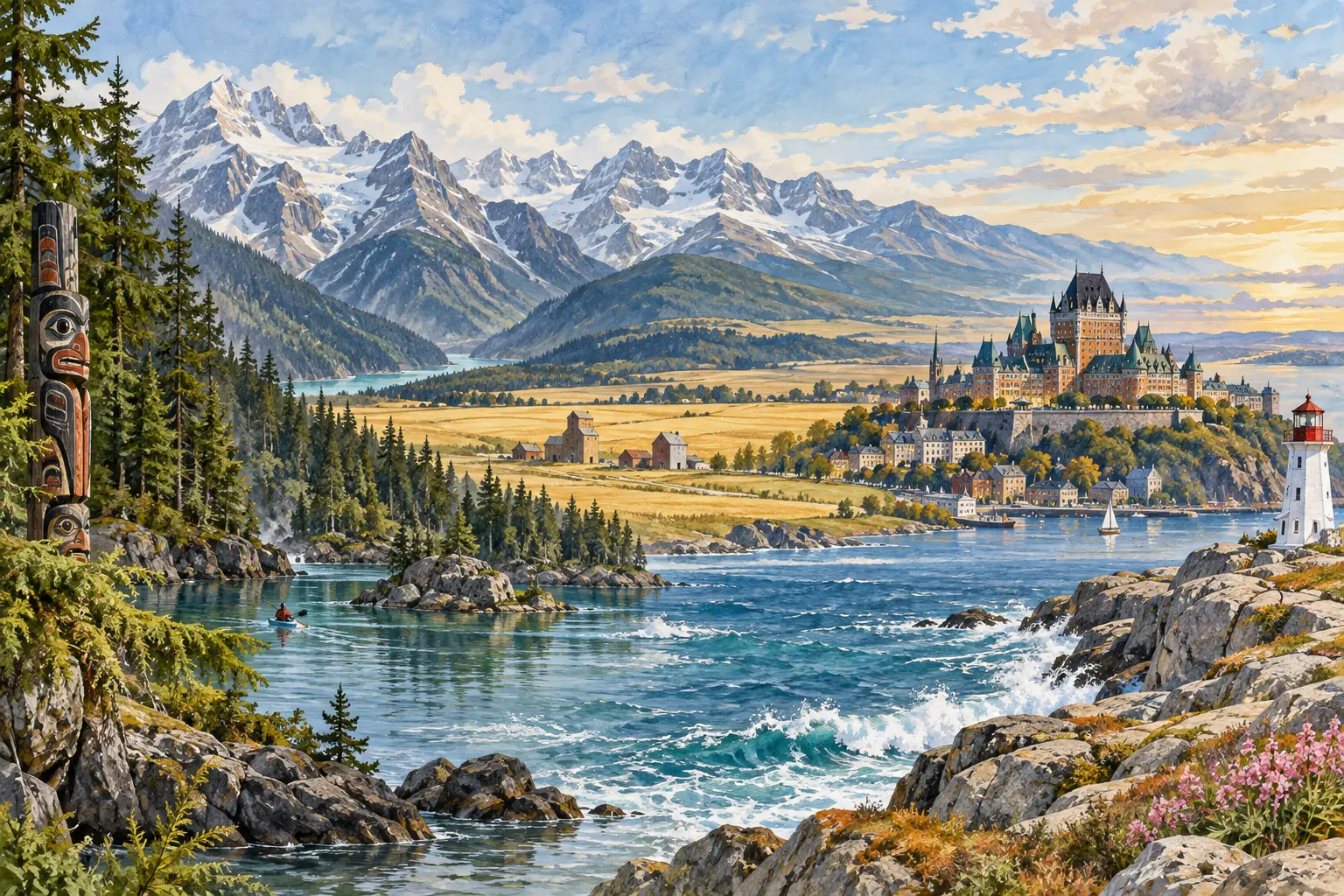
Canada is too large and varied to reduce to a single kind of holiday. A journey might involve Atlantic fishing villages, the historic streets of Québec, prairie skies, Rocky Mountain lakes or the rainforests of British Columbia—and the distances between them are enormous.
This researched guide brings together 30 of the best places to visit and experiences to consider across Canada. It updates an older guest article while preserving the destinations that made that version useful. I have not personally completed every experience listed, so this should be treated as inspiration for planning rather than a first-hand account of the entire country.
Opening arrangements, seasonal access and safety rules can change. Check official provincial, national-park and attraction information before travelling.
Quick guide to Canada’s regions
- Atlantic Canada: beaches, lighthouses, seafood and compact waterfront cities.
- Québec and Ottawa: historic architecture, museums, French-speaking culture and major urban destinations.
- Ontario: Toronto, islands and Niagara Falls.
- Manitoba and Saskatchewan: prairie landscapes, wildlife and important historic sites.
- Alberta: Calgary and the Canadian Rockies.
- British Columbia: Pacific cities, islands, rainforest, mountains and the Okanagan.
Prince Edward Island
1. Walk along Cavendish Beach
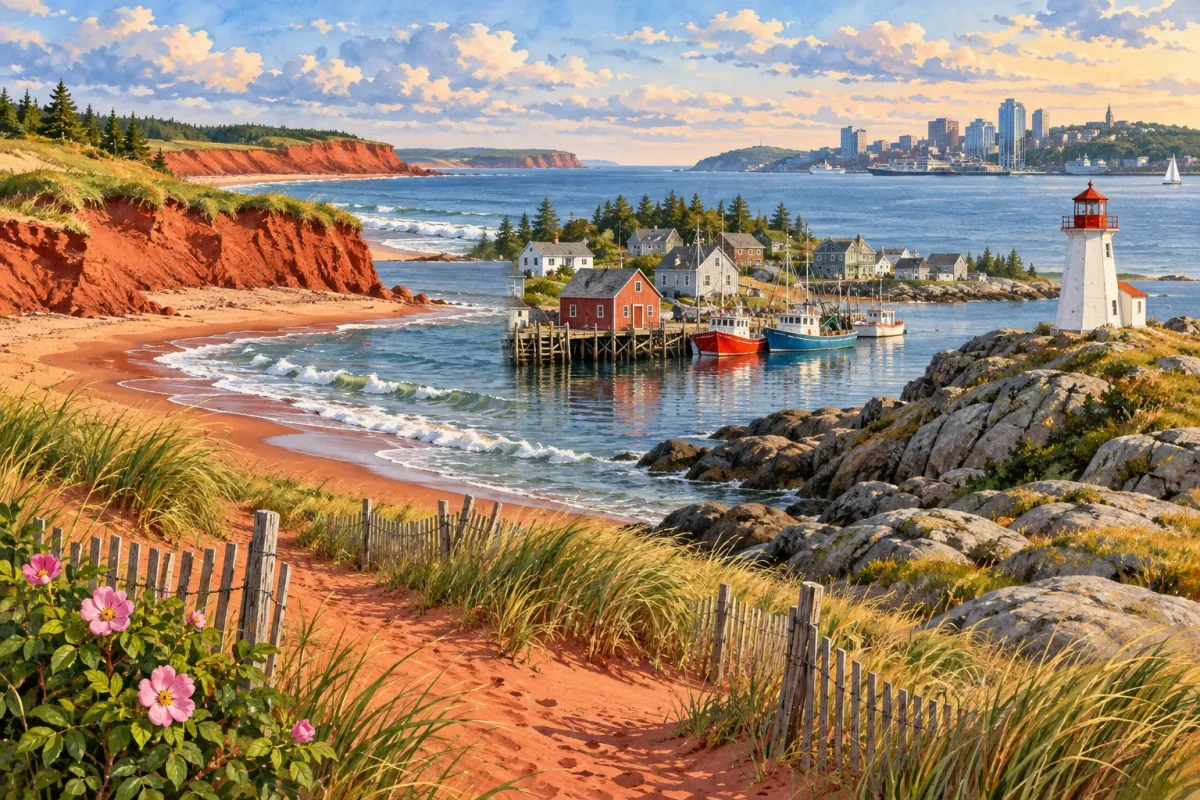
Cavendish Beach lies within Prince Edward Island National Park and is known for red sandstone cliffs, dunes and a broad sandy shore. The landscape is fragile, so use designated paths and boardwalks rather than walking across protected dunes. The wider Cavendish area is also closely associated with Anne of Green Gables.
2. Explore Charlottetown
Prince Edward Island’s compact capital makes a natural base for the province. Its waterfront, walkable centre and historic buildings can be explored without treating the city merely as a stop on the way to the beach. Charlottetown also has an important place in the story of Canadian Confederation, although that history deserves more nuance than a single nickname can provide.
Nova Scotia
3. Try Nova Scotia seafood
Seafood is part of the province’s coastal identity. Lobster, scallops, mussels and fish appear widely, but the most worthwhile experience is not necessarily the most elaborate restaurant. Look for businesses that explain where their seafood comes from and remember that availability and price vary with season and catch.
4. Visit the Annapolis Valley wine region
The Annapolis Valley has developed a recognised cool-climate wine industry. A vineyard visit can be combined with the valley’s orchards and rural landscape, but choose transport responsibly if tasting. The old article recommended one named commercial vineyard; the updated guide keeps the regional experience without presenting a business as a personal endorsement.
5. Follow Nova Scotia’s lighthouse coast
Peggy’s Cove is the province’s most famous lighthouse setting, but it is only one of many along the Atlantic coast. Stay off wet black rocks at Peggy’s Cove: waves can sweep across exposed granite unexpectedly. Quieter lighthouse routes elsewhere may offer a less crowded way to understand Nova Scotia’s maritime landscape.
6. Stroll along Halifax Waterfront
Halifax’s waterfront brings together harbour views, museums, food and links to the city’s maritime history. It is easy to explore on foot and works particularly well as an introduction to Nova Scotia before travelling into smaller coastal communities.
Québec and Ottawa
7. Wander through Old Québec
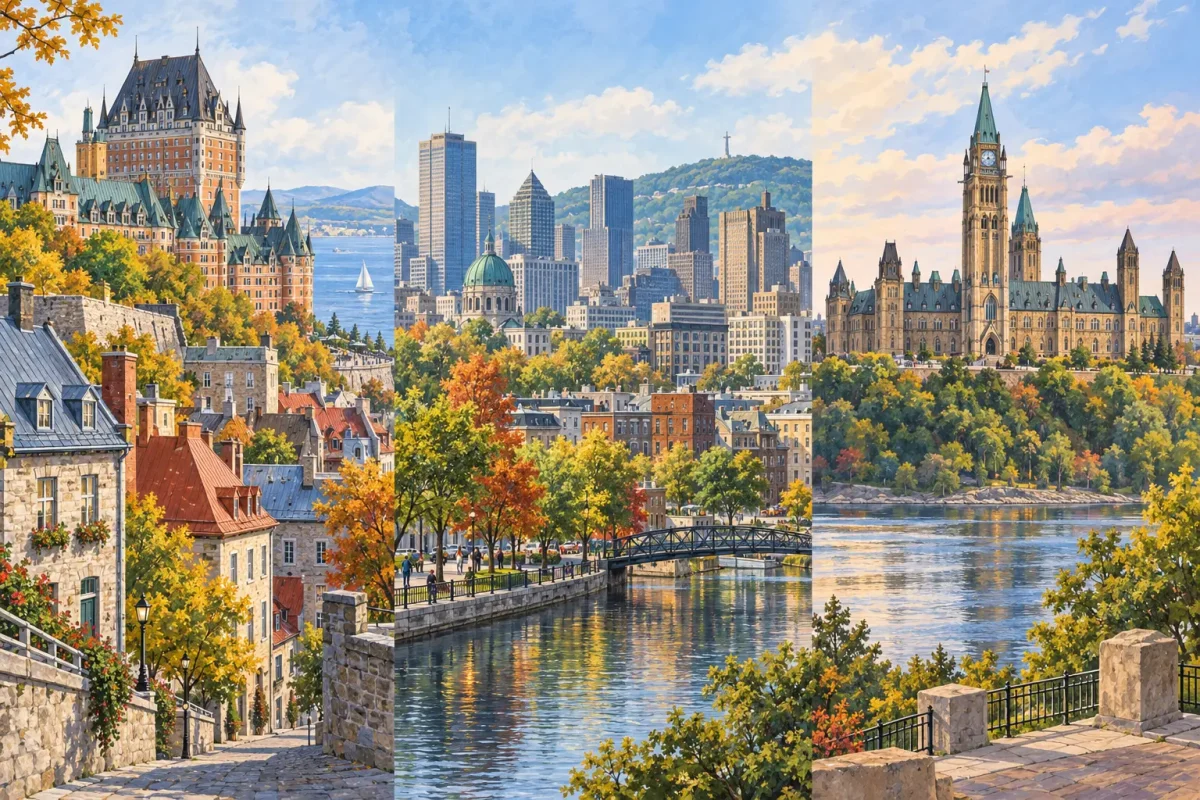
Old Québec is a fortified historic district overlooking the St Lawrence River. Its streets, defensive walls and dramatic upper and lower town make it one of Canada’s most distinctive urban destinations. Its attractive architecture is inseparable from colonial history, so museums or a knowledgeable guide can add valuable context.
8. Experience Montréal
Montréal combines historic districts with contemporary neighbourhoods, galleries, markets and a food culture influenced by many communities. Rather than trying to “do” the city through a short landmark checklist, allow time for Old Montréal, Mount Royal and at least one neighbourhood beyond the centre.
9. Visit Canada’s capital, Ottawa
Ottawa is in Ontario, not Québec—an error in the old article that has now been corrected. Parliament Hill, national museums, the Rideau Canal and the city’s setting on the Ottawa River make it a worthwhile destination in its own right, rather than simply a pause between Montréal and Toronto.
Ontario
10. Explore Toronto
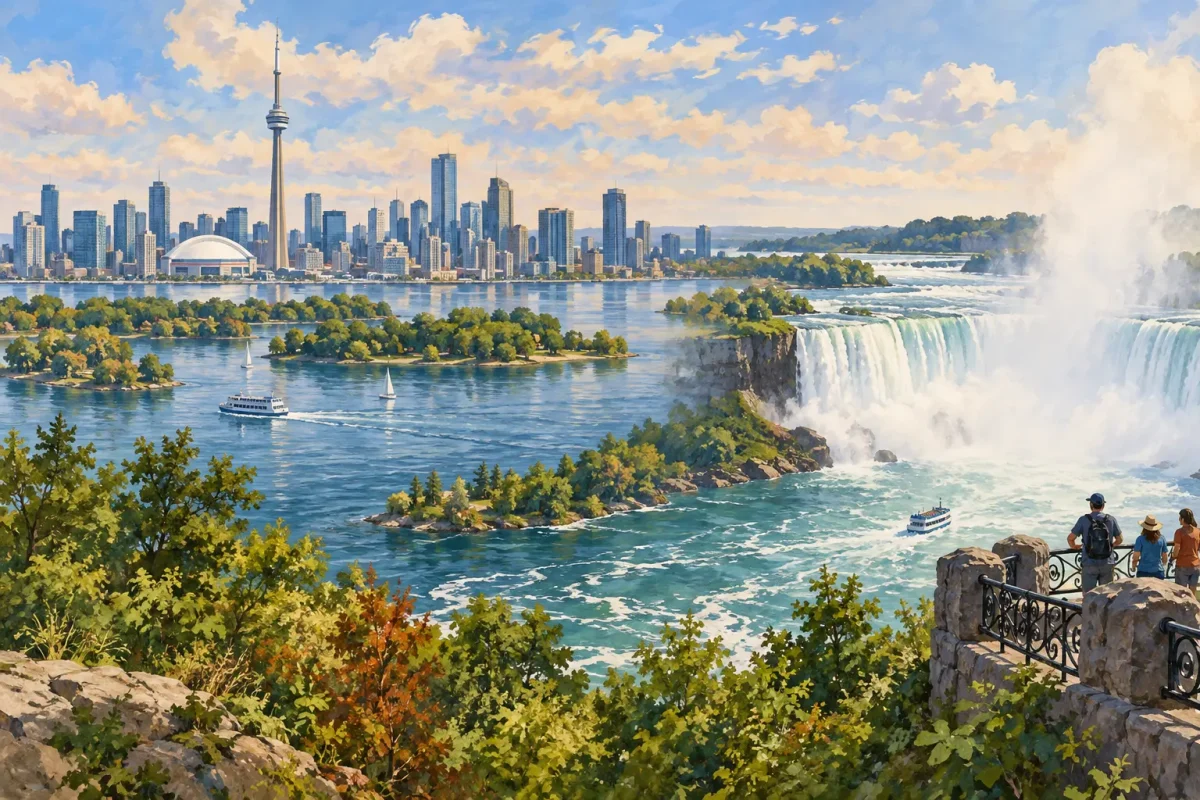
Toronto is Canada’s largest city and one of its most culturally diverse. The waterfront, neighbourhoods, museums, food markets and skyline provide more than enough for several days. Build an itinerary around a few areas rather than repeatedly crossing the city.
11. Consider the CN Tower EdgeWalk
The CN Tower’s EdgeWalk is a harnessed outdoor experience around the top of the tower’s main pod. It suits travellers actively seeking a height-based challenge, but eligibility, weather restrictions and prices must be checked directly. The observation levels provide the view without the exposed walk.
12. Take the ferry to the Toronto Islands
A short ferry journey leads to a quieter chain of islands with paths, beaches and views back towards Toronto’s skyline. Conditions vary by season, and flooding or maintenance can affect particular areas, so check local information before relying on one attraction or route.
13. See Niagara Falls responsibly
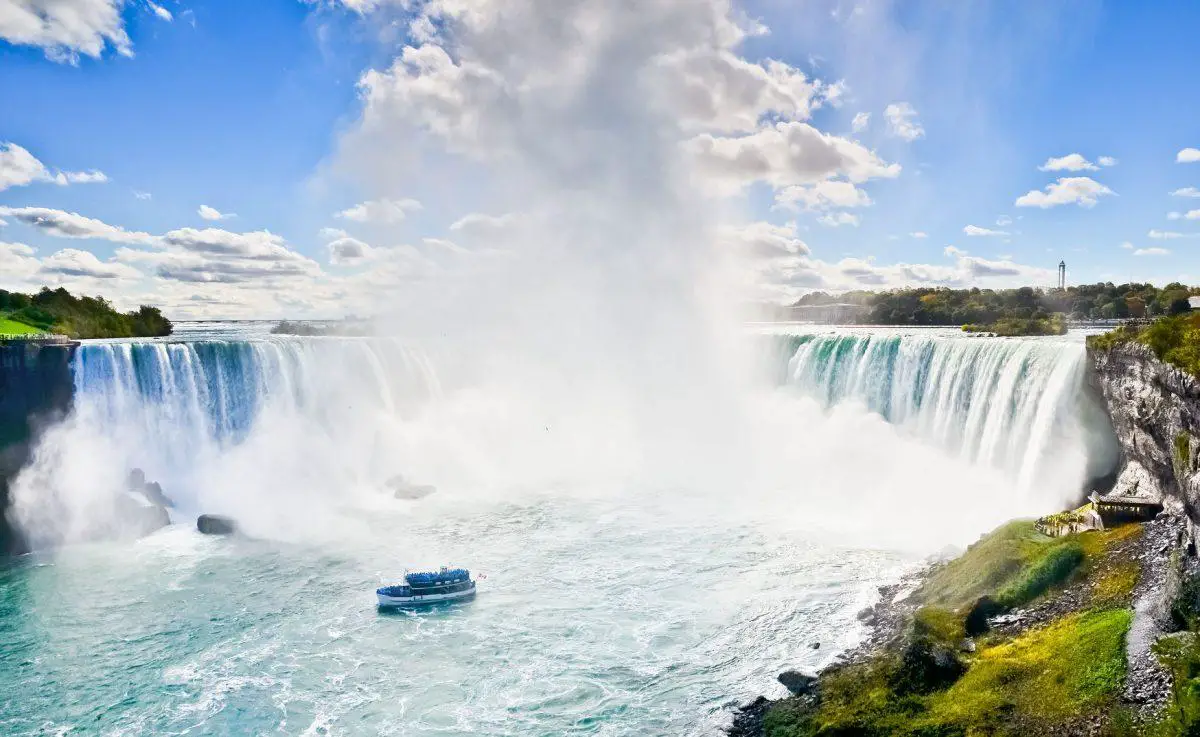
Niagara Falls is not a single waterfall but a group spanning the Canada–United States border. Viewpoints, boat trips and riverside walks provide different perspectives. Stay behind barriers and avoid treating the surrounding commercial development as though it represents the entire Niagara region.
Manitoba
14. Watch polar bears near Churchill
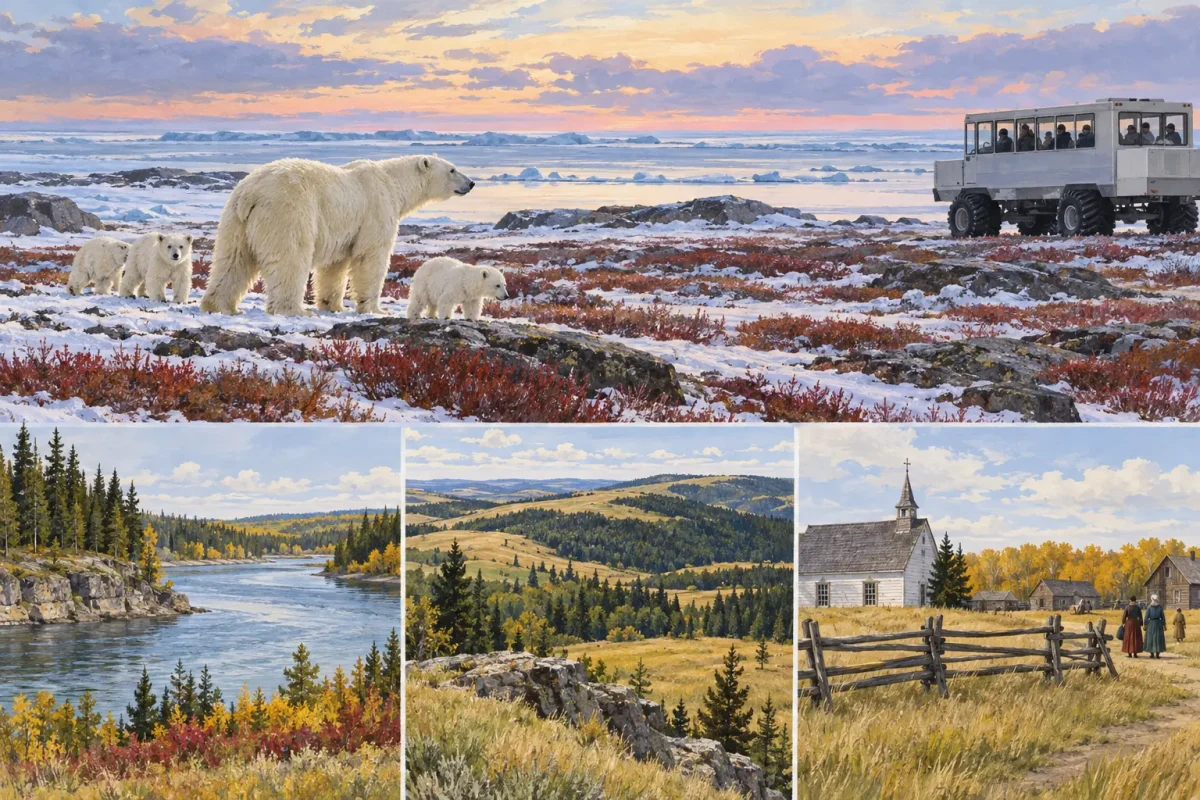
Churchill is internationally known for seasonal polar-bear viewing. Choose an established operator that keeps a safe distance and follows wildlife guidance. The animals should be observed, never approached or “stalked”—wording used in the original article that has been deliberately removed.
15. Discover Selkirk and the Red River
Selkirk is associated with the Red River and channel catfish angling. Anyone planning to fish needs to check Manitoba licensing, seasons and local rules. Travellers uninterested in angling may still use the area to learn about the river landscape and communities north of Winnipeg.
Saskatchewan
16. Understand the remoteness of Uranium City
Uranium City is a very remote northern community with a complex mining history. It is not an ordinary road-trip stop and should not be promoted casually as an abandoned “creepy” attraction. Access, accommodation and local expectations require careful research and respectful planning.
17. Reconnect with nature in Cypress Hills
Cypress Hills rises above the surrounding prairie and crosses the Alberta–Saskatchewan border. Its forests, trails and dark skies provide a surprising contrast to common ideas about the Prairies. Weather and road conditions can change, particularly outside the main summer period.
18. Visit Batoche National Historic Site
Batoche preserves a place central to Métis history and the North-West Resistance of 1885. It should be approached as a landscape of living cultural significance, not simply an atmospheric old settlement. Use the site’s interpretation to understand the people and events connected with it.
Alberta
19. Spend time in Calgary
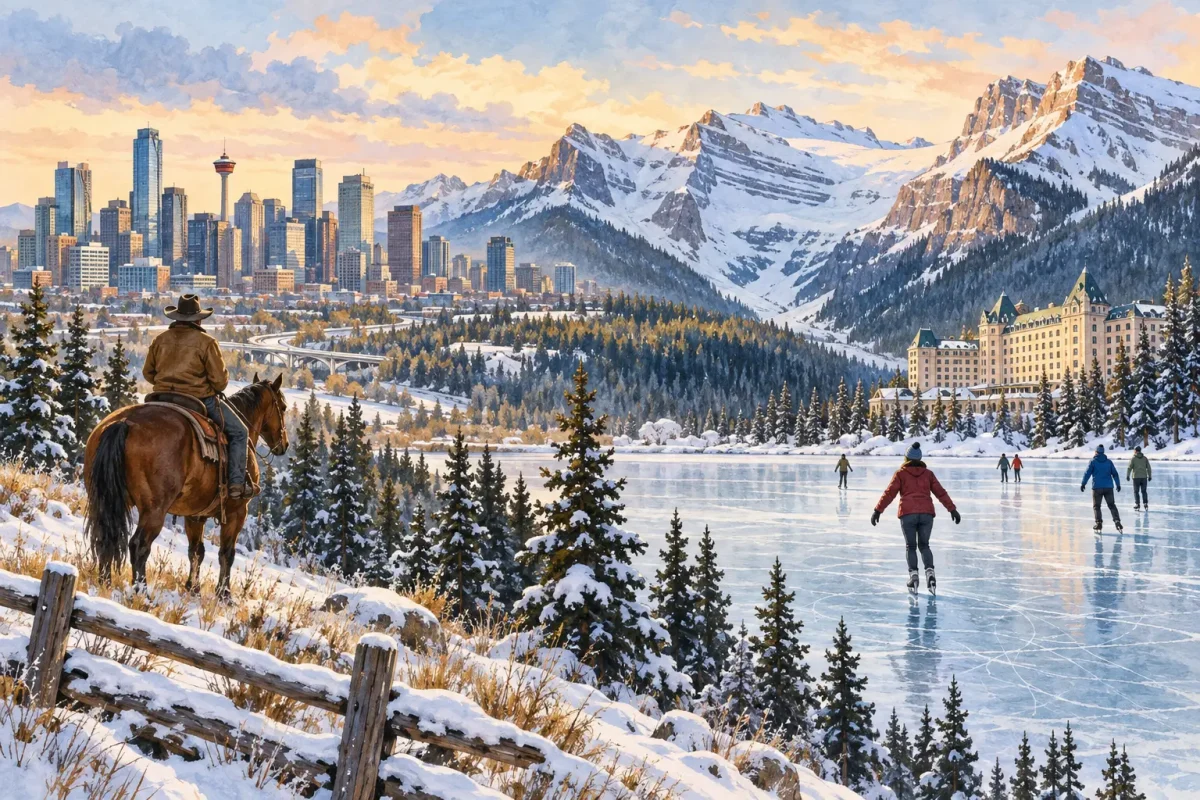
Calgary is more than a gateway to Banff. Its river paths, museums, neighbourhoods and food scene justify time before heading west. The city can also be a practical transport base, although mountain conditions should be checked separately.
20. Experience the Calgary Stampede
The Calgary Stampede is a major annual event combining rodeo, exhibitions, entertainment and western heritage. It attracts large crowds and requires advance planning. Visitors may also wish to consider animal-welfare questions and choose which parts of the programme align with their values.
21. Explore Banff National Park
Banff’s mountain scenery attracts very high visitor numbers. Plan accommodation and transport early, stay on marked trails and follow wildlife-distance rules. The town of Banff is convenient, but the national park’s value lies in the protected landscape rather than shopping alone.
22. See Lake Louise in different seasons
Lake Louise is famous for turquoise summer water and a snow-covered winter setting. Ice conditions must be officially assessed before skating; appearance alone cannot establish safety. Access and parking systems can also change, making current Parks Canada guidance essential.
British Columbia
23. Enjoy city life in Vancouver
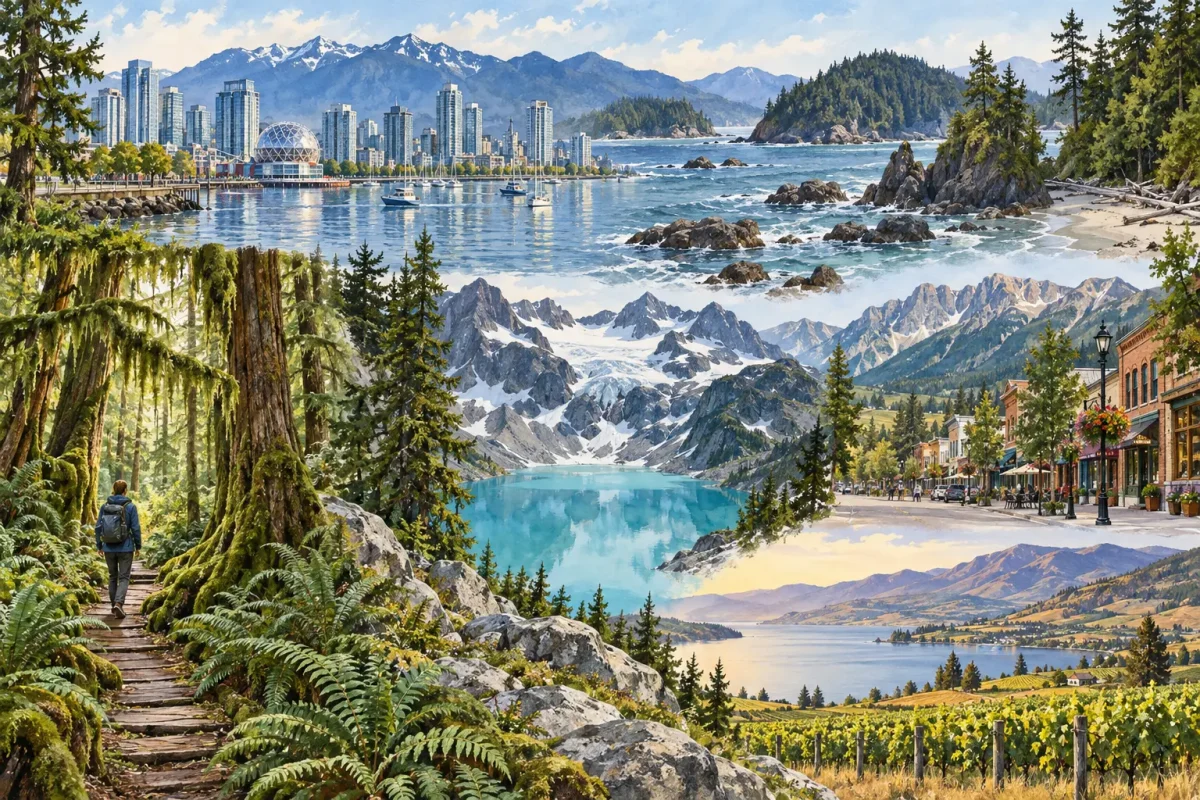
Vancouver combines an urban waterfront with immediate access to forests, mountains and the Pacific coast. Stanley Park, neighbourhood food and cultural institutions can fill several days. Allow for rain and avoid trying to combine too many distant regional excursions with a brief city stay.
24. Explore Vancouver’s brewing scene
Vancouver and neighbouring communities developed a substantial craft-brewing scene. Breweries change more quickly than landscapes, so use recent information and arrange public transport, walking routes or a guided tour rather than driving after tastings.
25. Take a ferry to Vancouver Island
Vancouver Island is large enough to be a destination rather than a quick add-on. Victoria, smaller coastal towns, beaches and forests require choices about time and distance. Ferry reservations and sailing conditions should be checked directly.
26. Walk through a temperate rainforest
British Columbia’s coastal temperate rainforest contains enormous trees, mosses and complex ecosystems. Use boardwalks and established trails, respect Indigenous territories and do not describe accessible visitor sites as untouched wilderness when they have long cultural histories.
27. Hike towards Wedgemount Lake
Wedgemount Lake near Whistler is reached by a demanding mountain route involving considerable elevation gain. It is not a casual lakeside stroll. Hikers need appropriate experience, equipment and current trail information, and must be prepared to turn back.
28. Discover Fernie
Fernie developed through coal mining and is now also known for mountain recreation. Its historic centre adds depth to a visit otherwise focused on skiing, cycling or hiking. Activities, trail access and avalanche conditions are seasonal.
29. Learn about Fraser River sturgeon
The Fraser River supports white sturgeon, a long-lived species subject to conservation and fishing controls. If considering an angling trip, choose an operator following current licensing, handling and catch-and-release rules. Wildlife welfare should take priority over a trophy photograph.
30. Visit Kelowna and the Okanagan Valley
Kelowna sits beside Okanagan Lake in a region associated with orchards, vineyards and outdoor recreation. Summers can be hot, while wildfire smoke and closures may affect travel in some years. Check emergency information and avoid visiting restricted areas.
How to plan a trip across Canada
Canada’s scale is the most important planning fact. Halifax, Toronto, Calgary and Vancouver should not be treated as neighbouring stops. Most travellers will have a better trip by concentrating on one region or combining a small number of cities using flights or a carefully chosen rail or road route.
- One week: choose one province or a compact pairing such as Montréal, Ottawa and Toronto.
- Two weeks: explore one broad region, such as Atlantic Canada, Québec and Ontario, Alberta’s Rockies, or Vancouver and Vancouver Island.
- Longer journeys: use internal flights or accept that substantial time will be spent travelling.
When is the best time to visit Canada?
There is no single best month for the entire country. Summer generally offers the widest access to hiking and coastal travel, but also brings crowds and, in some western regions, possible wildfire disruption. Autumn colour varies by latitude and year. Winter supports skiing and other cold-weather experiences but can introduce severe conditions and reduced services.
Choose dates according to the exact region and activity, then check official forecasts, park notices and transport updates shortly before travelling.
Frequently asked questions
What are the best places to visit in Canada for a first trip?
That depends on the experience wanted. Québec City and Montréal suit culture and architecture; Toronto and Niagara combine a major city with a famous natural landmark; Banff and Lake Louise provide accessible Rocky Mountain scenery; Vancouver combines city and coast.
Can you travel across Canada by train?
Passenger rail connects some major cities and offers long-distance routes, but it does not provide convenient access to every destination in this guide. Compare journey times carefully and treat scenic long-distance rail as part of the experience rather than simply the fastest transport.
Is Canada easy to visit without driving?
Major cities can be visited without a car, and the Québec City–Montréal–Ottawa–Toronto corridor is comparatively well connected. Remote parks, prairie sites and smaller coastal communities require more planning, tours or hired transport.
Explore more inspiration in our North America travel guides, browse all destinations, or use our step-by-step itinerary-planning guide.
This is a researched planning guide rather than a claim of first-hand experience at every destination. Information was reviewed against established material available before January 2025. Opening, access, prices, wildlife rules, fire conditions and transport arrangements require current official verification. Replacement images are original AI-generated editorial illustrations, not documentary photographs.


All these places are great. Will have to create time to visit all of them. Fabulous photos.
It’s hard to choose which to visit. I’ve been to Quebec and loved it! Pacific rim national forest looks like a good one to explore:)
I’ve been to Toronto and Niagara Falls and absolutely loved it! If you ever get to go, I’d recommend visiting Niagara-on-the-Lake too as it’s such a beautiful little town :)