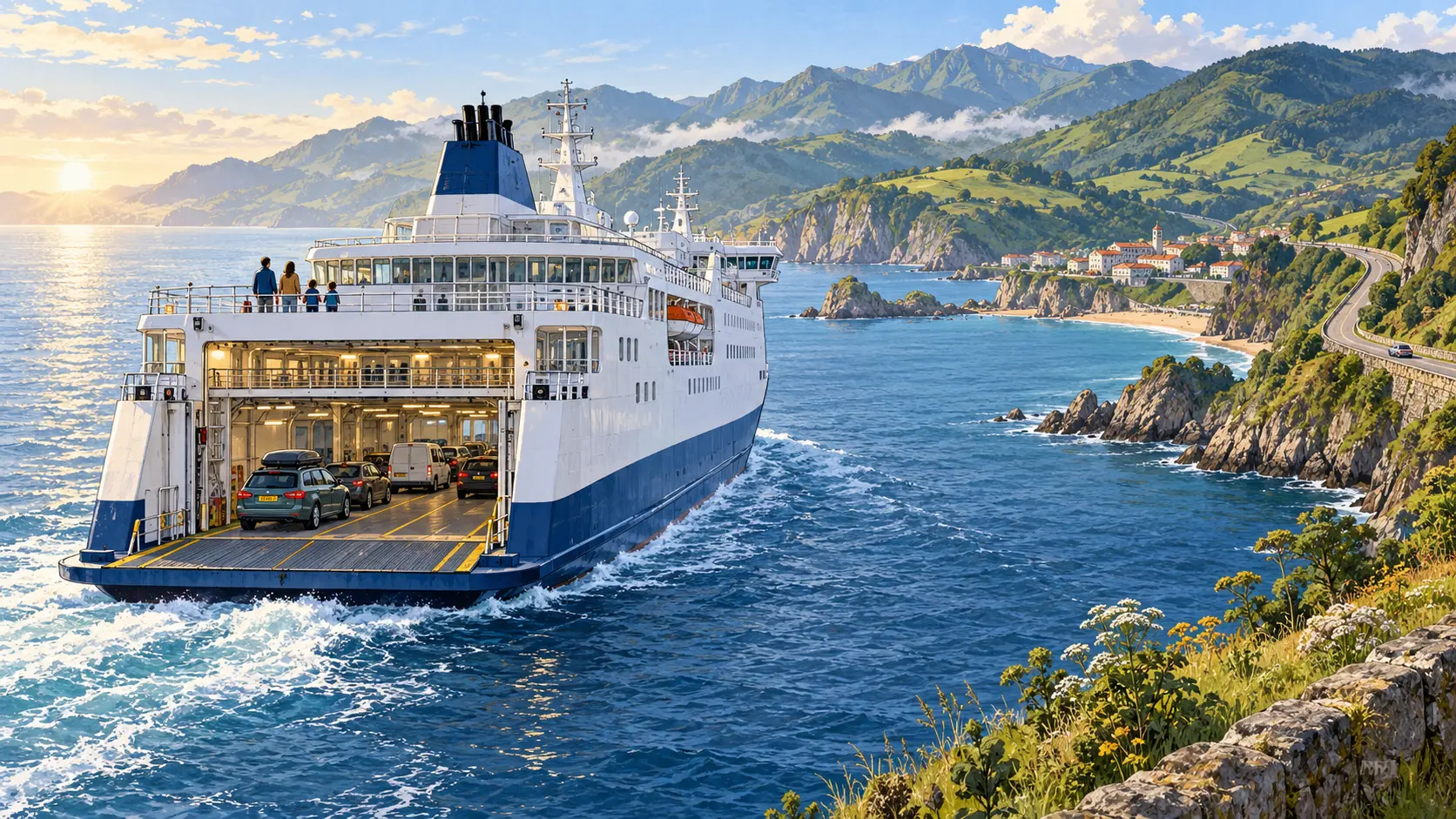
Flying may be the obvious way to reach Spain from Britain, but it is not always the most useful one. If you want to take your own car, carry awkward holiday equipment or turn northern Spain into a proper road trip, sailing across the Bay of Biscay can make far more sense than squeezing everything into airline baggage and hiring another vehicle on arrival.
That does not mean the ferry is automatically cheaper, quicker or more relaxing. The crossing is long, the sea can be lively and you still have to reach the British port. The honest question is not “Is the ferry better than flying?” but “Does it suit this particular trip?”
This article was originally produced in collaboration with Brittany Ferries in 2017. The company supplied information for the original version; this substantially rewritten guide is not a claim of a current partnership. Routes, ships, timetables, prices and onboard facilities can change, so check them directly before booking.
Is taking a ferry to Spain with your car worth it?
It can be an excellent option when the car is part of the holiday rather than merely transport to your accommodation. Northern Spain lends itself particularly well to a road trip: Bilbao and Santander provide access to the Basque Country, Cantabria, Asturias and the mountains and coastline of the north.
The argument becomes weaker if you only want a short break in a city with good public transport, live far from the departure port or are heading straight to southern Spain. A flight or a different combination of train and car hire may then use your holiday time more effectively.

UK to Spain ferry routes
Direct sailings from Britain have traditionally connected southern English ports with Santander and Bilbao. The precise combination of ports, sailing days and ships varies, so do not plan around an old route list. Use the operator’s live timetable for your dates.
- Compare the distance from home to the British port.
- Choose the Spanish port that best suits your itinerary.
- Check the crossing duration, arrival time and number of nights onboard.
- Make sure the quote includes the correct vehicle and cabin type.
A cheaper sailing can become a false economy if it adds several hours of driving at both ends. Compare the complete door-to-door journey, not just the ticket.
How long does the ferry take?
These are long-distance overnight crossings rather than quick Channel hops. Duration depends on the route, ship and timetable, while weather can affect arrival. Treat the sailing as part of the holiday and avoid planning an ambitious onward drive immediately after docking.
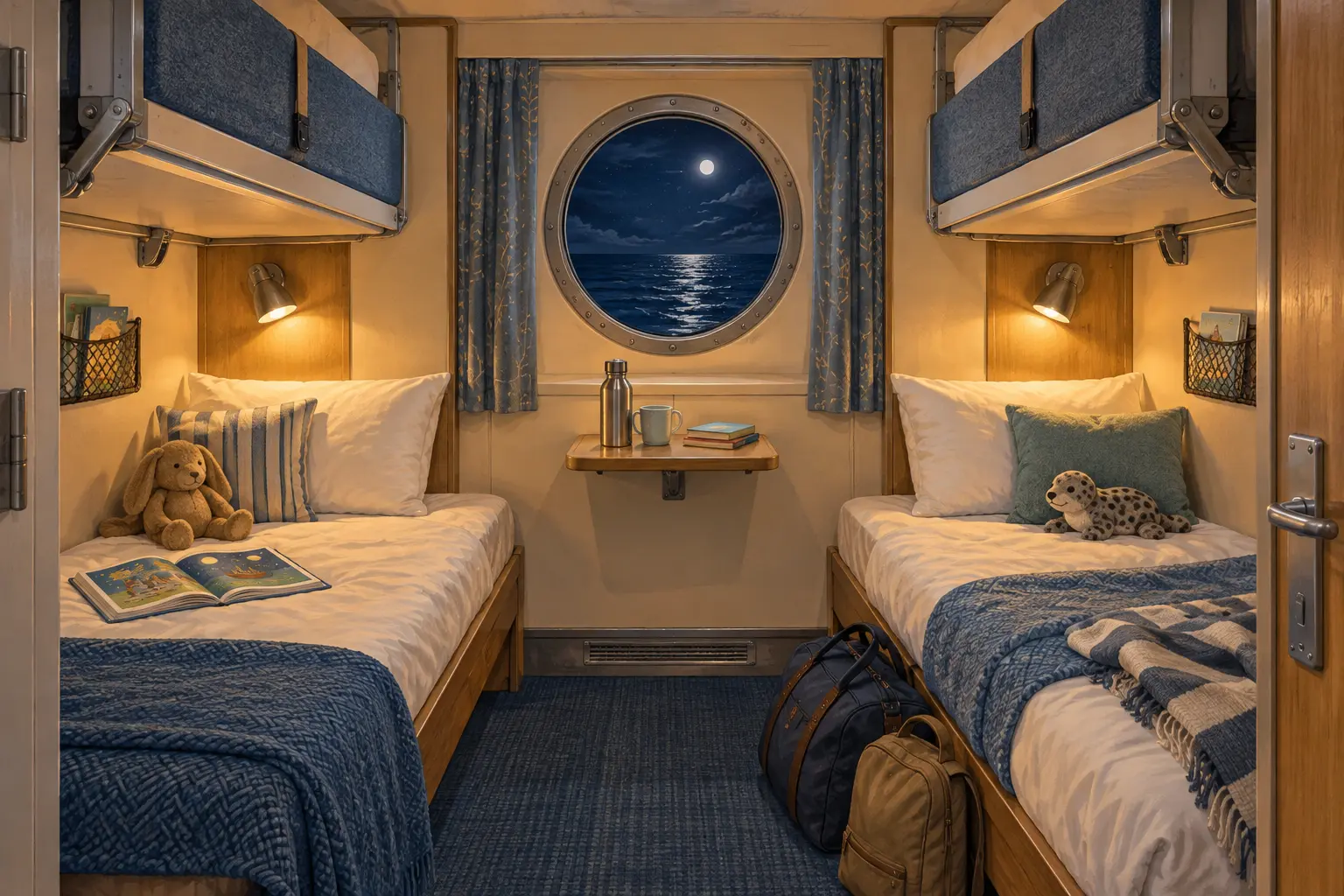
With children, a cabin gives everyone a better chance of arriving ready for the road. It also provides a private base for naps, bags and the astonishing collection of small objects children apparently require for one night away from home.
Does taking your car save money?
Sometimes, but not automatically. Ferry prices vary by season, demand, vehicle dimensions, passenger numbers and cabin choice. Compare the full costs:
- ferry ticket, vehicle charge and cabin;
- fuel or charging, tolls, parking and overnight stops;
- flights for every traveller plus bags, seats and airport transport;
- car hire, insurance, additional drivers and child seats.
Longer family holidays may favour taking the car because flight and hire costs multiply with passengers and days. A couple on a short break may reach the opposite conclusion. Price both options for your real dates.
Advantages of taking your own car
More useful luggage space
A car gives you more freedom than airline baggage allowances, particularly for pushchairs, camping equipment, bicycles and bulky family supplies. It is not literally unlimited: everything must fit safely, remain within the vehicle’s permitted weight and comply with the operator’s conditions.
A familiar vehicle
You avoid the hire desk, unfamiliar controls and some uncertainty around damage deposits. Families can bring correctly fitted child seats they already know how to use.
Freedom to explore northern Spain
Bilbao or Santander can be the first stop rather than somewhere to escape immediately. The Basque Country, Cantabrian coast, Picos de Europa and Asturias reward slower travel. If you are going much farther south, build in realistic stops instead of treating Spain as one enormous motorway.
Disadvantages to consider
- Seasickness: the Bay of Biscay can be rough.
- Time: the crossing and port journeys consume a meaningful part of a short holiday.
- Cabin cost: comfortable accommodation can materially change the price.
- Driving fatigue: a long onward journey is unwise after poor sleep.
- Left-hand traffic: your right-hand-drive vehicle will be travelling on the right.
Documents for taking a UK car to Spain
Rules change, so work through the official GOV.UK driving-abroad checklist and current Spain travel advice before departure.
- Valid driving licence and passenger travel documents
- Vehicle log book, or the correct authorisation for a leased, hired or company vehicle
- Valid insurance and the evidence required abroad
- Appropriate European breakdown cover
- Any required vehicle identifier and safety equipment
If the car is leased, financed, hired or supplied by an employer, obtain permission and the appropriate vehicle-on-hire document well in advance.
Driving your British car in Spain
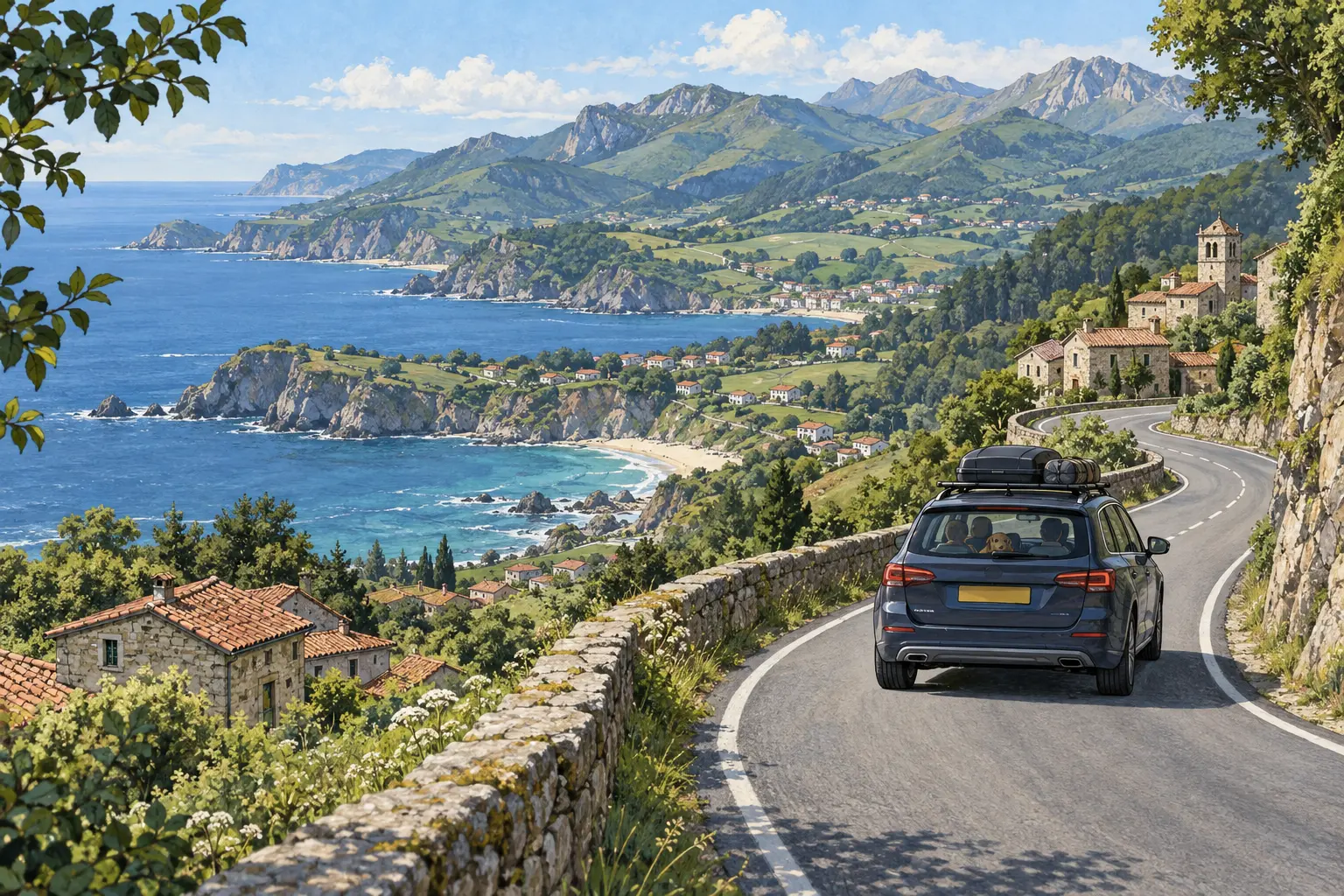
Drive on the right and take extra care at junctions, roundabouts and after quiet stops, when habit can briefly take over. Check Spanish requirements for speed limits, seat belts, child restraints, mobile-phone use, low-emission zones and equipment carried in the vehicle. Some cities may require foreign vehicles to be registered before entering restricted areas.
Keep luggage out of sight and be cautious if someone flags you down with a story about damage or a mechanical problem. If you need to inspect the vehicle, choose a busy, well-lit public place such as a service station.
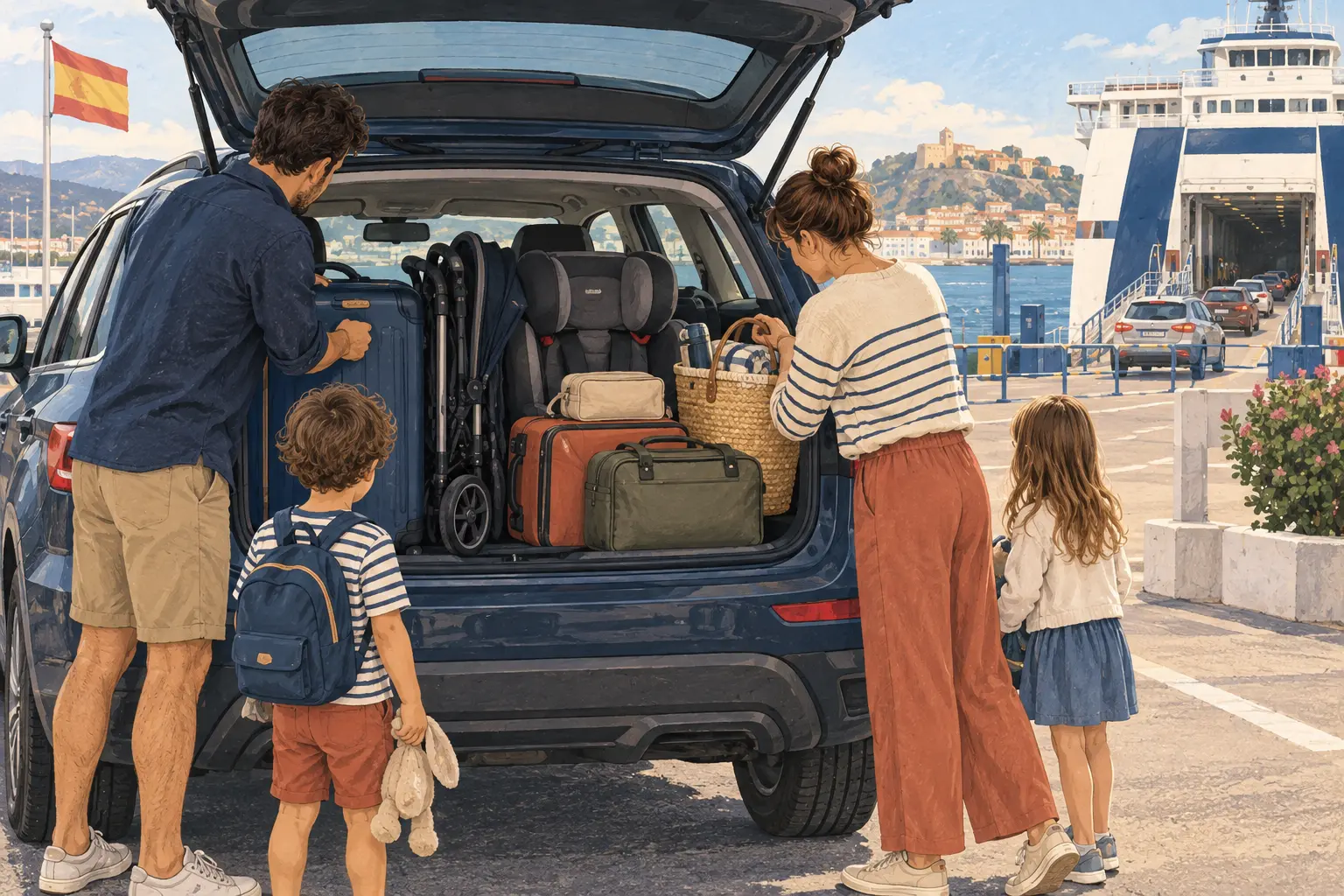
Taking children on the ferry
Pack overnight items, medication, chargers, changes of clothes and children’s essentials separately before reaching the port. Access to vehicle decks is normally restricted during the crossing, so assume anything left in the car is unavailable until arrival.
- Bring entertainment that works without internet access.
- Keep essential medication with you.
- Photograph your deck, stairwell and parking-location details.
- Supervise children closely on outside decks.
Can you take pets?
Pet travel can be a strong reason to choose the ferry, but pet-friendly cabins and kennel spaces are limited. Animal-travel documents have changed since the original article, so check both the operator’s conditions and government guidance before booking.
A sensible planning sequence
- Decide whether northern Spain is part of the holiday or simply the arrival point.
- Compare live sailings for your dates and vehicle size.
- Include a realistic cabin in the price comparison.
- Calculate driving distance, fuel, tolls and overnight stops.
- Compare the total with flights, baggage, transfers and car hire.
- Check every driver’s documents, insurance and permission to take the vehicle abroad.
Use our guide to planning a travel itinerary to shape the road trip, and browse the Europe travel guides for further ideas.
So, should you travel to Spain by ferry?
Choose the ferry when taking your own car unlocks the holiday you want: more luggage, familiar child seats, pets, bicycles or the freedom to explore northern Spain. Choose a flight when speed matters more, your destination is far from the northern ports or the sums do not add up.
The ferry is not automatically the cheap or effortless answer the old article suggested. But for the right journey, it can turn transport into the first chapter of the trip rather than an obstacle to endure.
Have you taken your own car to Spain by ferry? Tell us which route you used and what you would do differently next time.