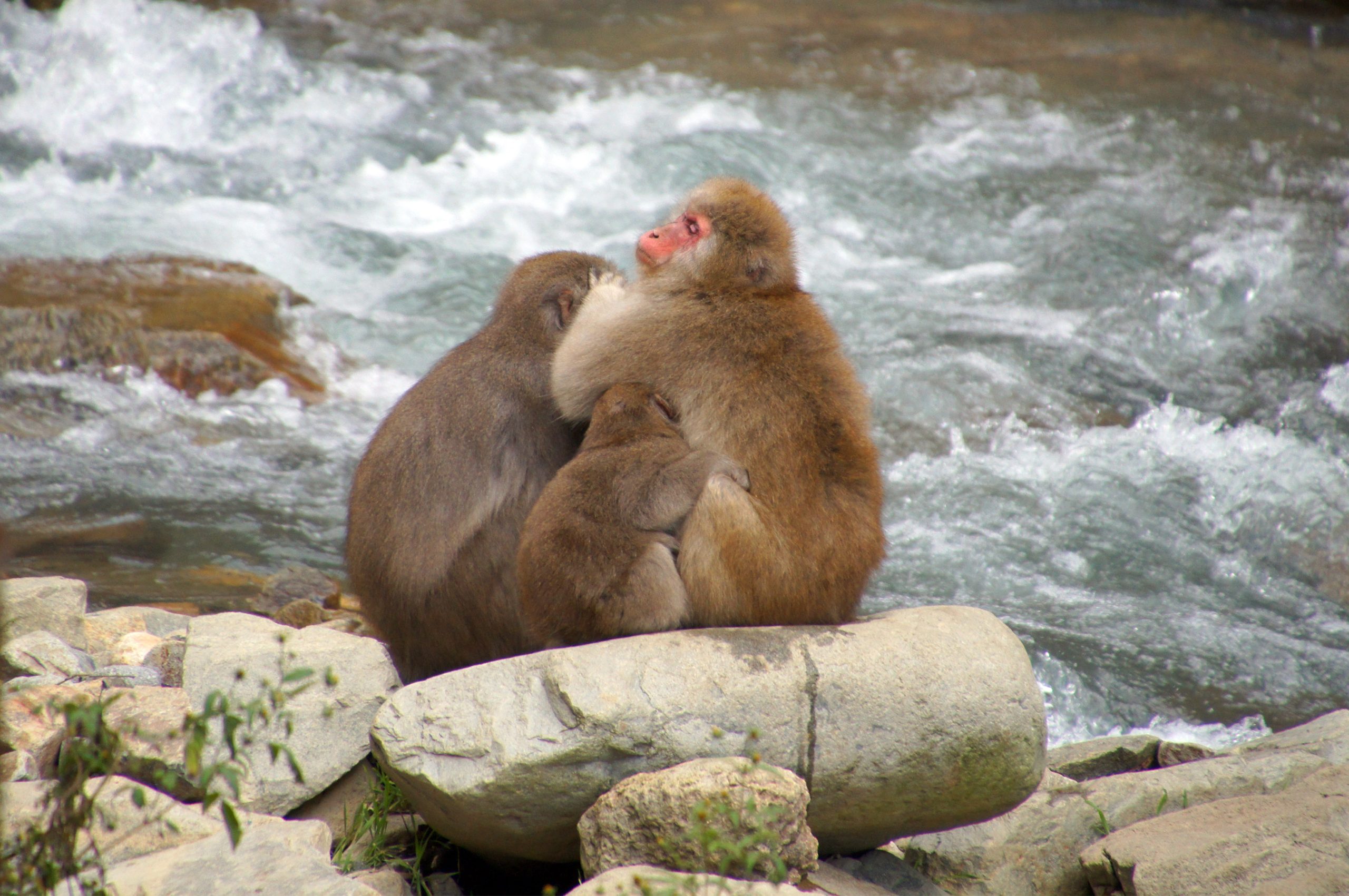
Gary and I visited Jigokudani Monkey Park (地獄谷野猿公苑) on 24 September 2017, travelling from Kanazawa for the day. This is the place famous for Japanese macaques bathing in hot springs while snow settles on their heads.
Except there was no snow. Obviously. We had chosen September. The clue was sitting quite openly in the words “snow monkeys”, but apparently I had decided not to trouble myself with it.
What we did find was a glass-fronted mountain train, a local bus through the villages, a quiet woodland walk and more young macaques than any sensible person needs photographs of. I took them anyway. So if you are wondering whether Jigokudani Monkey Park is worth visiting without its famous white backdrop, the answer is more interesting than a simple yes or no.
Practical information in this guide was rechecked against official sources on 23 September 2026. Prices from our 2017 trip are labelled as historical rather than quietly passed off as current.
Is Jigokudani Monkey Park worth visiting without snow?
Yes, it was worth it for us in September because we enjoyed the journey, the forest and watching the younger monkeys tumble around together. But I would not make a major detour solely for the celebrated hot-spring photograph. Bathing is mainly cold-weather behaviour, and the animals are wild enough to ignore your timetable altogether.
You should consider an off-season visit if you like wildlife observation, prefer a green woodland approach and are already travelling through Nagano or the Hokuriku region. Skip it if the snowy onsen scene is your only reason for going, you dislike attractions where wild animals are encouraged to gather with food, or the long walk is unsuitable for someone in your party.
My quick verdict: go without snow for the monkeys, young animals and forest; go in winter for the classic scenery. Either way, check the official live camera and monkey forecast before committing to the journey.
Our Jigokudani day trip at a glance
| When we visited | Sunday 24 September 2017 |
|---|---|
| Where we started | Kanazawa |
| Journey | Train towards Yudanaka, local bus, then the forest trail |
| Snow | None. Not one apologetic flake. |
| Best part | Young monkeys playing, plus the panoramic train and woodland approach |
| Biggest drawback | The travel time from Kanazawa made it a very long day |
| Would I go again? | Yes, but I would stay in Nagano, Yudanaka or Shibu Onsen and start earlier |
Our September day trip from Kanazawa
We were staying in Kanazawa for three nights and used one of them as the base for Jigokudani. It took roughly three hours to reach the park area once the different stages were added together. Then, rather inconveniently, Japan remained the same size and we still had to travel back.
In hindsight, arranging a six-hour round trip around wild animals that were under no contractual obligation to appear was bold. It worked. But if you are constructing your route now, I would place the visit between Tokyo and Kanazawa, stay overnight around Nagano or Yudanaka, and remove a great deal of unnecessary rail travel. If you also want the castle, our Matsumoto stopover guide explains how we fitted it between Tokyo and Kanazawa. Our restored two-week Japan itinerary shows how the wider route fits together.
The panoramic train towards Yudanaka
The train through Nagano Prefecture was part of the pleasure rather than dead time between sights. Ours was almost fully glazed, with views towards the mountains from the end of the carriage. If an observation-style service is running on your date, check the exact train and seat rules before boarding; Nagaden uses different rolling stock, so that view is not guaranteed on every departure.
Try for a forward-facing view on the outward journey or the rear window on the return. You may spend the first few minutes feeling faintly ridiculous for caring about a train seat. Then the buildings thin out, the hills close in and you will understand.
The village bus and forest walk
From Yudanaka we took a local bus through the villages, then followed the trail into the woods. After several days in densely populated cities, that approach was exactly what I needed: quieter air, trees on either side and half an hour in which nobody expected me to decipher a railway station.
The official Yumichi Natural Trail from Kanbayashi Onsen is about 2 kilometres and takes around 30 minutes each way. It is largely level, but sections are unpaved, uneven or stepped. This is a proper outdoor approach rather than a stroll across a visitor-centre car park.
Use the toilet before you start. There are no facilities along the 2-kilometre trail. The park also does not sell food, and you should not eat around the monkeys.
No snow, but plenty of young monkeys
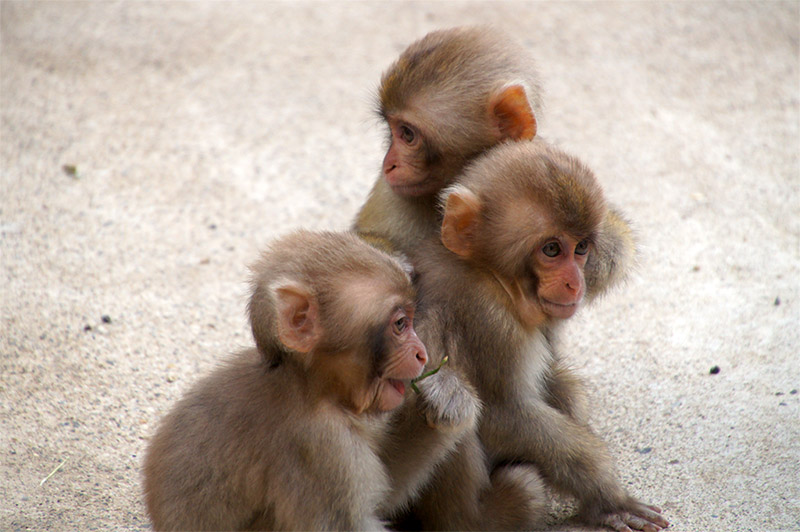
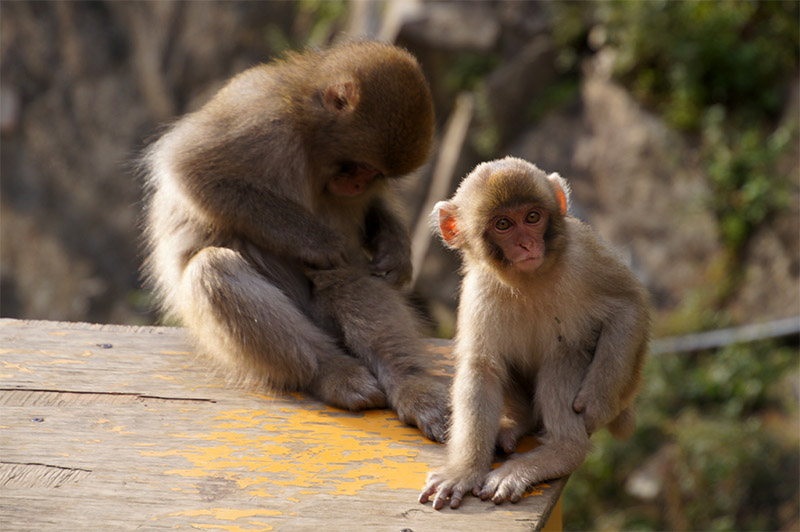
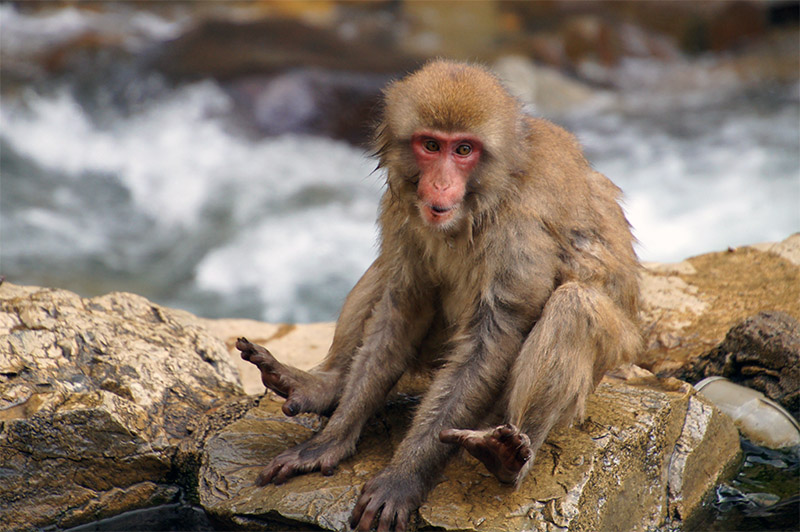
September did not give us the scene printed on every brochure. It gave us something else. The young born earlier in the year were still small, yet old enough to chase one another, climb, wrestle and generally behave as though the mountainside had been built for their entertainment.
I came home with far too many photographs. A startling number were nearly identical. This is what happens when a baby macaque does anything at all and you briefly lose your editorial judgement.
What is Jigokudani Monkey Park like without snow?
Without snow, Jigokudani looks less theatrical and more like what it is: a rocky valley, a hot-spring pool, woodland and a group of macaques moving around at will. The greenery makes the walk pleasant. It also exposes every fence, pipe and concrete edge that winter photographs can soften or conceal.
Do not expect the monkeys to spend the whole day soaking. The park itself says bathing is chiefly a way to cope with winter cold, not a performance that runs hourly throughout the year. Some may enter the water in warmer conditions, but you should treat that as a possibility rather than the product you purchased.
Are the snow monkeys really wild?
The Japanese macaques at Jigokudani are free-ranging: there are no fences keeping them inside the park, and their presence is never guaranteed. But it would be misleading to describe the experience as completely untouched wildlife observation. Staff use a regulated feeding routine to encourage the troop to come down and remain where visitors can see them.
That distinction matters. You may be comfortable with the park’s conservation history and managed observation model; you may not be. I would rather tell you before you travel than discover a moral debate halfway up a mountain with no phone signal and an increasingly sceptical husband.
Visitors must not feed, touch, call to or stare directly into the monkeys’ eyes. Keep your camera out of their faces, step back if a curious youngster approaches, and leave the selfie stick at home. The fact that they often ignore people does not turn them into props.
How to get to Jigokudani Monkey Park
Most public-transport routes pass through Nagano Station. From there, choose between the Nagaden train to Yudanaka plus a local bus, or a direct express bus to the Snow Monkey Park stop. Both options finish with the forest walk.
| Route | What it involves | Best for |
|---|---|---|
| Nagano → Yudanaka → park | Nagaden limited express, local bus, then roughly 30–35 minutes on foot | The most interesting journey and a stay in Yudanaka or Shibu Onsen |
| Nagano → Snow Monkey Park stop | Express bus, then roughly 35 minutes walking | Fewer changes and a straightforward day from Nagano |
| Kanazawa → Nagano → park | Hokuriku Shinkansen, then either local route above | Possible as a long day, but better as a stop between destinations |
| Tokyo → Nagano → park | Hokuriku Shinkansen, onward bus or train, then the trail | Doable very early; an overnight stay is less rushed |
Without a pass, the one-way fares checked on 23 September 2026 were ¥2,000 for the direct express bus from Nagano, taking about 45 minutes, or ¥1,290 for the Nagaden limited express to Yudanaka with an unreserved seat plus ¥390 for the local bus. The second route therefore came to roughly ¥1,680 each way and took around 55–60 minutes before the forest walk. A reserved train seat costs more, and seasonal timetables can alter the comparison.
Can you visit Jigokudani Monkey Park from Kanazawa?
Yes. We did. Take the Hokuriku Shinkansen from Kanazawa to Nagano, then continue by Nagaden train and local bus or board the express coach there. Allow a full day and leave an ample margin before the final return connection.
Would I recommend the same plan now? Not usually. A night in Nagano, Yudanaka or Shibu Onsen reduces the rushing and gives you a better chance of arriving early, particularly in winter. If your wider route runs from Tokyo through Nagano to Kanazawa, the park fits more neatly as a stop between the two.
Can you take a day trip from Tokyo?
A Tokyo day trip is possible: the fastest Hokuriku Shinkansen journeys reach Nagano in about 79 minutes, then you still need the local transfer and 30–35-minute walk. Start early. If you want unhurried time with the monkeys, a meal in the area or an onsen stay, sleep locally instead.
Depending on the service, your Japan Rail Pass may cover the JR journey to Nagano. It does not include Nagano Electric Railway or Nagaden buses, which are privately operated.
How much does Jigokudani Monkey Park cost?
The standard park admission checked on 23 September 2026 was ¥800 for adults, ¥400 for 6–17-year-olds, and free for accompanied younger children. The official guide did not list a future change date when I rechecked it, so use the current visitor information for the price that applies to your trip.
| Ticket | Adult | Child | What it includes |
|---|---|---|---|
| Park admission | ¥800 | ¥400, ages 6–17 | Single entry to Jigokudani Yaen-Koen |
| 2026 train/local-bus Snow Monkey Pass | ¥4,800 | ¥2,400, ages 6–12 | One day of Nagaden trains, one Yudanaka–Snow Monkey Park local-bus return, and one park entry |
The pass price is a dated snapshot, not a promise for next season. It is also non-refundable if the monkeys fail to appear. Compare the current sales options with separate fares once your date and route are fixed.
What we paid for our Kanazawa base
We stayed at HOTEL MYSTAYS PREMIER Kanazawa from 22 to 25 September 2017. Our Superior Double Room cost ¥38,600 for three nights, including the 8% VAT charged at the time and no meals. That is a historical receipt, not a useful guide to today’s room rate.
The hotel worked well for seeing Kanazawa, and our guide to spending one day in the city covers the route we would recommend. It was less logical as a snow-monkey base. If this visit is a priority for you, put at least one night on the Nagano side of the journey.
Jigokudani Monkey Park opening hours
- April to October: 8.30am–5pm
- November to March: 9am–4pm
- Last sensible arrival: at least 30 minutes before closing, according to the park
- Regular closing days: none, although weather, natural hazards or monkey behaviour can cause shorter hours or temporary closure
These hours were checked in September 2026. Look again shortly before travelling, particularly after heavy snow or a weather warning.
When is the best time to visit Jigokudani?
January and February offer the best chance of the classic snowy scene. But the best month for you depends on whether you care most about snow, young monkeys, lighter crowds or an easier trail.
| Season | What you may see | What to consider |
|---|---|---|
| Winter, especially January–February | Snow and the strongest chance of bathing behaviour | Ice, cold, crowds and possible entry controls; wear winter footwear or simple crampons |
| Late April–June | The main birth period and very young babies | Little or no snow; bathing is less likely |
| Summer | Green forest and playful youngsters born in spring | Warm-weather clothing still needs to suit an unpaved trail; insects are active |
| September–autumn | Older babies, green or changing woodland and fewer winter crowds | Monkeys range through the forest for seasonal food, so appearances can be particularly erratic |
In September, the macaques are busy feeding on nuts and fruit before winter. That helps explain why autumn attendance at the park can be unpredictable. Early autumn has historically offered a reasonable chance of seeing at least some bathing, even without snow. But later in the season, their attendance at the park becomes harder to predict, and bathing is never guaranteed. We were fortunate. Check the official live image and appearance forecast on the morning of your visit.
How long do you need at Jigokudani Monkey Park?
Allow two to three hours from the bus stop and back: about 30–35 minutes walking each way, plus at least an hour inside. Add generous waiting time for buses. The park area itself is not enormous, but animal activity decides how long it holds your attention.
If you are travelling from Nagano, set aside at least half a day. From Kanazawa or Tokyo, it becomes a full-day outing once the longer railway legs and connection buffers are included.
Is Jigokudani accessible with a wheelchair or pushchair?
No. The official park information says neither approach is accessible to wheelchairs or carts because of unpaved ground, steps and uneven sections. A pushchair is therefore a poor choice; if your child is small enough, a suitable carrier is more practical.
Also consider the return walk, winter ice, the lack of toilets along the path and the fact that assistance dogs are prohibited because macaques regard them as a natural threat. Those restrictions can make the attraction unsuitable for some visitors, and it is better to know that before arriving at Kanbayashi.
Practical tips before you go
- Check the live camera and appearance forecast before you leave. The monkeys are free to wander away, and autumn is particularly unreliable.
- Go early. You will have more connection options and rather less anxiety about closing time.
- Wear trainers or walking shoes in warmer weather. Winter usually calls for snow boots and simple crampons.
- Use the toilet at the trailhead because there are no facilities during the 2-kilometre forest walk.
- Carry water, but keep food packed away. The park sells no meals, and eating around the macaques is unwise.
- Never touch or feed the animals. Avoid direct staring, loud calls and close-up phone manoeuvres as well.
- Leave the selfie stick behind. The park prohibits those and drones.
- Download the timetable before setting out. Rural buses do not arrive every few minutes simply because you are cold.
- Leave some slack in the day. Weather, trail conditions and wild animals can all alter the plan.
- For the costs from our wider trip and how we kept them under control, see our Japan travel budget.
What we would do differently
I would still visit in September. The young macaques were engaging, the trail gave us a welcome pause from Japan’s cities, and I liked the journey itself. What I would change is the base.
Rather than returning to Kanazawa, I would sleep in Nagano, Yudanaka or Shibu Onsen. That would turn a punishing day trip into a slower mountain stop and leave room for an onsen that humans are actually allowed to enter.
I would also arrive with the right expectation: you are visiting a managed observation site for free-ranging Japanese macaques. You are not booking snow, a bath or a beautifully positioned monkey. Nature remains stubbornly bad at taking reservations.
Jigokudani Monkey Park FAQ
Is Jigokudani Monkey Park worth visiting without snow?
Yes, if you want to watch Japanese macaques and enjoy the forest approach. We liked our September visit because young monkeys were playing around the valley. It is less worthwhile if your only aim is the famous snowy hot-spring photograph.
Can you see the snow monkeys all year?
The park opens throughout the year, but the macaques are wild and may not appear. Autumn is particularly unpredictable because natural food is plentiful in the forest. Check the official camera and forecast before setting out.
Do the monkeys bathe when there is no snow?
They can enter the pool outside winter, but bathing is mainly a response to cold conditions and does not happen constantly. Never plan a warm-season visit on the assumption that the pool will be occupied.
How long is the walk to Jigokudani Monkey Park?
The main trail from Kanbayashi Onsen is approximately 2 kilometres and usually takes around 30 minutes each way. Some official route guidance allows 35 minutes. The path is mostly level, but it is unpaved and includes uneven or stepped sections.
Can you visit Jigokudani Monkey Park as a day trip from Kanazawa?
Yes. We travelled from Kanazawa via Nagano, then continued towards Yudanaka before taking a local bus and walking through the forest. It is a long full day, so an overnight stay in Nagano, Yudanaka or Shibu Onsen is usually the more relaxed choice.
Is Jigokudani Monkey Park covered by the Japan Rail Pass?
An eligible Japan Rail Pass can cover JR travel to Nagano on included services. It does not cover the private Nagaden railway, local buses, express bus or park admission. Always check the conditions of your particular pass.
Do you need a tour for Jigokudani?
No. Independent travel is straightforward if you check train and bus times in advance. But if you would rather let someone else wrestle with the logistics, two current GetYourGuide options are From Tokyo: Snow Monkey 1 Day Tour with Beef Sukiyaki Lunch and Nagano: Snow Monkeys, Zenkoji Temple & Sake Day Trip. Both combine the monkey park with transport, lunch and a guide, although the exact inclusions can change. A tour can be useful in winter, when time is tight or when infrequent rural connections are not your idea of holiday fun.
Our final verdict
Jigokudani Monkey Park without snow was not the wrong version of the experience. It was simply a different one: less cinematic, more green, and full of young monkeys launching themselves at one another while their mothers displayed the patience of saints.
The journey from Kanazawa was too long for the time we spent inside. But the day itself was memorable, and the forest helped it feel like more than a quick photograph beside a hot spring. Plan the route better than we did, understand how the animals are encouraged to gather, and go for what is actually there. Not for snow that September never promised you.