Across three trips to Japan, Gary and I took six proper day trips from Tokyo – plus Shibamata, which is technically still Tokyo and therefore cheating slightly. If you want one balanced answer, choose Kamakura. It combines temples, the Great Buddha and the coast without asking you to spend four hours on trains.
Choose Hakone for an onsen and a varied mountain circuit; Lake Kawaguchiko for your best chance of a close Mount Fuji view; Nikko for grand shrines and cedar forest; Yokohama for food and an uncomplicated urban day; or Kawagoe for merchant streets and sweet-potato snacks.
Some of these days went beautifully. On others we missed a turning, arrived minutes before an attraction closed or discovered that two places on my carefully imagined route were shut. I am therefore not going to present them as six equally effortless excursions. They are not.
These are the best day trips from Tokyo that I can compare from first-hand experience, rather than every place that could theoretically be reached before bedtime. If you are specifically looking for day trips from Tokyo by train, Kamakura, Hakone, Nikko, Yokohama and Kawagoe all work well without a car. Kawaguchiko is also reachable by direct train, although we used the cheaper highway bus.
This guide compares the journeys we actually made, including what each place is best at, how much time and money to allow, what can go wrong and which Tokyo day trip I would choose now. If you would rather stay inside Tokyo, our Shibamata guide covers a genuinely different kind of half-day escape. It is a Tokyo neighbourhood, not a day trip from Tokyo, so I have kept it separate from the six proper excursions below.
Tokyo day trips compared
Six proper day trips: Each option below wraps naturally on mobile and narrow content columns, so you can compare the trade-offs without a seven-column table trying to escape into the sidebar.
Kamakura
Best for: Temples, the Great Buddha and the coast. Journey: About 55 minutes from Tokyo Station. Allow: Full day. Effort: Low to moderate. Cost: Roughly ¥4,500–¥6,500 including simple meals. Drawback: More spread out than it first appears.
Lake Kawaguchiko
Best for: Close Mount Fuji views and lake scenery. Journey: About 1 hour 45 minutes by highway bus in normal traffic. Allow: Full day; consider one night. Effort: Moderate. Cost: From about ¥5,700 for an online return bus plus ropeway-and-boat ticket. Drawback: Fuji may stay behind cloud all day.
Hakone
Best for: Onsen, mountains, art and a scenic transport loop. Journey: About 80–90 minutes by Romancecar from Shinjuku. Allow: About 11–13 hours door to door. Effort: High. Cost: ¥7,100 for the Freepass; more with the Romancecar and attractions. Drawback: Easy to overfill, and transport can be disrupted.
Nikko
Best for: Ornate shrines, history and cedar forest. Journey: Roughly two hours each way, depending on the train. Allow: Full, early day. Effort: Moderate to high. Cost: From roughly ¥4,900 before food and any limited-express supplement. Drawback: Long journey and a surprising amount of climbing.
Yokohama
Best for: Ramen, port history and a flexible waterfront day. Journey: About 16–25 minutes from several central stations. Allow: Half or full day. Effort: Low. Cost: Train fare plus ¥450 for the Ramen Museum or ¥500 for CUPNOODLES MUSEUM. Drawback: The two noodle museums are in different places.
Kawagoe
Best for: Merchant architecture, temples and local food. Journey: About 30 minutes from Ikebukuro. Allow: Five to seven hours. Effort: Low. Cost: Roughly ¥4,000–¥6,000 including lunch and snacks. Drawback: Traffic runs through the famous historic street.
Prices were checked in September 2026 and are per adult unless stated otherwise. They are planning figures, not promises: rail fares depend on your starting station, and food is wonderfully capable of undoing a neat budget. Recheck the linked operator and attraction websites before travelling.
When is the best time to take a day trip from Tokyo?
We took most of these trips in September and visited Kawagoe in May, so I am not going to pretend I have personally tested every season. If seeing Mount Fuji is the priority, the JNTO recommends an early start and says crisp winter days usually provide the clearest distant views. June brings hydrangeas to Kamakura, but it is also part of the rainy season, according to Kamakura’s official tourism guide.
For autumn colour, Nikko’s official guide places the usual central Nikko window from late October to mid-November. Yokohama, Kawagoe and Shibamata are less dependent on one natural spectacle. They work throughout the year, although I would still avoid turning a hot summer afternoon into an endurance test merely because the spreadsheet says you have time.
1. Kamakura: the best all-round day trip from Tokyo
Kamakura is my best all-round recommendation if you want traditional Japan without committing to a two-hour journey in each direction. It combines forested temple grounds, the Great Buddha, older streets and the sea. That range makes it my safest choice for a first-time visitor who has only one spare day.
Gary and I visited in September 2015. We started at Engakuji in Kita-Kamakura, bought lunch from 7-Eleven and then walked in completely the wrong direction towards Ofuna. By the time we realised what we had done, the final admission to the interior of the Great Buddha was approaching.
What followed was not our most dignified piece of travel. We took a local train, ran from the station and reached Kotoku-in with roughly five minutes to spare. We did get inside the Buddha. We also had enough time afterwards to explore the grounds, pick up a sweet, salty and slightly chilli rice cracker and finish beside Yuigahama Beach at sunset.
Why choose Kamakura?
Kamakura is less dependent on weather than Kawaguchiko and less complicated than Hakone. The temples give you the history many people hope to find outside Tokyo, whilst the Enoden railway and coast stop the day becoming an endless procession of religious buildings.
But do not mistake “easy to reach” for “tiny”. Northern Kamakura, the central sights and Hase are spread out. Use the train between them and decide whether your priority is a slow temple walk or a broader highlights day. We tried to leave every option open and nearly replaced spiritual reflection with a medical emergency.
How much time and money should you allow?
Allow a full day. Our detailed Kamakura day-trip itinerary estimates roughly ¥4,500–¥6,500 per adult at September 2026 prices, including return travel, local transport, Engakuji and Kotoku-in, an inexpensive lunch, dinner and drinks. You can spend less, but extra temples or Enoshima will push the figure up.
Skip Kamakura if: you dislike walking between dispersed sights or you want mountain scenery rather than temples and coast.
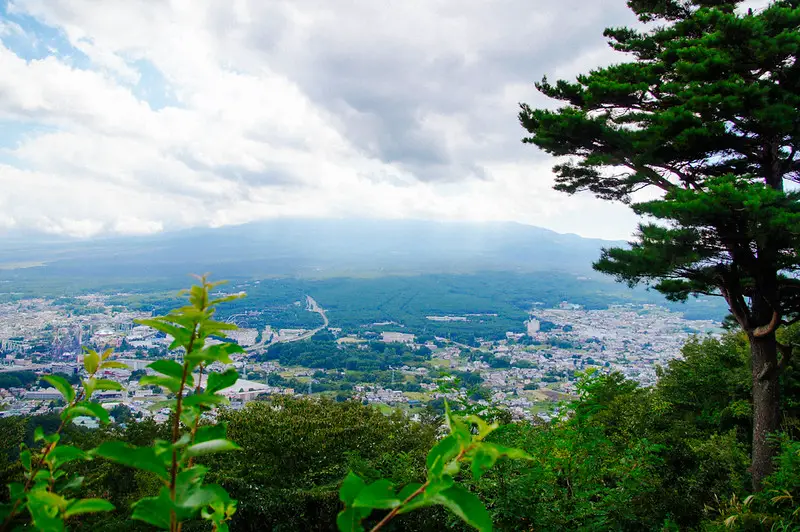
2. Lake Kawaguchiko: the best Tokyo day trip for Mount Fuji
If seeing Mount Fuji is the main objective, choose Lake Kawaguchiko. It offers a much closer and broader view than Hakone when the weather behaves. That final qualification matters.
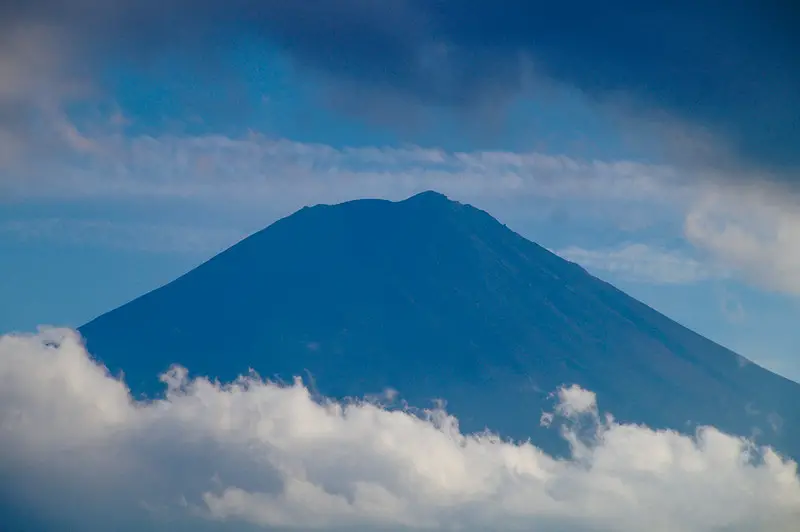
We went on 19 September 2017. Fuji spent the beginning of the day mostly hidden, showing us only its summit before disappearing again. The cloud gradually lifted as we travelled up the Mount Fuji Panoramic Ropeway, and we eventually saw the mountain properly from the lake.
Gary then proposed on a quieter path above the ropeway. He had previously threatened to do this at the top of Kilimanjaro, which I considered a very effective method of postponing an engagement indefinitely. Mount Tenjo was a sensible compromise. I still complained because he was walking too quickly, demonstrating a complete failure to identify romance even when it was carrying a miniature tripod.
Afterwards we took the sightseeing boat, ate soba, hired a swan pedal boat and walked beside the lake. The proposal is obviously why the day matters so much to us. But even without it, Kawaguchiko would have been one of the most visually memorable excursions we took from Tokyo.
What makes Kawaguchiko difficult?
Cloud. You cannot solve that with a more detailed spreadsheet. If Fuji is one of the main reasons for your Japan trip, stay overnight and give yourself an early-morning second chance. If it is a bonus rather than the whole point, a day trip works well.
Reserve the outward and return journey. Our 2017 highway bus was full, and I had booked it from London roughly three months earlier. The direct bus from Shinjuku costs ¥2,200 each way, discounted to ¥2,000 when booked and paid online. The Fuji Excursion train is more predictable in traffic but costs about ¥4,200 each way.
The return ropeway costs ¥1,000 and the sightseeing boat costs another ¥1,000. A ¥1,700 combination ticket covers both. The ropeway operator has announced a fare revision from 1 November 2026, so recheck the price if you are travelling after that date. See our full Lake Kawaguchiko day-trip guide for the route, accessibility limitations and local sightseeing-bus options.
Skip Kawaguchiko if: the forecast is poor and you would feel the entire day had failed without Fuji. Move it to a clearer date or choose a destination whose main attraction cannot hide behind a cloud.
3. Hakone: the best choice for an onsen and a varied mountain loop
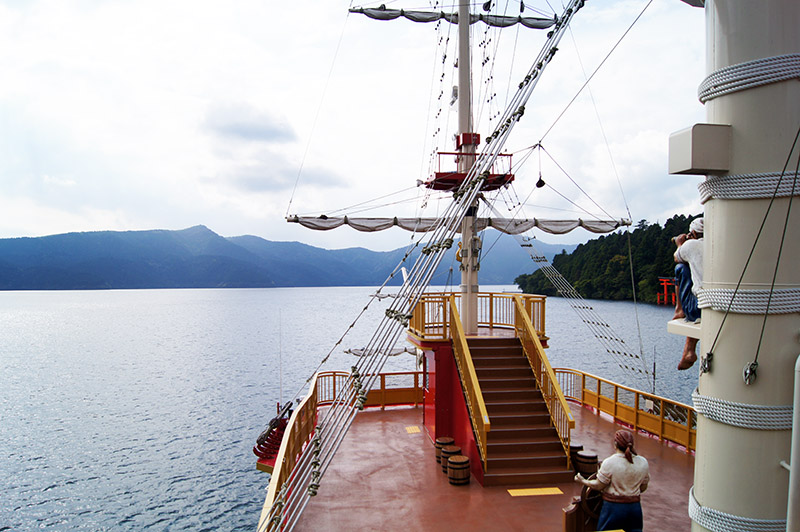
Hakone works best when you want several different experiences packed into one scenic circuit. Our clockwise route combined Hakone Shrine, Lake Ashi, the faintly ridiculous pirate ship, mountain transport, outdoor art and a traditional onsen.
We took this day trip during our first visit to Japan in September 2015. Owakudani was closed because of volcanic activity, so a replacement bus carried us between Togendai and Sounzan. That meant we missed the sulphurous valley and black eggs, but it also gave us more time elsewhere.
It was a lot to fit into one day. It was also one of my favourite days outside Tokyo!
The onsen became one of my favourite parts of the day, although I was the only non-Japanese woman in the baths and initially became intensely aware of every limb I possessed. Everyone else was simply getting on with it. Once I did the same, the hot water after a long day on foot was glorious.
Is Hakone too much for one day?
No, but it can become too much if you treat every stop as compulsory. Allow roughly 11–13 hours door to door and choose your priorities before leaving Tokyo. If Owakudani is open, something else may need to go. Time does not expand because a black egg is involved.
The two-day Hakone Freepass from Shinjuku currently costs ¥7,100 and can be used for a one-day visit. A Romancecar limited-express seat adds ¥1,200 each way. Once you add the Open-Air Museum, a public onsen and both Romancecar journeys, our clockwise Hakone loop estimates roughly ¥13,000–¥15,000 per adult before food.
Hakone is a better all-rounder than Kawaguchiko, but it is not the better choice when a close Fuji view is your only aim. We have failed to see the mountain from Hakone and seen it beautifully from Kawaguchiko. Your weather may decide to reverse that result, just to keep everybody humble.
Skip Hakone as a day trip if: you want an unhurried ryokan stay, several museums or a long onsen session. Spend one or two nights instead.
4. Nikko: the best day trip for grand shrines and forest
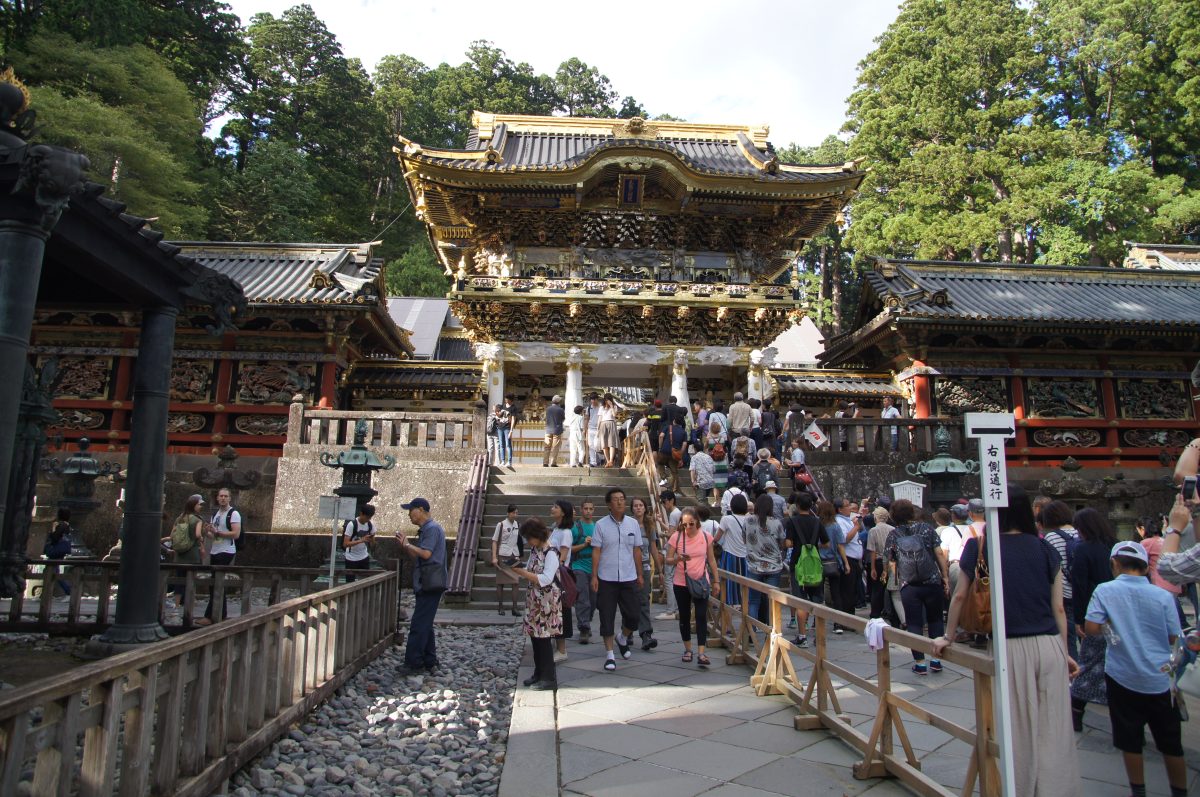
Nikko is the one I would choose for sacred architecture, elaborate craftsmanship and a setting that feels properly removed from Tokyo. Toshogu is unlike the quieter, more restrained religious buildings we had seen elsewhere. Its gates and storehouses are dense with gold, colour, animals, flowers and tiny carved details, all surrounded by tall cedars.
Our visit on 18 September 2017 was meant to happen the previous day. A typhoon arrived, so we postponed it and went to Yokohama instead. Nikko then greeted us with scorching sunshine, because apparently a gentle transition between weather systems would have been too ordinary.
We also attended a 9.30am furoshiki workshop at Shiba Park Hotel before leaving. It was lovely. It was not compatible with the early start Nikko deserves.
Our route ran from Toshogu to Futarasan Shrine and then Shinkyo Bridge. We recorded around 14,000 steps and returned to Tokyo shattered. If I repeated it, I would reverse the order: see Shinkyo first, add Rinnoji if time allows, then protect enough time for Toshogu and Futarasan.
Can you combine central Nikko with Lake Chuzenji?
You can make the timetable say yes. I would not recommend it for a first day trip. Lake Chuzenji and Kegon Falls require additional bus time, whilst the World Heritage area already fills a satisfying day. Choose one coherent area rather than spending the afternoon watching scenery through a bus window.
The Nikko Pass World Heritage Area currently costs ¥3,000 for eligible foreign travellers. Add ¥1,600 for Toshogu and ¥300 to cross Shinkyo, giving a basic independent total from roughly ¥4,900 before food and any limited-express supplement. Our Nikko day-trip guide explains the transport choices, current admissions and the route we would use now.
Skip Nikko if: you have only half a day, dislike steps and slopes or want lakes and waterfalls more than the central shrine complex. The latter deserves an overnight stay or a separate, carefully timed day.
5. Yokohama: the easiest food-focused day trip from Tokyo
Choose Yokohama when you want to leave Tokyo without organising your life around a 6am alarm. It’s close, flexible and particularly useful when the weather or your energy rules out a mountain expedition.
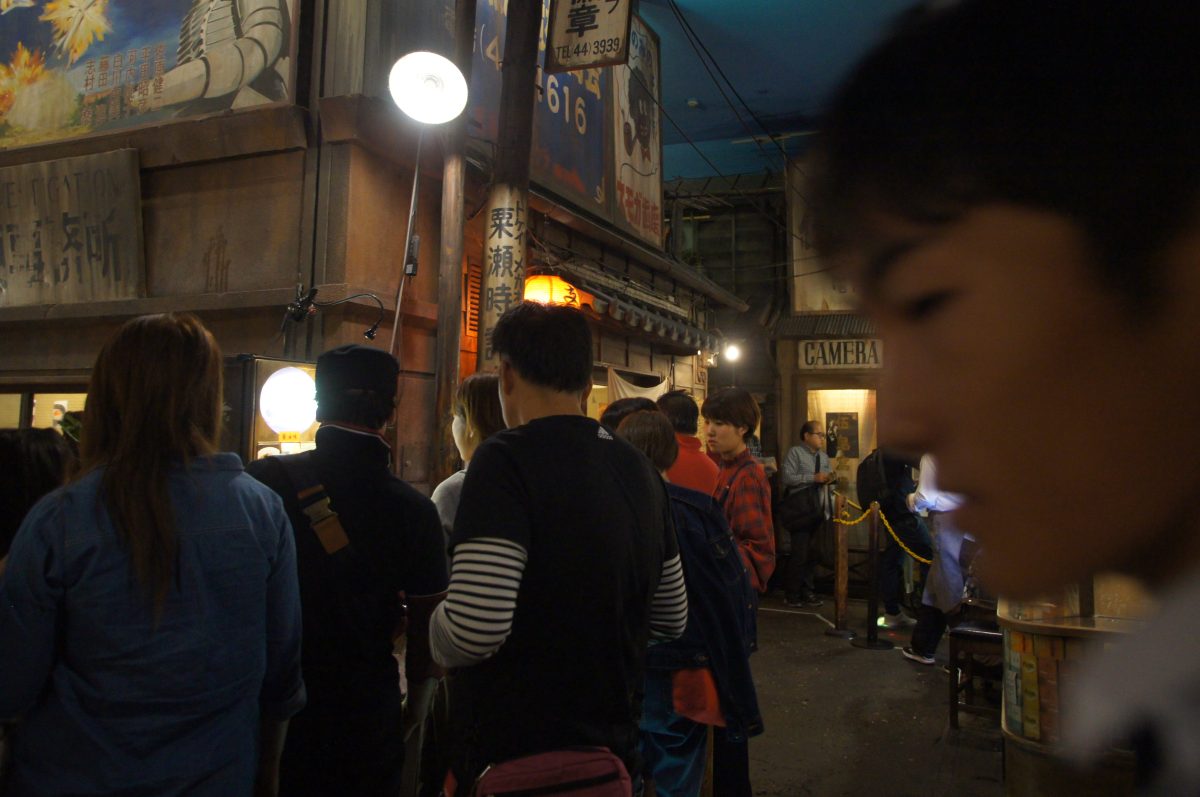
Our trip on 17 September 2017 was a rainy-day replacement for Nikko. We began around Shiba Park and Tokyo Tower, then took the train to the Shin-Yokohama Ramen Museum. Its recreated 1958 streetscape was entertaining enough to justify the journey, although the restaurant queues were so long that we managed only one bowl of ramen before continuing into the city.
It rained for much of the day. We still walked. This was either admirable determination or evidence that Gary and I are not especially good at sitting quietly in a hotel room.
Which Yokohama noodle museum should you visit?
The Shin-Yokohama Ramen Museum and CUPNOODLES MUSEUM YOKOHAMA are different attractions in different districts. The first combines ramen history, working regional restaurants and the retro streetscape we visited. The second is in Minato Mirai and centres on instant noodles and Momofuku Ando.
Current adult admission is ¥450 for the Ramen Museum and ¥500 for CUPNOODLES MUSEUM; food and hands-on activities cost extra. Yokohama itself takes roughly 16–25 minutes from several useful central Tokyo stations, although Shin-Yokohama requires another local journey.
Our Yokohama day-trip guide keeps our wet half-day honest, then shows how to expand it with Minato Mirai, the Red Brick Warehouse, Yamashita Park and Chinatown.
Skip Yokohama if: you want wilderness, old temples or the feeling of having travelled a long way from Tokyo. Choose it precisely because it is easy.
6. Kawagoe: the best day trip for merchant streets and snacks
Kawagoe suits you if you want Edo-period merchant architecture, temples and a frankly excessive range of sweet-potato food. The express journey from Ikebukuro takes about 30 minutes, so it gives you a substantial change of scene without consuming half the day in transit.
We visited on 24 May 2019, our final full day in Japan. Gary and I had spent the weeks before the trip renovating our house, so my usual enthusiasm for detailed planning had apparently gone on strike.
That is how we reached Kawagoe Castle Honmaru Goten and the City Museum on the fourth Friday of the month – the day both were closed. Nothing says competent travel writing quite like standing outside two locked attractions you crossed town to see.
Fortunately, the rest of the day worked. We visited Kita-in, Taisho Roman Street, Kurazukuri Street and Hikawa Shrine; tried a sweet-potato egg tart and pudding; drank local COEDO beer; baked a rice cracker in Candy Alley; and finished with sesame tonkatsu ramen. Even Gary liked the beer, which was apparently sufficiently important for me to record at the time.
Is Kawagoe better than Kamakura?
Choose Kawagoe for a compact merchant district, old warehouse architecture and food. Choose Kamakura for a broader historic day with major temples, the Great Buddha and the coast. Kawagoe is easier if you are based around Ikebukuro and want five to seven hours rather than a dawn-to-dinner outing.
The current Tobu Premium pass from Ikebukuro costs ¥1,200. Our Kawagoe day-trip itinerary suggests roughly ¥4,000–¥6,000 per adult for transport, the main admissions, lunch and several snacks. The fixed costs are low. The sweet potatoes are where discipline begins to weaken.
Skip Kawagoe if: you expect a traffic-free open-air museum or want dramatic natural scenery. It’s a living city with a concentrated historic core.
Within Tokyo: why Shibamata belongs in a different guide
Shibamata is a lovely half-day neighbourhood escape, but it is not a day trip from Tokyo in the geographical sense. I have therefore kept the main comparison focused on places we actually travelled to from the capital. Read our Shibamata guide for Taishakuten-sando, the temple carvings, the Tora-san Museum and the Edogawa riverbank.
Hakone or Kawaguchiko: which is better?
Choose Hakone for variety; choose Kawaguchiko for Mount Fuji. Hakone gives you a shrine, Lake Ashi, a ropeway, volcanic scenery when open, museums, a mountain railway and onsen. Kawaguchiko gives you a simpler lake-based day and a closer Fuji view when the sky is clear.
Neither guarantees the mountain. If Fuji matters enormously, keep Kawaguchiko flexible or stay overnight. If you would still enjoy the day without seeing it, Hakone has more alternatives built into the route.
Nikko or Kamakura: which is better?
Choose Nikko for one extraordinary shrine complex in a forested mountain setting. Choose Kamakura for a more varied and easier day.
Nikko’s Toshogu made the stronger impression on me as a single historic sight. But Kamakura combines several moods: Zen temple grounds, local trains, the Great Buddha, ordinary streets and the sea. It also asks less of your alarm clock.
Kawagoe or Shibamata: which old-fashioned escape should you choose?
Choose Kawagoe for a full day of merchant history and food; choose Shibamata for a quieter half-day within Tokyo. Both have old shopfronts, temples and snacks, but they are not interchangeable.
Kawagoe’s Kurazukuri district is larger and tied to its history as a prosperous merchant city linked to Edo. Shibamata is more intimate and its identity is closely connected to Tora-san, the temple and the riverside.
Which day trip works best in bad weather?
Yokohama is the most forgiving option because you can build the day around a noodle museum, food and shorter journeys. It saved our plans during a typhoon-affected weekend, although you will still spend some time outside.
Kawagoe and Kamakura can work in light rain, but much of their appeal lies in walking. Hakone transport may be disrupted by wind, weather, maintenance or volcanic conditions. Kawaguchiko is the weakest choice when low cloud removes the view you travelled for. Nikko’s shrines can look atmospheric in rain, but wet steps, slopes and a four-hour round trip are not trivial.
Why are Enoshima, Mount Takao and Kyoto not on this list?
I have not ranked Enoshima, Mount Takao, Chichibu or a Mount Fuji climbing trip because we did not take them as day trips from Tokyo. They may be excellent options, but this is a comparison of journeys I can judge from experience rather than a collection of places that appear on everybody else’s list.
We did plan to visit Karuizawa in May 2019. When I checked the journey, the route I found was roughly ¥5,000 per person each way, so we changed the plan. Treat that as a historical planning note rather than a current fare. And although Kyoto is technically reachable by Shinkansen, we visited it as a separate stop and I would not compress it into a few hours simply to call it a day trip.
How many Tokyo day trips should you add?
For a first visit with five full days in Tokyo, I would add one day trip. Choose two if you have a full week and do not mind giving up a city day. Our five-day Tokyo itinerary explains how to group the city itself, whilst our two-week Japan itinerary by train helps you decide whether another region deserves that day more.
On our first trip we based ourselves in Tokyo for a week and did not regret it. In fact, staying longer reduced hotel changes and allowed us to leave the city without treating every remaining Tokyo district as a personal failure.
If you are planning a wider route, start with the Japan travel guide. Our first-time Japan planning guide covers the larger decisions, and the Japan travel budget guide will help once the combined cost of scenic trains, temple tickets and “just one” local snack begins to look less innocent.
Frequently asked questions about day trips from Tokyo
What is the best day trip from Tokyo for a first-time visitor?
Kamakura is the best balanced choice for most first-time visitors because it combines temples, the Great Buddha and the coast with a journey of roughly one hour. Choose Hakone instead if mountain scenery and an onsen matter more than simplicity.
What is the easiest day trip from Tokyo?
Yokohama is the easiest true day trip in this guide. It takes roughly 16–25 minutes from several central stations and works as a half or full day. Shibamata is similarly easy, but it remains inside Tokyo.
Which Tokyo day trip is best for Mount Fuji?
Lake Kawaguchiko is the strongest choice for a close view of Mount Fuji. Hakone can also provide Fuji views, but the mountain is a possible extra rather than the main event. Cloud can hide it from either place.
Can you visit Nikko as a day trip from Tokyo?
Yes. Leave early and concentrate on the central World Heritage area around Shinkyo Bridge, Rinnoji, Toshogu and Futarasan. Trying to add Lake Chuzenji and Kegon Falls makes the day much more transport-heavy.
Is Hakone better as a day trip or overnight stay?
A day trip is enough for a brisk version of the Hakone loop. Stay overnight if a ryokan, a long onsen session, several museums or a second chance to see Mount Fuji is important to you.
Can you combine Kamakura and Yokohama in one day?
It’s possible, but each place comfortably fills its own day. Combine them only if you want a highlights route and are willing to give up Kamakura’s slower temple walk or Yokohama’s evening waterfront and food.
Do you need a guided tour for these Tokyo day trips?
No. We completed all six core trips independently using public transport. A tour may reduce the planning for Fuji or Hakone, but it is not necessary for any destination in this guide.
Our verdict
If I could keep only one easy, broadly appealing day trip, I would choose Kamakura. If I could keep only one memory, the answer would be Kawaguchiko, although that is rather unfair when one destination contains your engagement.
Hakone gave us the most varied day. Nikko had the most extraordinary shrine. Yokohama proved the value of an unplanned replacement. Kawagoe recovered from my closure-calendar failure with beer and sweet potato, which is a sound method of conflict resolution. And Shibamata remains the option I would use when a full expedition feels like too much.
So choose the day that suits your actual priorities, weather and energy. Tokyo will still be there when you get back. Probably glowing, crowded and ready to make the countryside feel remarkably quiet.