
Written by Katharina Mungall
Travel writer, photographer and architect
We’ve been up both Tokyo Skytree and Tokyo Tower, but on two completely separate trips. In 2015 we went up both of Skytree’s observation decks, and the queue was our gripe. Two years later, a typhoon heading towards Japan rearranged our plans, and instead of going to Nikko we spent a rainy 17 September 2017 going up Tokyo Tower. Later on that same trip, we could see Tokyo Tower (and a glimpse of Skytree) from our hotel high above Roppongi.
So if you only want to pay for one of them, which should you choose?
Our Skytree visit was in September 2015 and our Tokyo Tower visit on 17 September 2017. Prices and booking details were checked on 29 September 2026.
Quick answer
Choose Tokyo Skytree if you want the highest and widest view, you’re already spending the day around Asakusa, Sumida or Ryogoku, and you’re happy to book a date ahead.
Choose Tokyo Tower if you want the cheaper and simpler option, you like the idea of actually going inside one of Tokyo’s best-known landmarks, or you’re spending the day around Shiba, Zojoji or Minato.
Consider neither if you mainly want a free view or an open-air rooftop. The Tokyo Metropolitan Government Building and Shibuya Sky make more sense for those.
| Tokyo Tower | Tokyo Skytree | |
|---|---|---|
| Height of tower | 333m | 634m |
| Observation decks | Main Deck 150m; Top Deck 250m | Tembo Deck 350m; Tembo Galleria 450m |
| Adult ticket from | ¥1,500 Main Deck; ¥3,300 Top Deck Tour online | ¥1,800 Tembo Deck; ¥3,000 both decks (online; varies by date) |
| Booking | Buy on the day for the Main Deck; Top Deck Tour is cheaper online | Online tickets are for a set date; ¥500 extra per ticket at the on-site counter |
| The view | Closer to streets and buildings; you’re inside the tower itself | Much higher, wider and more map-like |
| Bad weather | Top Deck may close; low cloud can still reach it (it did on our visit) | Higher decks are more exposed to cloud; a dated ticket is a bet on the weather |
| At night | You can’t see Tokyo Tower from Tokyo Tower | You can see Tokyo Tower lit up across the city |
| Nearby | Shiba Park, Zojoji, Atago Shrine | Solamachi, Sumida Aquarium, Asakusa, Ryogoku |
| Our visit | 17 September 2017, a rainy day | September 2015, both decks |
Adult prices checked 29 September 2026. Check the official Tokyo Tower fees page and Tokyo Skytree tickets page before you go.
The view: height versus being close to the city
This is the biggest difference between the two, and it isn’t as simple as saying Skytree is twice as tall, so Skytree wins.
Tokyo Tower is 333 metres tall, with observation decks at 150 and 250 metres. Skytree reaches 634 metres, with the Tembo Deck at 350 metres and the Tembo Galleria at 450. For a UK comparison, Tokyo Tower is only a little taller than The Shard, while Skytree’s lower deck already sits above the Shard’s tip. That changes the kind of view you get.
From Skytree, Tokyo spreads out beneath you like a map. We went to both levels in 2015, the 350-metre Tembo Deck first and then up to the Tembo Galleria. At the time I described the glass floor on the lower deck as “vertigo-inducing”, and the upper gallery is a sloping ramp that winds even higher around the tower. Heights make me feel queasy anyway, so apparently I chose an excellent attraction.
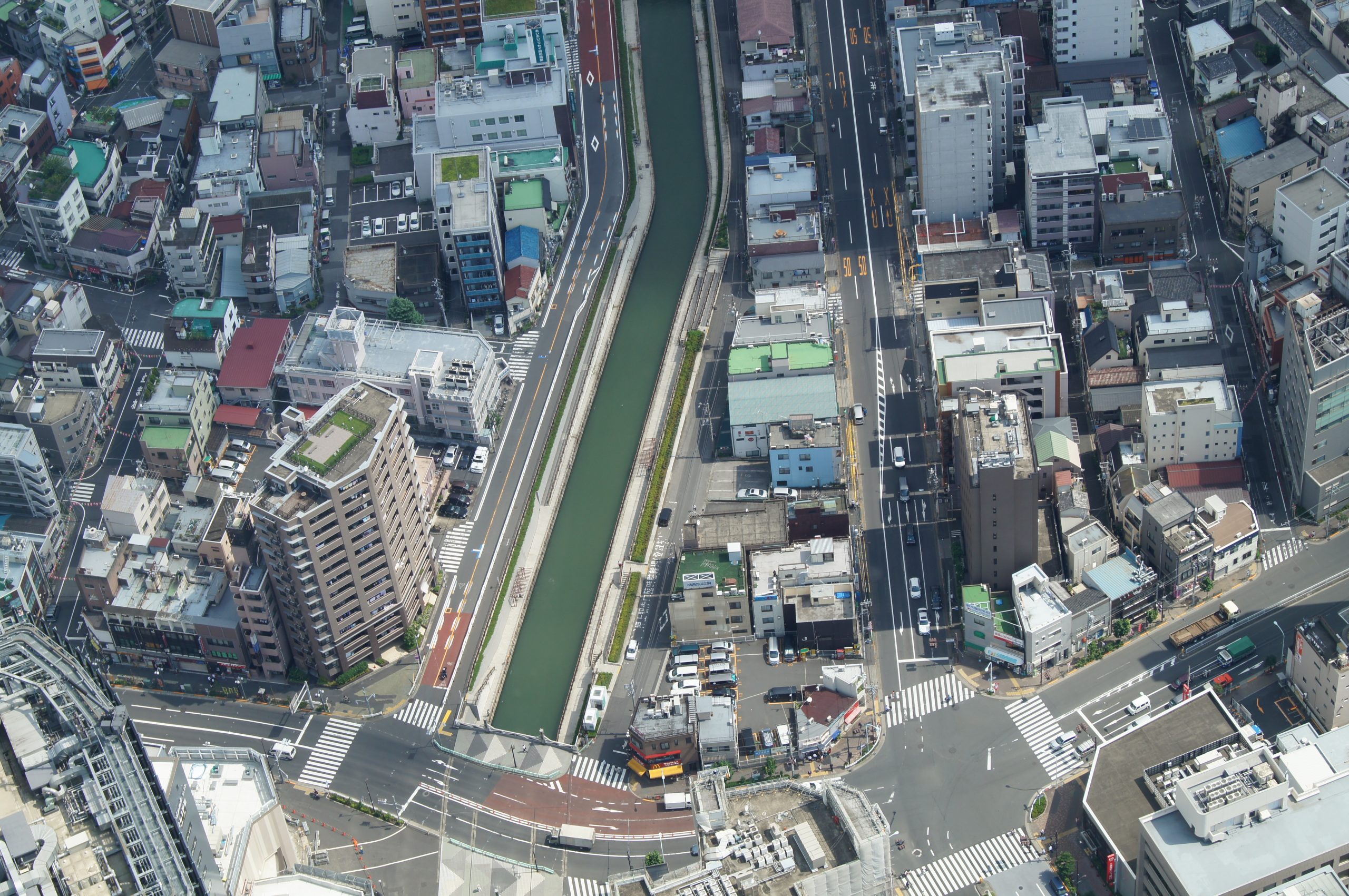
Tokyo Tower’s viewpoint is much lower, but that isn’t necessarily a disadvantage. You’re closer to the streets and buildings, picking out individual bits of the city rather than looking down on all of it from 350 or 450 metres up. And there’s one thing Skytree can’t offer: you’re actually standing inside Tokyo Tower.
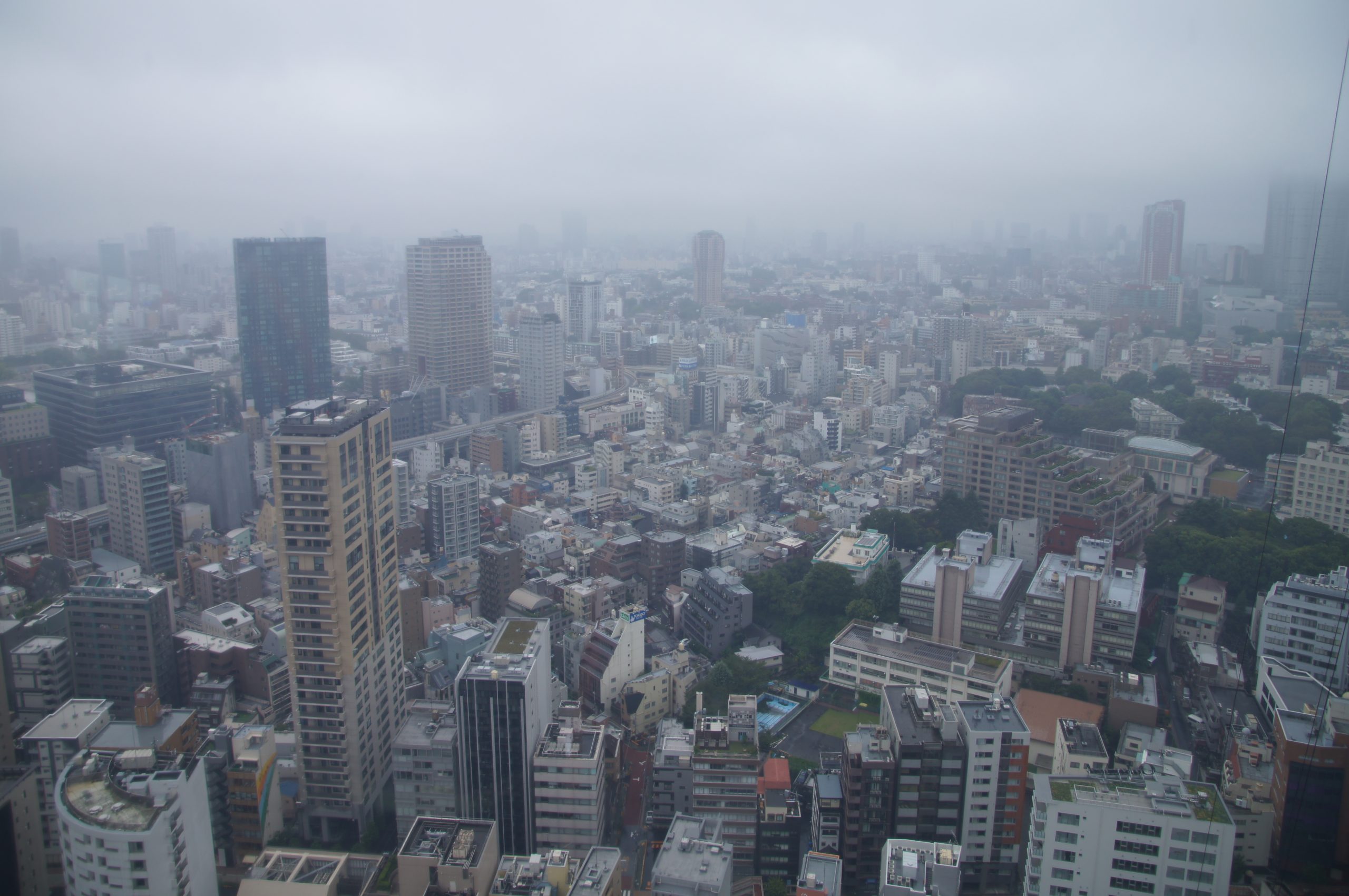
So if you want the biggest possible panorama, go for Skytree. If being closer to the city and going inside the tower itself matter more to you than sheer height, go for Tokyo Tower. Both have glass-floor sections too, although you’re entirely free to admire those without enthusiastically marching into the middle of the glass.
Price and booking
Tokyo Tower is the cheaper way up, as long as you stick to its Main Deck.
At the time of writing, an adult Main Deck ticket costs ¥1,500. The Top Deck Tour, which includes the Main Deck, is ¥3,300 online or ¥3,500 at the counter. High-school students and children pay less, down to ¥600 for the Main Deck and ¥1,500 online for the Top Deck Tour for small children aged four and over.
Skytree costs more for the basic deck, and its prices now vary by date. Adult tickets bought online start at ¥1,800 for the Tembo Deck, or ¥3,000 for the Tembo Deck and Tembo Galleria together. Buying at the fourth-floor ticket counter or machines on the day adds a ¥500 service fee per ticket. Online tickets are for a set date and entry time, and cancelling costs 20% of the price from 30 days before your visit.
Travelling as a family, or not that bothered about getting as high as possible? Then the Main Deck at Tokyo Tower is far easier to justify. Skytree earns its extra cost when height is the whole point. If it’s specifically that 350 or 450-metre view you’re after, the extra yen are buying you something Tokyo Tower can’t give you.
I would book Skytree ahead if your dates are set. We queued in 2015, and buying online also saves you the counter fee. There’s a catch, though, and it’s the weather.
For more on the decks themselves, our Skytree and Ryogoku day guide covers choosing between Skytree’s two levels, and our Tokyo Tower walk covers Main Deck or Top Deck.
Weather, cloud and Mount Fuji
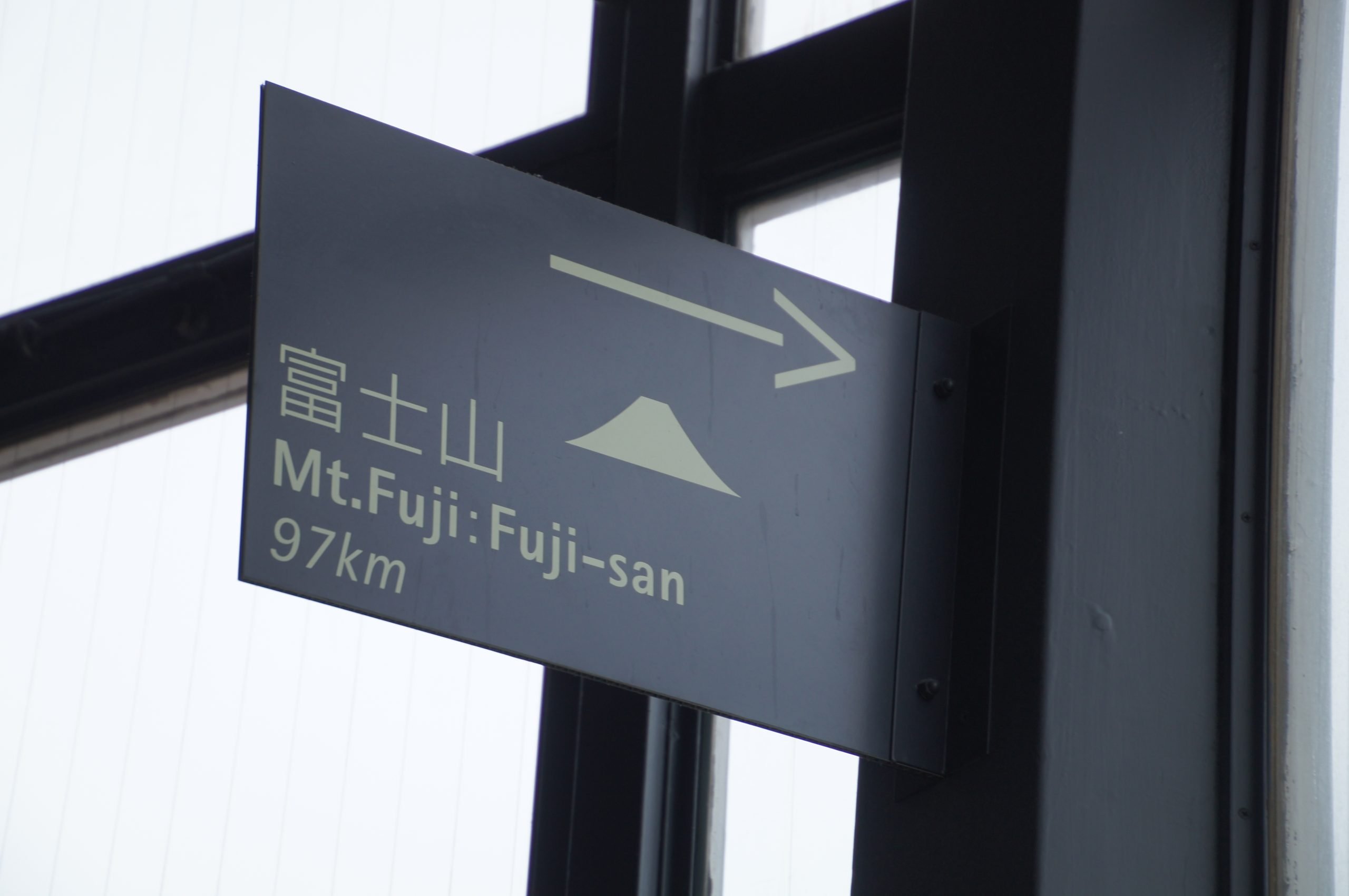
I wouldn’t build a tower visit around seeing Mount Fuji. Visibility in Tokyo changes quickly, and we found that out before we’d even got to Skytree. Two days earlier in 2015 we had gone up the free observation deck at the Tokyo Metropolitan Government Building hoping for Fuji. Cloud had other ideas.
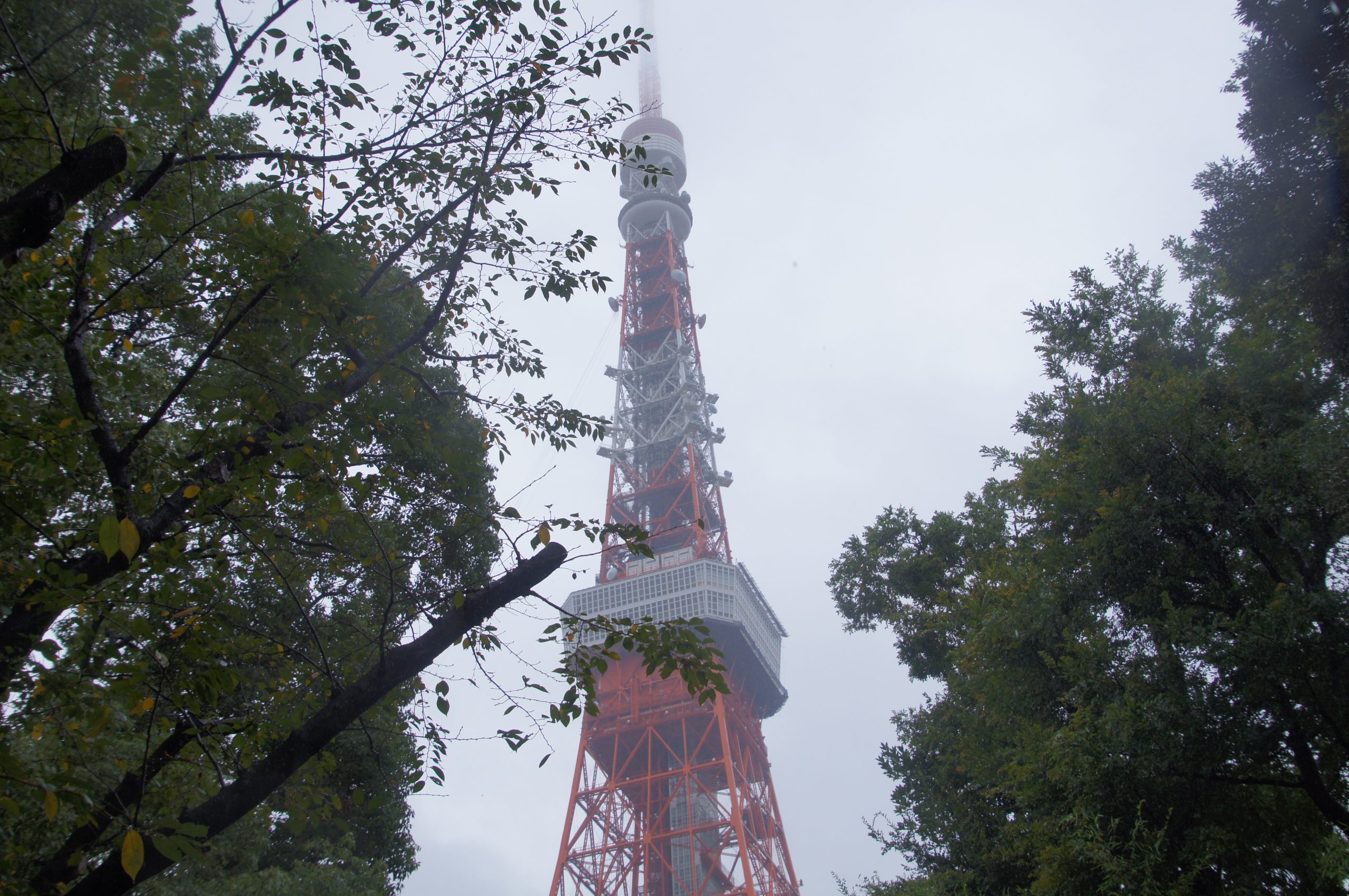
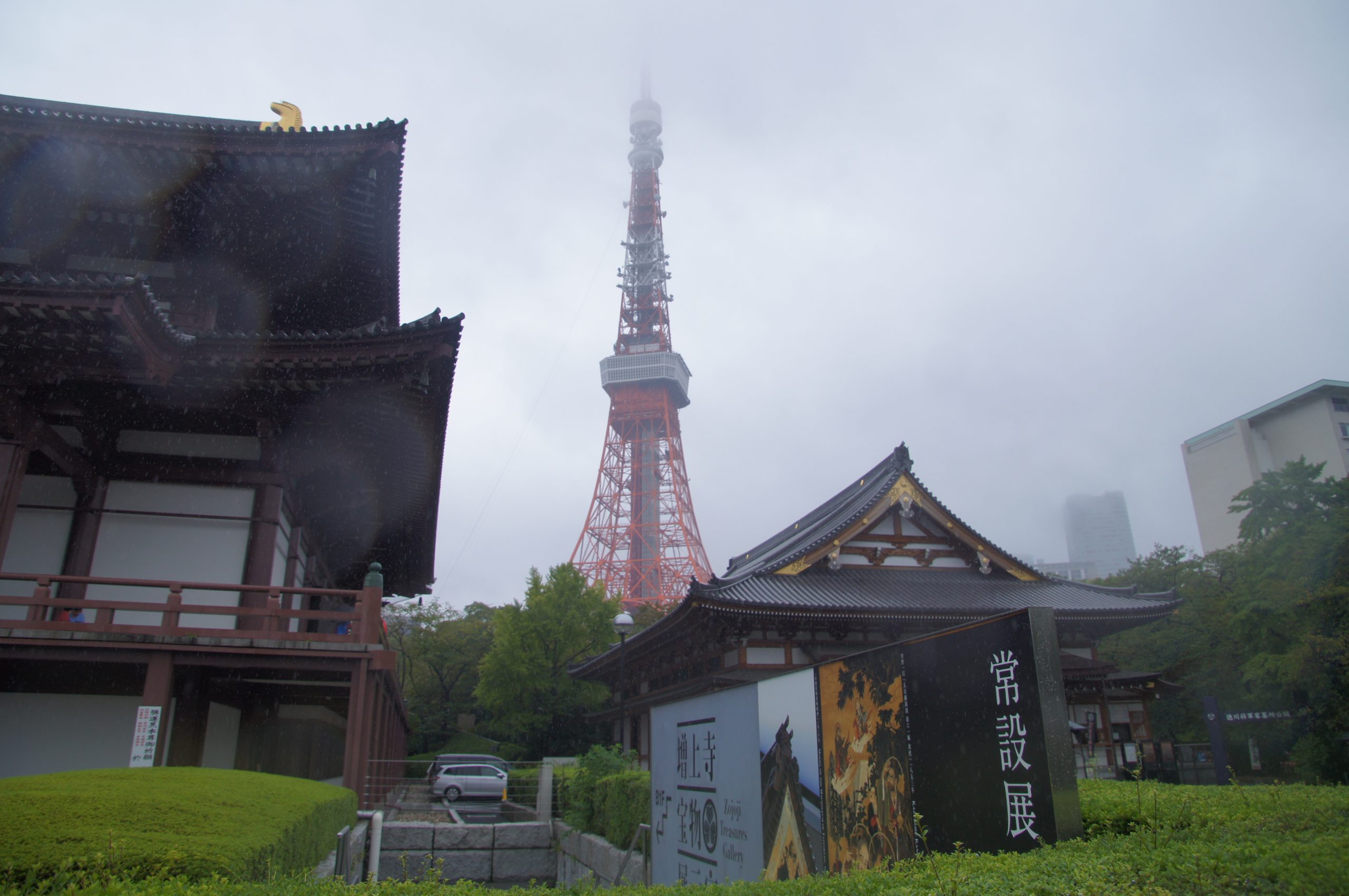
In 2017 the weather changed our plans altogether. A typhoon was heading towards Japan, so we pushed Nikko back a day and went up Tokyo Tower instead, as it was very close to our hotel. It was a rainy day. Looking up from underneath, the top of the tower disappeared into low cloud. We made the most of it, but it’s hardly the weather you’d pick for an observation deck.
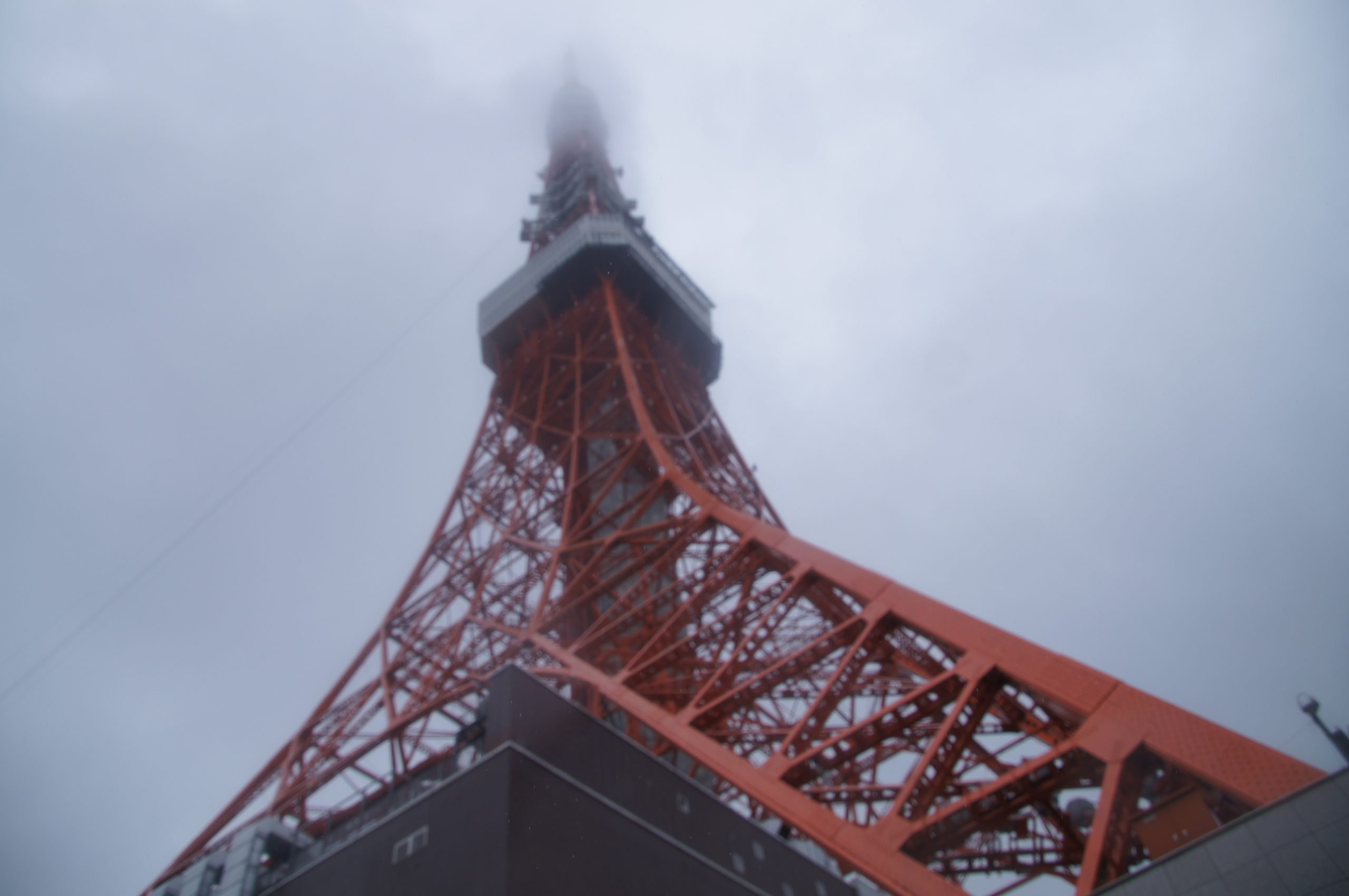
In other words, choosing the lower tower doesn’t make you immune to bad weather. Skytree’s decks sit considerably higher, so low cloud is more of a worry there, and Tokyo Tower’s Top Deck can close in poor weather anyway.
There’s another thing to think about before booking. Skytree nudges you towards a dated online ticket, but that ticket also commits you to whatever the weather decides to do that day. If low cloud is forecast and your plans are flexible, I’d switch days or settle for a lower deck rather than stubbornly sticking to the plan. That’s what we did with Nikko in 2017: rainy Tokyo Tower and Yokohama one day, then a scorching hot, sunny Nikko the next.
As for Mount Fuji, treat it as a bonus. Later on that same trip we had the clearest sky we’d ever seen in Japan, and spotted Fuji from the breakfast table at our Roppongi hotel. Which tells you how much those long-distance views depend on the day rather than the building.
Going up after dark
We went up both towers during the day, so I can’t compare the two decks at night first-hand. There’s one difference I’d still weigh up, though. From Skytree, Tokyo Tower can be part of the night view. From Tokyo Tower, for fairly unavoidable architectural reasons, it can’t.
Later on our 2017 trip we stayed on the 52nd floor of the Ritz-Carlton Tokyo. From the living room of our suite we could easily see Tokyo Tower, and the bedroom gave us a glimpse of Skytree. As the day went on, the view changed from a busy business city to a never-ending cityscape of red, pulsing lights, and we sat on the sofa for hours on end just watching it all.
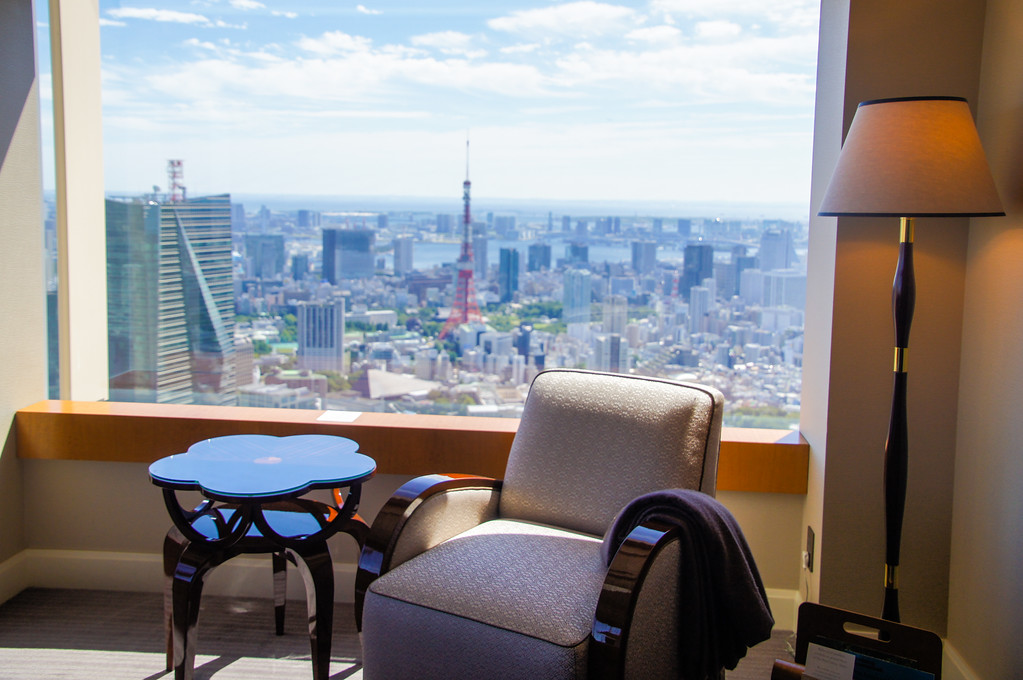
Sometimes the landmark is part of the view you want. If seeing Tokyo Tower lit up on the skyline matters to you, Skytree has the edge. Both towers stay open into the evening, so check the official sites for current closing times.
Which one fits your Tokyo route
Tokyo is big enough without crossing it purely because a comparison article told you one tower was marginally “better”. Where you’re spending the rest of the day should carry a lot of weight here.
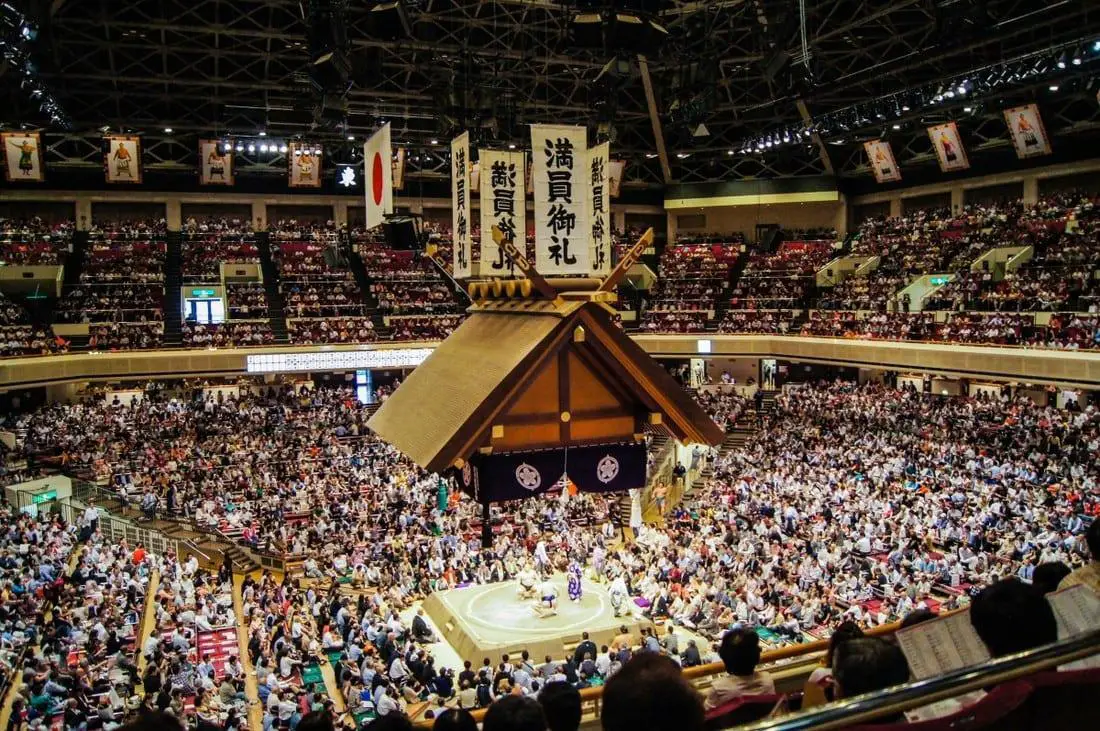
Skytree is on the east side of the city, served by Tokyo Skytree Station and Oshiage, and it pairs naturally with Asakusa, Sumida and Ryogoku. In 2015 we carried on from the decks to the Sumida Aquarium in Solamachi, then to the Edo-Tokyo Museum and the sumo in Ryogoku. It was too much for one day, but it shows how much of east Tokyo sits within reach of the tower. Our Skytree and Ryogoku day guide covers the wider area and how long to allow.
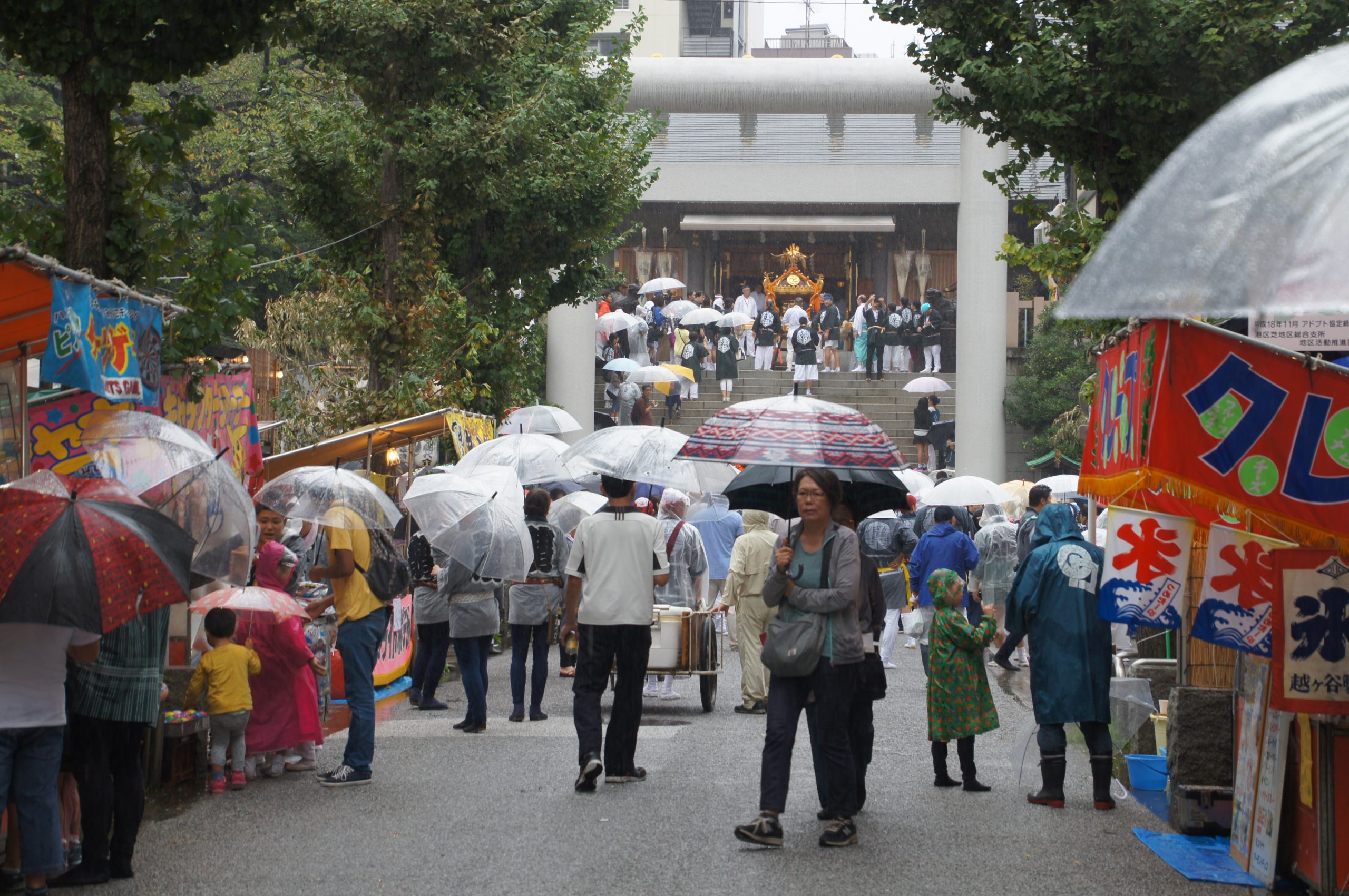
Tokyo Tower sits in Minato, with Akabanebashi, Onarimon, Kamiyacho and the Daimon/Hamamatsucho area all useful for getting there. It fits more naturally with Shiba Park, Zojoji, Atago and Roppongi. Our 2017 day is a decent example. We were staying at the Shiba Park Hotel, started in Shiba Park, went up the tower and then caught the train to Yokohama. On the way to the station we stumbled across a local celebration, random to us though probably not to the people celebrating. We’d walked 16,500 steps by the end of the day.
Our Tokyo Tower walk covers that area route and how long to allow, and if you’re still choosing a base, our guide to the Tokyo hotels we actually stayed in includes both of the hotels above. And if you still can’t decide, let geography settle it. Heading east towards Asakusa and Ryogoku? Choose Skytree. Spending the day around Minato, Shiba or Roppongi? Tokyo Tower makes much more sense. Our five-day Tokyo itinerary shows how the different areas fit together.
When neither tower is the answer
There are two situations where I’d skip both.
If you mainly want a free view, try the observation rooms at the Tokyo Metropolitan Government Building in Shinjuku. We got cloud instead of Fuji there in 2015, but at least it hadn’t cost us anything. Which rooms are open, and when, can change, so check before you go.
For an open-air rooftop, look at Shibuya Sky instead. It didn’t exist when we were in Japan, so we haven’t been up, but standing outside on a rooftop is a different thing altogether from the glassed-in decks at Tokyo Tower and Skytree. Entry is by timed ticket and popular slots can sell out, so book ahead. It’s easy to combine with our Shibuya, Harajuku and Shinjuku day.
Our take
If the view itself is your priority on a first trip, and you’re already spending time in the east of the city, Skytree is the one to pick. That’s where you get the scale most people have in mind when they start comparing Tokyo’s two towers.
But that doesn’t make Tokyo Tower the consolation prize. It’s the better choice if you want to spend less, you’re staying around Minato or you’re pairing it with Shiba Park and Zojoji. And there’s something quite different about going inside the orange-and-white tower you keep spotting across the city.
Two visits on two different trips, one of them in the rain, don’t give me a reason to call one tower universally better. It comes down to what you want from the view – height and scale, or the landmark and the part of Tokyo around it.
Have you been up Tokyo Tower or Tokyo Skytree? Which one would you choose?