

Written by Katharina Mungall
Travel writer, photographer and architect
Hakone is worth a day trip from Tokyo if you want a little bit of everything: mountains, an atmospheric shrine, a volcanic valley, a boat that has dressed up as a pirate ship, outdoor art and, if you plan the day carefully, an onsen before heading back. It’s possible in one day. But it’s not a leisurely one.
We did this route during our first trip to Japan in September 2015. I had never even been to Asia before, so naturally I decided that what our holiday needed was a day involving a train, a mountain bus, a boat, a replacement bus, a cable car, another train and public nudity. It was a lot. It was also one of my favourite days outside Tokyo!
Our route followed the Hakone loop clockwise: Hakone-Yumoto → Moto-Hakone and Hakone Shrine → Lake Ashi → Togendai → Owakudani/Sounzan → Gora → Hakone-Yumoto. Owakudani was closed because of volcanic activity when we visited, so we used the replacement bus. That saved us time, although it was not quite the sulphurous adventure I had planned.
If Mount Fuji is your only reason for leaving Tokyo, I would choose our Lake Kawaguchiko day trip instead. If you want grand shrines and forest rather than a Fuji-area circuit, compare it with our Nikko day trip. Hakone is the better all-rounder. Fuji is a possible extra, not part of the contract.
Is Hakone worth a day trip from Tokyo?
Yes, especially if the rest of your Japan itinerary by train is heavy on cities. Hakone is less than 100 kilometres from Tokyo, but it feels wonderfully removed from it. The loop is part sightseeing route, part transport obstacle course. Oddly, that is half the fun.
A day trip is best for travellers who are short on time and happy to keep moving. Stay overnight if a ryokan, a long onsen session or a slower look around the museums is important to you. One day gives you the outline. Two days let you exhale.
It’s also worth being honest about what Hakone is not. It is not the safest bet for an unobstructed view of Mount Fuji. Clouds can swallow the mountain completely. And although the transport network is excellent, queues and a single closed section can rearrange your day with impressive efficiency.
Our clockwise Hakone loop itinerary
This is based on the route we actually followed, with current transport details and prices checked afterwards. The timings are targets, not commandments. You are crossing a mountainous area using several forms of public transport; Hakone will not care that your spreadsheet says lunch is at 12:17!
- Tokyo to Hakone-Yumoto
- Bus to Moto-Hakone
- Hakone Shrine and the lakeside torii
- Old Tokaido Cedar Avenue and optional Hakone Checkpoint
- Lake Ashi sightseeing cruise to Togendai
- Ropeway to Owakudani and Sounzan
- Cable car to Gora and the Hakone Open-Air Museum
- Mountain railway to Hakone-Yumoto, then an onsen
7:00–7:30am: travel from Shinjuku to Hakone-Yumoto
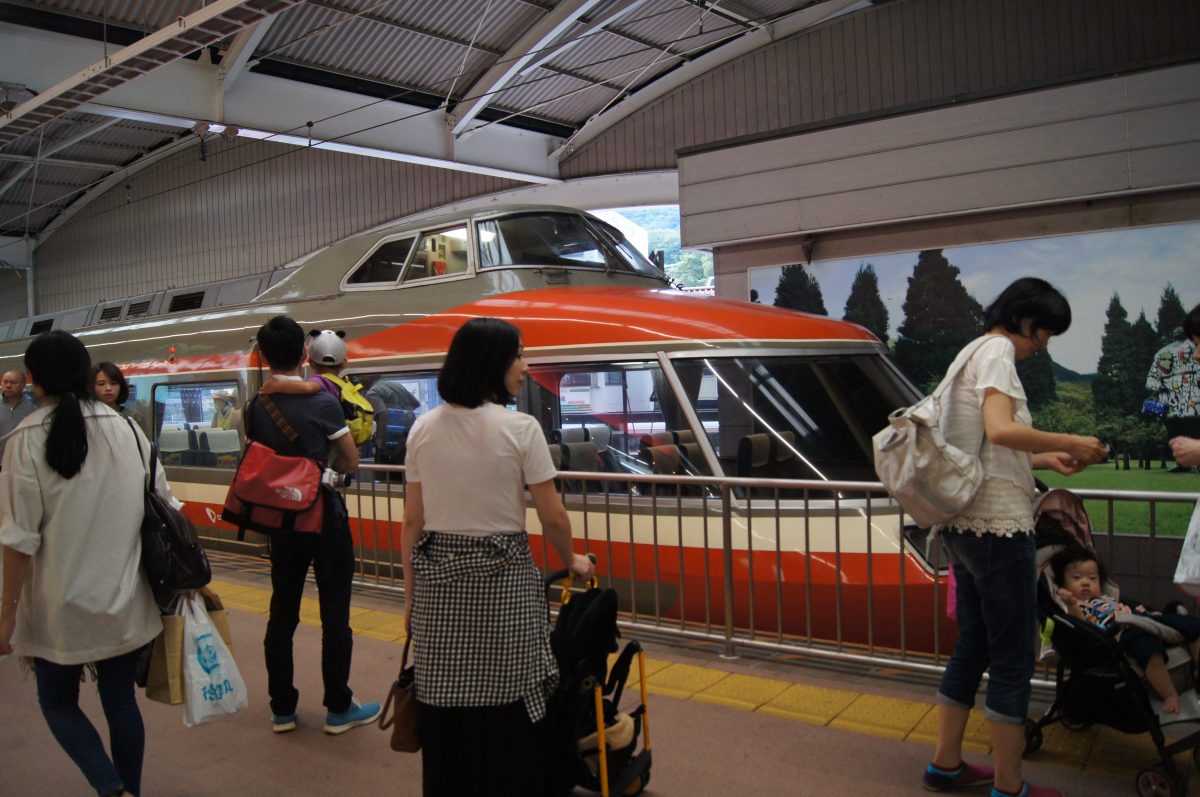
The easiest start is the Odakyu Romancecar from Shinjuku. It is a reserved-seat limited express and takes roughly 80–90 minutes to reach Hakone-Yumoto without a change. The name makes it sound as though someone might scatter rose petals down the aisle. They do not. It’s simply a comfortable train.
The regular Odakyu service is covered by the Hakone Freepass from Shinjuku. The Romancecar needs a separate limited-express ticket: currently ¥1,200 each way. If you are staying closer to Tokyo Station, the Shinkansen to Odawara is faster, but you will need a separate JR ticket and the Hakone-area version of the Freepass.
On our trip, we aimed for the 7:38am departure and reached the Hakone area in time to begin the loop before the middle of the day. Early matters here. A late start is how a pleasant circuit becomes a competitive transfer event.
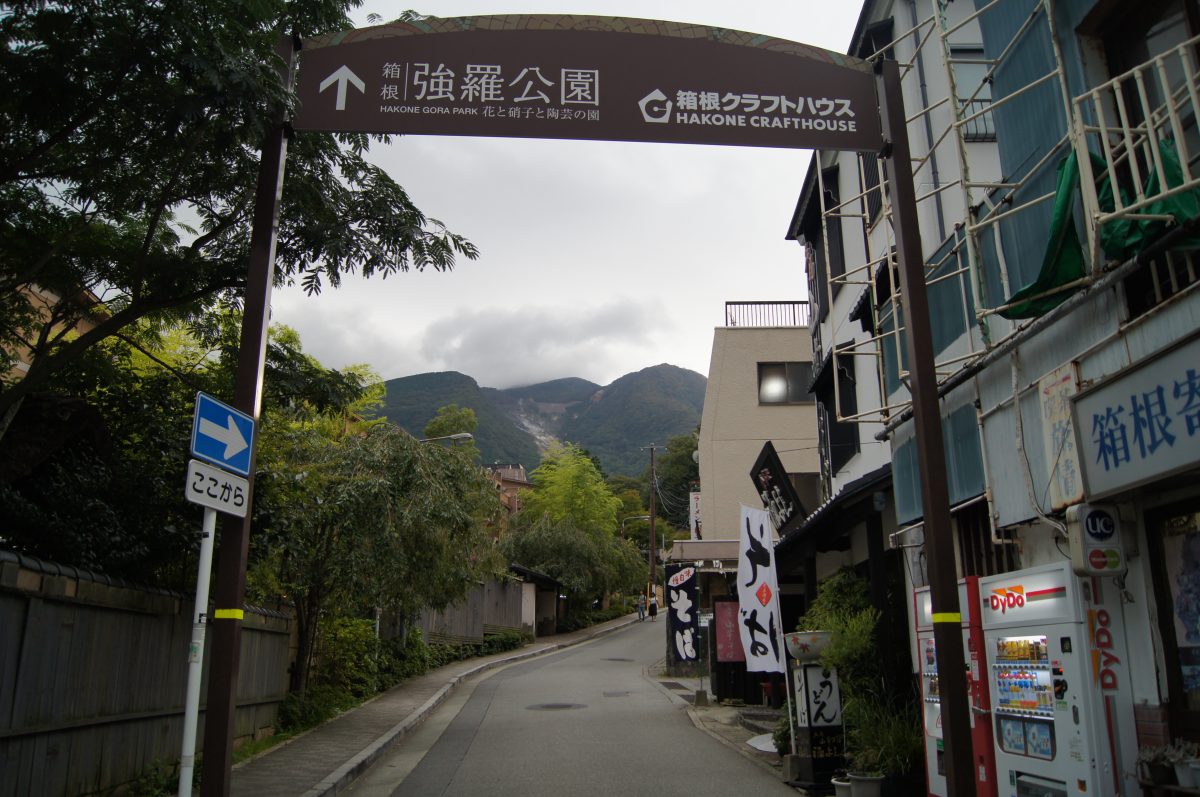
9:15–10:00am: bus from Hakone-Yumoto to Moto-Hakone
For the clockwise route, leave Hakone-Yumoto Station and take a bus towards Moto-Hakone. Allow roughly 40 minutes before traffic delays. The mountain road is pretty, bendy and not especially kind to anyone who gets travel sick. Try to sit down if you can.
Bus letters, stops and timetables change, so use the official journey planner rather than an old screenshot from a blog—including an old screenshot from this blog. Several routes serve the lake side of Hakone. Also check the destination display before boarding; confidence is not a transport ticket.
10:00–11:15am: Lake Ashi and Hakone Shrine
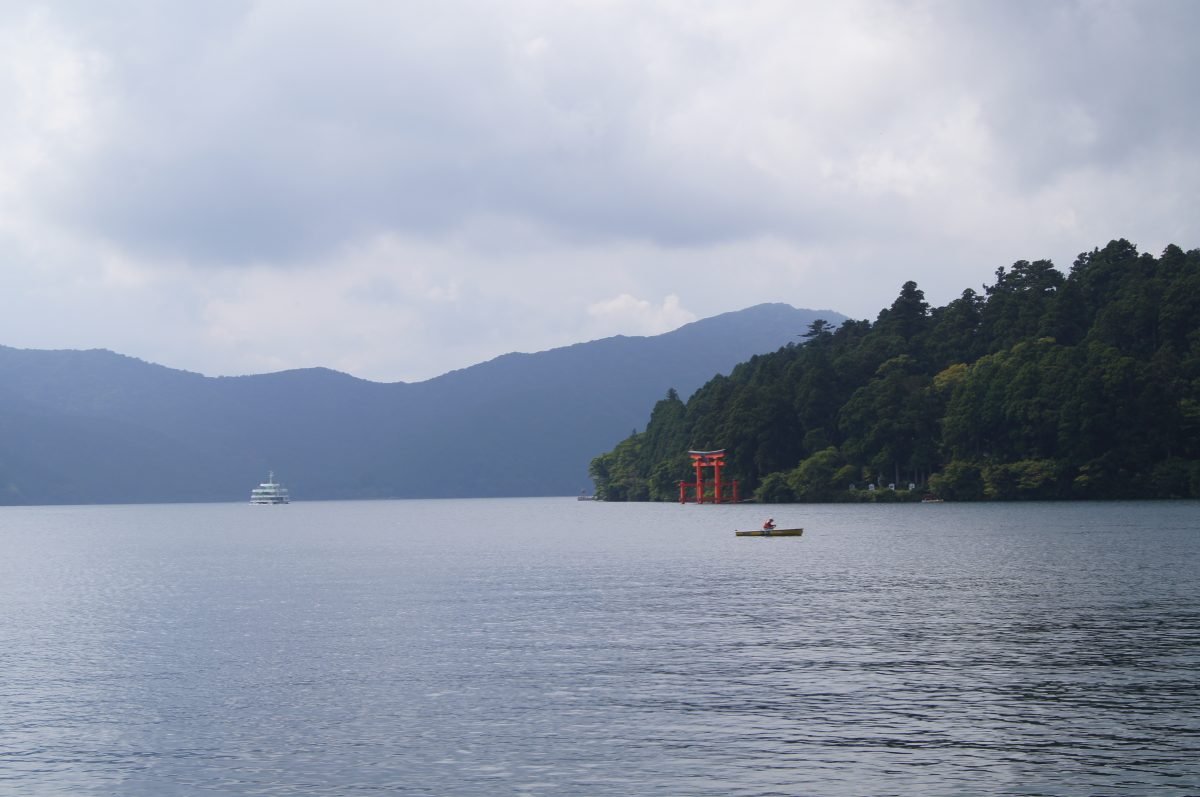
Moto-Hakone deposits you beside Lake Ashi, with forested slopes rising behind the water. On a clear day, Mount Fuji may appear beyond the lake. On a cloudy one, you will stare at the correct patch of sky and wonder whether everyone has collectively invented a mountain.
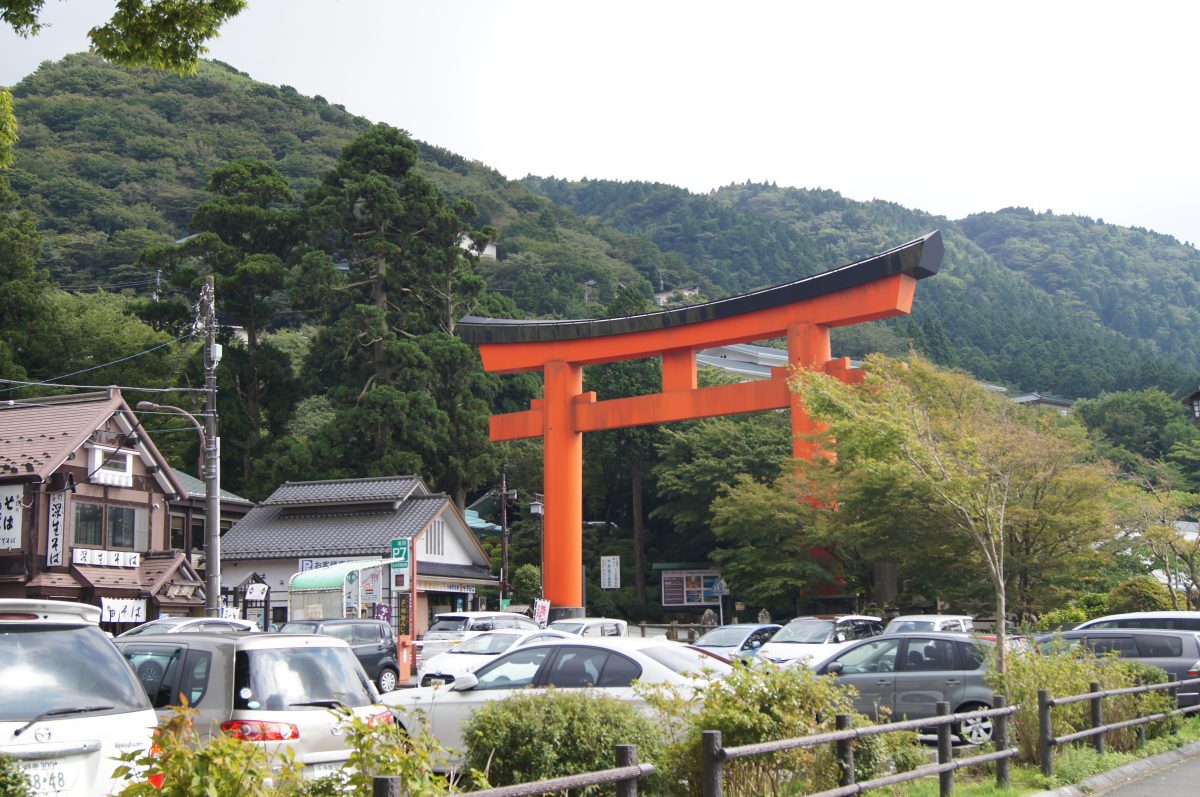
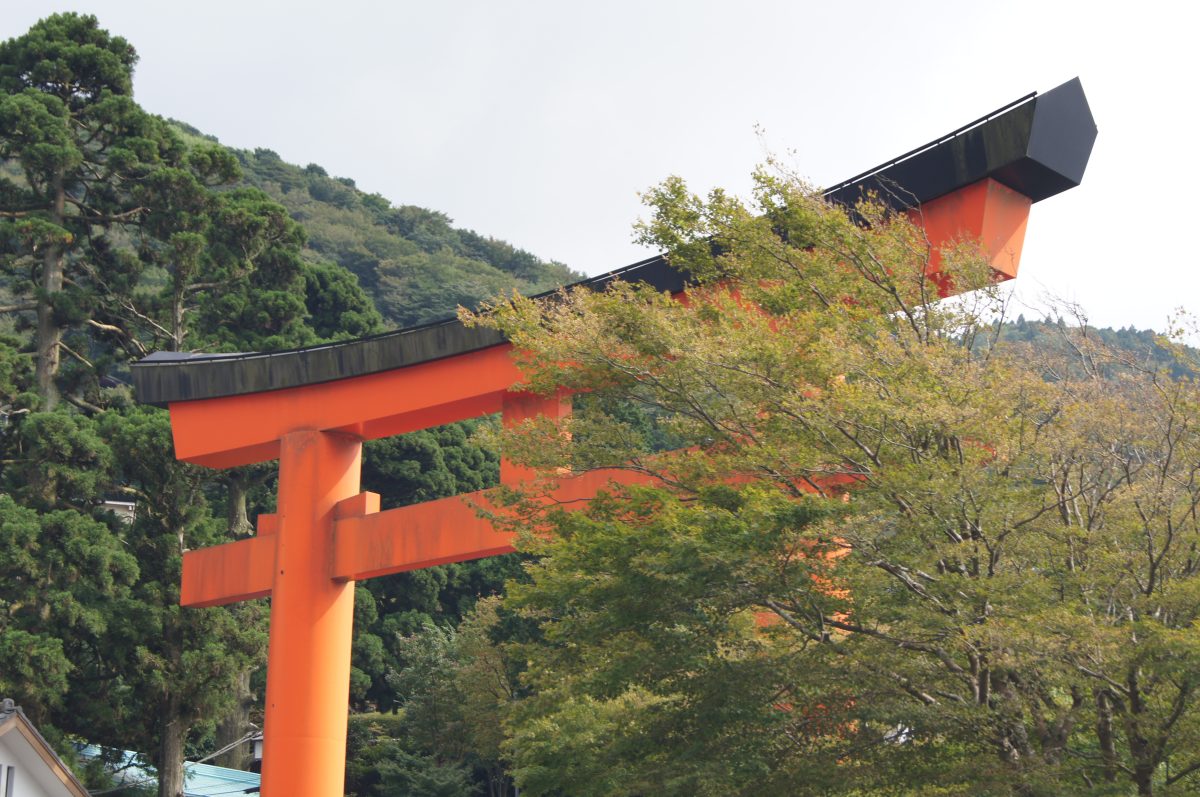
Walk for about ten minutes along the lake to Hakone-jinja. The shrine was founded in 757 and sits among tall cedar trees at the foot of Mount Hakone. Its vermilion Heiwa no Torii stands in the water and now attracts a queue of people waiting for the same photograph.
Do go beyond the torii. The climb through the trees to the shrine is the memorable part. Hakone Shrine was one of the most atmospheric shrines we visited during our first two weeks in Japan. Mist and rain suit it beautifully, which is useful because Hakone is quite capable of supplying both.
Time-saving advice: if the photograph queue is long, skip it. The shrine does not become less lovely because you failed to stand under one particular gate.
11:15am–12:30pm: walk the Old Tokaido Cedar Avenue
Return to Moto-Hakone and continue along the southern shore towards Hakone-machi. Part of the old Tokaido road survives here beneath mature cedars. It is a satisfying stretch to walk and adds some history to a day otherwise spent boarding things.
Hakone Checkpoint is at the Hakone-machi end. The reconstructed barrier explains how travellers were controlled on the Edo-period road between Edo and Kyoto. Admission is currently ¥500 for adults, or ¥400 with the Hakone Freepass, and a typical visit takes 30–45 minutes.
But this is your first serious choice. If you want enough time for Owakudani, the Open-Air Museum and an onsen, admire the checkpoint from outside and move on. If Japanese road history fascinates you, go in and accept that the museum later may become a shorter visit.
12:30–1:15pm: lunch near Hakone-machi
Eat before crossing the lake. There are more options around Hakone-machi and Moto-Hakone than at Togendai, and a bowl of soba or curry is easier to enjoy when you are not watching a boat pull away from the window.
Check the cruise departure before ordering. We learned quickly that the most useful lunch reservation in Hakone is the timetable.
1:15–2:00pm: cruise Lake Ashi to Togendai
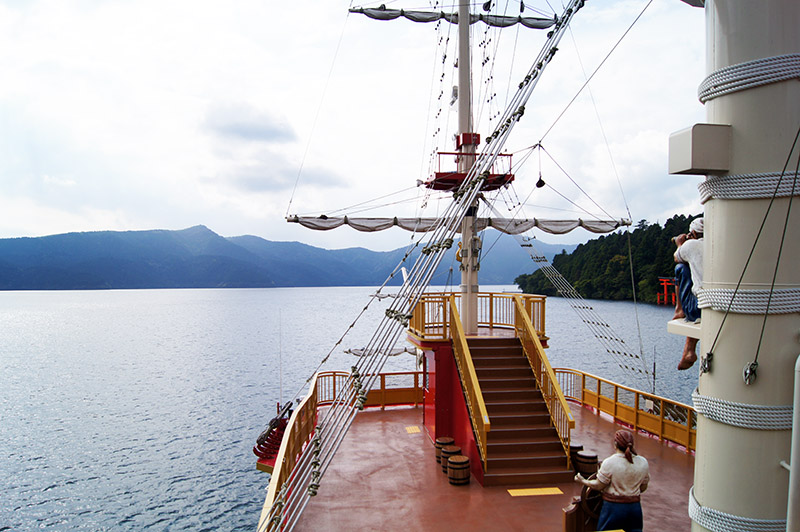
The Hakone Sightseeing Cruise runs between Hakone-machi, Moto-Hakone and Togendai. The ships are designed like European warships and are usually called pirate ships. They are conspicuously silly against the calm lake. I liked them enormously.
The crossing takes about 25–40 minutes depending on your port and service. It’s covered by the Hakone Freepass. Go onto the open deck for views of the lake, the shrine gate and, if the weather cooperates, Mount Fuji.
2:00–3:15pm: Hakone Ropeway and Owakudani
At Togendai, transfer to the ropeway. The journey to Sounzan runs in sections and takes roughly 30 minutes in motion. Allow 40–45 minutes once you include the change at Owakudani, before adding any sightseeing time there.
Owakudani is an active volcanic valley with sulphur vents, steaming ground and the famous kuro-tamago: eggs cooked in the hot spring water until their shells turn black. Local legend says eating one adds seven years to your life. I cannot review either the egg or its effect on longevity because the entire section was closed when we went. Volcanic activity had other plans.
We took the replacement bus from Togendai to Sounzan. It was less dramatic, but it kept the loop moving. If Owakudani is open when you visit, allow 30–45 minutes there. That means you may need to drop the checkpoint, Gora Park or the onsen. You cannot add an hour to the day simply because an egg is involved.
3:15–3:45pm: cable car from Sounzan to Gora
From Sounzan, the Hakone Tozan Cable Car descends to Gora in about ten minutes. It’s a funicular rather than a dangling cable car, with stepped carriages built for the slope. The transfer is simple, and both the cable car and ropeway are covered by the Freepass.
Gora Park is a pleasant optional stop for its gardens, greenhouse and views. We enjoyed how quiet it felt. But on a one-day itinerary it is the first thing I would cut if the Open-Air Museum matters to you.
3:45–5:00pm: Hakone Open-Air Museum
The Hakone Open-Air Museum combines large-scale sculpture with mountain scenery and several indoor galleries. It opened in 1969 as Japan’s first open-air museum and includes a Picasso Pavilion, a stained-glass tower and a footbath.
It’s open from 9:00am to 5:00pm, with last entry at 4:30pm. Adult admission is currently ¥2,000 at the door or ¥1,800 online. An hour is the bare minimum. Ninety minutes is better. If you arrive after 4:00pm, do not spend ten minutes pretending you can still see everything. Choose the outdoor works and one indoor space.
5:00pm onwards: train to Hakone-Yumoto and finish with an onsen
Walk to Chokoku-no-Mori Station and take the Hakone Tozan Railway down to Hakone-Yumoto. The mountain train uses switchbacks to negotiate the steep valley and takes about 35–40 minutes from Gora. Sit near the front or back if you can; watching the driver reverse direction is unexpectedly entertaining.
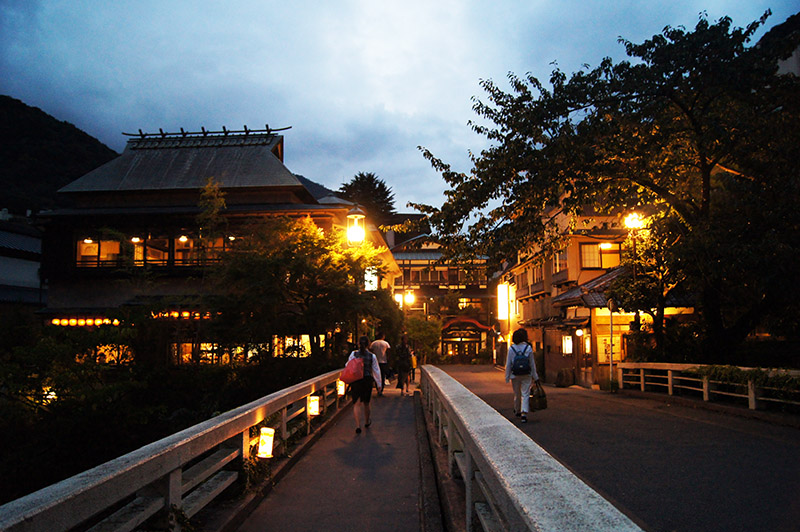
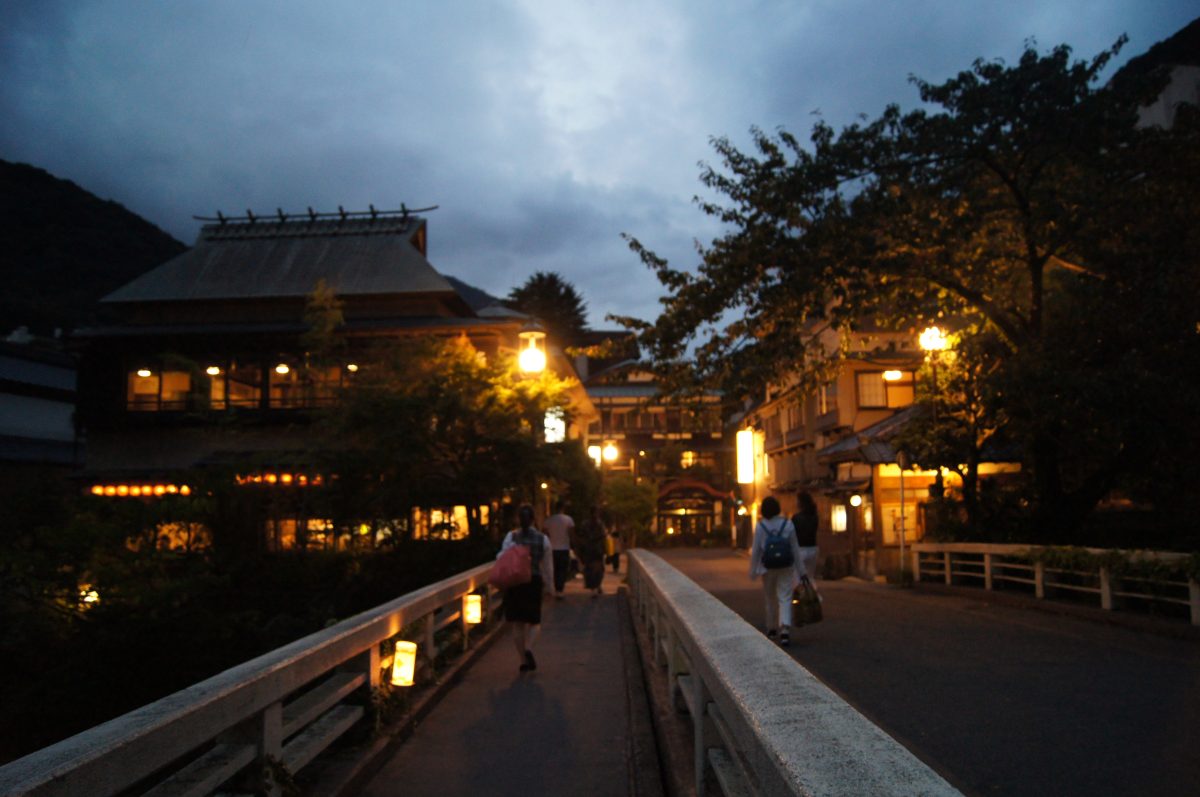
We ended our day in a traditional, gender-separated onsen. I knew perfectly well that swimming costumes were not part of the arrangement. Knowing this and calmly removing all your clothes in a room full of strangers are, it turns out, separate skills.
I was the only non-Japanese woman in the baths and became intensely aware of every limb I possessed. Also, everyone else was simply getting on with it. But once I stopped behaving as though I had accidentally wandered into the wrong changing room, it became one of my favourite parts of Hakone. The hot water after a full day on foot was glorious.
For a current, easy-to-research option, Hakone Yuryo is a day-use onsen three minutes from Hakone-Yumoto by free shuttle bus. Its public baths cost ¥1,700–¥1,800 on weekdays and ¥2,000–¥2,200 on weekends and holidays. Last admission is 7:00pm on weekdays and 8:00pm on weekends and holidays, so this finish works only if the rest of the loop stays on schedule. Towels cost extra. Hakone Yuryo removed its tattoo restrictions in April 2025. Public baths are still nude and gender-separated; private baths are available by reservation.
Clockwise or counter-clockwise: which Hakone loop is better?
Both work. The standard counter-clockwise route goes Hakone-Yumoto → Gora → Sounzan → Owakudani → Togendai → Lake Ashi → Moto-Hakone → Hakone-Yumoto. Our clockwise version reverses it.
| Direction | Best reason to choose it | Main drawback |
|---|---|---|
| Clockwise | Reaches Hakone Shrine earlier and leaves the onsen until the end | The first bus can be busy, and a slow shrine visit squeezes the museum |
| Counter-clockwise | Follows the best-known sequence and puts the ropeway earlier | You may meet more people following the same plan |
I would still choose clockwise for a day trip built around the shrine and a final soak. But there is no magical, permanently crowd-free direction. Check the day’s service notices and weather. If the ropeway has a scheduled closure, let that decide for you.
Is the Hakone Freepass worth it for one day?
Usually, yes—if you are doing the full loop. The name is confusing because the shortest pass is valid for two days, but you can use it for a one-day trip. It’s a two-day ticket, not a demand that you find a hotel.
The adult 2-day pass costs ¥7,100 from Shinjuku or ¥6,000 from Odawara. The Shinjuku version includes one round trip on the regular Odakyu Line between Shinjuku and Odawara, plus unlimited travel on eight forms of transport in the Hakone area. That includes the mountain railway, cable car, ropeway, sightseeing cruise and designated buses. The Romancecar supplement is not included.
Our 2015 notes list the pass at ¥5,140 from Tokyo. It now costs rather more. Time has marched on, as it tends to do when nobody is watching the ticket machine. Even so, the current pass makes sense when you combine the round trip with the complete loop, and it removes the need to buy a ticket at every transfer.
Buy it through the official Odakyu Hakone Freepass page, an Odakyu ticket machine or a sightseeing service centre. If you use the digital version, keep your phone charged and connected. A dead battery is a very modern way to make a mountain day more complicated.
How much does a Hakone day trip cost?
| Item | Adult price checked September 2026 | Note |
|---|---|---|
| Hakone Freepass from Shinjuku | ¥7,100 | 2-day pass; regular Odakyu return and Hakone loop transport included |
| Romancecar supplement | ¥1,200 each way | Add this to the Freepass if you want the limited express |
| Hakone Open-Air Museum | ¥1,800 online or ¥2,000 on the day | Open 9:00am–5:00pm; last entry 4:30pm |
| Hakone Checkpoint | ¥500, or ¥400 with the Freepass | Optional on a tight day |
| Hakone Yuryo public onsen | ¥1,700–¥1,800 weekdays; ¥2,000–¥2,200 weekends/holidays | Towels cost extra; private baths cost considerably more |
Add lunch, drinks and any shopping. A realistic total with a return Romancecar, museum and public onsen is roughly ¥13,000–¥15,000 per adult before food. You can spend less by using the regular Odakyu train, choosing either the museum or onsen, and resisting the persuasive little boxes of local sweets.
What to cut from a one-day Hakone itinerary
The current live version of this article tried to fit nearly everything into one day. That was optimistic. We also moved faster because Owakudani was closed. If it is open for you, something else has to give.
- For the classic first visit: keep Hakone Shrine, the cruise, Owakudani and the Open-Air Museum. Skip the checkpoint and Gora Park.
- For history and scenery: keep the shrine, Old Tokaido Cedar Avenue, checkpoint, cruise and Owakudani. Skip the museum.
- For a slower day: choose either the shrine side or the museum side of the loop, then finish at an onsen.
- For families or anyone with limited mobility: cut the Cedar Avenue walk and allow more time for queues and transfers.
Do not build the day around a minute-by-minute schedule copied from someone else’s visit. Use the route as a sequence and decide your two non-negotiable stops before you leave Tokyo.
Hakone or Kawaguchiko for a day trip?
| Choose Hakone if… | Choose Kawaguchiko if… |
|---|---|
| You want onsen, art, a shrine and several scenic forms of transport | Your main goal is a closer, broader view of Mount Fuji |
| You enjoy a varied loop with several short stops | You prefer lakeside cycling or a simpler out-and-back day |
| You would consider staying in a ryokan overnight | You want the Fuji Five Lakes landscape and photography |
Both depend on clear weather for Fuji. Our Kawaguchiko day-trip guide explains that route, including the small matter of Gary proposing beside the lake while I was busy criticising his timing. Hakone has less romance of that sort, despite the train name. It has the better onsen.
Practical tips for one day in Hakone
- Travel on a weekday if possible. Weekends and Japanese holidays bring heavier queues.
- Check transport status before leaving Tokyo. The ropeway and cruise can stop because of wind, weather, maintenance or volcanic conditions.
- Wear layers. Hakone can be cooler and wetter than central Tokyo.
- Bring only a day bag. This route involves repeated transfers and sometimes compact buses. Use luggage forwarding or lockers if Hakone sits between two hotels.
- Download your tickets and keep your phone charged. This matters if you use the digital Freepass.
- Do not count on Fuji. Enjoy the loop you can see rather than the mountain you cannot.
- Read the onsen rules before going. Wash before entering the bath, keep towels out of the water and check the current policy on tattoos and children.
If you are still arranging the Tokyo part of your trip, our Tokyo itinerary for first-time visitors shows where Hakone fits. For a gentler coastal alternative, look at our Kamakura day trip. And our Japan travel guide ties the whole country together without pretending you can see it all in a fortnight. For the least complicated option, our Yokohama day trip combines the Ramen Museum with a flexible waterfront route.
Hakone day trip FAQs
Can you visit Hakone as a day trip from Tokyo?
Yes. Leave Tokyo around 7:00–7:30am and allow 11–13 hours for the return trip and loop. A day is enough for the main sights, but you need to choose your priorities.
Should I do the Hakone loop clockwise or counter-clockwise?
Either direction works. We went clockwise, starting with the bus to Moto-Hakone, because it put Hakone Shrine in the morning and the onsen at the end. Counter-clockwise puts the train, cable car and ropeway first.
Is the Hakone Freepass worth buying for one day?
Usually yes if you complete the loop. The shortest pass is valid for two days, but it can be used on a one-day visit and covers the main local transport. The Romancecar limited-express ticket costs extra.
Can you see Mount Fuji from Hakone?
You can see Mount Fuji from Lake Ashi, the ropeway and Owakudani in clear weather. It is never guaranteed. Choose Kawaguchiko instead if a close Fuji view is the main purpose of your day trip.
What happens if the Hakone Ropeway is closed?
Check the official transport status before leaving Tokyo. Replacement buses may operate during planned maintenance or closures, as they did on our visit, but the exact arrangement depends on the disruption.
Is one day or two days better for Hakone?
One day is enough for a brisk loop. Two days are better if you want a ryokan, an unhurried onsen, several museums or a second chance to see Mount Fuji.
Our verdict
Hakone made an excellent day trip from Tokyo, but not because it gave us one perfect headline sight. It was the combination: the shrine in the trees, the faintly ridiculous ship, the mountain railway and that final onsen when my feet had started filing formal complaints.
Would I do it again? Yes! I would leave early, keep the clockwise route and choose fewer stops. I would also allow Owakudani the time we could not give it in 2015. But I would not sacrifice the onsen. A little awkwardness is a reasonable price for feeling that relaxed on the train back to Tokyo.
For wider planning, start with our first-time Japan planning guide. If cost is the part currently making you wince, our Japan travel budget guide will help you decide where to spend and where to be less easily seduced by a pirate ship. Our Tokyo day-trips comparison also shows when Hakone makes more sense than Kawaguchiko, Kamakura, Nikko, Yokohama or Kawagoe.
Would you travel around Hakone clockwise or counter-clockwise?