Is Shuri Castle still worth visiting after the fire? I think it is—but your experience will be very different from ours. We visited Shurijo Castle during our Okinawa honeymoon, before the devastating fire of October 2019, and were able to walk through the richly decorated buildings that were later destroyed.
Even after visiting a rather ridiculous number of castles during our trips around Japan, Shuri stood out as one of the best. It was not trying to be a mainland Japanese castle transplanted somewhere warmer. The vivid red architecture, enormous ceremonial spaces and intricate interiors belonged unmistakably to the former Ryukyu Kingdom.
This guide combines what we genuinely experienced with practical advice for planning a visit today. Where access, ticketing or reconstruction arrangements can change, I have deliberately pointed you to the official Shurijo Castle Park website rather than pretending a travel blog can freeze a building project in time.
SHURI CASTLE AT A GLANCE
Best for: Ryukyuan history, architecture and panoramic views over Naha
Our visit: Before the October 2019 fire, including the former Seiden interiors
How long to allow: Roughly 2–3 hours if you want to explore the wider park without rushing
Getting there: Yui Rail towards Shuri, followed by a walk or local bus
Important: Check the official website for the current reconstruction stage, accessible areas, reservations, opening hours and admission
IS SHURI CASTLE WORTH VISITING?
Yes—particularly if you care about history, architecture or understanding why Okinawa feels so different from mainland Japan. If your only aim is to photograph a perfectly completed red palace, check the current reconstruction status before committing. If you are interested in the Ryukyu Kingdom, the surviving gates, stonework, setting and evolving reconstruction story still give the site considerable value.
Shuri Castle was the main highlight of our Naha sightseeing day. That is not faint praise: we had already visited castles including Himeji and Matsumoto, and Gary will enthusiastically add a fortress to an itinerary whenever one appears within a plausible radius. Shuri was different enough that it never felt like castle number eleven.
Its greatest strength is context. Our morning at the Okinawa Prefectural Museum had introduced the Ryukyu Kingdom and Okinawa’s complicated relationship with Japan, China and the wider region. By the afternoon, Shuri turned that history into spaces we could actually walk through. If possible, I would still pair the museum and castle rather than treating either as an isolated photo stop.
WHAT MADE SHURI CASTLE SO SPECIAL BEFORE THE FIRE?
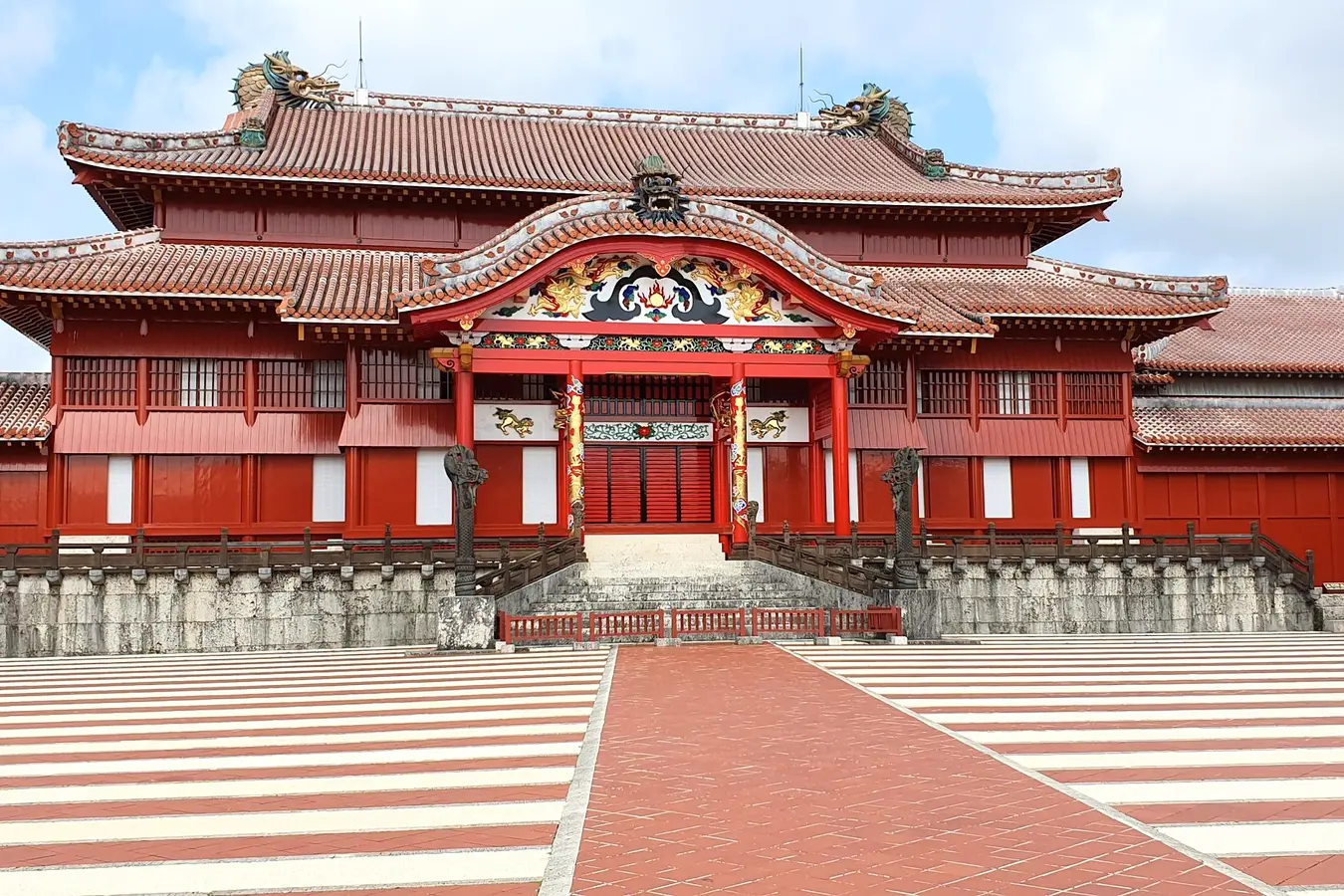
The first thing I remember is the size. The approach unfolded through successive gates and courtyards, and the formal spaces felt genuinely royal. Outside the main hall, striking coloured stripes ran across Una Plaza. They were not decorative queue markings: they organised officials by rank during ceremonies, turning the courtyard itself into part of the architecture of power.
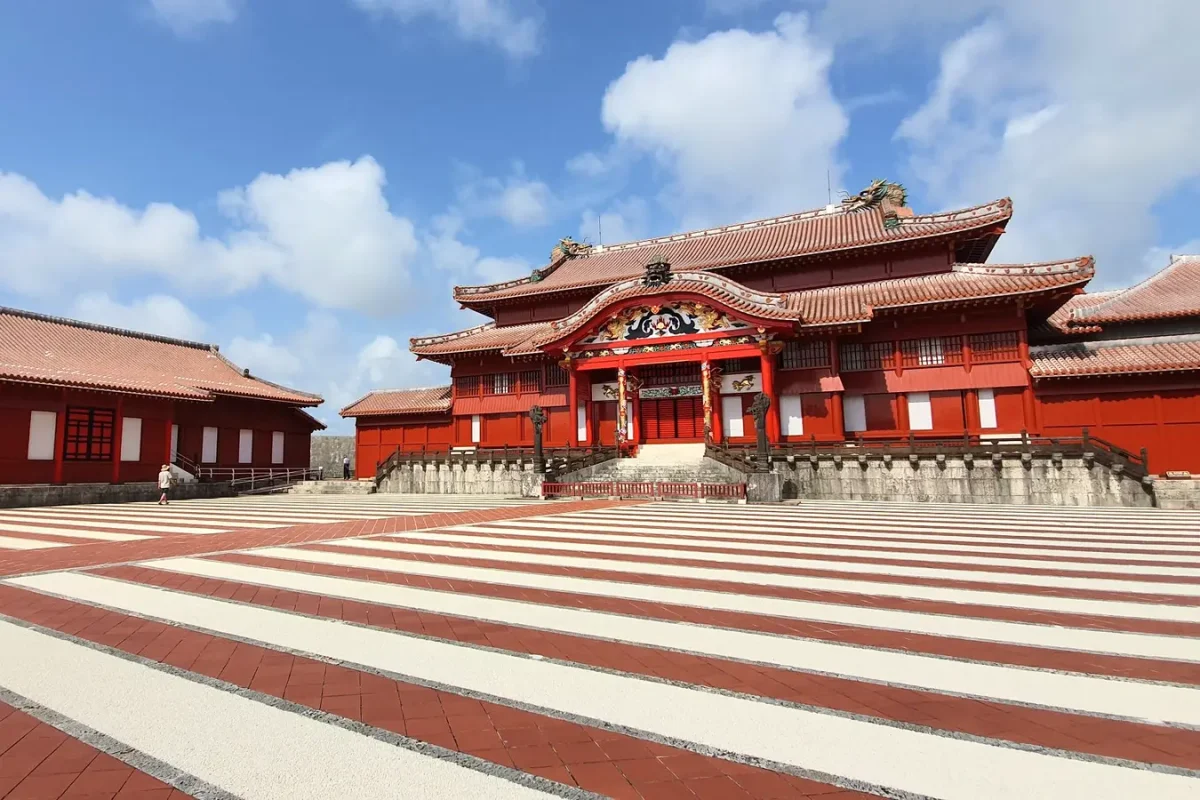
As an architect, I was completely absorbed by how the buildings framed that space. The symmetry and ceremony were obvious, but so were the Chinese influences and the ways the castle differed from the pale timber, white plaster and restrained interiors familiar from many mainland Japanese sites.
THE INTERIORS
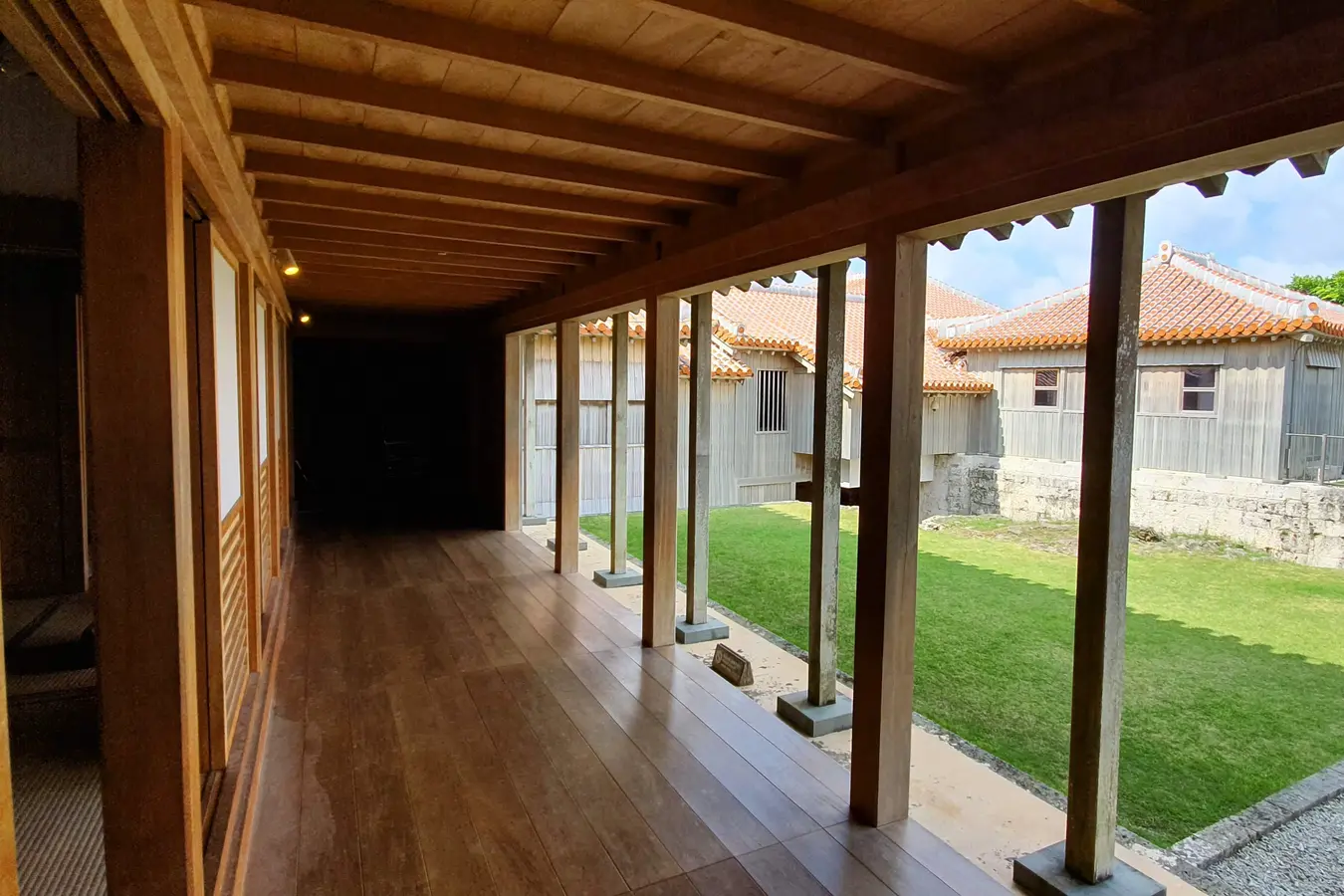
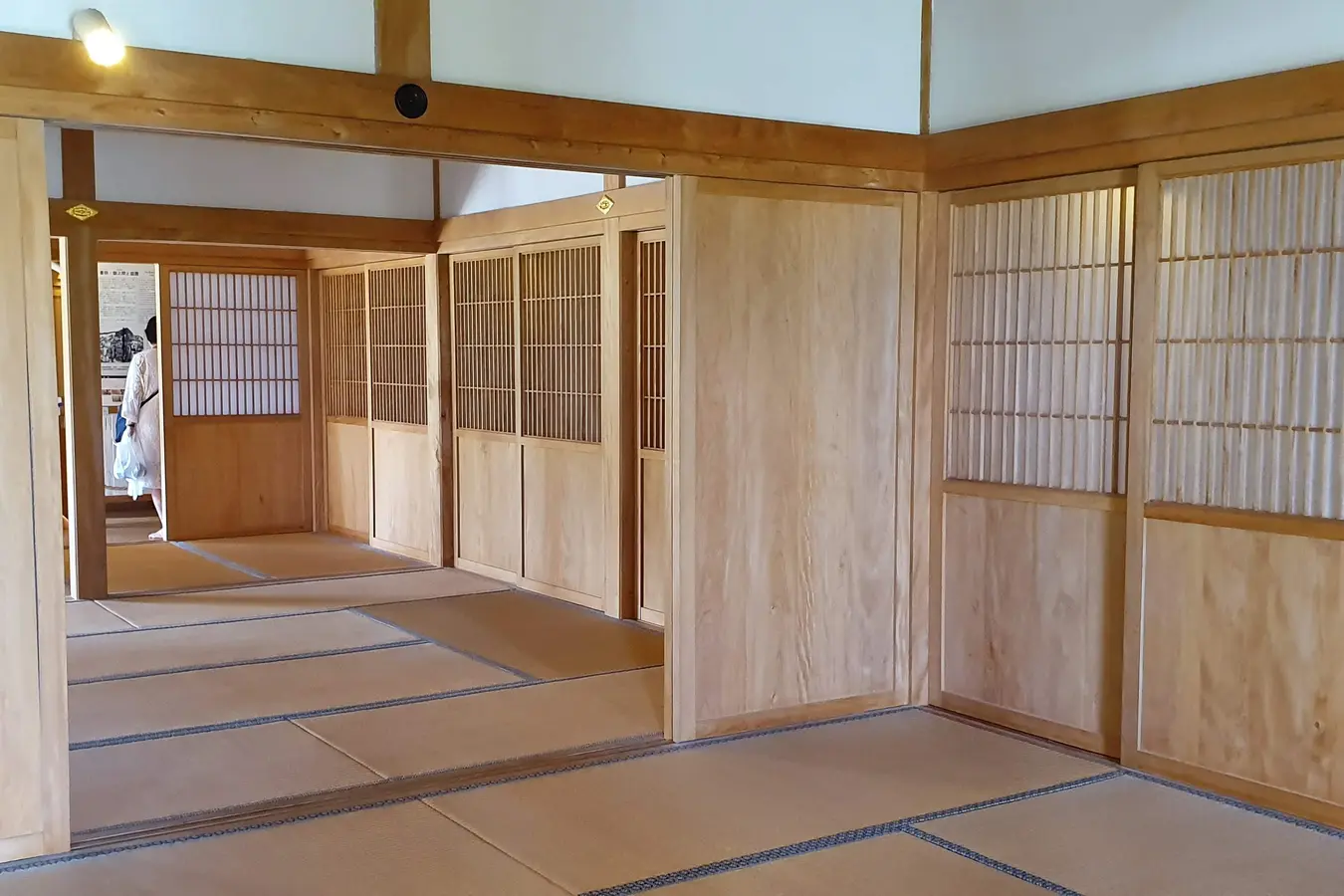
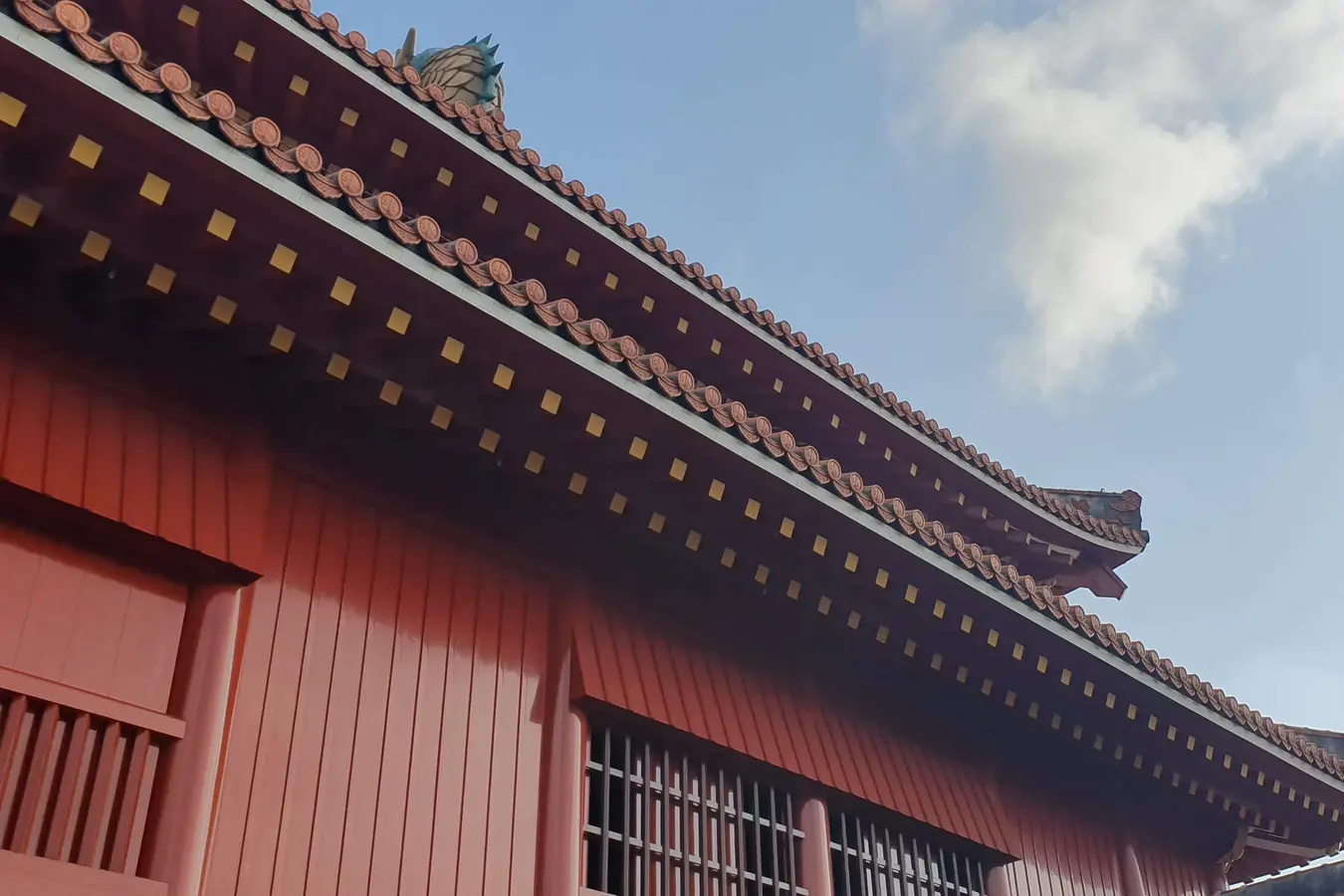
Inside, the detail was extraordinary. Rich reds and golds, carved decoration, painted surfaces and ceremonial rooms created something far more intricate than I had expected. The rooms also felt substantial—not a token reconstruction containing two display boards and a polite request to leave through the gift shop.
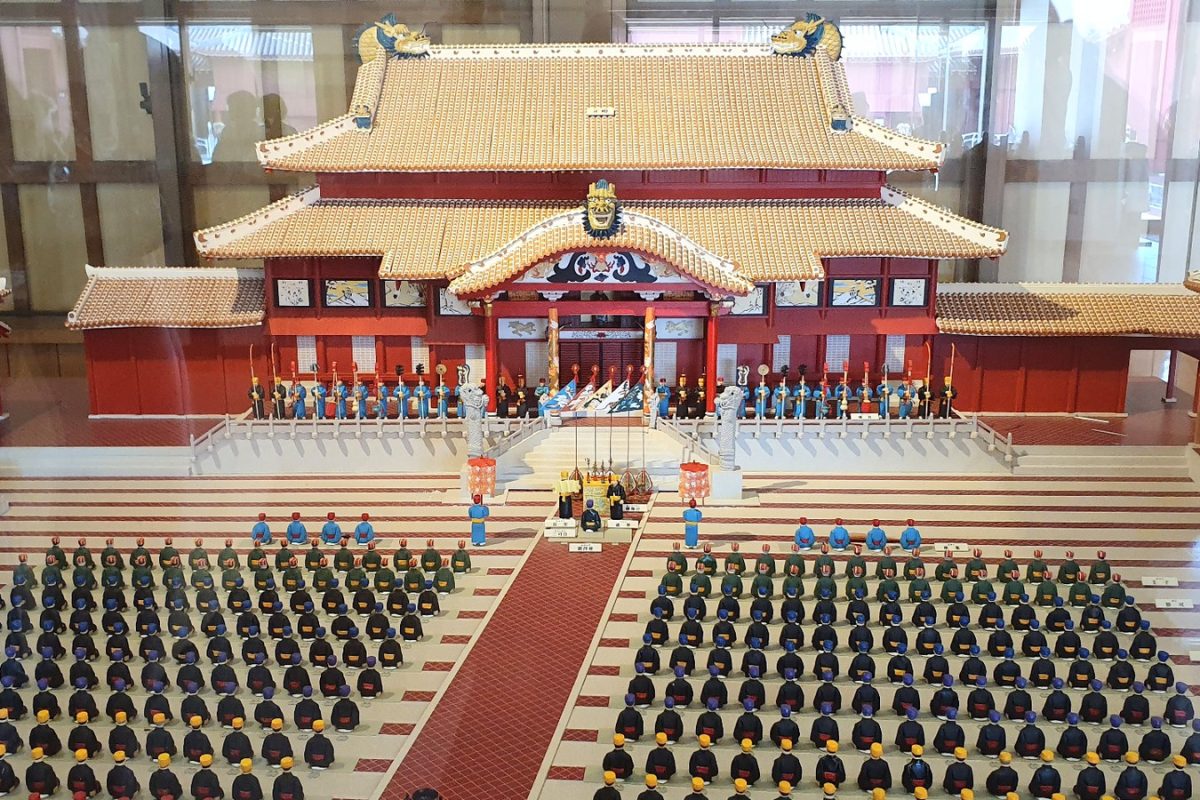
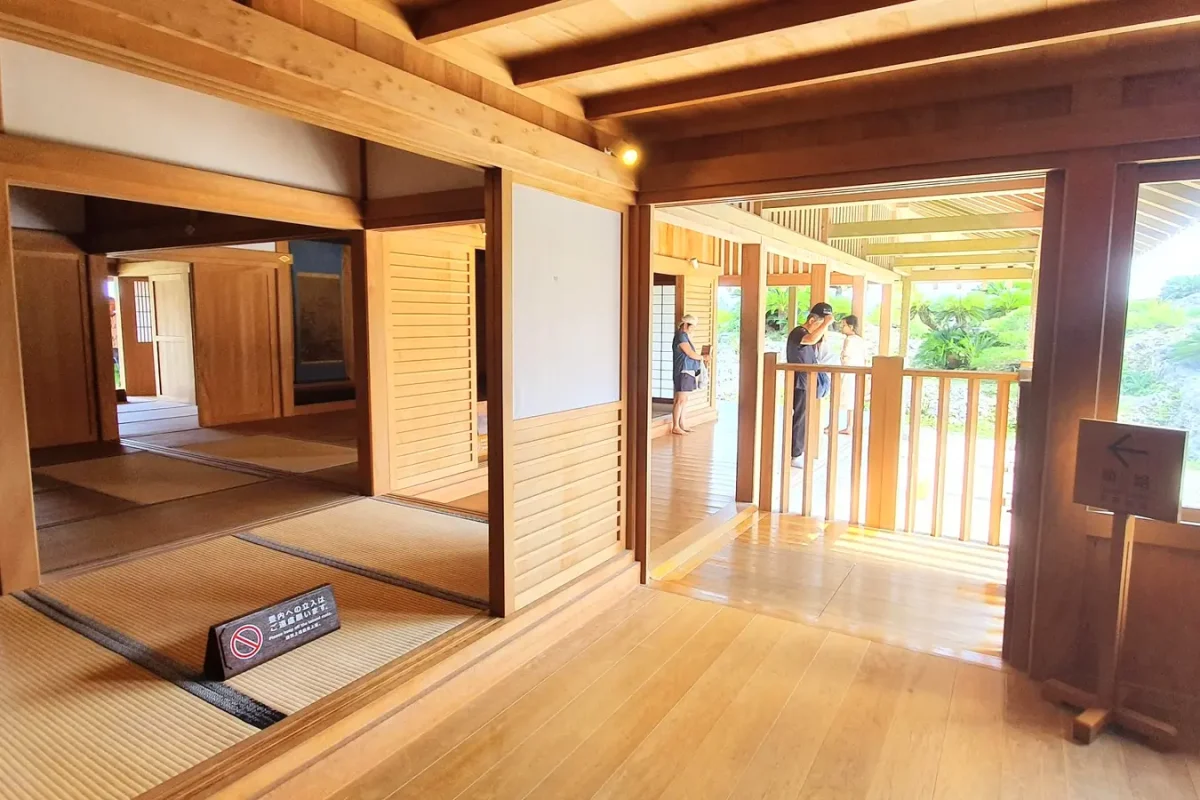
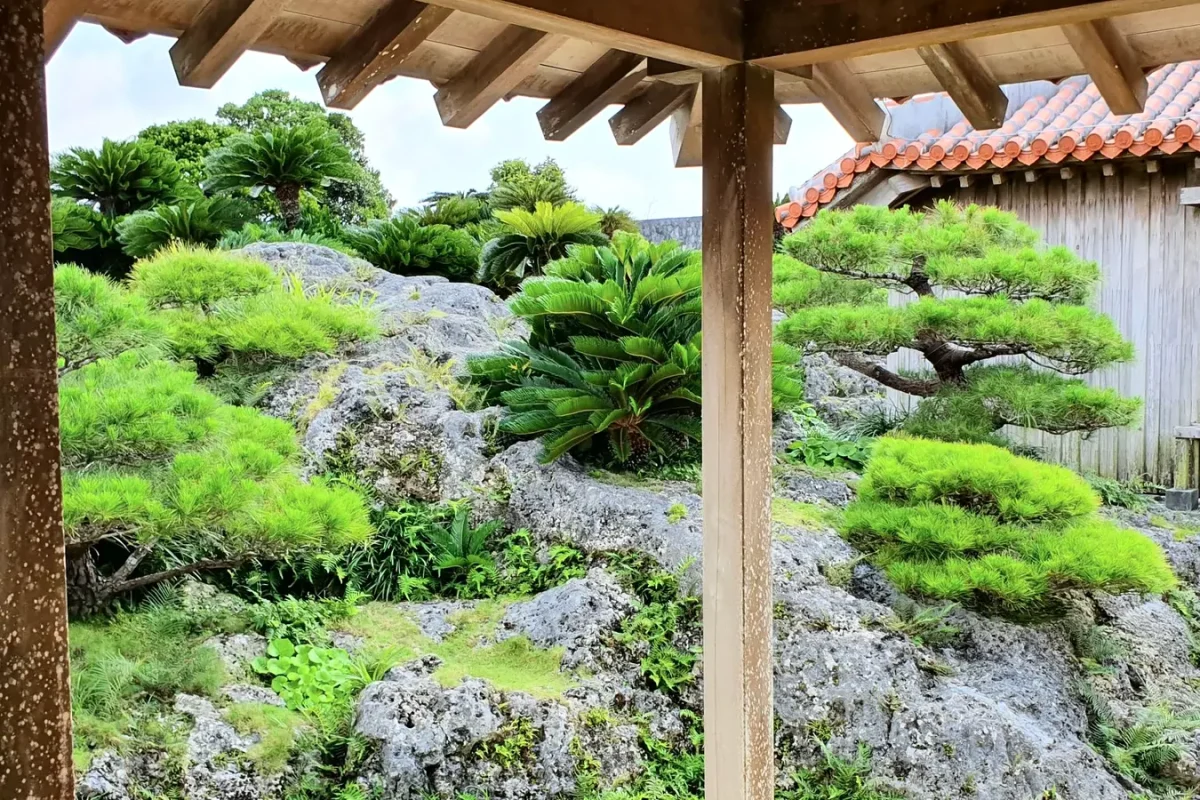
What makes the loss especially upsetting is that the building we entered was itself a painstaking reconstruction. Shuri Castle had been destroyed during the Battle of Okinawa and rebuilt before our visit. The 2019 fire therefore destroyed not only a visitor attraction but decades of craftsmanship and a powerful symbol of Ryukyuan identity.
THE RYUKYUAN DANCE PERFORMANCE
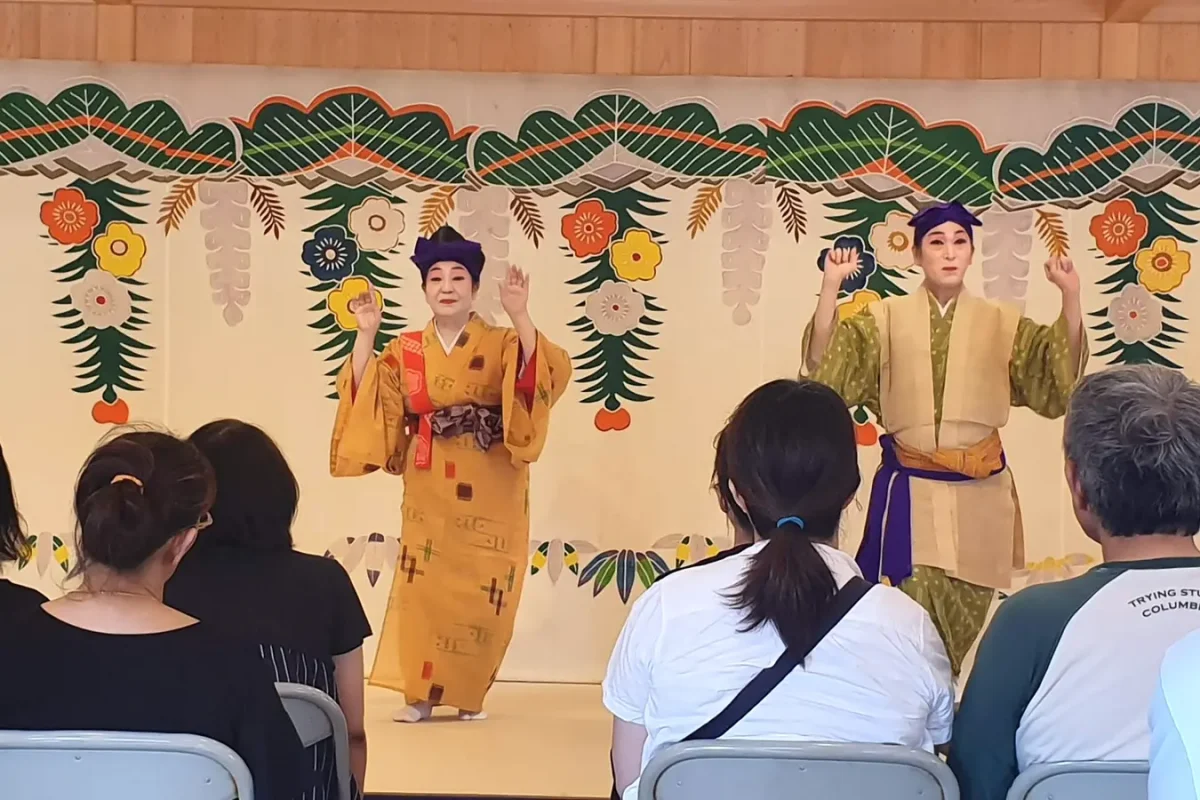
We also watched a traditional dance performance inside the complex. For years I loosely remembered it as a “geisha dance”, which is precisely why old travel memories need checking before being polished into confident internet facts. It was Ryukyuan dance: a distinct Okinawan tradition, and a much better reflection of the place we were visiting.
The performance added life to the rooms and made the palace feel connected to ceremony rather than displayed as a beautiful empty shell. Events and performance schedules can change, so treat this as part of our experience rather than a promise that the same performance will appear during yours.
WHAT HAPPENED TO SHURI CASTLE IN 2019?
A major fire on 31 October 2019 destroyed the Seiden main hall and several surrounding buildings. The stone foundations and other parts of the wider castle site survived, and reconstruction began afterwards.
There is a useful distinction hidden behind the familiar phrase “UNESCO castle”. The World Heritage listing covers the archaeological remains of Shuri Castle as part of the Gusuku Sites and Related Properties of the Kingdom of Ryukyu; the modern reconstructed palace buildings were not themselves the original medieval fabric. That does not make their destruction emotionally or culturally insignificant, but it does explain why the heritage value of the site survived the fire.
Our photographs therefore show the previous reconstruction before the fire. I have labelled them carefully because it would be deeply misleading to present those images as the exact view awaiting visitors now.
WHAT CAN YOU SEE AT SHURI CASTLE NOW?
The answer depends on when you visit. Reconstruction stages, viewing routes, interior access and reservation systems can change. Use the official park information immediately before your trip for the current position.
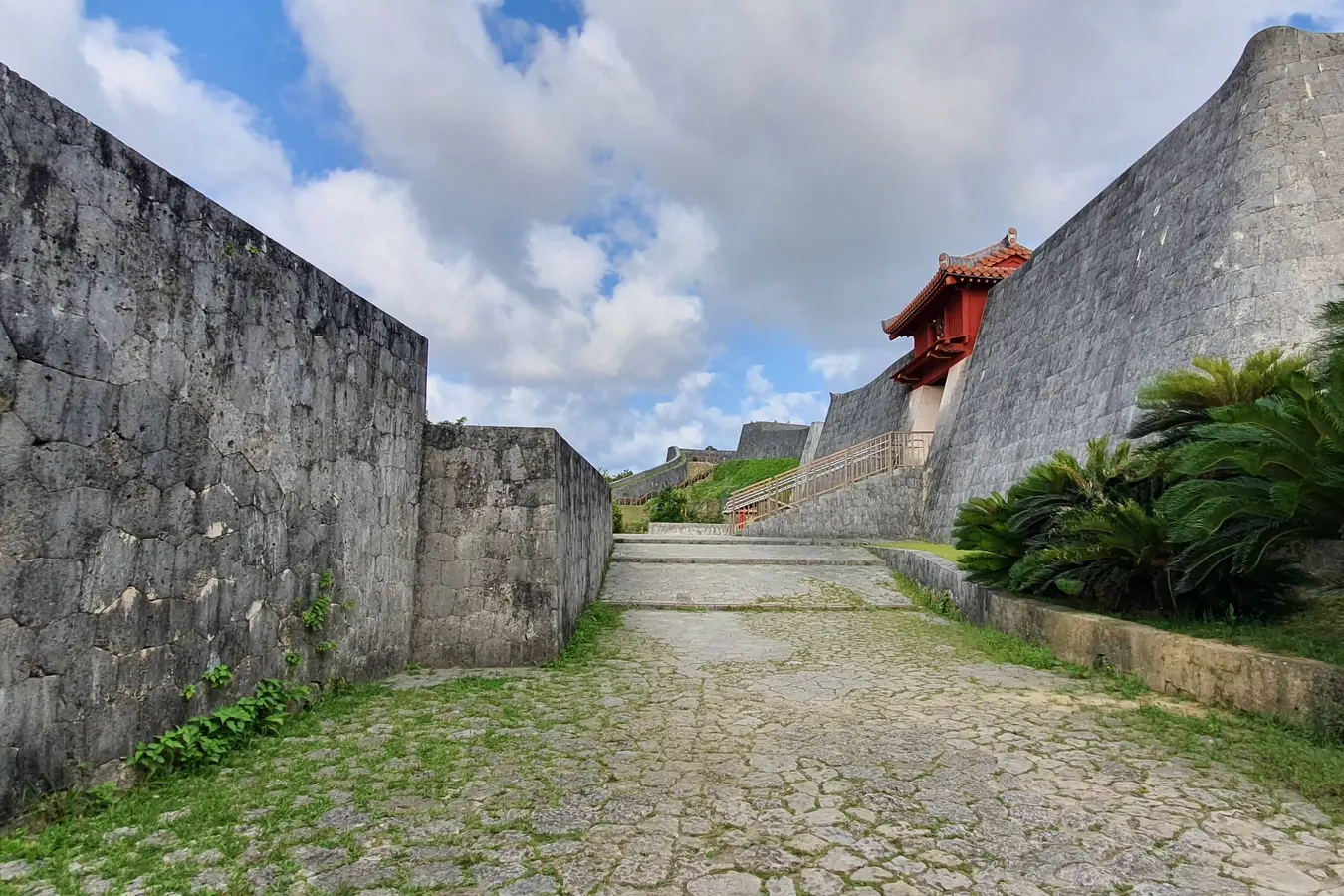
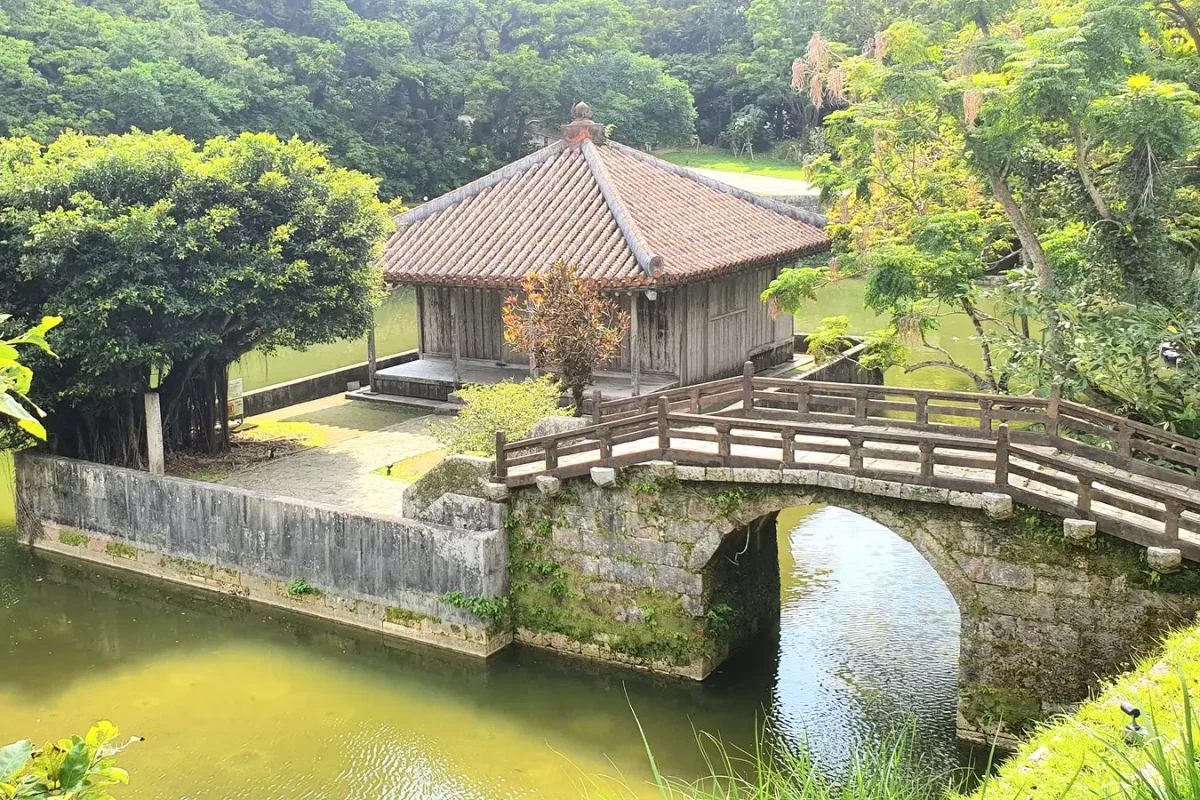
Do not dismiss the entire site simply because one headline building is—or was—under reconstruction. Shurijo Castle Park encompasses historic gates, defensive walls, viewpoints, archaeological remains and routes through the wider royal landscape. Watching traditional reconstruction work can also be interesting in its own right, particularly if you enjoy architecture and craftsmanship.
Equally, I would not tell you that construction makes no difference. We were fortunate to enter the completed palace rooms, and that was central to our visit. Readers travelling during reconstruction deserve to know that their experience will not exactly reproduce ours.
WHAT SHOULD YOU PRIORITISE AT SHURIJO CASTLE?
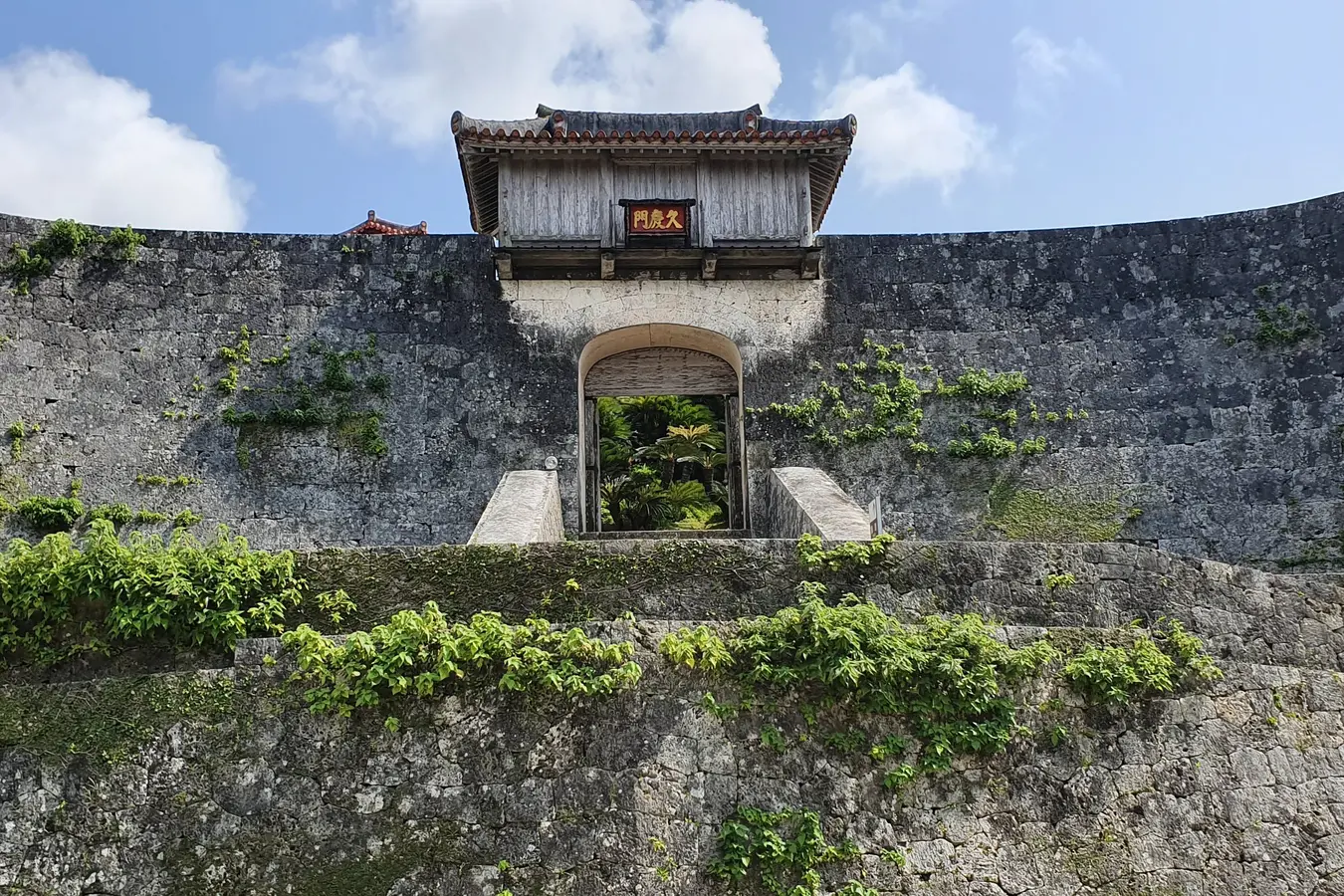
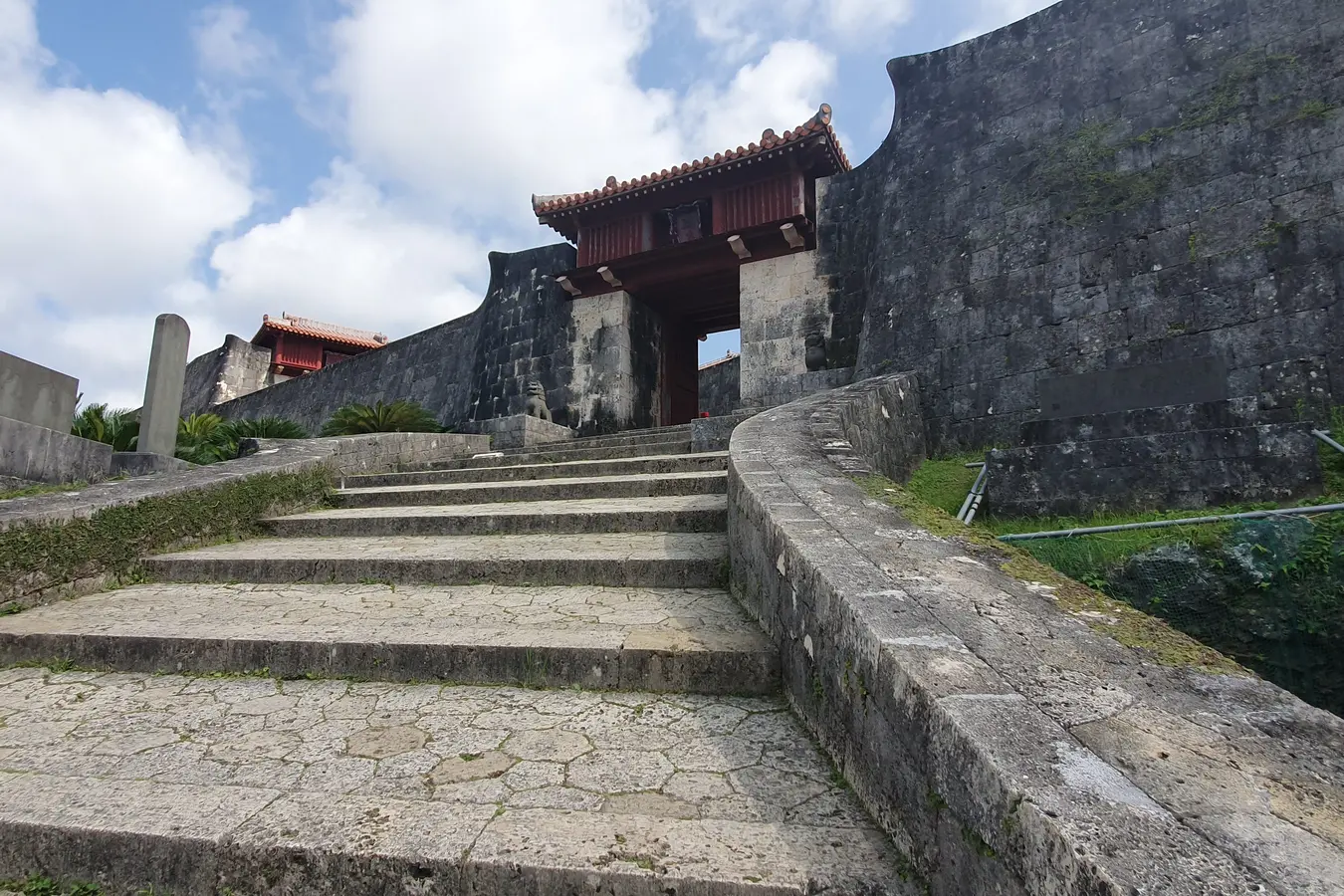
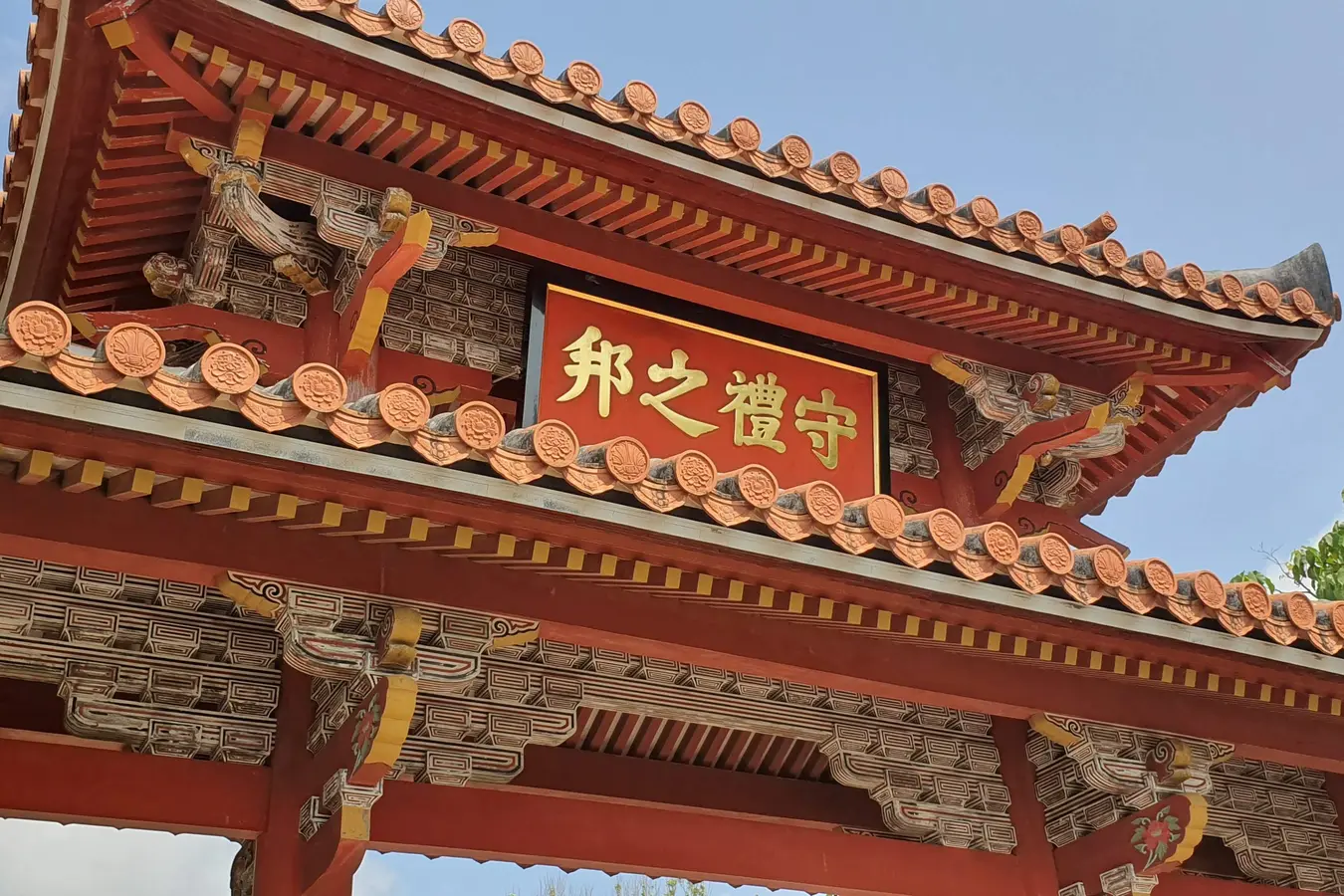
If your time is limited, concentrate on the processional route through the major gates, the surviving stone walls, the central castle area and at least one hilltop viewpoint. Shureimon is the best-known ceremonial gate, but the experience builds as you pass through the wider sequence of entrances rather than materialising at a single red façade.
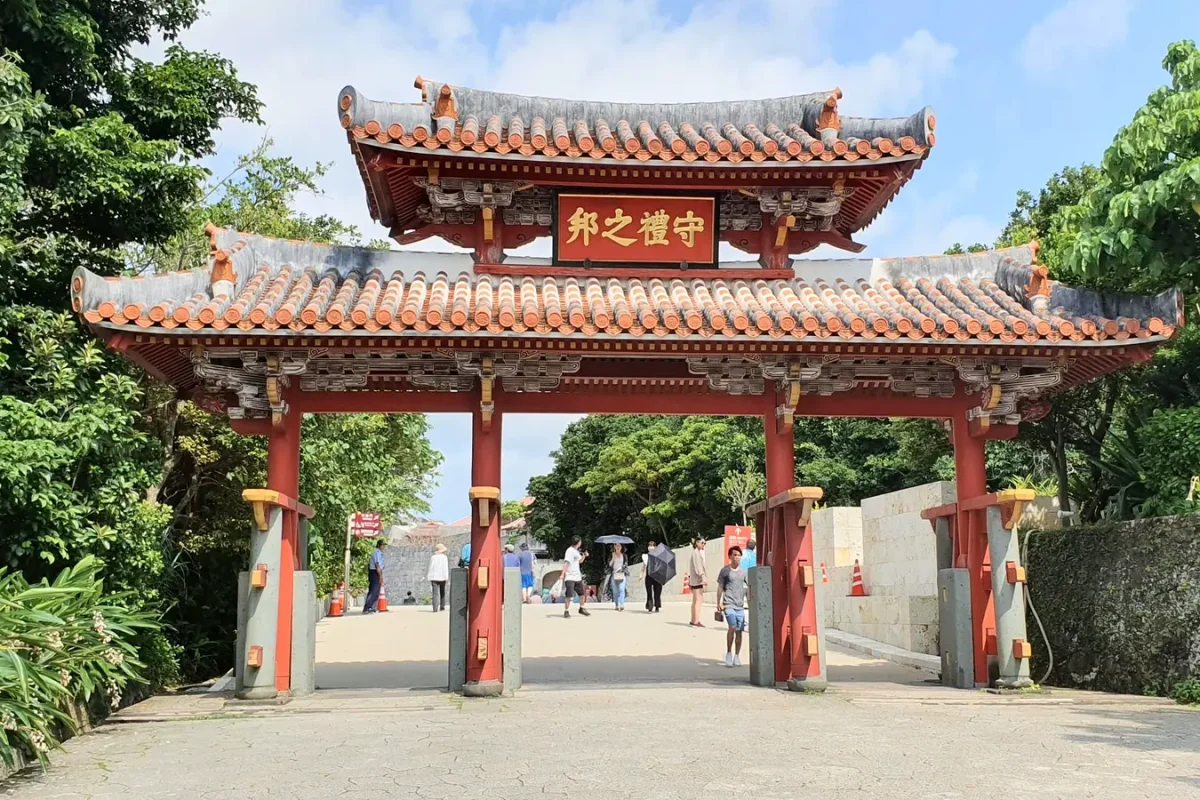
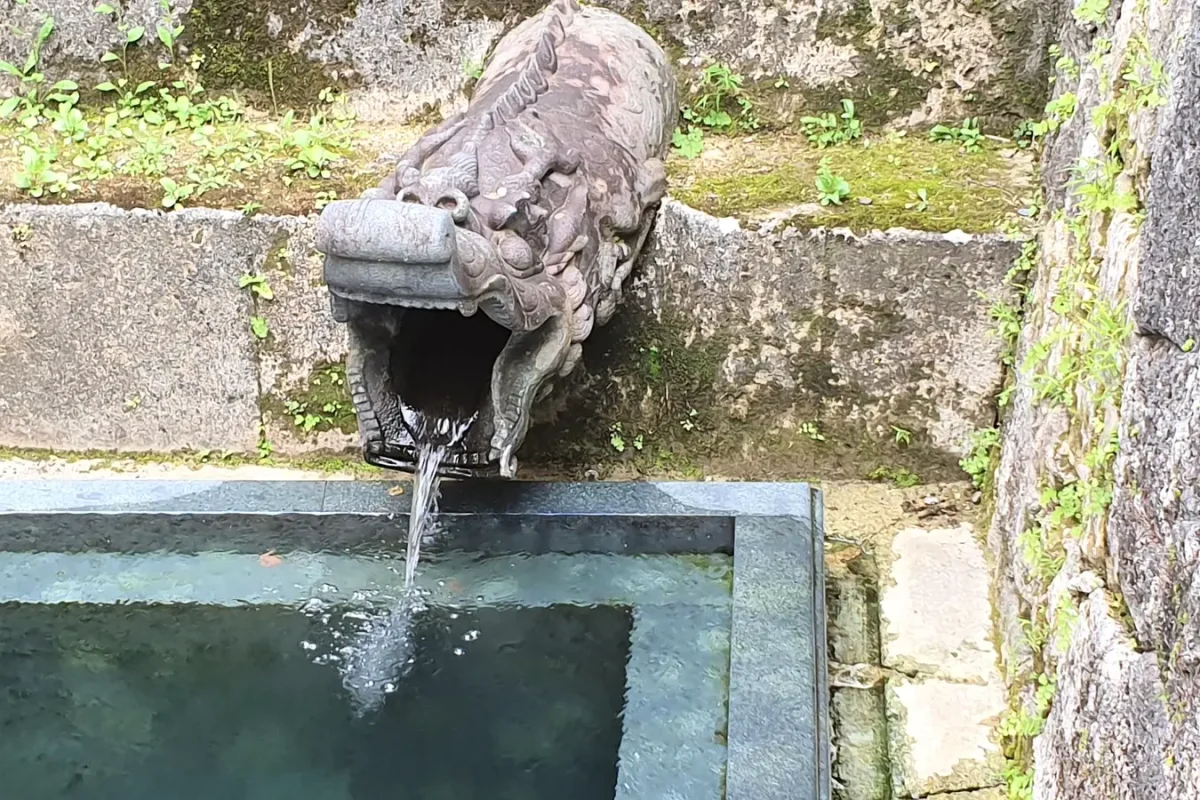
- Shureimon: the celebrated red gate on the approach and one of Shuri’s most recognisable structures.
- Sonohyan-utaki Ishimon: a sacred stone gate associated with prayers made by the Ryukyuan king before journeys.
- Kankaimon and the castle walls: the fortified approach that makes Shuri feel very different from a freestanding palace.
- The central Una area: where the Seiden and surrounding halls framed royal ceremonies.
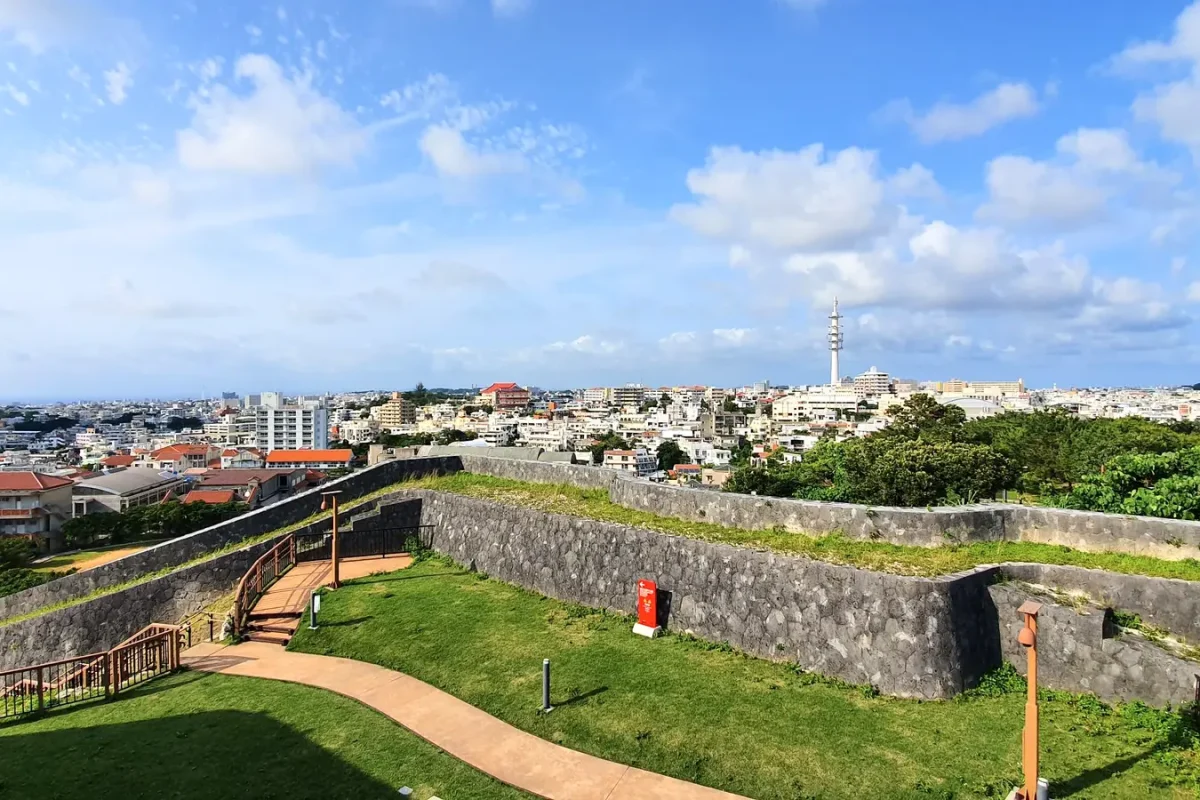
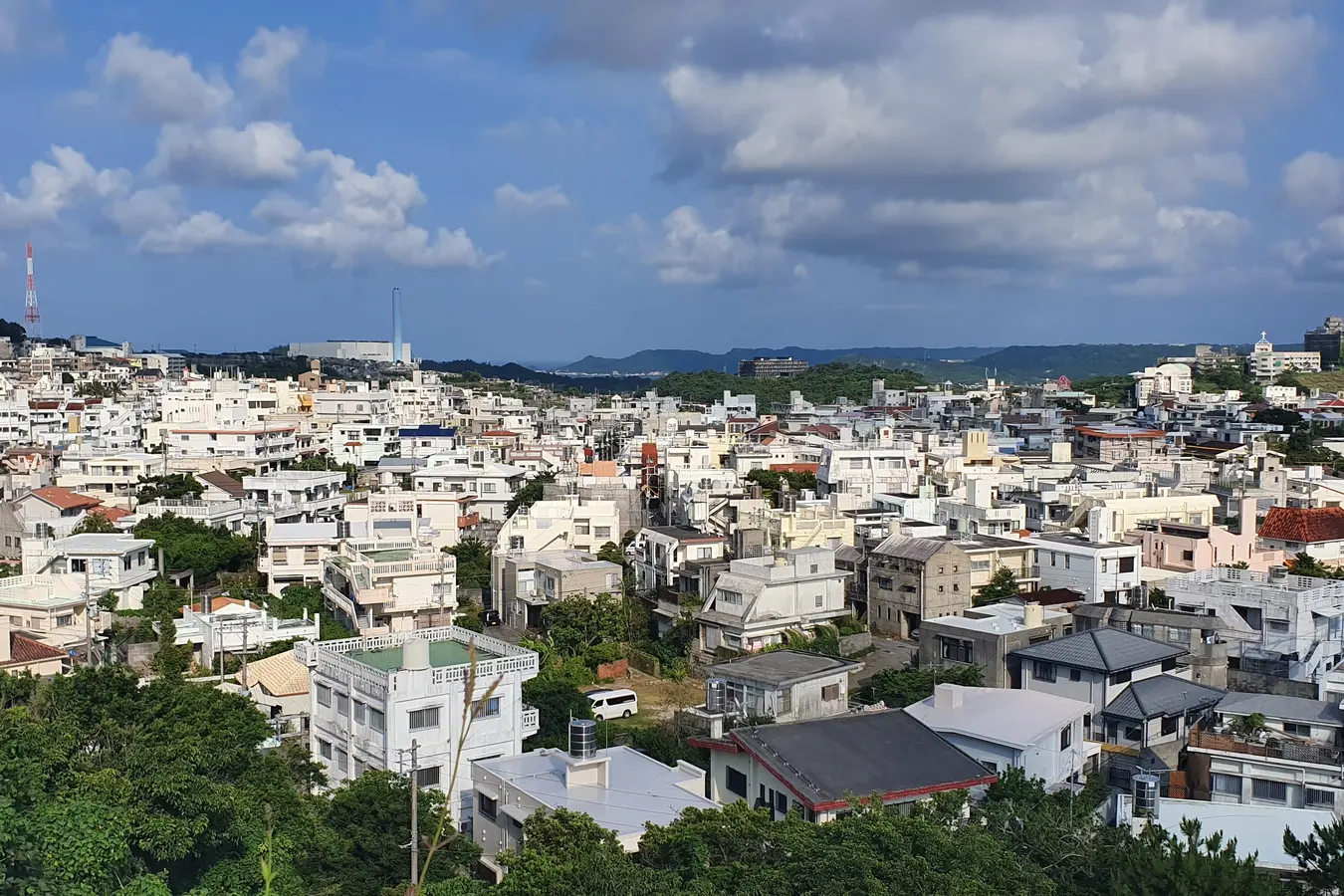
- The viewpoints: Shuri’s hilltop position opens views across Naha and towards the sea.
These are established parts of the wider site, but the precise visitor route can change during reconstruction. Follow the route operating on the day rather than treating this list as a rigid treasure hunt.
HOW LONG DO YOU NEED AT SHURI CASTLE?
Allow roughly two to three hours for the castle park and main visitor route if history interests you. You could move through faster, but the hilltop site, gates and viewpoints are part of the experience. This is not an attraction I would squeeze into forty minutes because lunch ran late—although, inconveniently, that is more or less what our timetable tried to encourage.
Our original notes place lunch at Shuri Soba at about 1:30 pm, Sairaiin at 2:30 pm and Shurijo Castle at 3:00 pm. We then returned towards Tsuboya around 6:00 pm. Those are approximate memories from an older itinerary, not recommended current opening times.
OUR SHURI AFTERNOON ITINERARY
1:30 pm: Lunch at Shuri Soba
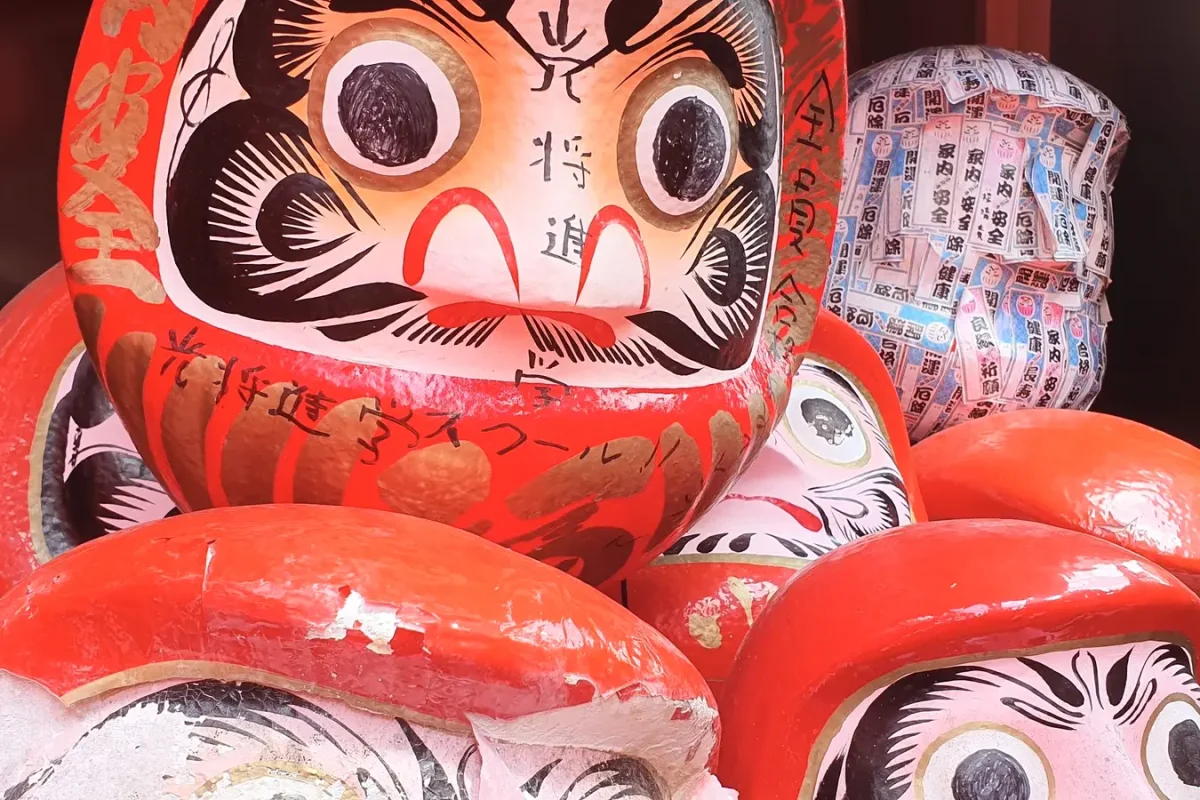
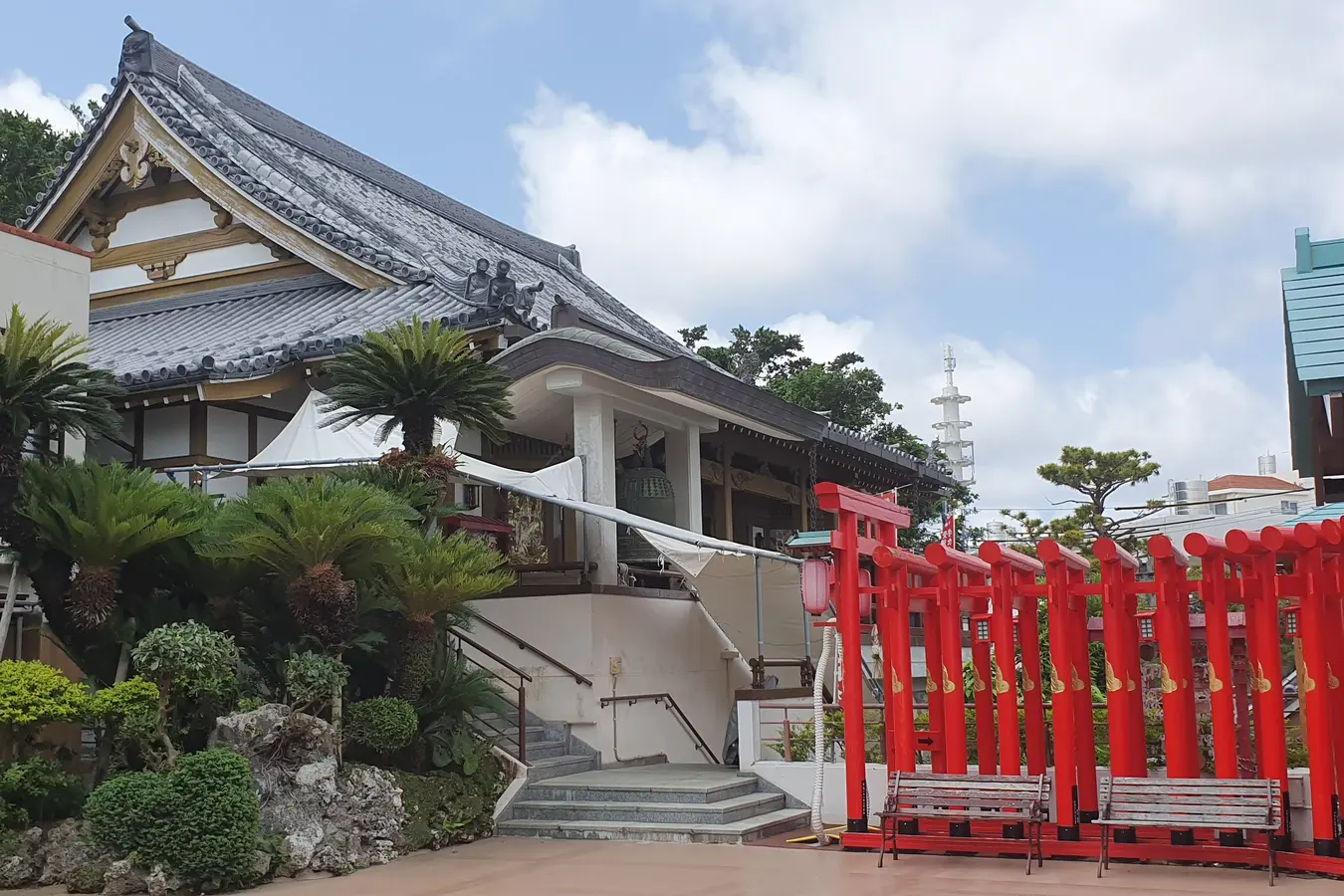
2:30 pm: Short visit to Sairaiin, also known as Daruma Temple
3:00 pm: Explore Shurijo Castle and its grounds
6:00 pm: Return towards Tsuboya Yachimun Street
This formed the afternoon portion of our larger Naha itinerary without a car. If I planned it again, I would eat earlier and protect more time for the castle. Shuri Soba was among the best bowls of Okinawa soba we ate, but we appeared to secure some of the final noodles of the day and I would not build a modern itinerary around repeating that feat.
HOW TO GET TO SHURI CASTLE FROM NAHA
We used the Yui Rail to travel towards Shuri and think we also used a local bus around the castle area. I cannot remember whether we used individual tickets or a transport card, so I will not manufacture a perfectly frictionless journey several years after the event.
Shuri Castle is not directly outside the monorail station. Allow time for the onward walk, or check the current local bus connection if you would rather save your legs for the castle grounds. Official tourism guidance has historically described the walk from Shuri Station as roughly 15–20 minutes, but routes, fares and payment arrangements should be checked for your dates.
You do not need a hire car for this visit. Public transport worked well for our broader Naha day, and avoiding parking made it easier to continue later to Tsuboya and Makishi.
IS SHURI CASTLE ACCESSIBLE?
Parts of Shurijo Castle Park have step-free or more accessible routes, but this is a large hilltop historic site with slopes, gates and uneven surfaces. The route that was available during our visit may not match the route used during reconstruction.
If mobility, wheelchair access or stamina will affect your visit, consult the official accessibility information before travelling and ask staff which route best avoids steps. I would also use the bus for the final approach rather than automatically adding the walk from Shuri Station. “It is only fifteen minutes” is one of those phrases that behaves very differently on a hot, humid hill.
WHAT ELSE SHOULD YOU DO NEAR SHURI CASTLE?
EAT OKINAWA SOBA IN SHURI
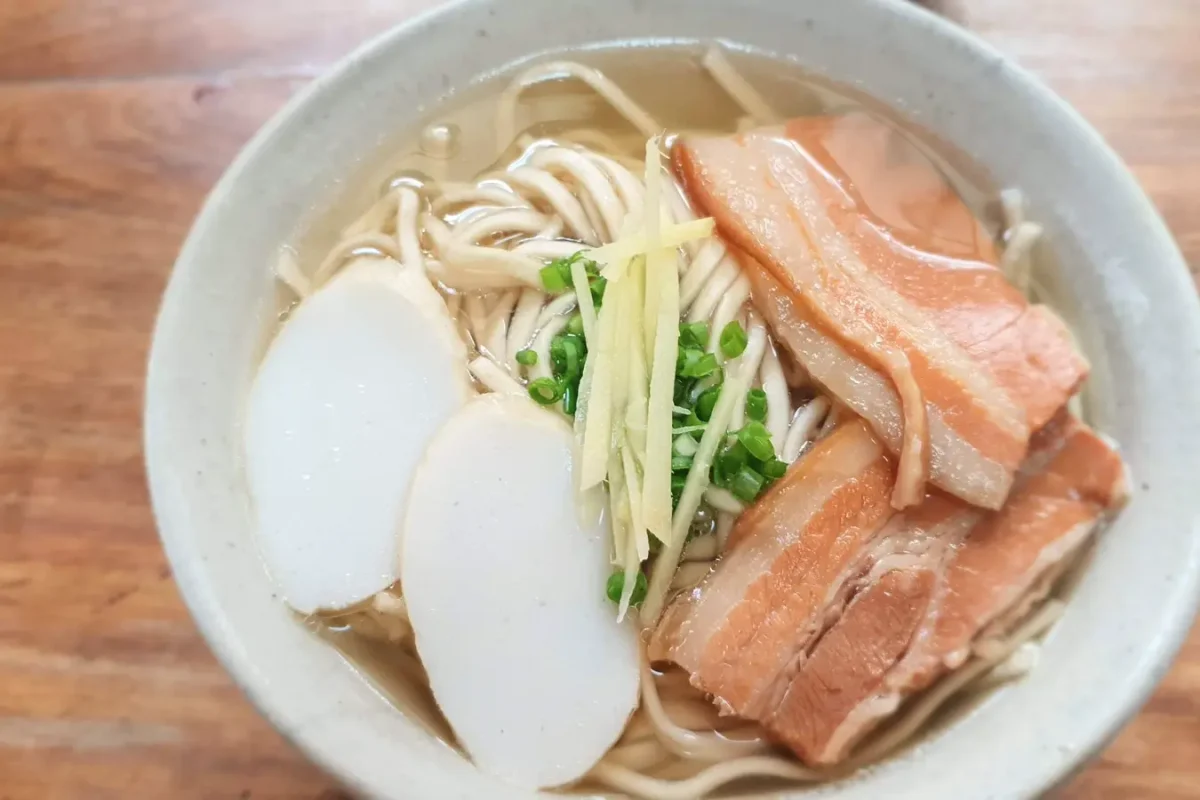
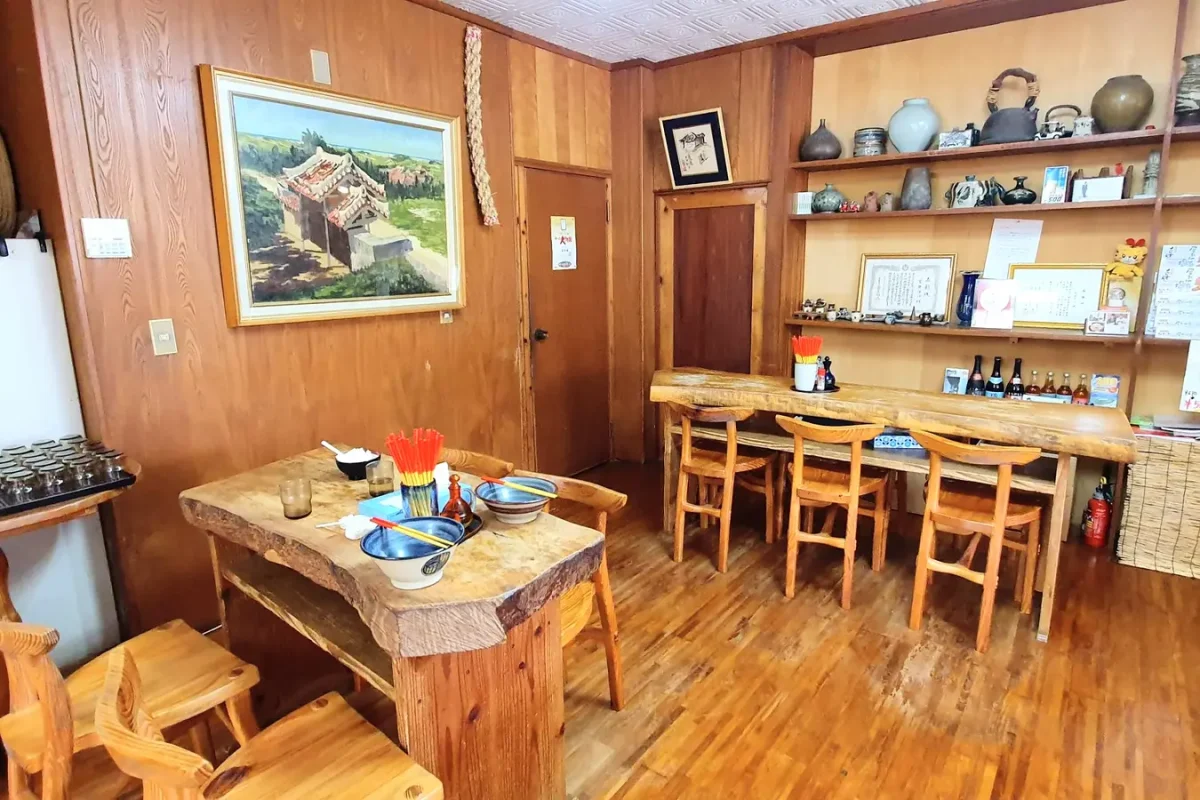
Our lunch at Shuri Soba remains one of the clearest memories covered in our guide to the best food in Okinawa. The restaurant was small, appeared popular with locals and offered both floor seating and a narrow seating area by the window. We may have received the last portion of the day, which felt triumphant but is not a sensible booking strategy. Arrive earlier and check its current opening arrangements.
VISIT SAIRAIIN (DARUMA TEMPLE)
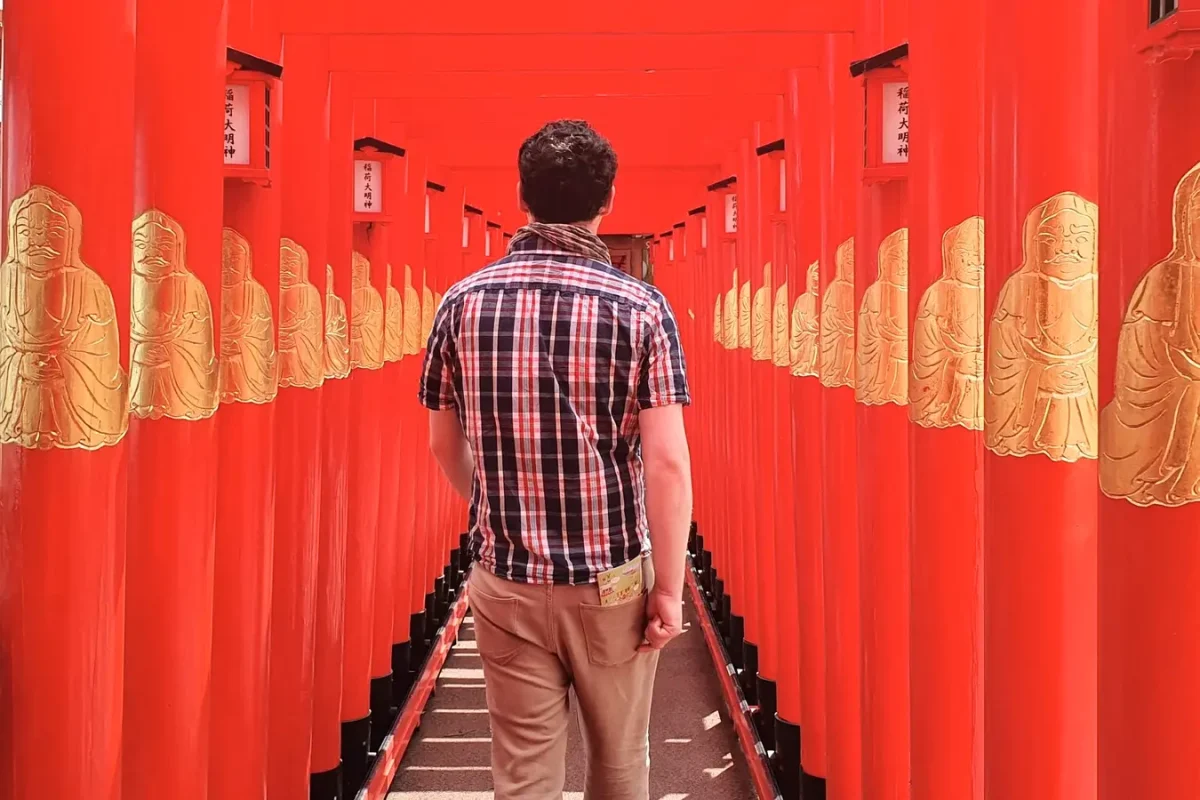
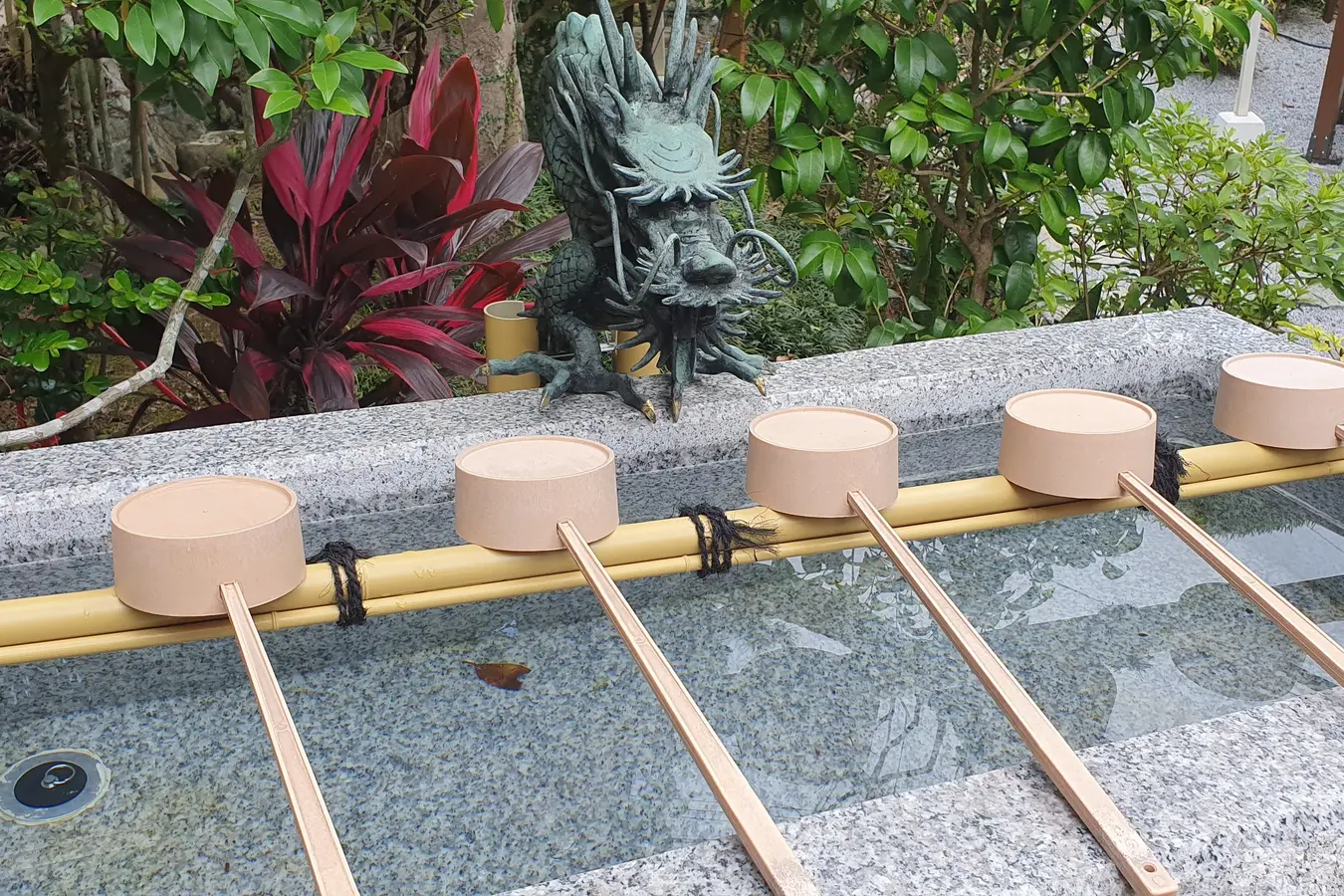
We stopped briefly at Sairaiin before the castle. Because this was our honeymoon, I had quietly included temples associated with fertility and expanding a family wherever I could. It was peaceful, small and a lovely contrast with the scale and ceremony of Shuri.
EXPLORE MORE OF HISTORIC SHURI
If you have longer, Shuri is more than the castle entrance. Tamaudun, the royal mausoleum, and the old Kinjo stone-paved road add further layers of Ryukyuan history nearby. We did not visit either on this particular afternoon, so I am mentioning them as researched additions rather than quietly absorbing somebody else’s itinerary into ours.
Both add walking, and Kinjo’s old stone paving is sloped, so they make more sense on a generous Shuri half-day than as desperate additions before closing time.
COMBINE IT WITH THE OKINAWA PREFECTURAL MUSEUM
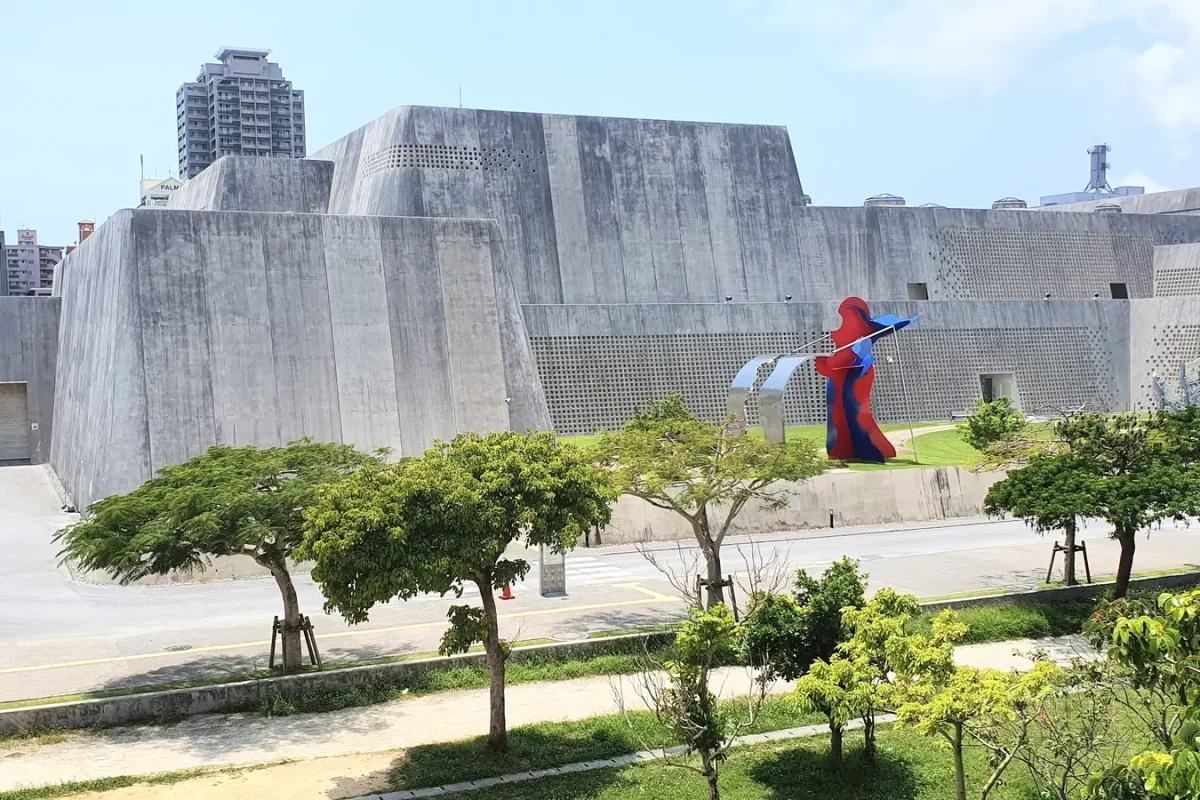
If this is your first visit to Okinawa, start with the prefectural museum earlier in the day. Its explanation of Ryukyuan history and traditional houses made the castle far more meaningful to us. I am biased—I am an architect and can lose track of time beside a vernacular building display—but the historical context genuinely improved the whole trip.
SHURI CASTLE OR ANOTHER OKINAWA CASTLE?
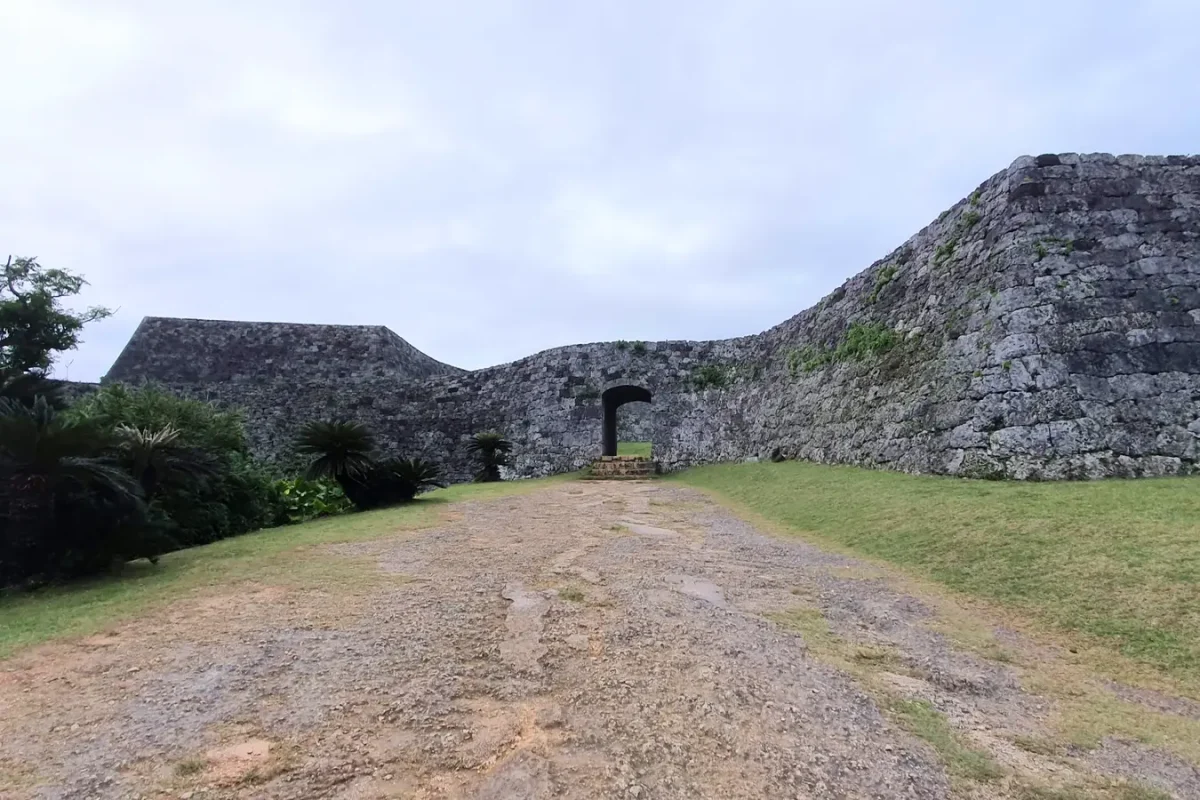
Shuri is the best choice if you want royal history, reconstructed palace architecture and an easy connection from Naha. The gusuku ruins elsewhere on Okinawa offer a different experience: exposed stone fortifications, landscape and archaeology rather than richly furnished state rooms.
Zakimi Castle reminded me more strongly of European fortifications, while Shuri felt ceremonial and palatial. They are not substitutes for one another. If your itinerary allows, visit Shuri for the Ryukyu court and at least one ruined gusuku for the extraordinary relationship between Okinawan stonework and landscape.
IS SHURI CASTLE SUITABLE FOR FAMILIES?
We visited as a couple on our honeymoon, so this is not a first-hand account of visiting with children. Families interested in castles and history may enjoy the gates, open spaces and reconstruction story, but the slopes, walking distances and changing access routes are worth checking before you go.

With younger children, I would choose either a substantial castle visit or the museum rather than forcing both into an already full day. The temptation to collect attractions like Pokémon is powerful. Resist. Nobody learns much about the Ryukyu Kingdom while being marched towards the next closing time.
PRACTICAL TIPS FOR VISITING SHURI CASTLE
- Check the official site shortly before visiting. Opening areas, reservations, prices and reconstruction routes can change.
- Allow for the hill and the walk from public transport. Comfortable shoes are more useful than a heroic timetable.
- Give the site at least two hours. Add longer if interiors and exhibitions are accessible during your visit.
- Do not rely on old photographs. Images taken before October 2019 show buildings that were subsequently destroyed.
- Combine it with context. The prefectural museum, Shuri neighbourhood and an Okinawa soba lunch make a more meaningful day than rushing in for one photograph.
- Expect exposed outdoor areas. Prepare for Okinawa’s heat, sun and sudden rain according to the season, and check our guide to the best time to visit Okinawa.
OUR VERDICT: SHOULD YOU ADD SHURI CASTLE TO YOUR OKINAWA ITINERARY?
Yes. Shuri Castle belongs in a first Okinawa itinerary because it explains the islands in a way beaches and resorts cannot. It shows that Okinawa was shaped by the Ryukyu Kingdom, regional trade, war, loss and repeated reconstruction.
Would I have been disappointed if we had arrived to find the palace interior unavailable? Probably—because those rooms were magnificent. Would I skip the entire site as a result? No. The gates, landscape, surviving remains and reconstruction story still matter, and seeing skilled craftspeople rebuild a cultural landmark offers a different sort of experience.
For the wider route, use our Naha itinerary without a car, our complete five-day Okinawa itinerary, our guide to the best things to do in Okinawa and our advice on where to stay in Okinawa.
For all our first-hand itineraries, island guides, hotel reviews and planning advice in one place, visit our Okinawa Travel Guide.
Would you visit Shuri Castle during its reconstruction—or wait to see the completed Seiden?
Comment below and let us know!