
Are you wondering how to fit Ishigaki into a wider Okinawa itinerary without turning every day into a frantic race around another island? That was essentially our challenge. We wanted to see Ishigaki, but we also wanted to use it as a base for Taketomi and Iriomote—and there are only so many ferries, breakfasts and clean pairs of socks one honeymoon can sensibly accommodate.
We spent three nights on Ishigaki during our honeymoon in Okinawa in May 2019. Rather than attempting to cover every beach and viewpoint on Ishigaki itself, we used the island as our comfortable base for two very different day trips: a wonderfully distinctive day on Taketomi and a far more adventurous kayaking and jungle-trekking excursion on Iriomote.
This Ishigaki Island itinerary follows the route we actually took. I have included practical planning information and some additional places you could visit if you have more time, but I have kept those clearly separate from our own experience. Seven years is quite long enough for memories to become fuzzy without giving them a little fictional assistance.
IS ISHIGAKI WORTH VISITING?
Yes—particularly if you want to explore the Yaeyama Islands. Ishigaki has its own beaches, scenery, food and culture, but one of its greatest advantages is its transport position. Ishigaki Port connects the island with Taketomi, Iriomote and several other islands, making it a very practical base for island hopping.
For us, Ishigaki was less about racing around a checklist of attractions and more about what it allowed us to experience. Taketomi gave us traditional red-roofed architecture, white coral-sand lanes, a buffalo-cart tour and beaches. Iriomote gave us mangrove kayaking, dense jungle and a climb that turned out to be considerably more demanding than I had been led to expect. They could hardly have felt more different, yet both were reached from the same base.
Ishigaki also felt distinctly removed from both mainland Japan and Okinawa Honto. By this stage we had already explored Naha, Zamami and the main island by car, but moving farther into the Yaeyama Islands made the trip feel as though it had changed character all over again.
OUR 3-NIGHT ISHIGAKI ITINERARY
This is the structure recorded in our original Okinawa itinerary and supported by our surviving flight and tour correspondence:
18 May 2019: Fly from Naha to Ishigaki, arrive in the afternoon and check into Grandvrio Resort Ishigakijima
19 May 2019: Take an independent day trip from Ishigaki to Taketomi Island
20 May 2019: Travel to Iriomote for a pre-booked Pinaisara Falls kayaking and trekking tour
21 May 2019: Leave Ishigaki and fly to Tokyo
The precise ferry times in our old notes do not always agree with the surviving booking email, so use the structure—not the historic clock times—to plan your own trip. Always check current flight, ferry and tour information.
DAY 1: FLY FROM NAHA TO ISHIGAKI
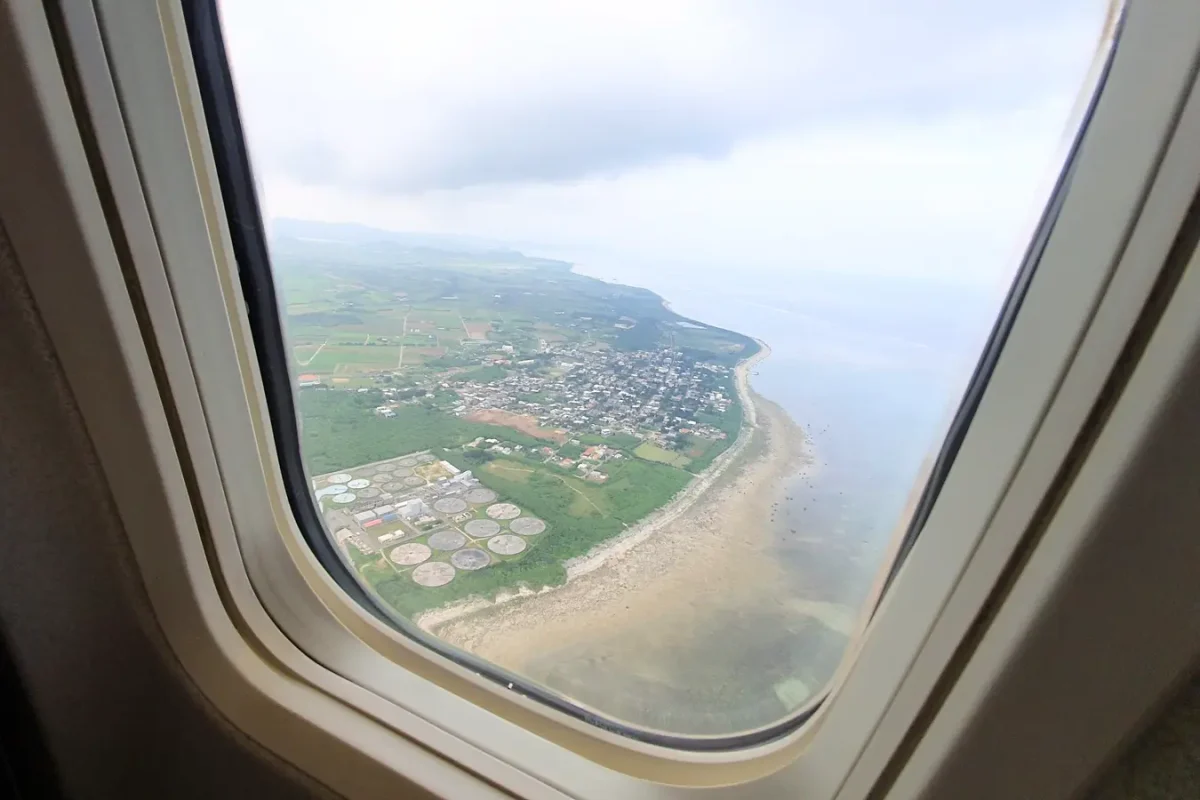
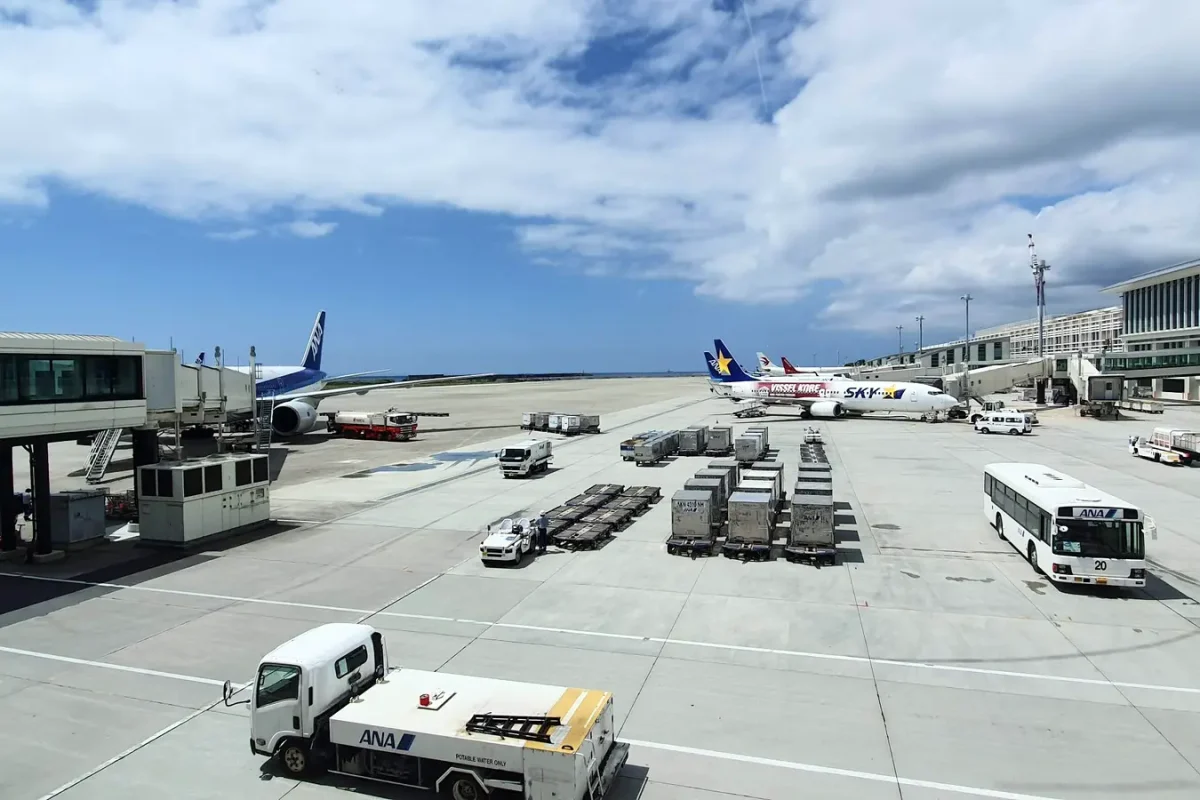
We flew from Naha to Ishigaki on ANA flight NH1771. Our booking records show a scheduled departure at 2:45 pm and arrival at 3:50 pm. The two economy tickets cost us £107.40 in 2019, but that historic price is not a useful indication of what you will pay now.
An afternoon flight worked neatly within our wider five-day Okinawa itinerary. We could use our final morning in Naha before moving to a completely different part of the archipelago. The trade-off was that arrival day was not a full Ishigaki sightseeing day, and I would not build an ambitious island circuit around it.
After landing, we went to the hotel and did precisely nothing ambitious. Our messages from the trip say that we were tired, the resort was quite far from town and we ate dinner at the hotel. The surviving photographs show pasta and Japanese curry, although I cannot now say with certainty who ordered which dish. If your flight arrives at a similar time, treat the evening as useful breathing space: check in, eat and prepare anything needed for the following morning’s ferry.

DAY 2: TAKETOMI ISLAND DAY TRIP
Our first full day was devoted to Taketomi Island. I had initially remembered booking the ferry and buffalo-cart tour separately, but a message I sent during the trip records that we bought a ferry package which included the water-buffalo cart ride. That contemporaneous account is more reliable than my memory seven years later. The fast crossing from Ishigaki took roughly 15 minutes.
Taketomi became one of the most memorable days of our honeymoon. We toured the village by buffalo cart, walked among its extraordinary traditional houses, visited West Pier, swam at Kondoi Beach and looked at the tiny star-shaped sand at Kaiji Beach. We also made the questionable decision to walk almost everywhere in intense heat. Gary was sunburned by the light reflecting from the white sand despite our rented parasol, and by the end we were desperate for shaved ice.
The complete route, ferry guidance and our honest walking-versus-cycling verdict are in our Taketomi Island day-trip itinerary.
DAY 3: IRIOMOTE KAYAKING AND JUNGLE TREK
Our second full day was a guided trip to Iriomote. Surviving correspondence confirms that we booked a Pinaisara Falls kayaking and trekking tour for two and paid ¥22,000 by card. The instructions told us to take the 7:40 am ferry from Ishigaki to Uehara for a 9:30 am tour start.
The preparation at the tour base was extremely well organised, and I enjoyed kayaking through the mangroves—although Gary’s most vivid memory is apparently me steering us directly into a spiky bush and scratching his arm. Marriage is about collecting these tender little memories for one another.
The jungle walk began gently and included fascinating explanations about the plants. It later became steep enough to feel frightening to me because I am extremely scared of heights. We reached the top and ate an excellent Japanese camping-style meal, but the descent upset me even more. One guide eventually took Gary and me back separately while the rest of the group continued with the other guide, and the company helped us catch an earlier ferry.
That experience deserves more explanation than a glossy list of waterfall highlights, particularly for anyone nervous about heights or unsure of their fitness. Read our full Iriomote Island day-trip and Pinaisara Falls guide before deciding whether the same tour would suit you.
HOW MANY DAYS DO YOU NEED IN ISHIGAKI?
Three nights worked for our particular plan because it gave us two full excursion days between arrival and departure. It did not give us a thorough tour of Ishigaki itself. That distinction matters: three nights can work well for island hopping, but it is not the same as three full days exploring Ishigaki.
If Taketomi and Iriomote are your priorities, I would regard three nights as a practical minimum. Adding another one or two nights would make room for Ishigaki’s own beaches, Kabira Bay or a weather buffer without forcing you to sacrifice an island trip. Ferry-dependent plans are always rather less obedient than they look in a spreadsheet.
If you only have two nights, choose one major day trip rather than attempting both. Taketomi is the gentler, easier day from our experience. Iriomote offered more adventure but required an early start and a demanding organised activity.
WHERE TO STAY IN ISHIGAKI FOR ISLAND HOPPING
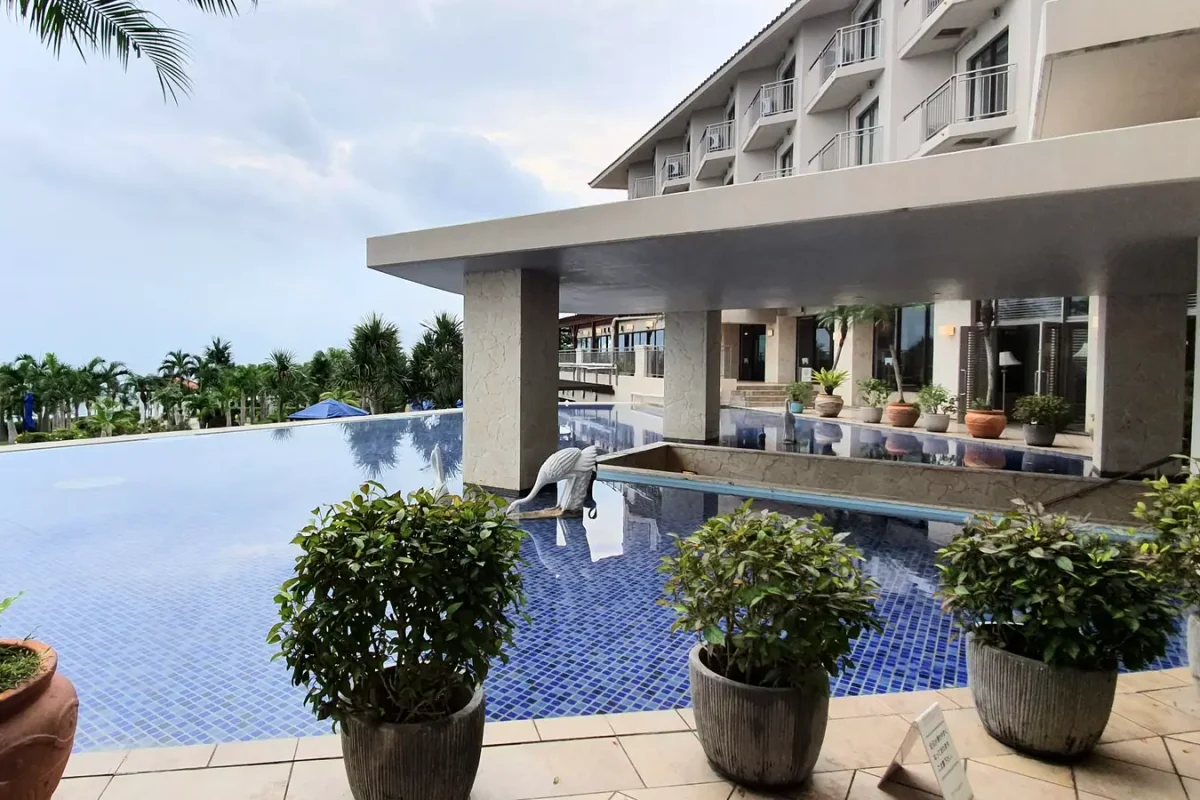
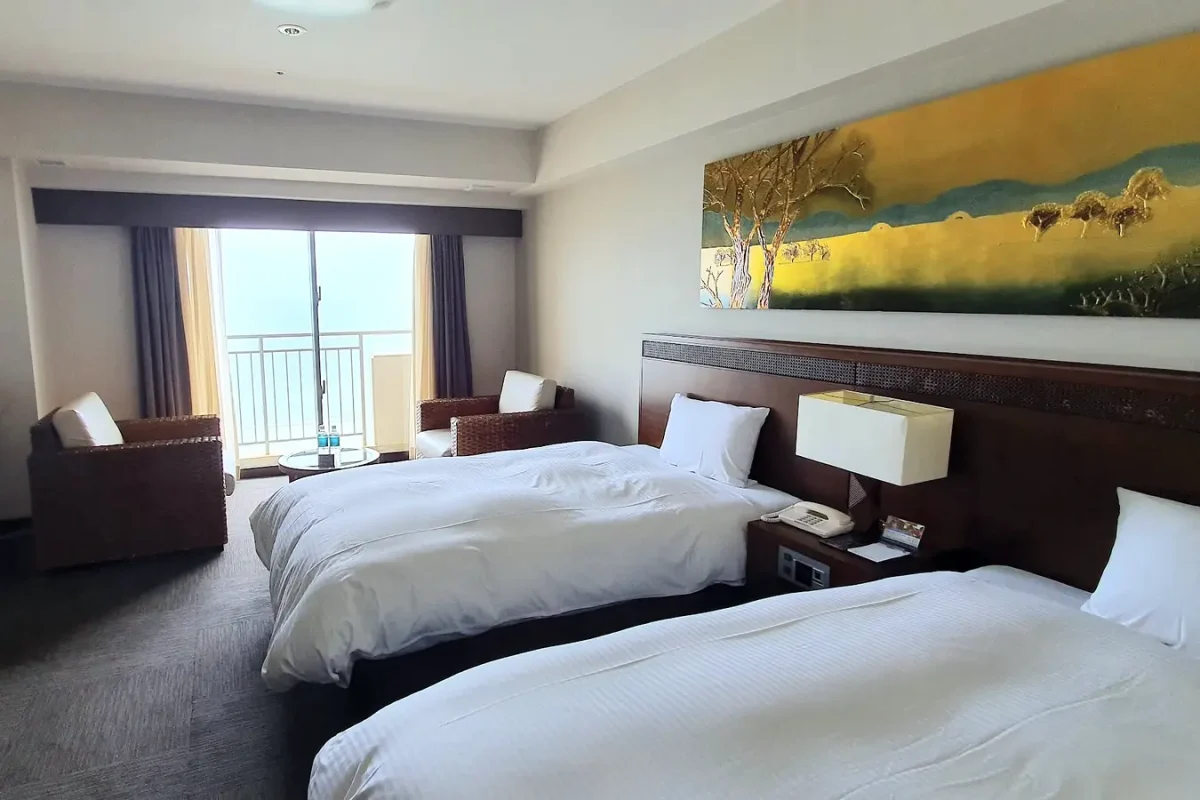
We stayed at Grandvrio Resort Ishigakijima during our honeymoon. Our room was spacious and clean, with a balcony and a sea view, and the resort gave us somewhere comfortable to recover between two busy excursions. We ate dinner there on our first evening, had a massage at the hotel during the stay and were given a pair of chopsticks as a honeymoon gift. That small gesture has stuck in my mind rather more than many supposedly grander hotel details.
It is important to understand the location, however. Grandvrio is a resort base rather than accommodation beside the ferry terminal. Current hotel information places it roughly 10 minutes from Ishigaki Port by car and around 40 minutes from the airport by taxi. Transfer arrangements can change, so check the hotel’s current information directly before booking.
If your priority is catching several early ferries, staying within walking distance of Ishigaki Port may be more convenient. If you want a more resort-like stay and do not mind arranging transport to the terminal, somewhere such as Grandvrio may suit you better. Our broader guide to where to stay in Okinawa includes the accommodation choices we considered.
HOW TO GET TO ISHIGAKI
For our route, flying was the practical connection. We travelled from Naha to New Ishigaki Airport in a little over an hour according to the booked schedule. Ishigaki also has domestic air links with several other Japanese cities, but routes and frequencies change, so check the airlines serving your dates rather than relying on an old list.
There is no regular passenger ferry from Naha to Ishigaki. That is an easy planning mistake to make when looking at an island map that does not adequately communicate just how far apart these places are.
GETTING AROUND ISHIGAKI WITHOUT A CAR
We did not hire a car on Ishigaki because our two full days centred on ferry trips. That worked for this itinerary, but it would be more restrictive if your priority were exploring Ishigaki’s dispersed beaches and viewpoints.
Current official visitor information shows bus connections between New Ishigaki Airport, the city centre and the ferry terminal. Routes elsewhere on the island are less frequent. Taxis and hotel transfers can therefore be useful, particularly when you have an early boat or luggage.
For a self-drive circuit around Ishigaki itself, hiring a car would provide more flexibility. Gary was our only driver in Okinawa and needed an International Driving Permit before the trip. We did hire a car on Okinawa Honto, but not during this Ishigaki stay, so I cannot give you a first-hand review of driving on Ishigaki.

USING ISHIGAKI PORT FOR ISLAND HOPPING
Ishigaki Port Remote Island Terminal is the practical heart of this itinerary. Ferries leave for Taketomi, Iriomote and other Yaeyama islands, but not every route operates with the same frequency or reliability. Weather can alter or cancel services, and the Uehara route on Iriomote is particularly important to check when conditions are poor.
Our Taketomi ferry was arranged independently. Our Iriomote tour was pre-booked and its email gave us a specific ferry to catch. That is a useful distinction: for an organised excursion, follow the operator’s instructions rather than choosing a sailing simply because it appears convenient.
- Check the live operating status before leaving your hotel
- Confirm which Iriomote port your tour uses
- Arrive with enough time to find the correct operator and departure point
- Keep the return sailing in mind throughout an independent day trip
- Carry some cash for smaller businesses on the outer islands
WHAT DID WE EAT IN ISHIGAKI?
The food memory I can substantiate most clearly is Ishigaki beef—we have an original photograph of it in the site’s media library, and it appears in our Okinawa food guide. Ishigaki beef is one of the island’s best-known specialities and was exactly the sort of honeymoon dinner we were never likely to argue against.
I no longer remember the restaurant name confidently enough to recommend it. I would much rather tell you that than attach the photograph to whichever restaurant happens to appear first in a search result. You can find more of the dishes we tried across the trip in our guide to the best food in Okinawa.

WHAT ELSE CAN YOU DO ON ISHIGAKI?
Our three-night route prioritised the outer islands, so the following are additional possibilities rather than places I am claiming we visited. They appear consistently in official visitor information and established Ishigaki guides:
- Kabira Bay: Ishigaki’s best-known scenic bay, where glass-bottom boats operate. Swimming is prohibited in the bay because of the currents.
- Ishigaki’s beaches: several beaches offer swimming or snorkelling, but conditions, facilities and seasonal supervision vary.
- Banna Park: a large inland park with viewpoints and subtropical scenery.
- Yaeyama Museum: an option for learning more about the history and culture of the islands.
- Ishigaki Yaima Village: an open-air cultural attraction with traditional houses.
- Stargazing: the Yaeyama Islands are known for dark skies, although cloud cover can obviously have other ideas.
If I were rebuilding our trip with more time, I would add at least one full day for Ishigaki itself rather than squeezing several of these places around the ferries. I would not bolt them onto the arrival afternoon and call it relaxed travel. That would be lying to both you and the clock.
WOULD THIS ISHIGAKI ITINERARY SUIT FAMILIES?
We travelled as a couple on our honeymoon, not with children. Ishigaki nevertheless felt like a potentially family-friendly base, particularly for a shorter Taketomi excursion and a resort stay.
The Iriomote activity we booked would require much more careful consideration. Parents should check the tour’s current minimum age, fitness expectations, terrain and safety information directly with the operator. My own experience also showed that a description such as “suitable for beginners” does not necessarily mean comfortable for somebody with a severe fear of heights.
OUR HONEST VERDICT
Ishigaki worked extremely well as the final base of our Okinawa honeymoon. Three nights gave us two unforgettable island days without another hotel move between them. Taketomi was one of the most distinctive and enjoyable days of the whole trip; Iriomote was beautiful and fascinating, although personally much harder than expected.
The weakness in our plan was that we allowed very little time for Ishigaki itself. If island hopping is your priority, our itinerary works. If you also want Kabira Bay, beaches and a proper circuit of Ishigaki, add another day or two rather than pretending an arrival afternoon is a full day.
Continue planning with our guides to the best things to do in Okinawa, the best time to visit Okinawa, our Taketomi day trip and our Iriomote day trip.
For all our first-hand itineraries, island guides, hotel reviews and planning advice in one place, visit our Okinawa Travel Guide.
Would you use Ishigaki mainly for island hopping—or add more time to explore Ishigaki itself?
Comment below and let us know!