Zakimi Castle Ruins are worth visiting if you are driving through central Okinawa and want to see a side of the island that looks nothing like its beaches—or the timber castles of mainland Japan. It’s compact, free and architecturally fascinating. But it is a ruined fortification rather than a complete castle, so it works best as one stop in a wider Yomitan or west-coast road trip.
We visited Zakimi during our honeymoon in May 2019, after an already rather ambitious day involving Churaumi Aquarium, Pizza in the Sky, Cape Manzamo and Ryukyu Mura. By the time we reached the castle, the sensible part of the afternoon had gone. This was very much a final-look-before-dinner visit!
Our quick verdict
Yes, Zakimi Castle is worth visiting for its curved limestone walls, old arched gateway and the contrast it provides with both Shuri and mainland Japanese sites such as Kanazawa Castle. Allow 30–45 minutes for the ruins, or about an hour if you also want to visit the museum. I would not make a long bus journey from Naha solely for Zakimi, but it is an excellent short stop when you are already exploring Yomitan.
Zakimi Castle Ruins: quick facts
| Japanese name | Zakimi-jo Site / 座喜味城跡 |
| Location | Yomitan, central Okinawa Honto |
| Best for | Architecture, Ryukyu history, views and a short road-trip stop |
| Castle admission | Free |
| Castle opening hours | The outdoor ruins are always open |
| Time needed | 30–45 minutes; longer with the museum |
| From central Naha | About one hour by car; considerably slower by bus and on foot |
| Parking | Free parking beside the museum and castle grounds |
| Our visit | May 2019, near the end of our main-island driving day |
Is Zakimi Castle worth visiting?
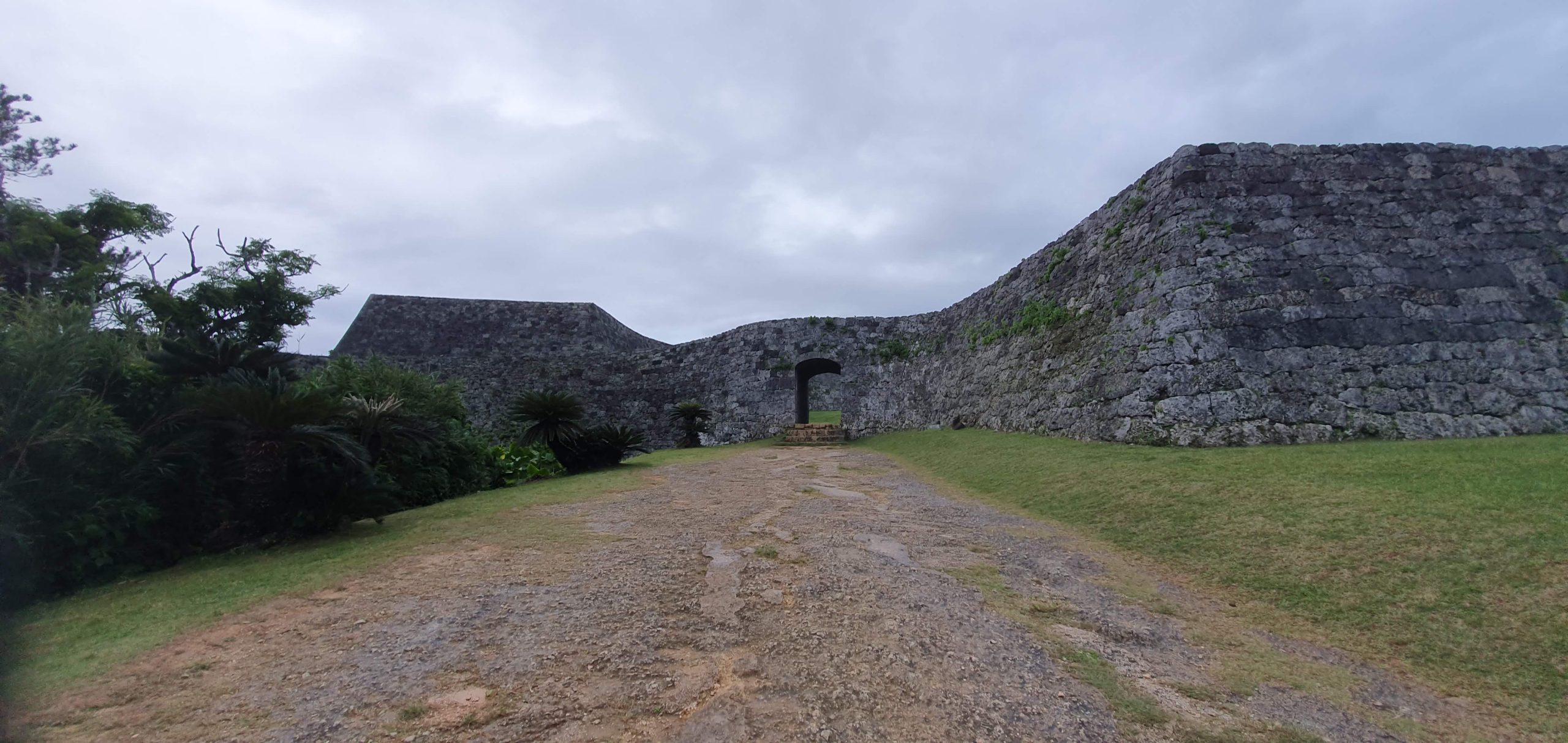
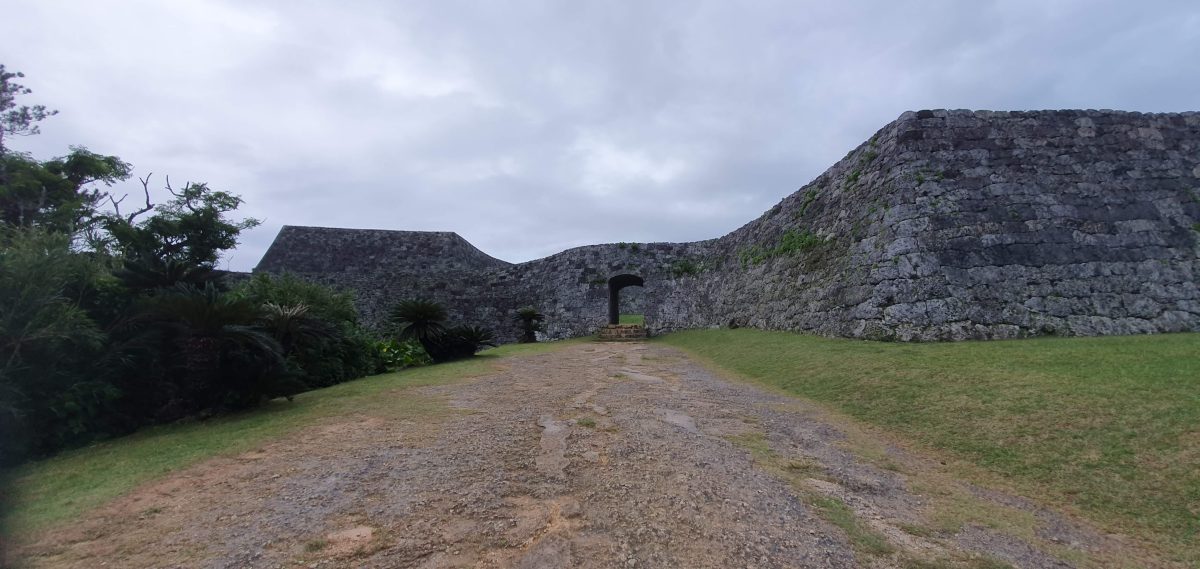
Zakimi is worth the stop, but you need to arrive with the right picture in your head. There is no castle keep, furnished palace or room-by-room exhibition waiting at the top. What survives is the thing that makes Zakimi special: a pair of stone enclosures, muscular curved walls and gateways that seem to have grown out of the hill.
Gary chose this stop. He has always been drawn to fortifications, and Zakimi immediately felt closer to the British castles we knew than the elegant timber buildings we had seen elsewhere in Japan. The comparison only goes so far—the construction, culture and history are distinctly Ryukyuan—but the defensive logic is much easier to read here.
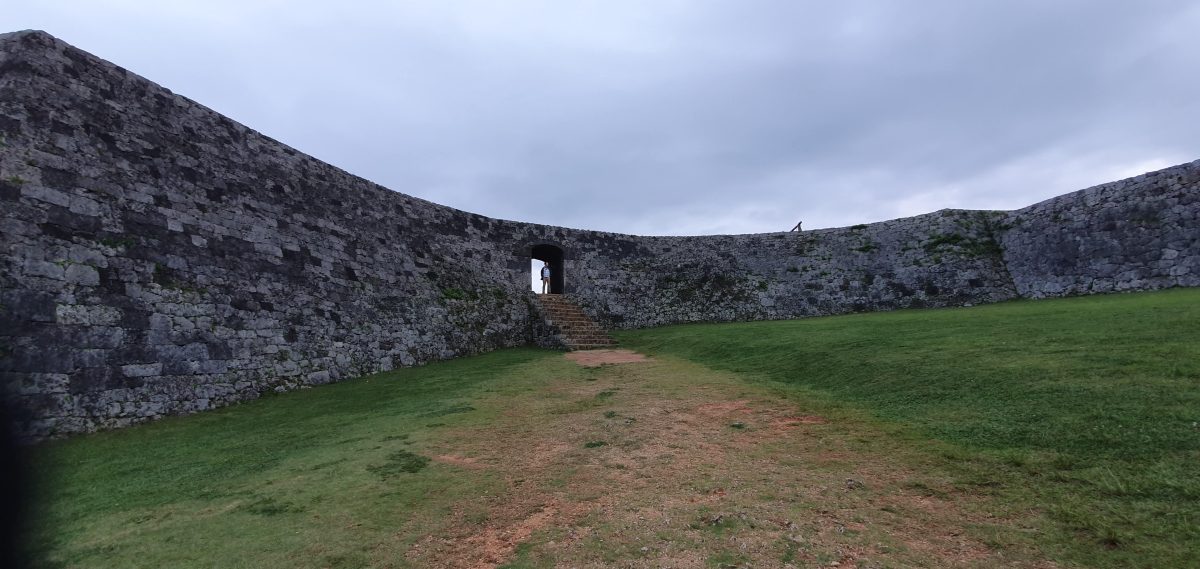
Perhaps this is my architect showing, but I found the walls more interesting than a reconstructed building would have been. They curve rather than simply marching in a straight line, and the gateway compresses you through a thick band of stone before releasing you into the grassy enclosure. It’s simple. But it’s also very clever.
Our experience at Zakimi Castle
Our written itinerary placed Zakimi at about 5pm. My photograph timestamps put us there closer to 6.30pm, which is probably the most accurate summary of how that road-trip schedule was progressing.
We had started in Naha, driven north to the aquarium and then worked our way south through lunch, Cape Manzamo and Ryukyu Mura. You can see the complete sequence in our Okinawa main-island road-trip itinerary. It was possible because we did it. It was not relaxed.
By the time we walked beneath the pines towards Zakimi, the museum was no longer part of the equation and American Village still stood between us and dinner. We spent roughly 15–20 minutes inside the ruins. That was enough to walk through the enclosures, study the gateway and admire the view, but not enough to linger or understand the site as thoroughly as it deserved.
Even so, it did not feel like an empty patch of old stones. The walls define the space so strongly that you can understand the castle as soon as you step through them. Also, Zakimi was quieter and less ceremonious than Shuri Castle. After a day of large attractions and increasingly anxious clock-watching, that simplicity was rather welcome.
What is Zakimi Castle?
Zakimi is a gusuku: an Okinawan fortified site associated with the Ryukyu Islands rather than the feudal castles most visitors picture when they think of Japan. According to the official Okinawa travel guide, it was built in Yomitan around 1420 by Gosamaru, a commander of the central Chuzan kingdom, during the Sanzan period of competing kingdoms.
The buildings have disappeared, but the limestone walls remain. Zakimi forms part of the UNESCO-listed Gusuku Sites and Related Properties of the Kingdom of Ryukyu, a group of nine places representing roughly five centuries of Ryukyuan history.
That distinction matters. Zakimi is not a smaller, slightly disappointing version of Himeji Castle or Matsumoto Castle. It belongs to a different architectural and political tradition. Treat it as a ruined Ryukyuan stronghold and the site makes far more sense.
What can you see at Zakimi Castle?
The curved stone walls
The walls are the main event. Their wave-like plan was not simply decorative: the projecting curves improved visibility and helped defenders respond from several directions. The Yomitan tourism association compares their structural logic with a modern arch dam and explains that several different Okinawan stone-laying techniques can be seen here.
You do not need an engineering lecture to appreciate them, though. Walk around the enclosure and the changing curve does the explaining for you.
The arched gateways
Zakimi has two enclosures connected by stone gateways. The official guide describes one as Okinawa’s oldest arched gate to use a keystone. Look closely and you can see how carefully the dressed blocks lock together—less showy than a red palace gate, but arguably more satisfying.
Views from the walls
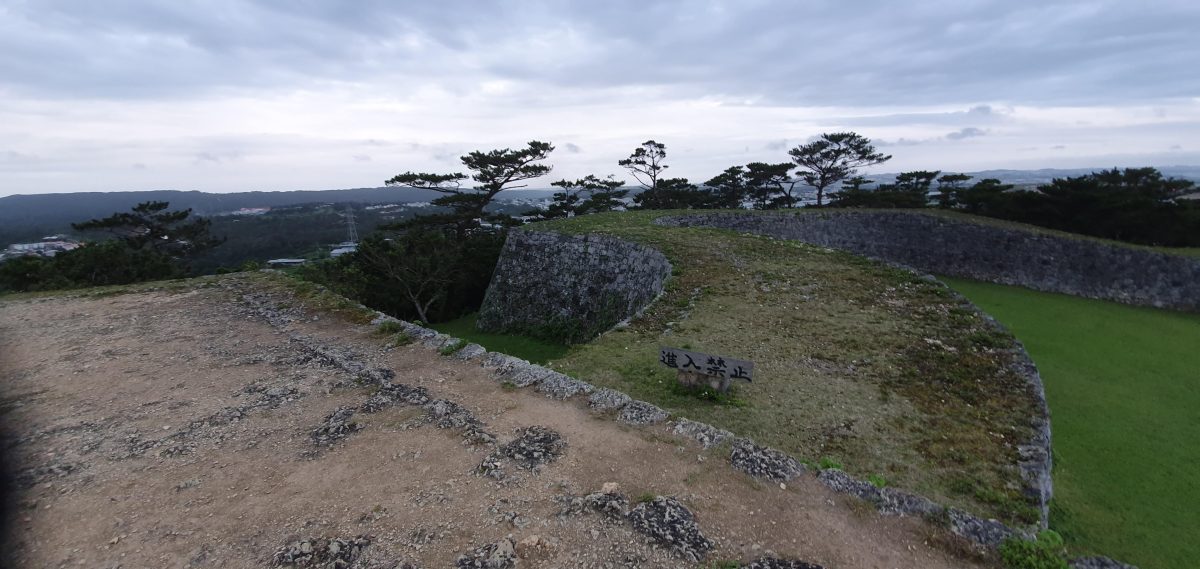
Visitors are permitted on designated sections of the thick castle walls. On a clear day, the official tourism information says you can see towards Shuri and Naha, as well as across Yomitan and the coast. Follow the barriers and posted restrictions; these are historic walls rather than a modern viewing platform.
Yuntanza Museum
The Yuntanza Museum stands beside the ruins and covers the local history, culture, archaeology and art of Yomitan. It also contains a model explaining the castle’s design. We arrived too late to include it, so I cannot give you a personal museum review. But if Zakimi is more than a quick road-trip stop for you, the museum should provide the context our rather speedy lap was missing.
Our Japanese castle comparison explains how Zakimi and Shuri differ from one another and from the four mainland castles we visited.
Zakimi Castle or Shuri Castle?
Visit both if your itinerary allows. They explain different parts of Okinawa’s history and do not feel interchangeable.
| Zakimi Castle | Shuri Castle |
|---|---|
| Ruined hilltop gusuku in Yomitan | Royal and ceremonial complex in Naha |
| Best for fortifications, masonry and views | Best for court history, reconstructed architecture and museum displays |
| Compact outdoor visit | Larger attraction requiring more time |
| Free outdoor castle grounds | Larger, managed visitor complex |
| Easiest within a driving route | Accessible from central Naha by monorail and bus/walking |
If you have only one day in Naha and no car, prioritise Shuri. If you are driving through central Okinawa, Zakimi gives you the better understanding of how a defensive gusuku used stone and terrain.
How long do you need at Zakimi Castle?
- 20 minutes: enough for a brisk walk through the enclosures and photographs.
- 30–45 minutes: a better visit, with time to study the walls and enjoy the viewpoint.
- About one hour: sensible if you want the ruins and a short museum visit.
- Longer: useful if you are particularly interested in architecture, local history or photography.
We were firmly in the first category. I am glad we stopped, but I would give Zakimi at least another 15 minutes next time. Hardly a grand act of slow travel, admittedly, but progress!
What is the best time to visit Zakimi Castle?
The best time depends on whether you want to include the museum. For both, arrive before the museum’s current last entry at 5.30pm. If you only want the outdoor ruins and softer light, late afternoon works well; the official Okinawa guide specifically recommends the walls for sunset.
We reached Zakimi at about 6.30pm in May, which gave us warm evening light. But American Village and dinner were still on our schedule, so naturally we left before the sky did anything especially dramatic.
Zakimi Castle admission, opening hours and museum prices
The outdoor castle ruins are free and always open. Our own admission spend was therefore ¥0.
The adjacent Yuntanza Museum currently opens from 9am to 6pm, with last entry at 5.30pm. It normally closes on Wednesdays and from 28 December to 4 January. The listed individual rate for visitors from outside Yomitan is ¥500 for high-school age and above, ¥300 for primary and junior-high pupils, ¥400 for people aged 65 or over, and free for infants. Prices and closing arrangements can change, so check the Yuntanza Museum website before relying on them.
How to get to Zakimi Castle Ruins
By car
Driving is the easiest option. Zakimi is roughly 25 kilometres north of Naha, and the journey from central Naha generally takes around an hour before allowing for traffic. We visited with a hire car as part of our much longer island route.
Free parking is available beside the museum and castle grounds, according to the official Okinawa tourism listing.
Use the current destination details rather than trusting an elderly satnav with strong opinions. Ours shouted about tolls in Japanese and then stopped being useful, so Google Maps eventually became the more diplomatic member of the car.
By bus
You can reach Zakimi without driving, but it is less convenient. The official Okinawa guide gives a journey of about 80 minutes from Naha Bus Terminal to Takashiho Iriguchi, followed by roughly 20 minutes on foot. Check the live route planner on the day because timetables and stopping patterns can change.
How to include Zakimi in an Okinawa road trip
Zakimi works particularly well with other central and western Okinawa stops. Our own route continued from Ryukyu Mura to Zakimi and then to American Village for dinner. That section made geographical sense; trying to fit the aquarium, Pizza in the Sky and Cape Manzamo into the same day was the part that turned it into a race.
- Short cultural route: Ryukyu Mura → Zakimi Castle → American Village.
- Slower Yomitan route: Zakimi Castle → Yuntanza Museum → Yachimun no Sato pottery village.
- West-coast route: Cape Manzamo → Ryukyu Mura → Zakimi Castle.
If the aquarium is your priority, give it the time it deserves and remove one or two afternoon stops. Our five-day Okinawa itinerary shows where the driving day fitted into the wider honeymoon, while the Japan Travel Guide connects it with our mainland routes and castle visits.
Who should visit Zakimi Castle—and who should skip it?
Visit Zakimi if:
- You are interested in Ryukyu history, defensive architecture or stone construction.
- You want a short, free stop while driving through Yomitan.
- You have already seen Shuri or mainland Japanese castles and want a useful contrast.
- You enjoy ruins where the landscape and surviving structure do most of the storytelling.
Skip Zakimi if:
- You would be travelling from Naha solely for this one compact site.
- You want furnished interiors, a reconstructed keep or extensive exhibitions.
- Your Okinawa schedule is already too full. Yes, I do recognise the irony of giving you this advice.
Our final verdict on Zakimi Castle Ruins
Zakimi Castle Ruins are not one of Okinawa’s enormous headline attractions, and that is part of their appeal. They offer a compact, readable piece of Ryukyu history: strong walls, intelligent curves, an old stone gateway and a hilltop position that explains why the castle existed.
I would not build an entire day around Zakimi. But I would absolutely include it in a Yomitan or central-Okinawa route, particularly if you have an interest in architecture or have started to suspect that every Japanese castle comes with white plaster and sweeping tiled roofs. Okinawa has other ideas.
Zakimi Castle Ruins FAQs
Are Zakimi Castle Ruins worth visiting?
Yes, particularly if you are already driving through Yomitan. The free ruins offer distinctive curved walls, an old arched gateway and wide views, but the site is too compact to justify a long journey from Naha on its own for most visitors.
Is Zakimi Castle free?
Yes. Entry to the outdoor castle ruins is free. The neighbouring Yuntanza Museum has a separate admission charge for its paid exhibition area.
What are the Zakimi Castle opening hours?
The outdoor ruins are always open. The Yuntanza Museum currently opens from 9am to 6pm, with last admission at 5.30pm, and normally closes on Wednesdays and over the New Year period.
What is the best time to visit Zakimi Castle?
Late afternoon is a good choice for softer light, and the official Okinawa guide recommends the walls for sunset. Visit earlier if you also want the Yuntanza Museum, as its current last admission is 5.30pm.
How long should I spend at Zakimi Castle?
Allow 30–45 minutes for the ruins. A rushed 20-minute visit is possible, while roughly one hour makes more sense if you also want to see part of the Yuntanza Museum.
Can you climb the walls at Zakimi Castle?
Visitors are allowed onto designated sections of the thick walls. Follow current signs and barriers, and take particular care with children because this is a historic ruin rather than a purpose-built viewing platform.
How do I get to Zakimi Castle from Naha?
Driving from central Naha usually takes around one hour, depending on traffic. Public transport is possible, but the official route involves an approximately 80-minute bus journey followed by about 20 minutes on foot.
Is there parking at Zakimi Castle?
Yes. Free parking is available beside the Yuntanza Museum and castle grounds, making Zakimi an easy stop on a central-Okinawa driving route.
Is Zakimi Castle the same as Shuri Castle?
No. Zakimi is a ruined defensive gusuku in Yomitan, known for its stone walls and gateways. Shuri was the royal and ceremonial centre of the Ryukyu Kingdom and is a much larger visitor attraction in Naha.
What can I combine with Zakimi Castle?
Zakimi combines naturally with Ryukyu Mura, Yachimun no Sato, Cape Manzamo or American Village. Choose two or three nearby stops rather than copying our entire aquarium-to-American-Village marathon.