

Written by Katharina Mungall
Travel writer, photographer and architect
This three-day Kyoto itinerary is based on two trips to the city. We paid for everything ourselves, got a few timings wrong and have rearranged the route accordingly. Attraction prices were checked on 24 September 2026.
Not to blow my own trumpet. But Gary and I have visited Kyoto twice now, which puts me in the useful position of knowing both what worked and what made us stare at a transport map as though it had personally betrayed us.
On our first visit, we tried to squeeze Kyoto and Nara into three days. We also stayed near Fushimi Inari, in a quiet residential area. It was easy enough to get around from there, but with hindsight we should have stayed closer to the centre.
We came back in 2017 and finally saw Kinkaku-ji, the Golden Pavilion. This itinerary combines the best parts of both visits, fixes our poor geographical decisions and gives Kyoto three proper days. Nara is lovely, but it no longer steals a third of a Kyoto itinerary while nobody is looking.
The quick answer: how to spend 3 days in Kyoto
Spend your first day walking through Southern Higashiyama and Gion. Start day two early at Fushimi Inari, then cross the city for Kinkaku-ji and keep the evening loose. Use day three for Arashiyama, including the bamboo grove, Togetsukyo Bridge and either the monkey park or a slower garden visit.
| Day | Area | Route | Realistic pace |
|---|---|---|---|
| 1 | Eastern Kyoto | Sanjusangendo → Kiyomizu-dera → Sannenzaka and Ninenzaka → Kodaiji → Yasaka Shrine → Gion | A full walking day |
| 2 | South and north-west | Fushimi Inari → Kinkaku-ji → central Kyoto or an early dinner | Two headline sights and one long transfer |
| 3 | Western Kyoto | Arashiyama Bamboo Grove → Togetsukyo Bridge → Iwatayama Monkey Park | Half to three-quarters of a day |
If you only remember one thing: group Kyoto by area. It’s far more spread out than its neat little cluster of pins suggests.
Is three days in Kyoto enough?
Yes. Three full days are enough for a first visit to Kyoto if you accept that you are not going to see every temple, shrine, garden and photogenic lane in the city. You are not. I tried this approach and mostly achieved sore feet with an impressive side order of temple fatigue.
With three days, you can cover Kyoto’s most useful sightseeing areas: Higashiyama in the east, Fushimi in the south and Arashiyama in the west. Kinkaku-ji sits awkwardly in the north-west, so I have paired it with Fushimi on the lightest day. It is not the shortest transfer. But it is more honest than wedging six major sights into one day and calling it relaxed.
If you have a fourth day, take our Nara day trip from Kyoto. If Kyoto forms part of a longer holiday, our two-week Japan itinerary shows how it fits between the rest of the country.
What I have deliberately left out
You will see Nishiki Market, Nijo Castle, Ginkaku-ji, the Philosopher's Path and Tenryu-ji in plenty of Kyoto itineraries. They are not in this one because we did not visit them on these two trips. That is not a judgement on whether they are worthwhile. It is me resisting the urge to turn somebody else's research into my “personal” recommendation.
If one of them is high on your list, swap it in; do not simply add it on top. Kyoto itineraries acquire extra temples with alarming ease.
Kyoto costs for this itinerary
These are current adult admission prices, checked against the official attraction websites on 24 September 2026. Shrines and temples do change fees and opening hours, especially around seasonal illuminations, so check again before you go. Future you will be grateful!
| Place | Adult admission | Notes |
|---|---|---|
| Sanjusangendo | ¥600 | Shoes come off inside |
| Kiyomizu-dera | ¥500 | The wider grounds include free areas |
| Kodaiji | ¥800 | Standard adult entry; special events may differ |
| Fushimi Inari Taisha | No admission charge | Allow more time if you want to climb to the summit |
| Kinkaku-ji | ¥500 | Open 9am–5pm at the time of checking |
| Arashiyama Bamboo Grove | No admission charge | It is a public path, not a ticketed garden |
| Iwatayama Monkey Park | ¥800 | Cash only at the time of checking; the climb is part of the visit |
We also spent ¥5,000 on a kaiseki dinner in Gion during our 2015 trip. That is a historic price, not a promise that you can still order the same meal for the same amount. I have included it because it was one of the most memorable meals of our first visit, and because a specific old figure is sometimes more useful than vague claims that a restaurant is “reasonably priced”. Reasonable to whom?
How to get around Kyoto without losing half the day
Kyoto has trains, a subway and buses, but there is no single line joining every sight you want to see. Use rail for Fushimi Inari and Arashiyama, then walk within each neighbourhood. Buses are useful for Kinkaku-ji and parts of Higashiyama, although road traffic can make journey times optimistic. Also, a bus that looks direct on a map is not necessarily the quickest choice.
- Pay as you go: within the flat-fare area, Kyoto City Bus journeys cost ¥230 per adult. IC cards such as Suica, PASMO and ICOCA are accepted.
- Day pass: the Subway & Bus One-Day Pass costs ¥1,100 for an adult. It is only good value if you will make enough covered journeys.
- Fushimi Inari: JR Inari Station is directly beside the shrine. From Kyoto Station, the local train takes about five minutes and it is the second stop.
- Arashiyama: the JR Sagano Line to Saga-Arashiyama is usually the simplest option from Kyoto Station.
- Luggage: leave it at your hotel, use station lockers or arrange luggage forwarding. Dragging a suitcase through Sannenzaka is not a personality-building exercise you need.
If this is your first time in the country, read our Japan trip-planning guide before deciding whether you need a nationwide rail pass. You do not need one just for Kyoto.
Day 1: Southern Higashiyama and Gion
Route: Sanjusangendo → Kiyomizu-dera → Sannenzaka and Ninenzaka → Kodaiji → Yasaka Shrine → Gion.
We began this day after a three-hour train journey from Hiroshima, so we only had about three-quarters of it for sightseeing and stuck to the southern part of Higashiyama. I would not recommend copying that part. Start in the morning and the route becomes far more civilised.
Start at Sanjusangendo
Sanjusangendo is better known for what it holds than for its exterior: 1,001 statues of Kannon arranged through a long wooden hall. Photography is not permitted in the hall, which is probably why it gets less attention online than Kyoto’s more camera-friendly landmarks. But the sight of all those figures is far more affecting than another perfectly framed photograph would suggest.
You remove your shoes before entering. Wear presentable socks. This sounds like the sort of advice only an anxious aunt would give you, right up until your big toe appears through a hole in a silent 13th-century temple.

Continue to Kiyomizu-dera
Kiyomizu-dera is busier, bigger and much easier to underestimate. The famous wooden stage is only part of it. You also have hillside paths, smaller buildings, the Otowa Waterfall and broad views over Kyoto.
We tried the love-stone challenge at Jishu Shrine, where you walk between two stones with your eyes closed. Apparently success means luck in love. It seems to have worked for Gary and me, but it’s harder than it sounds when the path is crowded. The shrine has since undergone restoration, so check what is accessible when you visit.
Before you leave, ask at the ticket office for directions to Tainai Meguri. You take off your shoes and go down into complete darkness, guided only by a beaded rail, then spin a stone at the bottom and make a wish. If you are claustrophobic, skip it without a shred of guilt.

Walk through Sannenzaka and Ninenzaka
From Kiyomizu-dera, walk downhill through Sannenzaka and Ninenzaka. The lanes are lined with wooden machiya, small shops, cafés and rather a lot of other people attempting exactly the same photograph. Go early if empty streets matter to you. If they do not, slow down, look up and accept that popular places are sometimes popular for a reason.
Do not treat these streets as a corridor between temples. They are part of the day. Stop for tea, browse the shops and allow yourself to be distracted. Also, look up. Our best Kyoto moments rarely happened while marching efficiently towards the next numbered attraction.

Do not skip Kodaiji
We found Kodaiji almost by accident. It was also one of the calmest and most beautiful places we visited in Kyoto. Funny how the attraction you have not colour-coded in advance sometimes wins.
The temple has landscaped gardens, a rock garden, tea houses and a small bamboo grove. It felt far less crowded than Kiyomizu-dera during our visit, and the quieter pace was exactly what we needed by that point. We paid ¥600 in 2015; the standard adult price is now ¥800.

Yasaka Shrine and Gion after dark
Continue north to Yasaka Shrine, then cross into Gion for the evening. Kyoto changes character when the lanterns come on and the day-trippers begin to leave. We finished with a kaiseki meal served course by course in a traditional setting. Our dinner cost ¥5,000 in 2015 and was the most expensive meal of that trip. It was also worth it.

Day 2: Fushimi Inari and Kinkaku-ji
Route: Fushimi Inari early → lunch or a pause near Kyoto Station → Kinkaku-ji → central Kyoto for dinner.
These two sights are on opposite sides of the city. I know. But they are also the two famous Kyoto places sitting outside the neat day-one and day-three clusters. Pairing them gives each enough breathing room and stops the Arashiyama day becoming a competitive endurance event.
Go to Fushimi Inari before breakfast crowds
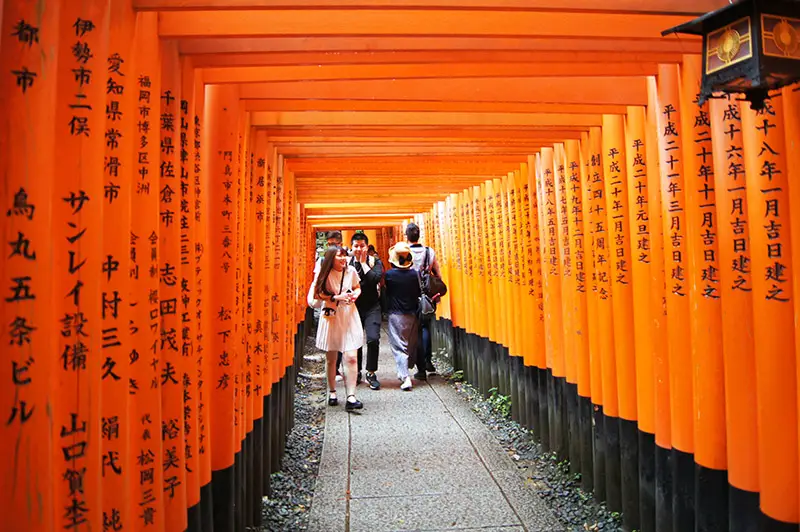
Our first Kyoto hotel was close to Fushimi Inari. Wherever you stay, go early in the morning. The lower torii tunnels are the busiest part and they look completely different when you have enough space to notice the inscriptions and the fox statues rather than somebody’s raised phone.
You do not have to climb to the summit to understand the place. Most visitors go only as far as the Yotsutsuji intersection, about 30–45 minutes up and roughly halfway, where the trail splits and there’s a view across Kyoto. Continue if you enjoy the walk. Turn back if your knees have started negotiating. Both are valid decisions.
Allow around two hours for an unhurried visit to the lower trail and viewpoint, or longer for the full circuit. The main shrine grounds do not have an admission charge. JR Inari Station is immediately outside, so this is one Kyoto journey where the transport system behaves itself.
Cross the city for Kinkaku-ji
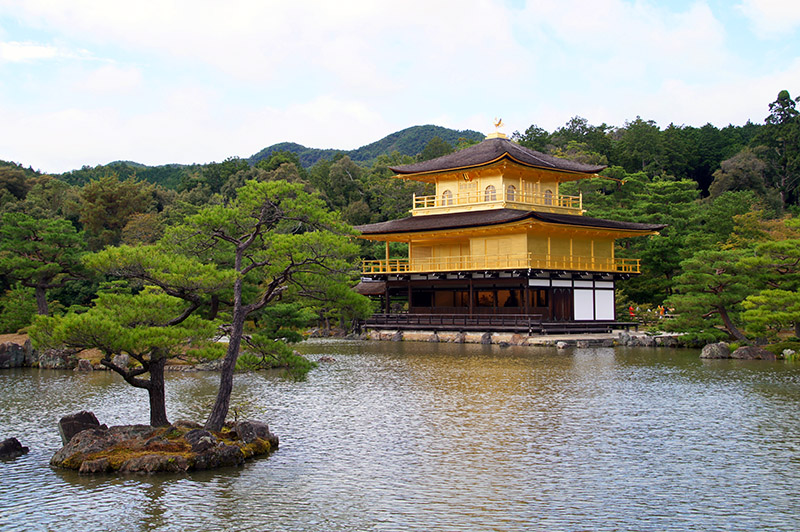
We skipped Kinkaku-ji on our first trip because we were short on time. On the second visit, we corrected that, on our last day in Kansai on the way back to Tokyo. Expect a gold-clad building reflected in a pond, with a carefully managed path moving visitors around the garden.
It’s not a long visit. Allow roughly an hour, perhaps a little more if it is busy. You cannot enter the pavilion itself, and the route is largely one way. Go for the view, the garden and the frankly unapologetic amount of gold.
From Fushimi Inari, return towards Kyoto Station and expect about an hour of travel to Kinkaku-ji, depending on your train, subway and bus connection. Kinkaku-ji closes at 5pm at the time of writing, so do not leave the transfer until late afternoon and hope for the best. I have done enough of that for both of us.
Keep the evening flexible. Head back towards Kawaramachi, Pontocho or your hotel for dinner. After two early starts and a cross-city journey, you do not need another five-item checklist.
Day 3: Arashiyama bamboo, river and monkeys
Route: Arashiyama Bamboo Grove → river and Togetsukyo Bridge → Iwatayama Monkey Park. Add Okochi Sanso only if you have the time and interest.
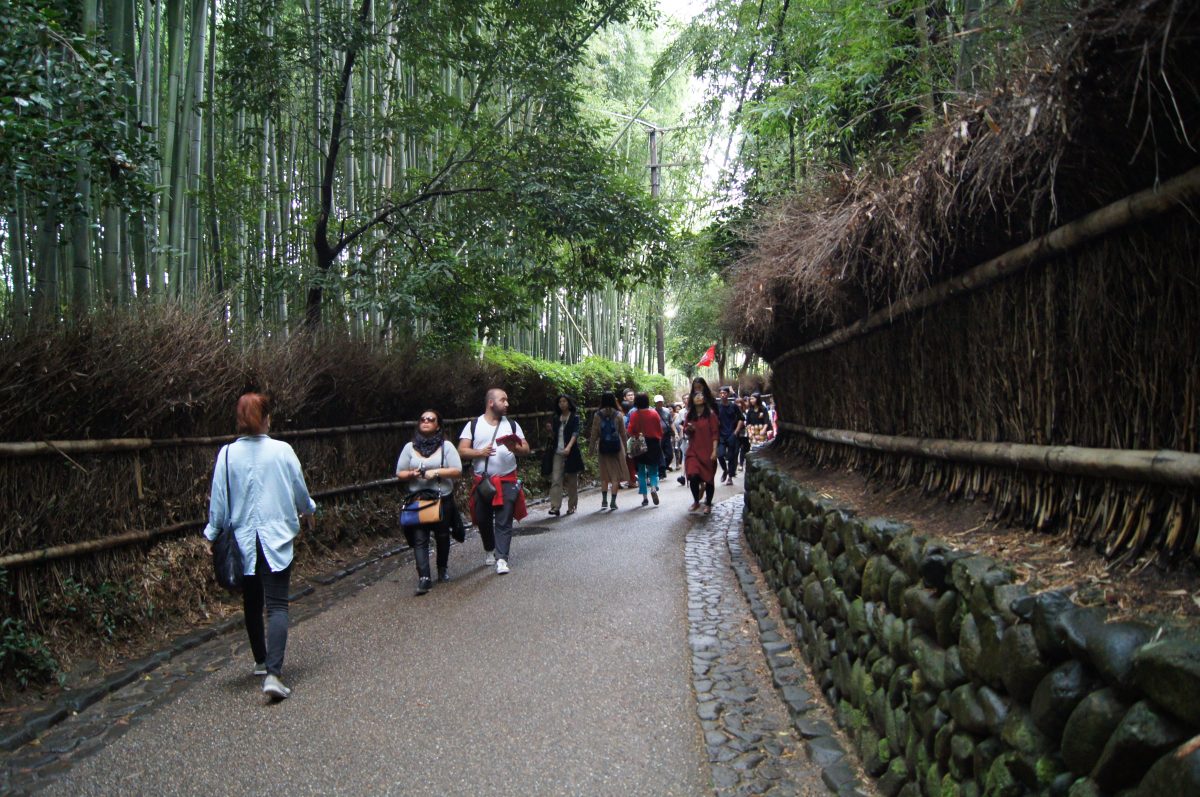
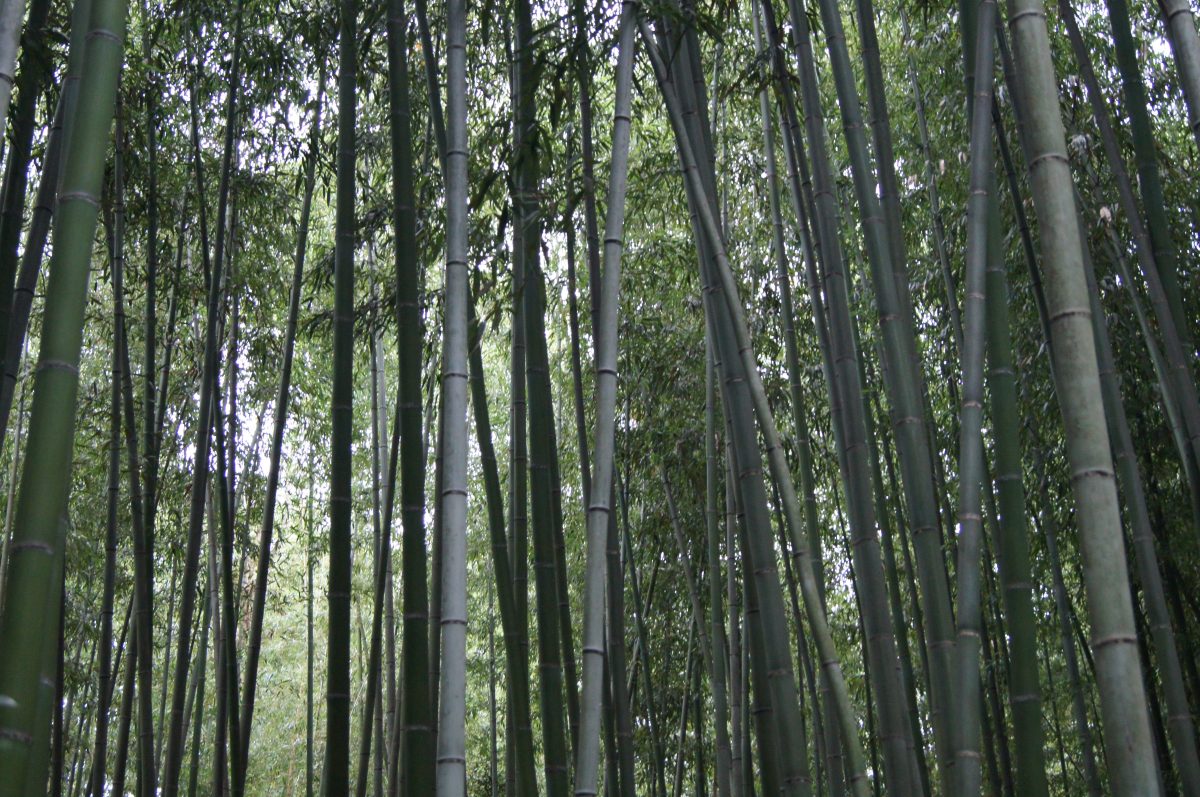
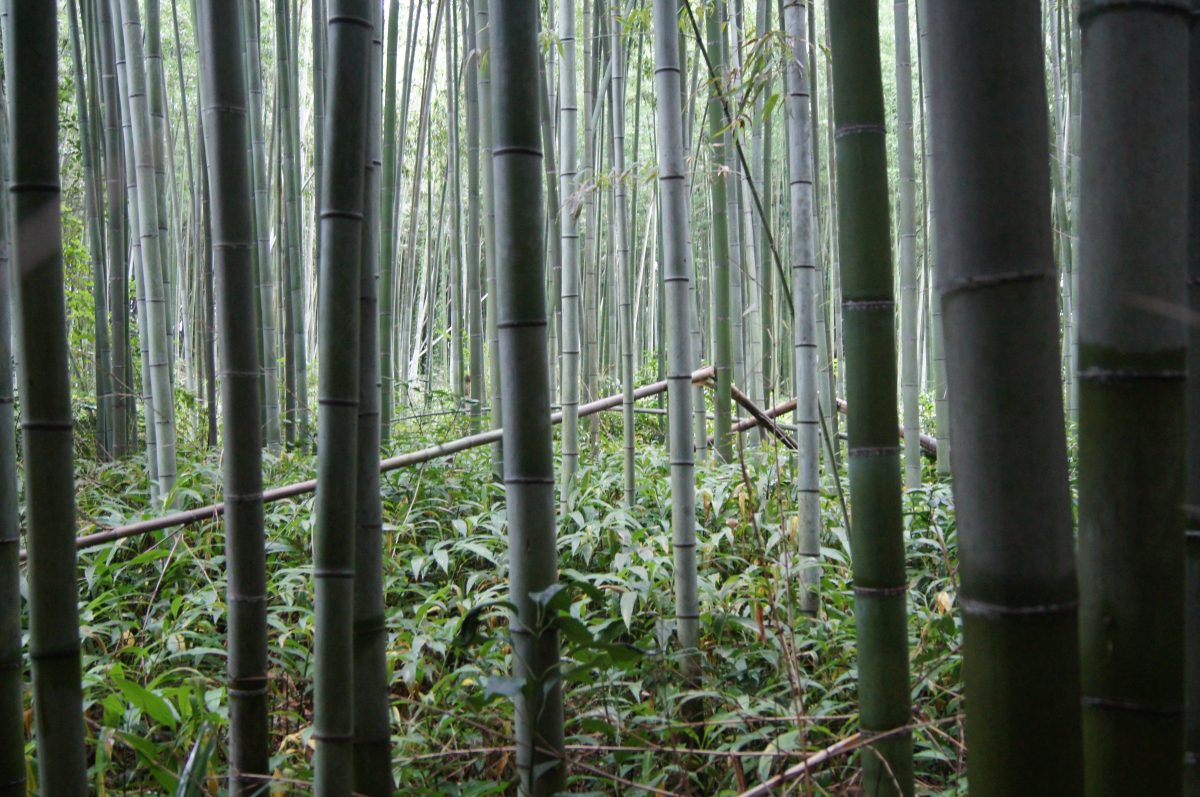
Arashiyama is worth treating as a district, not a bamboo photo stop. The grove is surprisingly short. The river, mountain views and paths around it are what turn the journey west into a proper day.
Start at the bamboo grove
Arrive early and walk through the grove before the busiest tour groups. The path is public and free to enter. It can feel wonderfully still first thing in the morning; later, it resembles a very green railway platform.
We planned to visit Okochi Sanso at the far end. We did not. We lost a lot of time that morning, so we skipped the garden, and later chose the monkey park over a taxi to the Golden Pavilion. I am not going to pretend otherwise simply because the garden would make the itinerary look more cultured.
If you prefer landscaped gardens to a steep walk, choose Okochi Sanso instead. But check its current admission and opening details before visiting; it is an optional suggestion here, not somewhere I can review first-hand.
Walk beside the river and cross Togetsukyo Bridge
Continue towards the Katsura River and Togetsukyo Bridge. The bridge has been an Arashiyama landmark for centuries, but the real pleasure is the setting: wooded hills rising behind a broad river, especially pretty in spring and autumn.
This is a good place to stop for lunch. It is also where I would allow plans to loosen slightly. Walk along the bank, browse a few shops or sit down. Kyoto rewards curiosity, but it also makes a strong case for the occasional cup of tea.
Finish at Iwatayama Monkey Park
The monkey park entrance is near the south side of Togetsukyo Bridge. The climb took us around 15 to 20 minutes, although heat, queues and ordinary human legs can stretch that. Wear sensible shoes and carry water.
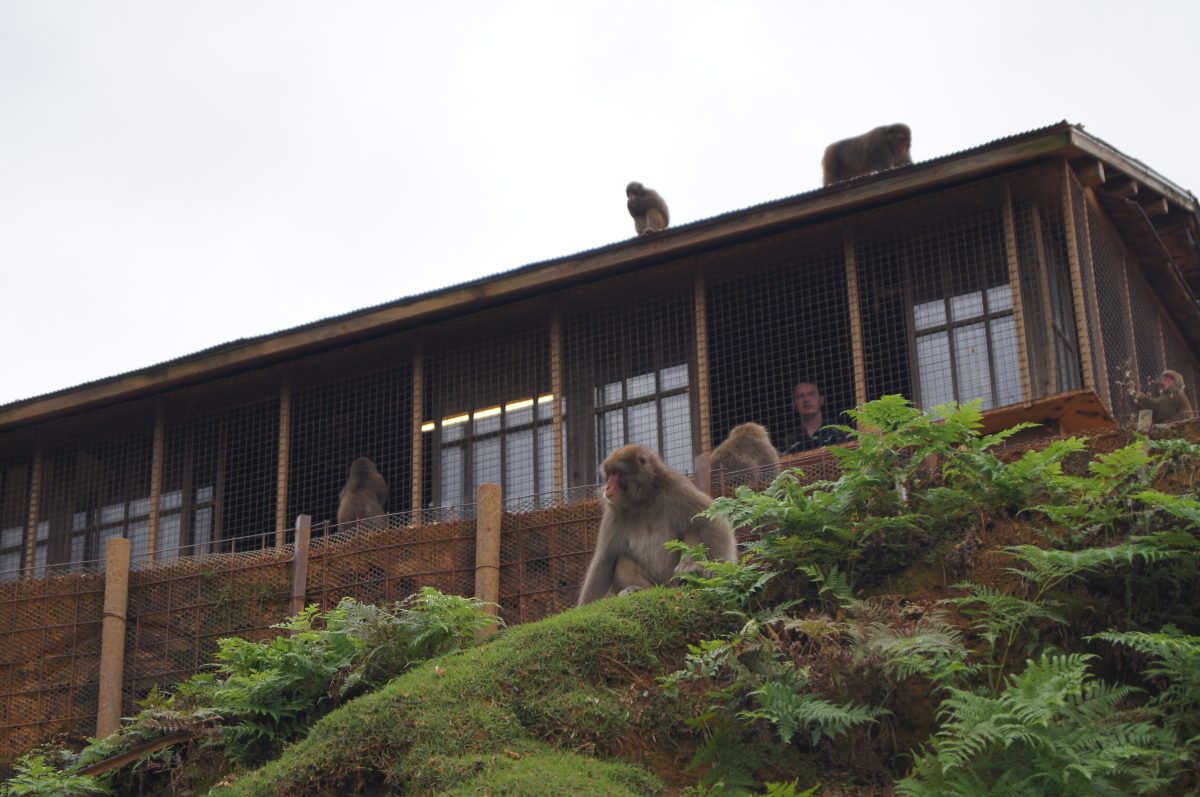
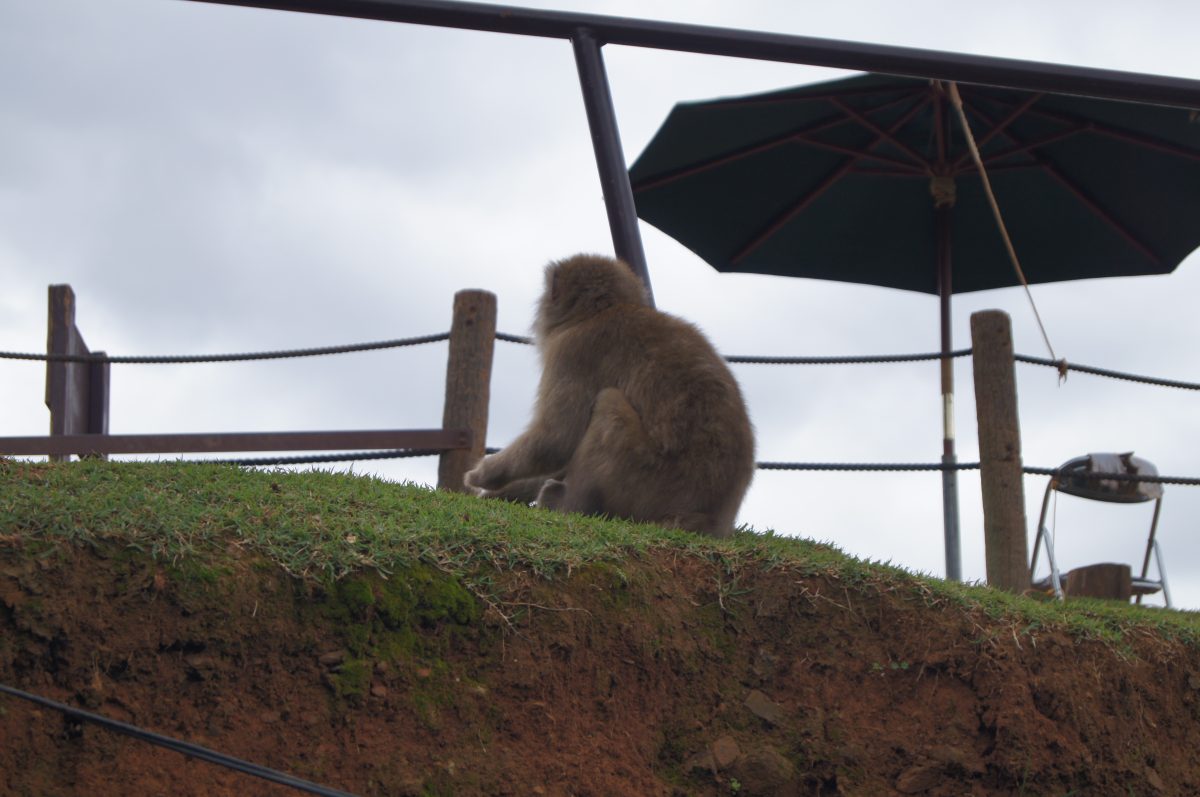
At the top, Japanese macaques roam around the hillside while visitors enter a caged building to buy food and feed them through the wire. In other words, the people go inside the cage. The monkeys retain the better view!
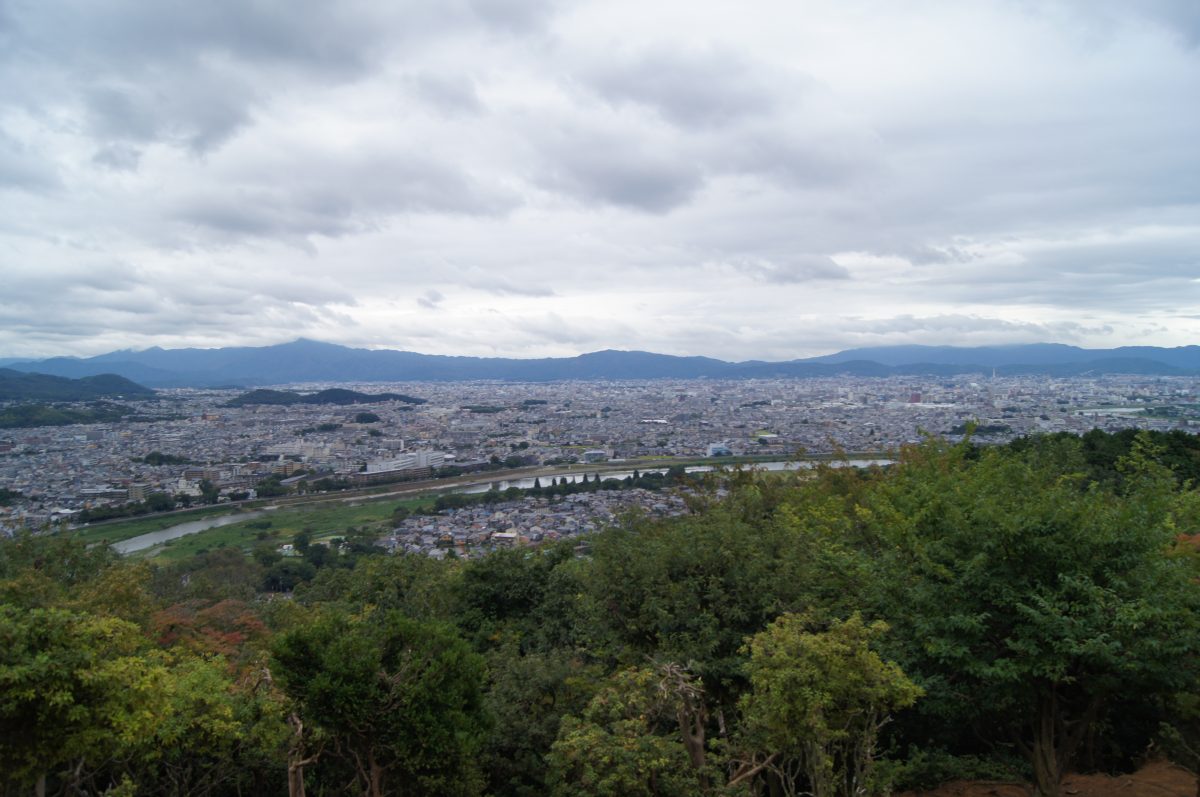
The panorama across Kyoto was as memorable as the animals. Standard adult admission is currently ¥800. Follow the park rules, keep your distance and do not stare directly into a monkey’s eyes.
Where to stay for this Kyoto itinerary
On our first trip, we stayed at Urban Hotel Kyoto near Fushimi Inari. It was a clean, modern hotel in a quiet residential area, and getting to the other sights was relatively easy. But with hindsight, we should have stayed a bit closer to the centre.
For this three-day route, choose your base according to what matters most:
- Kyoto Station: best for onward trains and easy access to Fushimi Inari and Arashiyama. Less atmospheric, but extremely practical.
- Downtown Kyoto around Kawaramachi: a useful middle ground for restaurants, shopping and transport in several directions.
- Gion or Higashiyama: best for atmosphere and an early start on day one. You may pay more for the privilege.
Compare Kyoto hotels on Booking.com
This post contains affiliate links; if you book through one, we may earn a commission at no extra cost to you.
Staying in Osaka and visiting Kyoto by train can work, which is effectively what we did on our second visit. But for a full three-day Kyoto itinerary, I would stay in Kyoto. The early mornings are valuable and commuting every day will become tiresome. Our two-day Osaka itinerary is better treated as a separate city break.
What I would change after two visits
- I would not count Nara as a Kyoto day. Give it a fourth day or visit from Osaka. Our original itinerary muddled the two.
- I would stay more centrally. With hindsight, somewhere closer to the centre would have suited this route better.
- I would start earlier. Kiyomizu-dera, Fushimi Inari and Arashiyama all become markedly busier through the morning.
- I would plan fewer temples. Kodaiji stayed with me because we slowed down enough to notice it.
- I would leave half a day slightly loose. Kyoto is not improved by constant clock-watching.
- I would wear better socks. This remains sound advice.
If you have two or four days in Kyoto
With two days: keep the Higashiyama and Gion route, then choose between day two and day three. Pick Fushimi Inari and Kinkaku-ji if the torii gates and Golden Pavilion matter most to you. Choose Arashiyama if you would rather have bamboo, river scenery and monkeys than another cross-city transfer. I would not attempt all three areas in one heroic final day. Your feet have done nothing to deserve that.
With four days: use the extra day for our Nara day trip from Kyoto. That is how I would extend this route, because it is the additional day we have actually tested rather than a collection of plausible-looking pins added from my desk.
How this fits into a longer Japan trip
Kyoto sits naturally between Hiroshima and Osaka on a longer rail itinerary. If you are travelling west, our Miyajima day-trip guide and two days in Hiroshima guide cover the previous section of the route. Heading east or building the whole holiday from scratch? Start with the Japan Travel Guide.
If you are watching the cost, our Japan budget guide covers the choices that make a bigger difference than saving ¥100 on a bus fare.
Three-day Kyoto itinerary FAQs
Is three days enough for Kyoto?
Yes. Three full days are enough for a first visit if you group the sights geographically and accept that you will not see every temple. Add a fourth day for Nara or a slower northern Kyoto day.
What are the best areas for a first Kyoto visit?
Southern Higashiyama and Gion, Fushimi Inari, Arashiyama and Kinkaku-ji give a first-time visitor a strong mix of temples, shrines, traditional streets, gardens and scenery.
Do I need a JR Pass in Kyoto?
No. A nationwide JR Pass is not necessary for travelling around Kyoto. Local trains, the subway, buses and an IC card are normally more useful. A rail pass may make sense for your wider Japan route, not for these three days alone.
Is this Kyoto itinerary walkable?
Parts of it are. Day one is a long walk through Higashiyama, and most of day three is on foot in Arashiyama. You still need trains, subway services or buses to travel between Kyoto’s main districts.
When should I visit Fushimi Inari?
Go early in the morning for a quieter walk through the lower torii tunnels. Late evening can also be calmer, but shops and shrine offices may be closed.
Should I include Nara in three days in Kyoto?
Not if you want three proper Kyoto days. Add Nara as a fourth day, or use it as a day trip from Osaka. It deserves more than being squeezed between two Kyoto attractions.
Should I stay in Kyoto or Osaka?
Stay in Kyoto for this itinerary. Osaka works for a one-day visit to Kyoto, but commuting on all three days costs you the quiet early hours at the busiest sights.
Do I need to book Kyoto temples in advance?
Not for the standard visits listed here. Regular entry is usually paid on arrival. Seasonal illuminations, special openings and specific cultural experiences can have separate booking rules, so check official websites for your dates.
My honest verdict: Kyoto is not a city you conquer with a longer list. It is a place you understand by slowing down in the right areas. Three days will not make you an expert. But it will give you time for the red gates, golden pavilion, old lanes, wooded hills and at least one accidental favourite. That is a very good start.
Which part of this Kyoto itinerary would you most want to slow down for?