
Written by Katharina Mungall
Travel writer, photographer and architect
A Nara day trip from Kyoto is easy to do independently and one day is enough for the main sights. The journey takes about 45 minutes, the centre is walkable and the route we used links Kōfuku-ji, Nara Park, Tōdai-ji and Kasuga Taisha without doubling back all over the city.
Nara was the final side trip of our first journey around Japan. If you’re only going to take one day trip from Kyoto, I’d make it this one: Tōdai-ji’s 15-metre bronze Buddha and Kasuga Taisha’s lanterns are a short train ride away.
The deer get most of the publicity. They are charming, frequently polite and occasionally quite determined about biscuits. But Nara is not a petting zoo with some temples attached. It was Japan’s capital in the eighth century, and three stops on this walk form part of the UNESCO-listed Historic Monuments of Ancient Nara.
Is Nara worth a day trip from Kyoto?
Yes. If you have at least three days in Kyoto, I would give one of them to Nara. It adds a different sort of history to a Kyoto itinerary, and the journey is short enough that you do not lose half the day to transport.
One day is sufficient for Nara Park and the eastern temple district. It is not enough for every UNESCO component, museum, garden and atmospheric shopping street in the city. That distinction matters. Several Nara itineraries read as though the author was pursued by a stopwatch. You do not need to join them.
Our four-stop route is already a substantial day. Stay overnight if you want quiet walks before the day-trippers arrive, or if Naramachi, the gardens and the more distant temples are priorities rather than optional extras.
How to get from Kyoto to Nara by train
You have two sensible railway choices from Kyoto: JR or Kintetsu. Neither is universally “best”. The right one depends on where you are staying, which pass you hold and how strongly you feel about an extra 15-minute walk.
| Route | Typical time | Adult one-way fare | Best for |
|---|---|---|---|
| JR Miyakoji Rapid: Kyoto → JR Nara | About 45 minutes | ¥720 | Travellers using a Japan Rail Pass or staying near Kyoto Station |
| Kintetsu: Kyoto → Kintetsu-Nara | About 35–45 minutes | From ¥760 | The closest station to Nara Park and the most convenient start for this walk |
The JR Miyakoji Rapid runs between Kyoto Station and JR Nara without the surcharge attached to a limited express. It is covered by the Japan Rail Pass. From JR Nara Station, allow about 20 minutes on foot to reach Nara Park.
Kintetsu-Nara Station is only a short walk from Kōfuku-ji and the park. Ordinary express services start at the basic ¥760 fare, although some journeys require a change at Yamato-Saidaiji. Kintetsu limited express trains need an additional reserved-seat ticket, and the special Aoniyoshi sightseeing train costs more again. Check the official Kintetsu route and fare search for your date.
Kintetsu also sells a one-day rail pass for ¥1,900, including designated Nara buses. But two ordinary single tickets for this walking route start at ¥1,520, so the pass only begins to make financial sense if you add buses, extra Kintetsu journeys or useful attraction benefits.
If you are not using a rail pass, I would choose Kintetsu for the more convenient arrival. If JR is already included in your ticket, take the Miyakoji Rapid and consider the extra walk your warm-up. There is no need to buy a national JR Pass for this day alone.
Our one-day Nara itinerary
This is the route we actually followed, with current prices and practical changes layered onto it. The timings are deliberately generous. Nara is better when you notice the details rather than marching past them in pursuit of the next pin on a map.
- Arrive at Kintetsu-Nara or JR Nara Station
- Kōfuku-ji
- Nara Park and the deer
- Tōdai-ji and the Great Buddha Hall
- Lunch near the park
- Kasuga Taisha
- Walk back through the park and return to Kyoto—or continue to Osaka
8:30–9:00am: arrive in Nara
An early start is worthwhile, especially at weekends or during cherry-blossom and autumn-leaf seasons. From Kintetsu-Nara, walk east towards Kōfuku-ji. From JR Nara, follow Sanjo-dori towards the same point.
If you are transferring from Kyoto to Osaka, you can use Nara as a stop between the two. Leave Kyoto after breakfast, store your luggage near the station, follow this route, collect your bags and continue to Osaka. It turns a hotel-change day into a proper outing, which feels pleasingly efficient. But check storage availability before committing; a locker which exists in theory is not much help when every large compartment is occupied.
9:00–9:45am: start at Kōfuku-ji
Kōfuku-ji was the family temple of the powerful Fujiwara clan and once contained more than 150 buildings. Its grounds are free to enter, which makes it an easy first stop even if you do not visit every hall.
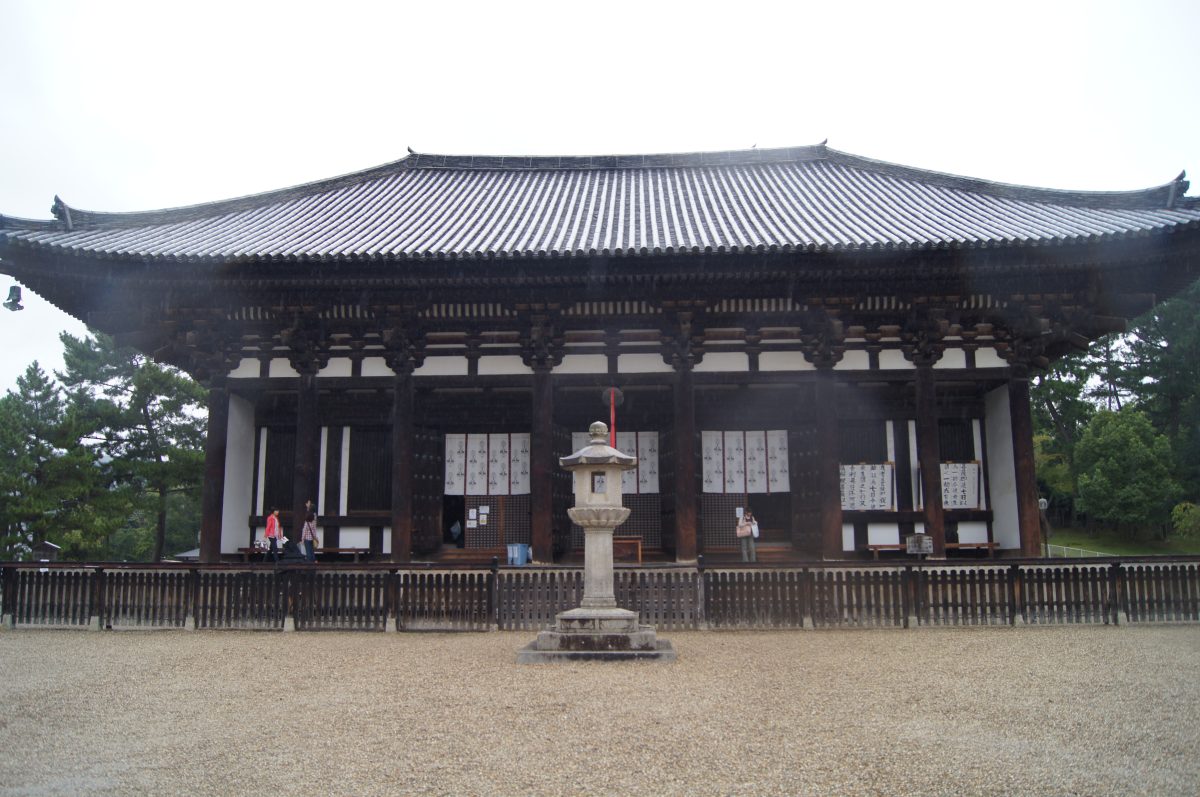
There is one important update that many older Nara guides miss: the famous five-storey pagoda is covered by a large protective structure during major conservation work. The current schedule runs to March 2034. It is still worth visiting Kōfuku-ji for the Central Golden Hall, the three-storey pagoda and the scale of the complex. But do not arrive expecting the classic unobstructed photograph from ten years ago. Time has put the pagoda in a very large box.
The National Treasure Hall is the paid highlight, particularly if Buddhist sculpture interests you. Adult admission is currently ¥700 and it is open from 9:00am to 5:00pm, with last admission at 4:45pm. Add about 45 minutes if you go inside. Otherwise, keep moving towards Nara Park.
9:45–10:30am: meet the deer in Nara Park
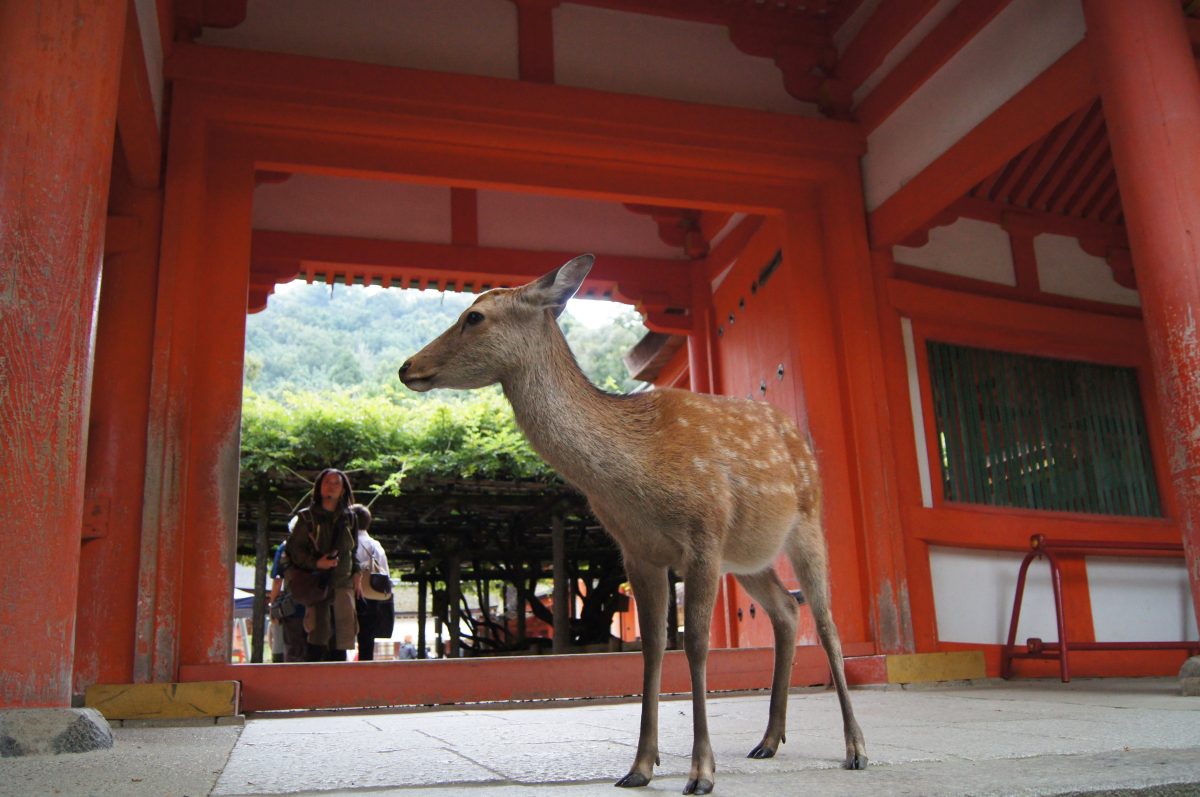
Nara Park is free to enter and the deer wander well beyond a single fenced area. They have long been connected with Kasuga Taisha, where deer were regarded as messengers of the gods. Today they are protected as a natural monument and have also become very good at identifying the person holding breakfast.
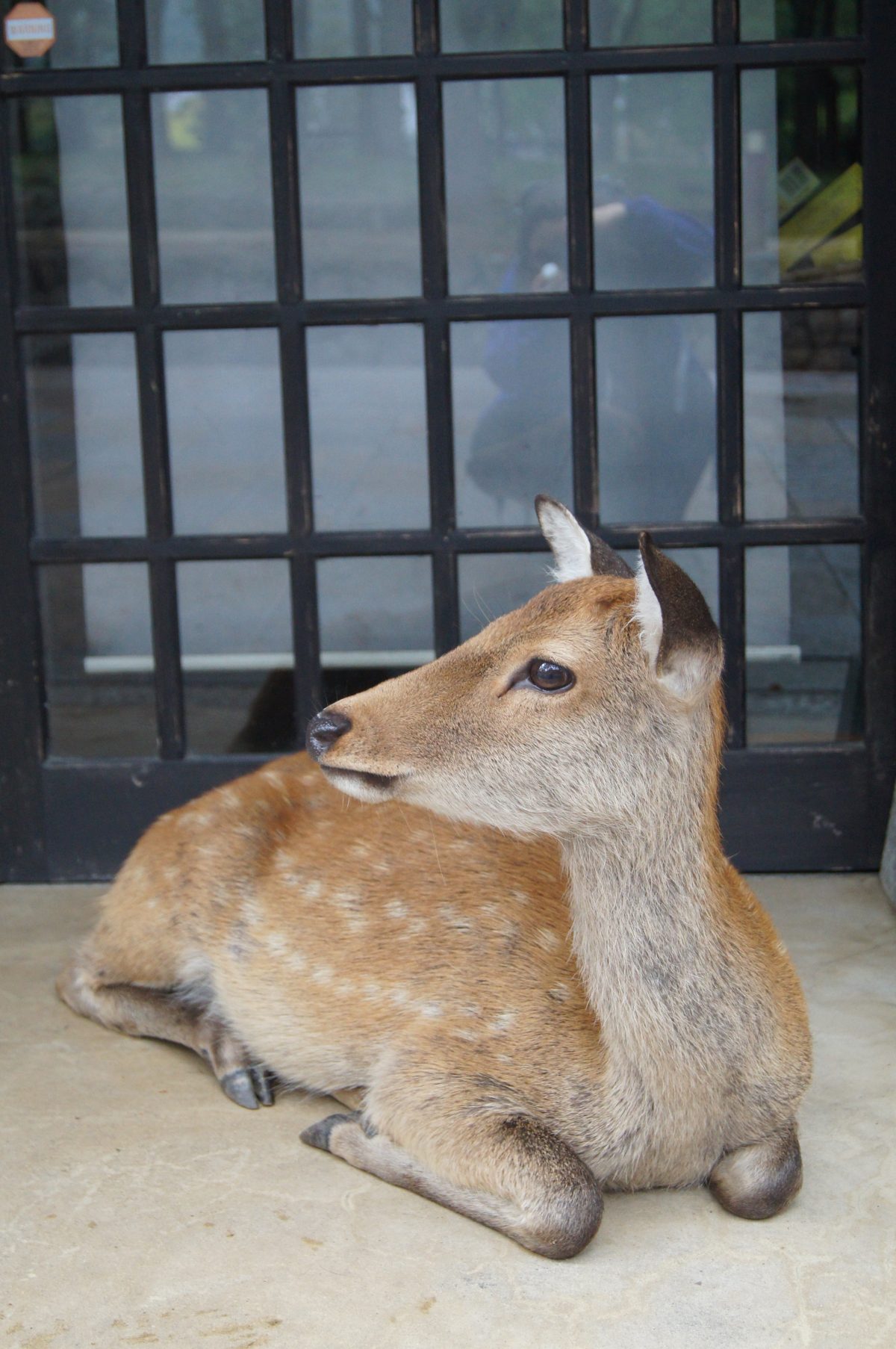
You can buy a pack of ten shika senbei for ¥200 from licensed sellers. Feed only those crackers—not bread, sweets or whatever has survived at the bottom of your bag. Offer them one at a time, let go promptly and show the deer your empty hands when you have finished.
Some deer politely bow. Others skip the ceremony, head straight for the biscuits and may headbutt you when you’re not looking. They’re generally shy and gentle, but ours could become quite forceful once food appeared, which was very funny until I remembered that I was negotiating with an undomesticated animal. Keep maps, tickets and loose paper hidden; deer do not always distinguish stationery from lunch.
Also, do not tease them by holding a cracker out of reach for a photograph. They are wild animals, not theme-park employees. Give smaller children close supervision, and be particularly careful around males with antlers.
10:30am–12:15pm: visit Tōdai-ji and the Great Buddha
Continue through the park to Nandaimon, Tōdai-ji’s Great South Gate. The gate alone is enormous, with two muscular guardian figures glaring down from either side. It provides fair warning that the temple beyond is not doing anything on a modest scale.
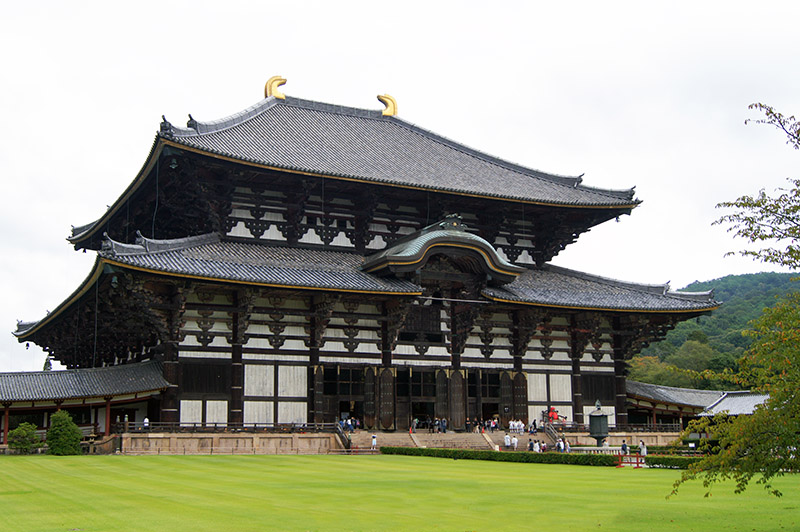
The Daibutsuden, or Great Buddha Hall, contains a roughly 15-metre bronze Vairocana Buddha. The present hall dates from the Edo period and is seven bays wide; the earlier halls were eleven. In other words, it is smaller than its predecessors but about two-thirds of their width—not one-third, as some older guides claim. It remains one of the world’s largest wooden buildings.
It is difficult to convey the effect of walking into that hall. “Large Buddha” is technically accurate in the same way that “noticeable hill” describes Mount Fuji. The scale only makes sense once you are standing beneath it.
The Great Buddha Hall costs ¥800 for adults. It opens from 7:30am to 5:30pm between April and October, and from 8:00am to 5:00pm between November and March. Check the official Tōdai-ji visitor information before your trip.
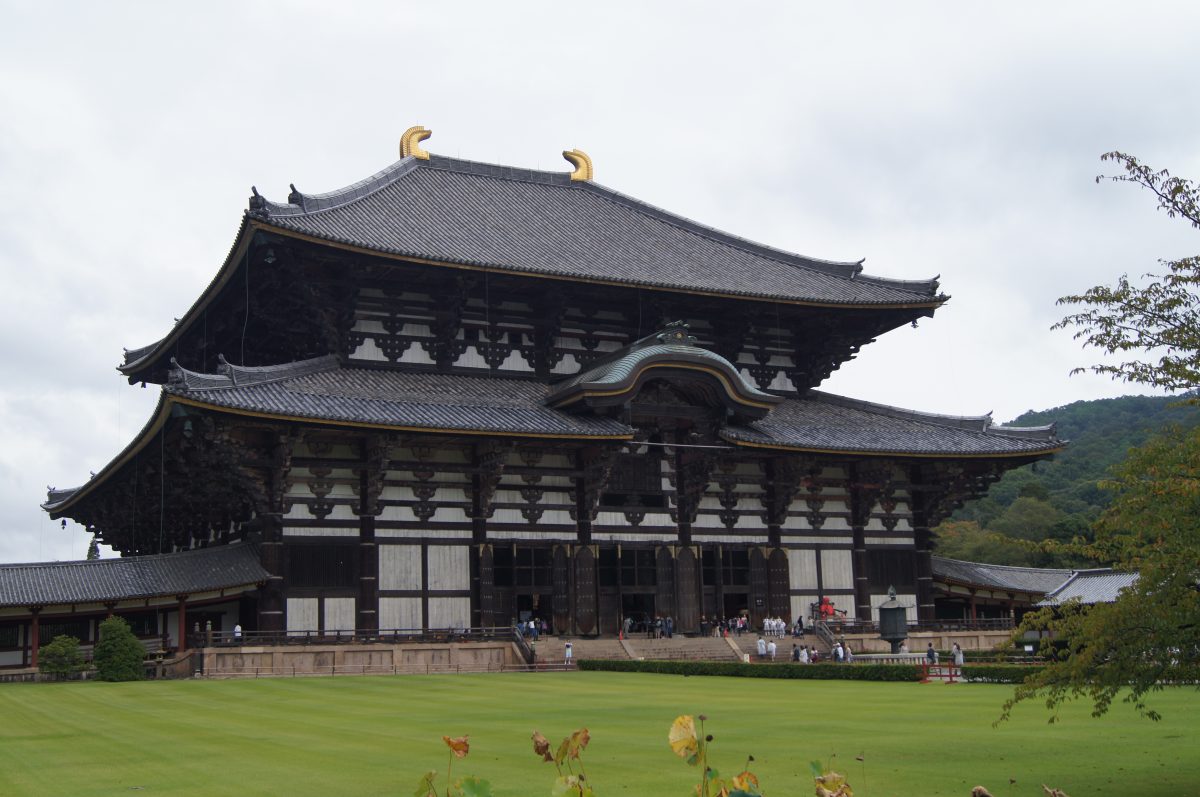
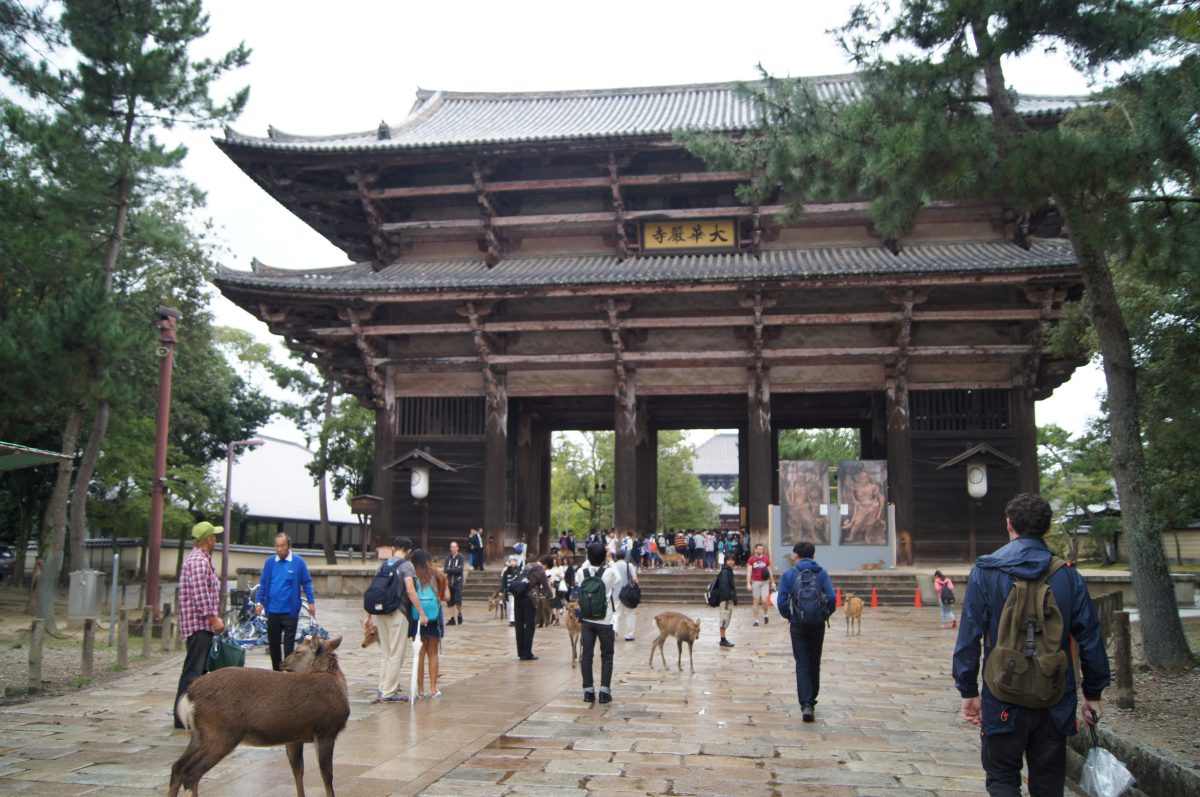
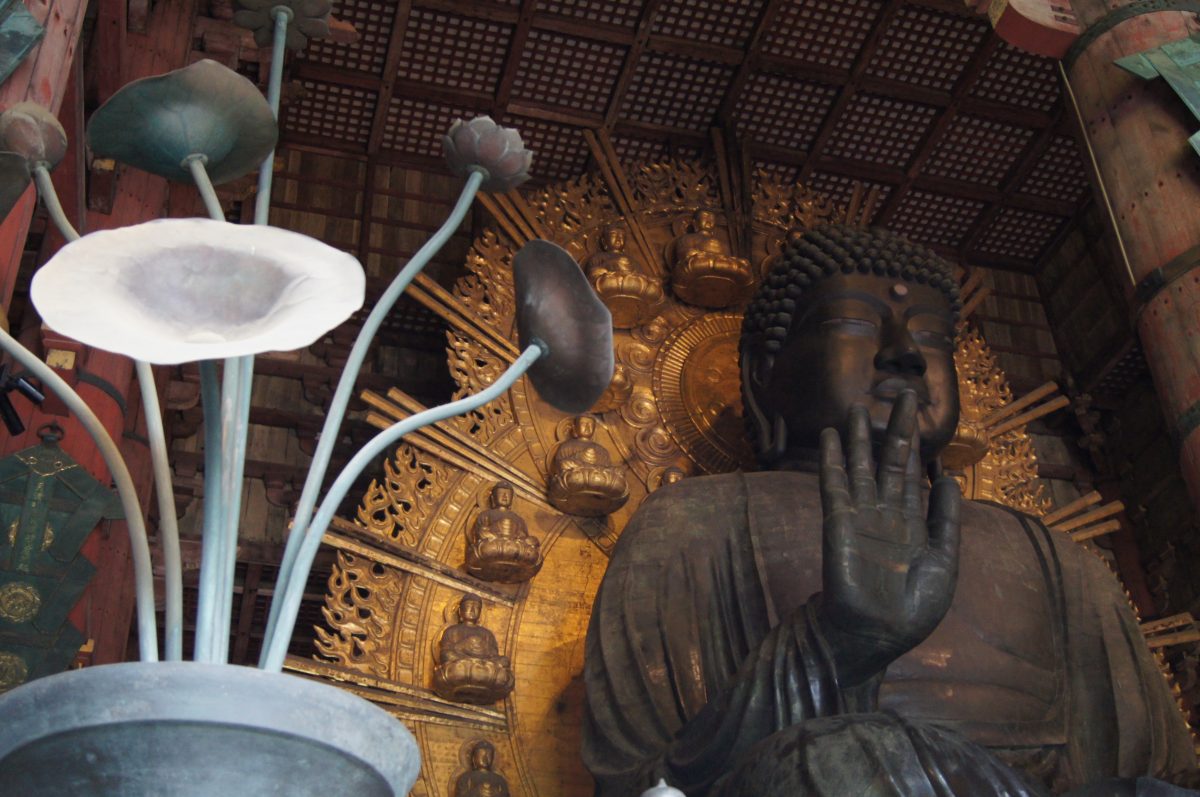
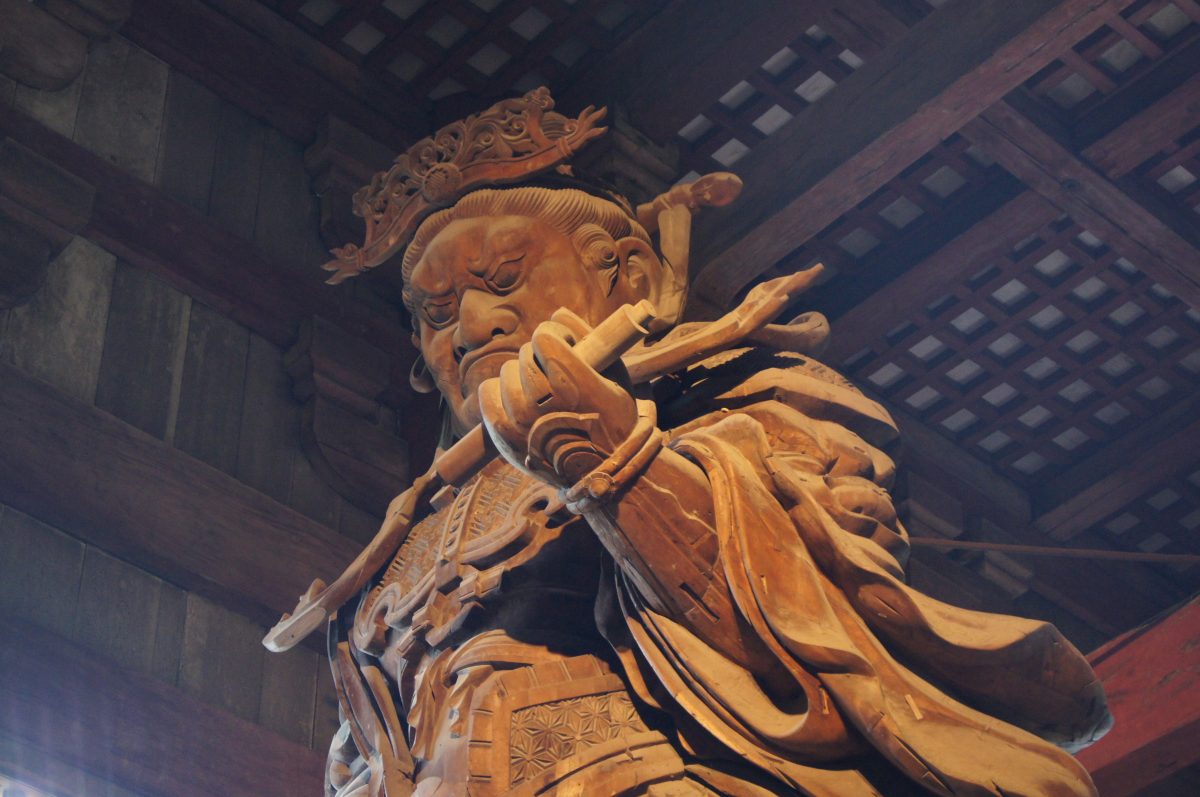
Inside, look for the pillar with a hole through its base, traditionally said to be the same size as the Buddha’s nostril. Visitors attempt to wriggle through it. I support this as a concept and rather less as a personal fitness test in front of an audience.
If you have the energy, add Nigatsu-dō after the Great Buddha Hall. It is free, quieter and has a terrace overlooking Nara. Allow another 30–45 minutes. If the day is hot or you have already spent too long befriending deer, skip it without guilt.
12:15–1:15pm: stop for lunch
Have lunch before the longer walk to Kasuga Taisha. There are cafés and restaurants around the park, near the museum and back towards the shopping streets.
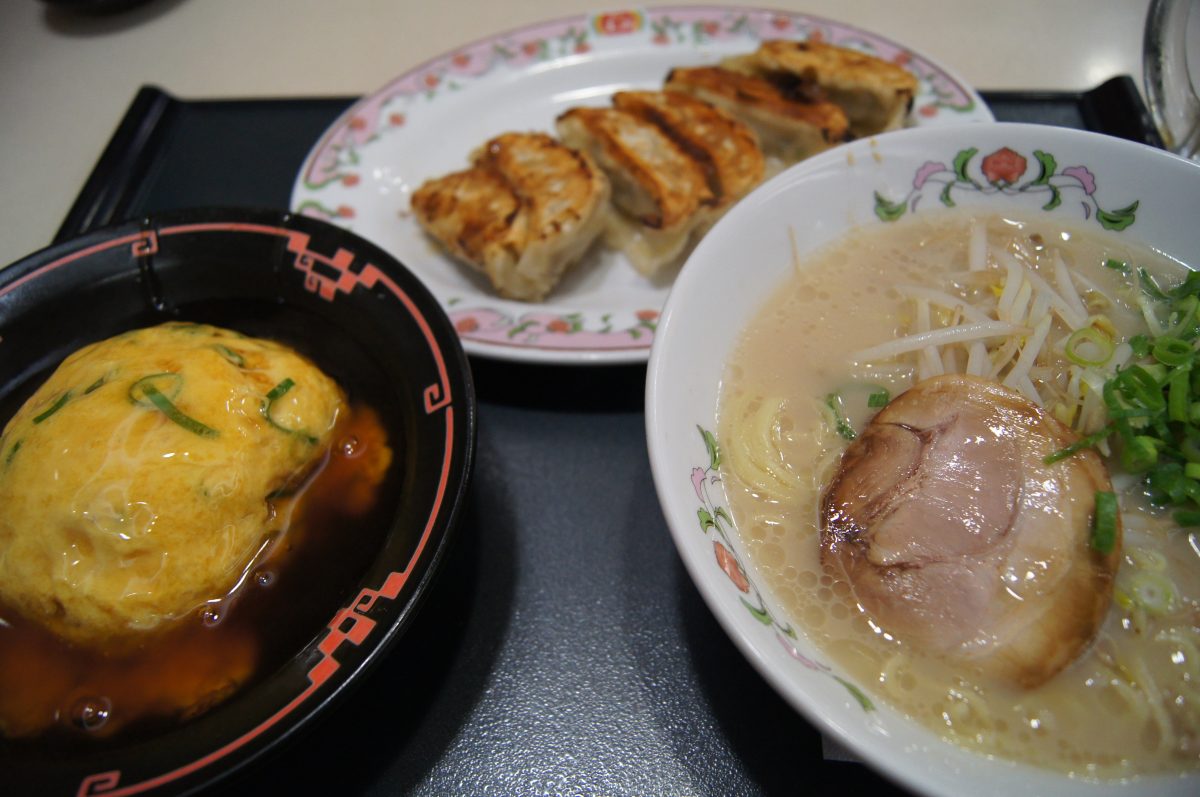
For something local, look for kakinoha-zushi, sushi wrapped in persimmon leaves, or miwa somen. If your priority is speed, a simple bowl of noodles will do the job rather more efficiently than a long set meal.
1:15–3:00pm: walk to Kasuga Taisha
From Tōdai-ji, follow the paths through the park and forest towards Kasuga Taisha. The walk takes roughly 25–35 minutes depending on your route, your pace and the number of deer-related negotiations along the way.
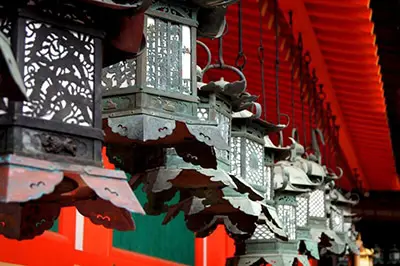
Kasuga Taisha is my all-time favourite shrine in Japan, because every corner of it is filled with lanterns. It is known for 3,000 donated lanterns: mossy stone ones lining the approach and bronze lamps hanging from the vermilion buildings. It sits in the woods at the eastern edge of the park, so allow for the walk.
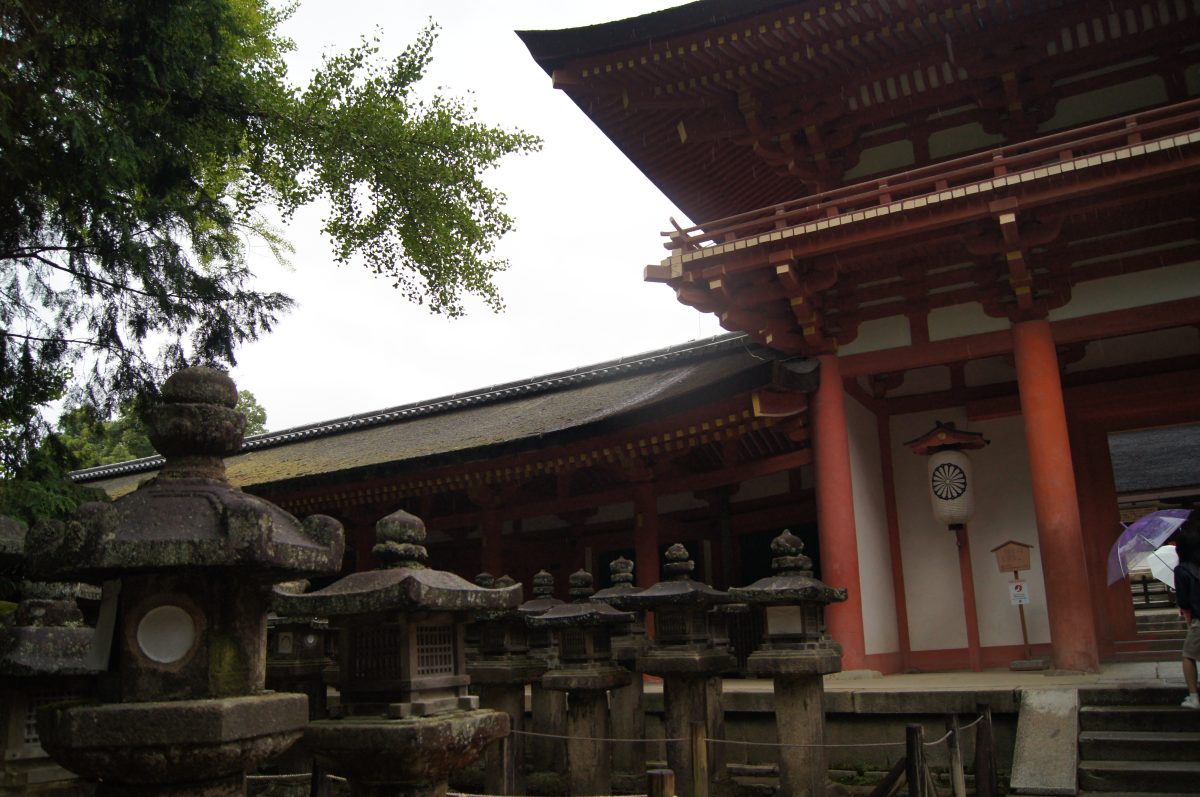
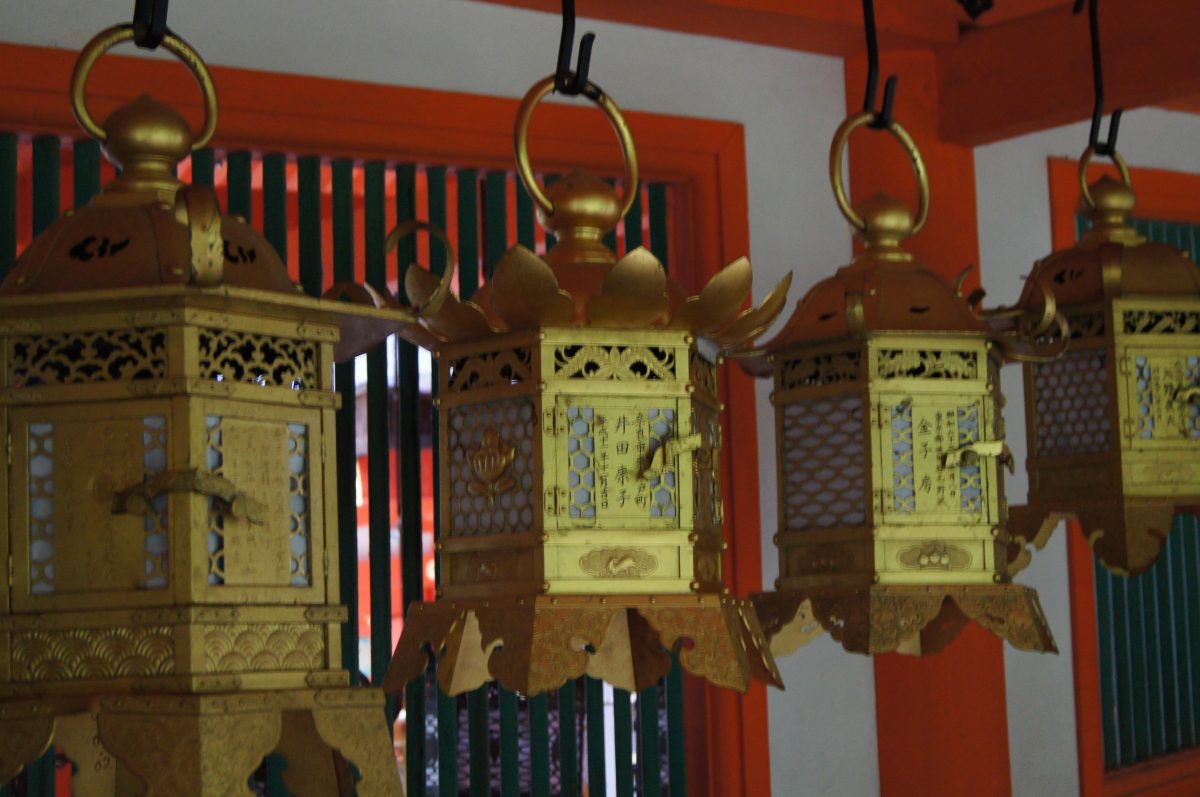
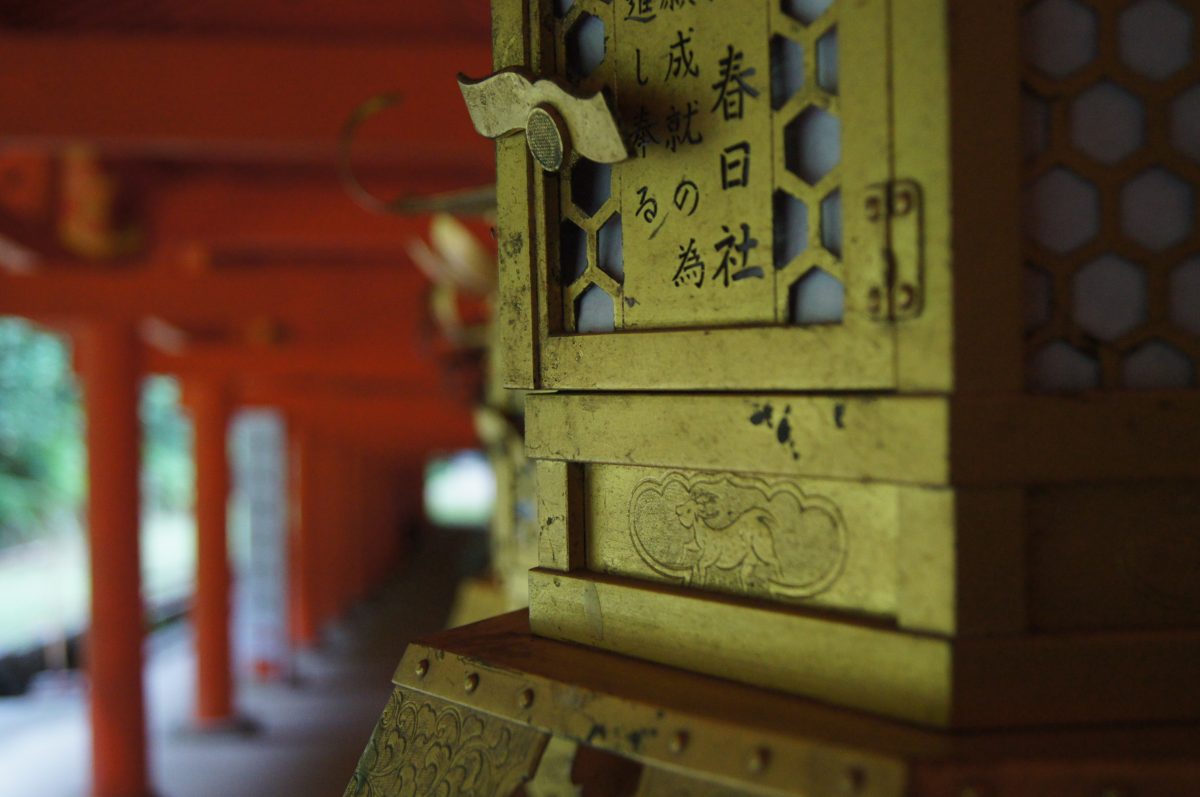
You can see part of the shrine without paying. Special admission to the inner cloister costs ¥700 and includes the lantern-lined passage and Fujinami-no-ya Hall, where hanging lanterns are kept alight in a darkened room. I would pay. The shrine’s most distinctive details are precisely the part you have come to see.
General worship is open from 6:30am to 5:30pm from March to October and 7:00am to 5:00pm from November to February. The paid inner area normally runs from 9:00am to 4:00pm, with several closure dates and shorter openings for ceremonies. Check the official Kasuga Taisha information before travelling.
3:00–5:00pm: return through the park
Walk back towards Kintetsu-Nara Station through the park. You can return via Kōfuku-ji and Higashimuki Shopping Street, or detour towards Naramachi if your feet and your train time are still on speaking terms.
Nakatanidou’s fast mochi-pounding demonstrations appear in many current Nara itineraries. We did not build our day around them, and Nara’s tourism board does not publish a demonstration timetable. Treat one as a lucky extra if you pass at the right moment, not a timed appointment.
From Kintetsu-Nara, return to Kyoto or continue to Osaka. From JR Nara, the walk is longer, so leave enough time for Sanjo-dori rather than ending the day with an undignified sprint.
How much does a Nara day trip from Kyoto cost?
| Item | Adult price checked September 2026 | Note |
|---|---|---|
| JR return from Kyoto | ¥1,440 | Two ¥720 journeys; covered by eligible JR passes |
| Kintetsu return from Kyoto | From ¥1,520 | Basic fare; limited express seats cost extra |
| Kōfuku-ji grounds | Free | National Treasure Hall costs ¥700 |
| Nara Park | Free | Shika senbei cost ¥200 for ten |
| Tōdai-ji Great Buddha Hall | ¥800 | Joint ticket with the museum costs ¥1,200 |
| Kasuga Taisha inner area | ¥700 | Outer worship area can be visited without this ticket |
The core day therefore costs about ¥3,140 by JR or ¥3,220 by ordinary Kintetsu train, before lunch and optional museums. Add Kōfuku-ji’s National Treasure Hall and the sightseeing total rises by ¥700.
This is one of the more affordable side trips in our two-week Japan itinerary. If you are working out the wider numbers, our Japan travel budget guide covers the categories people tend to underestimate.
Is it better to visit Nara from Kyoto or Osaka?
Both are easy. Visit from whichever Kansai base you are keeping longest. Kyoto works naturally with the historic theme and offers direct JR and Kintetsu services. Osaka is equally practical, particularly if you are staying near Namba and use Kintetsu.
There is also a third option: travel from Kyoto to Nara in the morning, store your bags, then continue to Osaka after sightseeing. Geographically, it makes sense and saves a return journey. It’s a useful trick on a longer Japan route by train. For the complete version of that Kyoto–Nara–Osaka sequence, see our seven-day Kansai itinerary.
But I would not recommend it if you dislike sightseeing with luggage in the back of your mind. A straightforward return trip is better than spending the day worrying about whether your suitcase has formed a new life in a station locker.
What should you skip on a one-day Nara itinerary?
Skip Hōryū-ji on this particular day. It is an exceptional temple and contains some of the world’s oldest surviving wooden buildings, but it sits well away from the central walking route. Adding it means more trains or buses and less time at the places above.
Our old Nara post treated Hōryū-ji as though it could be casually attached after Kasuga Taisha. That was too ambitious. Give it a separate half day, or replace part of central Nara rather than pretending the clock has become flexible.
If you want one extra stop near this route, choose Nigatsu-dō, Isuien Garden, Yoshikien Garden or a short wander through Naramachi. Add one. The word “or” is doing important work there.
Practical tips for your Nara day trip
- Arrive by 9:00am. You will see the busiest sights before the largest groups settle in.
- Wear comfortable shoes. The route is compact by Japanese-city standards, but you will still walk several kilometres.
- Carry cash. Train gates accept IC cards, but smaller purchases and some temple tickets are easier with yen.
- Hide paper and food around the deer. Maps, leaflets and shopping bags can attract attention.
- Feed only official shika senbei. Give each cracker promptly and show your empty hands when they are gone.
- Check the Kōfuku-ji restoration. The five-storey pagoda is currently concealed by protective scaffolding.
- Allow for heat. Summer in Nara can be humid, and the walk to Kasuga Taisha is longer than it looks on a small screen.
- Do not over-plan lunch. Keep the middle of the day flexible and protect the time you want at Tōdai-ji and Kasuga Taisha.
If this is part of a longer first trip, start with our Japan travel guide and Japan planning guide. For nearby routes, compare our two days in Osaka and Himeji day trip.
Nara day trip FAQs
Is one day enough for Nara?
Yes. One day is enough for Kōfuku-ji, Nara Park, Tōdai-ji and Kasuga Taisha at a comfortable pace. Stay overnight or add another day if you also want Naramachi, several gardens, museums or temples outside central Nara.
How long does it take to get from Kyoto to Nara?
Allow about 45 minutes by JR Miyakoji Rapid. Kintetsu journeys generally take about 35–45 minutes, depending on the service and whether you change trains.
Is JR or Kintetsu better from Kyoto to Nara?
Kintetsu is more convenient for sightseeing because Kintetsu-Nara Station is closer to Nara Park. JR is a good choice if you are staying near Kyoto Station or already have a rail pass which covers the journey.
How much does a Nara day trip from Kyoto cost?
Allow about ¥3,140–¥3,220 per adult for return transport, Tōdai-ji, Kasuga Taisha’s paid inner area and one pack of deer crackers. Add lunch and any optional museums or gardens.
Are the deer in Nara safe?
The deer are accustomed to people but remain wild animals. They can nudge, nip, kick or butt, particularly when they see food. Feed only official deer crackers, do not tease them and keep loose paper and bags out of reach.
Can you visit Nara between Kyoto and Osaka?
Yes. Store your luggage near a Nara station, follow the central walking route and continue to Osaka afterwards. It is an efficient transfer day, although large lockers and staffed storage are not guaranteed to be available.
Can you add Hōryū-ji to a Nara day trip?
You can, but it does not fit comfortably with the full central route. Treat Hōryū-ji as a separate half-day or replace one or two central sights rather than squeezing it onto the end.
Our final verdict
Nara is not merely an easy excursion from Kyoto. It is one of the strongest single days in Kansai: compact, historically dense and varied enough that the temples do not blur into one another. Tōdai-ji supplies the spectacle. Kasuga Taisha has the atmosphere. The deer provide the administrative challenge.
The four-stop route works well as it is. Start early, and leave Hōryū-ji for another day unless Buddhist art is the main reason you’re going. It’s a day trip, not an endurance sport.
For the wider journey, return to our Japan travel guide, use our two-week Japan itinerary to place Nara in your route, or continue with our Osaka itinerary.
Which Nara stop would you make your priority?