
Written by Katharina Mungall
Travel writer, photographer and architect
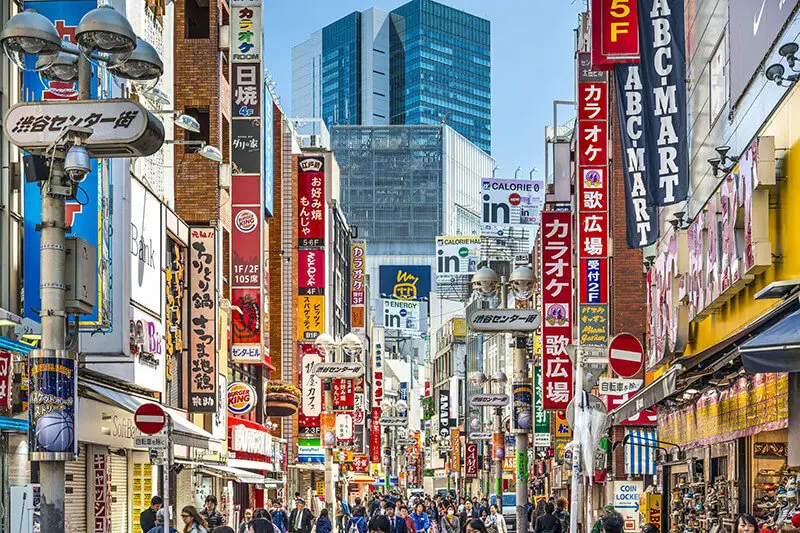
We came to Meiji Jingu on our second day in Tokyo, during our first trip to Japan in September 2015. Gary and I had started the day in Shibuya and Harajuku with my cousin, drinking very sweet canned coffee from a vending machine and walking down Takeshita Street. Harajuku itself didn’t do that much for me. Then we walked into the forested grounds of the shrine.
We visited in September 2015 on our first trip to Japan. The personal experience in this article comes from that visit; current practical details were checked against official information on 27 September 2026.
Meiji Jingu is Tokyo’s best-known Shinto shrine, dedicated to Emperor Meiji and Empress Shoken. It is free, it sits right beside Harajuku Station, and it gives you a green, quiet counterweight to Shibuya and Harajuku within the same few hours. That combination is why it belongs in most first Tokyo itineraries, including our own.
Should you go? The quick version
Yes. It costs nothing, it takes about an hour, and it is the easiest way to see a major working Shinto shrine without leaving central Tokyo. Go early if you want the forest paths at their quietest, and pair it with Harajuku or Shibuya.
Just don’t expect a colourful temple: Meiji Jingu is about the walk through the trees and the main shrine itself, not bright decoration.
Visiting essentials
| What you need to know | Current information |
|---|---|
| Admission to the shrine | Free |
| Opening hours | Sunrise to sunset; roughly 5am–6pm in early summer and 6.40am–4pm in midwinter |
| Time needed | About 1 hour for the shrine; about 2 hours with the Inner Garden and museum |
| Entrance to main shrine | At least 10 minutes’ walk |
| Inner Garden (Gyoen) | ¥500 maintenance contribution |
| Meiji Jingu Museum | ¥1,000 adults; 10am–4.30pm (last entry 4pm); closed Thursdays |
| Photography | Not allowed in front of the main sanctuary where people are praying or at the amulet office |
| Accessibility | Wheelchairs are available at the shrine entrances |
The walk in is the main event
Much of a Meiji Jingu visit is simply walking. From the Harajuku entrance, wide gravel paths lead through tall trees for at least ten minutes before you reach the shrine buildings. It’s a beautiful, peaceful place and a welcome expanse of greenery in a crowded city, and that is still the best reason to go.
It is easy to describe all this as Yoyogi Park, but Meiji Jingu’s forest and Yoyogi Park are separate neighbouring places. If your map pin says Yoyogi Park, you may end up on the wrong side of the trees; use the Meiji Jingu entrance by Harajuku or Meiji-jingumae for the classic southern approach.
None of that forest is ancient. The shrine precinct was completed in 1920 after 100,000 trees were donated from across Japan. The forest now covers about 70 hectares and contains 234 varieties of trees, planted as a self-regenerating woodland that would mature over a century. It worked: today it looks as though it has always been there.
On the main approach you pass under the Otorii, the great wooden torii gate. At 12 metres tall and 17.1 metres wide, it is the largest of its style in Japan, and it is plain wood rather than painted vermilion. The shrine buildings follow the same restrained style. They look as old as any temple, just a little less colourful, although the originals were destroyed in 1945 and the main shrine was rebuilt in 1958.
Along the way, look out for the wall of decorated sake barrels offered by brewers each year, and the barrels of Burgundy wine opposite them, a nod to Emperor Meiji’s interest in Western culture.
At the main shrine
At the main hall, we watched visitors make their offerings and looked at the ema, the small wooden plaques that people hang up with their wishes written on them. You can join in whatever your faith: make an offering, buy an omamori charm or write an ema of your own. (We wrote one in 2019, at Hikawa Shrine on our Kawagoe day trip.)
The etiquette is simple once you have seen it done. Bow slightly as you pass under a torii, rinse your hands at the purification fountain before approaching the hall, and at the offering box bow twice, clap twice and bow once more. The shrine’s own etiquette page explains the steps and the rules.
Meiji Jingu is a working shrine and a popular place for weddings, so you may see a procession crossing the courtyard. Give it space. Photography is not allowed in front of the main sanctuary where people are praying, and the shrine also asks visitors not to leave the forest paths or fly drones.
Are the Inner Garden and museum worth adding?
The Inner Garden, or Gyoen, sits just off the main approach and has a separate ¥500 maintenance contribution. It was once imperial property, commissioned by Emperor Meiji partly for Empress Shoken, and it is at its best when the irises flower in June. Azaleas in spring and maples in late autumn are the other highlights, and Kiyomasa’s Well is inside too. Outside those seasons I would treat it as optional unless you want a longer, quieter walk.
The Meiji Jingu Museum opened in 2019, after our visit, in a building by Kengo Kuma, the architect of Tokyo’s new National Stadium. As an architect myself, I would add it if you are interested in design or in the imperial history behind the shrine. Admission is ¥1,000 and it closes on Thursdays.
When to go and what to pair it with
The gates open at sunrise, so an early visit is the simplest way to walk the approach before the tour groups. New Year is famously the shrine’s busiest time.
Meiji Jingu fits naturally into a west Tokyo day. We did it between Harajuku and the free observation deck at the Tokyo Metropolitan Government Building in Shinjuku, where the clouds hid Mount Fuji. That route is Day 2 of our five-day Tokyo itinerary.
When we came back to Harajuku in 2019, we walked Takeshita Street again and didn’t see a single person in cosplay, so don’t build your day around that either. The shrine is the part of this corner of Tokyo that doesn’t depend on luck.
The main entrance is by JR Harajuku Station on the Yamanote Line and Meiji-jingumae Station on the Chiyoda and Fukutoshin lines. The northern and western entrances are closer to Yoyogi, Kita-sando and Sangubashi stations. Whichever you use, add at least ten minutes’ walk to the main shrine. Wheelchairs are available at the entrances; if gravel or distance is a concern, allow more than the headline one-hour visit. Check the official access page for the entrance map and the monthly opening times.
Should Meiji Jingu make your list?
For most first-time visitors, yes. It is free, central and easy to combine with the busiest parts of west Tokyo, and the forest walk shows you a calmer side of the city in about an hour. If you have only a morning, do the shrine and skip the extras. If you are visiting in June or you love architecture, add the Inner Garden or the museum.
The only people I would steer elsewhere are those hoping for the ornate, colourful temples they have seen in photos of Kyoto or Nikko; for that, our Nikko day trip is the better choice. For another easy half-day in central Tokyo, especially with children, see whether Ueno Zoo is worth visiting now the pandas have gone.
Have you visited Meiji Jingu, or are you planning to? Let us know in the comments below.