
Written by Katharina Mungall
Travel writer, photographer and architect
We went up Tokyo Skytree in 2015, on our first trip to Japan, and did both observation decks: the Tembo Deck and then the Tembo Galleria above it. The queue was what we grumbled about. When I wrote the trip up afterwards, I called the glass floor “vertigo-inducing” and described the Galleria as a sloping ramp that spirals up to 451.2 metres.
Both are still there. What has changed is how tickets are priced and sold: since April 2026 the price depends on your date, and buying at the tower costs extra. The refund rules are worth understanding before you book, too, because they treat a closed tower very differently from a cloudy one. So there are really two decisions to make: whether to pay to go up at all, and whether the Galleria is worth paying more for on the day you’re going.
My quick answer: Tokyo Skytree is worth paying for on a clear day. The Tembo Deck is enough for most visitors and includes the glass floor; pay extra for the Tembo Galleria if you want the higher, sloping walkway. If low cloud hides the view, see the tower from the ground instead.
The personal experience in this article comes from our 2015 trip; current prices, opening hours and booking rules were checked against official Tokyo Skytree information on 1 October 2026.
| Practical detail | Current information |
|---|---|
| Adult tickets | Tembo Deck from ¥1,800; Tembo Deck + Tembo Galleria from ¥3,000 (online). Prices vary by date |
| Buying at the tower | ¥500 extra per ticket at the fourth-floor counter or ticket machines |
| Ages | Adult normally 15+; child 6–14 (school year can change this); 5 and under free |
| Hours, October 2026 | Weekdays 10am–10pm, weekends 9am–10pm, with a few exceptions; last admission one hour before closing |
| Booking | Dated entry slot; on sale from the 1st of the month two months before your visit |
| Bad weather | No refund for cloud or rain while the tower is open; closures are handled separately |
| Nearest stations | TOKYO SKYTREE (Tobu Skytree Line); Oshiage (Hanzomon and Toei Asakusa lines) |
These are the published starting prices, and your date may cost more. Check it on the official Skytree ticket page, and check the opening calendar too, because hours can change without notice.
Tembo Deck or both decks?
Skytree gives you three choices. You can look at it from the ground for nothing, buy the Tembo Deck, or buy the Tembo Deck together with the Tembo Galleria. There’s no Galleria-only ticket: the higher level sits above the Tembo Deck, so every Galleria visit includes the lower deck as well.
| Choice | What you get | Who it suits |
|---|---|---|
| Outside only: free | The tower from street level, Tokyo Solamachi and the evening lighting. No deck access | Low cloud, a tight budget or another tall viewpoint already planned |
| Tembo Deck: adults from ¥1,800 online | Floors 340, 345 and 350, including the glass floor on Floor 340 | Most visitors on a reasonably clear day. You can still add the Galleria once you’re up there |
| Tembo Deck + Tembo Galleria: adults from ¥3,000 online | The whole Tembo Deck, plus the sloping walkway from 445m to 450m and Sorakara Point at 451.2m | A clear day when the extra height is the reason you’re going |
Children aged 6 to 14 pay from ¥900 for the Tembo Deck and from ¥1,500 for both levels. The adult price normally starts at 15, but school year settles the awkward cases: a 15-year-old who is still at junior high school pays the child price, and anyone at senior high school pays the adult one. Children aged five and under go free, and so do six-year-olds who aren’t yet at primary school, even if they go to kindergarten.
What the Tembo Deck gives you
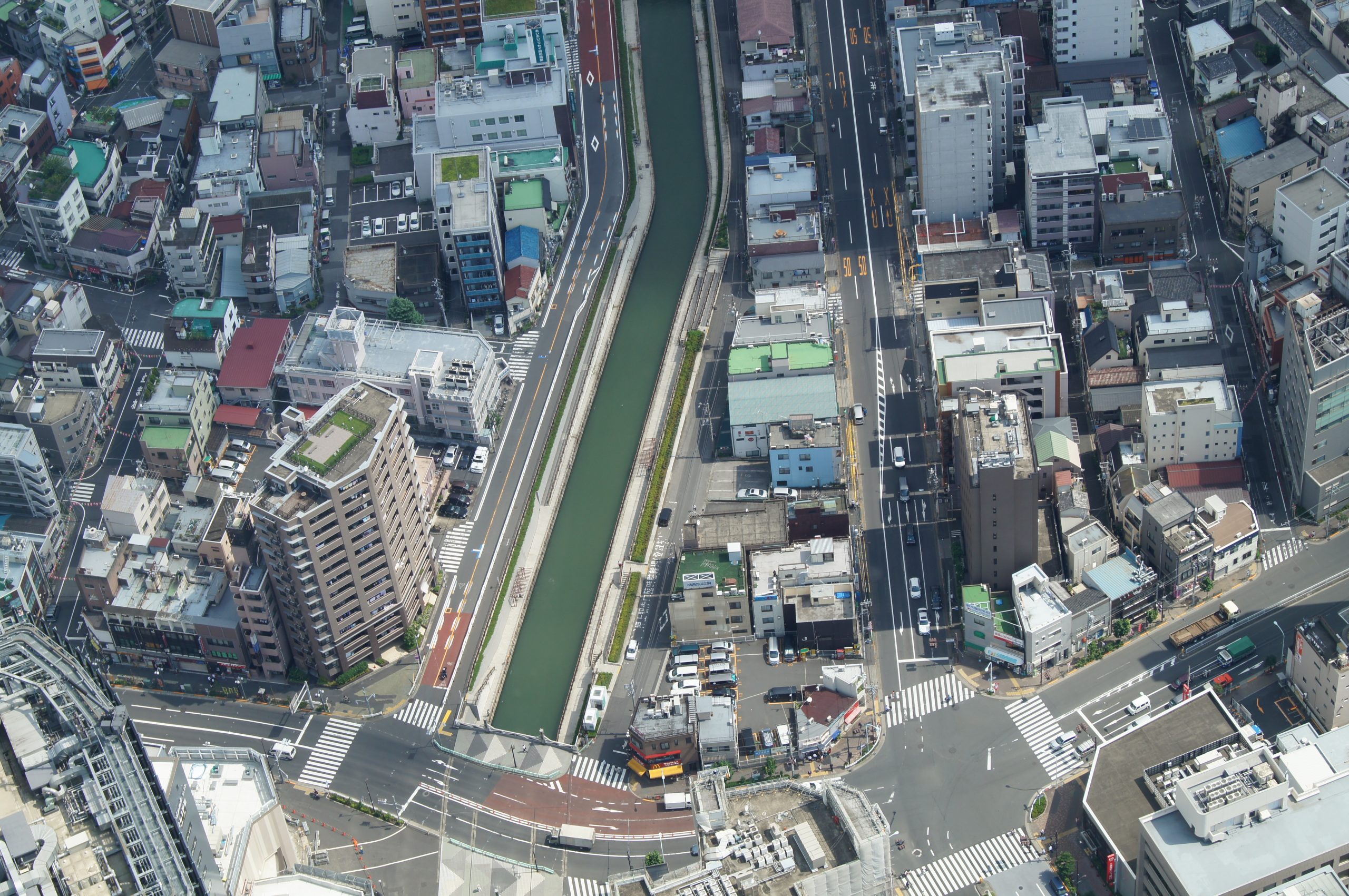
The Tembo Deck is spread over Floors 340, 345 and 350. The glass floor is on Floor 340, the lowest of the three, so it comes with either ticket. When I wrote about the deck in 2015, I described it as three floors: a fully glazed top floor, the souvenir shop and restaurant in the middle, and the glass floor at the bottom. Floor 350 is where most of the newer extras are, including the W1SH RIBBON wish monument and the Round Theater, which projects night-time visuals onto the windows at some times of year.
For most visits, the Tembo Deck is enough. It’s the cheaper ticket, it includes the glass floor, and it’s a shorter visit, which matters if you’re also trying to fit in Asakusa, the aquarium or Ryogoku on the same day.
When the Galleria is worth the extra
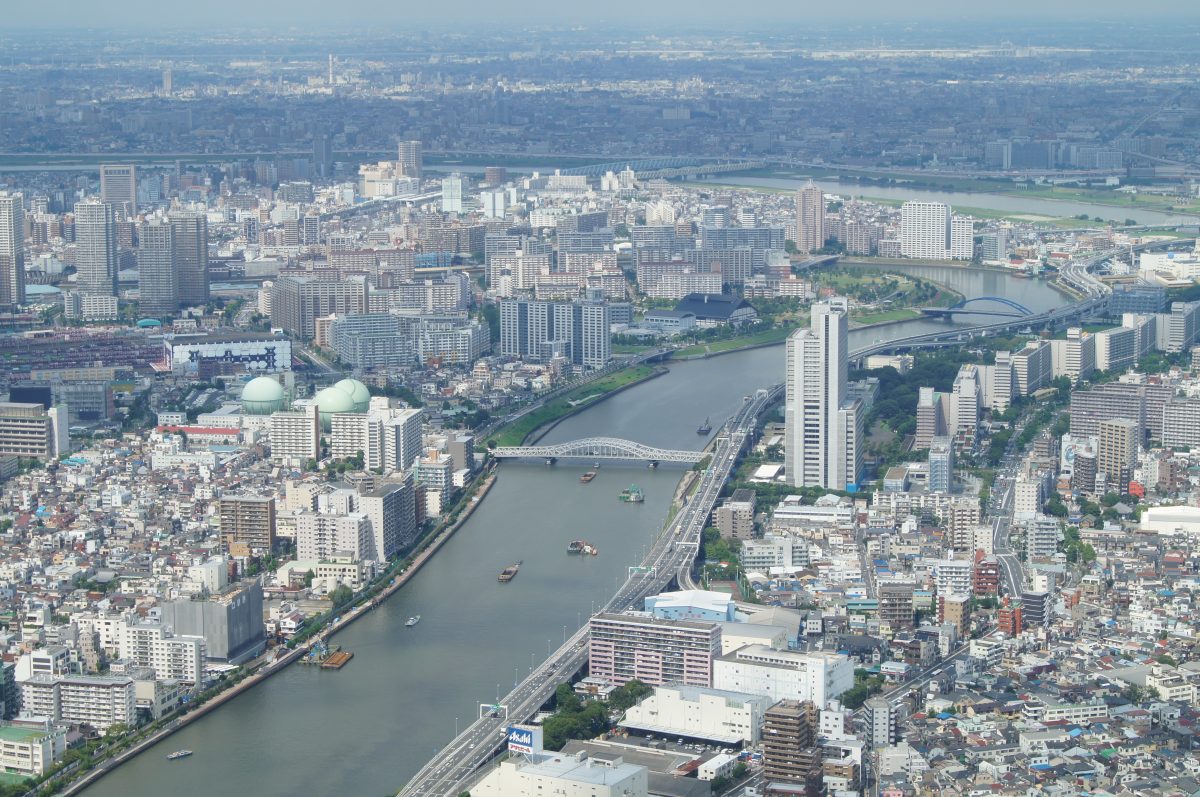
The Tembo Galleria is a sloping, glass-enclosed walkway that climbs from 445 to 450 metres and ends at Sorakara Point, 451.2 metres up. It’s the same ramp I described in 2015.
At the starting prices, the combined ticket costs ¥1,200 more than the Tembo Deck on its own. But you don’t have to decide when you book. Tembo Deck ticket holders can buy the Galleria on Floor 350 for ¥1,400 (¥700 for children), with no ¥500 on-site charge. That’s slightly more than the starting-price gap, but you’re paying once you’ve seen how clear the view actually is.
The catch is that the upstairs Galleria sales can be paused when it’s crowded, and late afternoon into the evening is generally Skytree’s busiest stretch. Once you leave the Galleria you can’t go back up to it, either, so don’t rush it.
I’d only pay for the Galleria on a clear day. If the forecast looks good when you book and the higher level is the reason you’re going, buy the combined ticket and don’t risk the upgrade being paused. If you’re not sure about the weather, buy the Tembo Deck and make the call on Floor 350.
What’s changed since we went up in 2015
The tower itself would be familiar. The Tembo Deck, the glass floor and the sloping Galleria were all there in 2015, and I described all three at the time. The changes are mostly in how you buy a ticket, with a few additions on Floor 350 and on the outside of the tower.
The big one came on 1 April 2026. Skytree replaced its old weekday/holiday and advance/same-day prices with a single system in which the price depends on your admission date. It also dropped the separate youth price, so the adult rate now normally starts at 15, and it added ¥500 per ticket if you buy at the fourth-floor counter or ticket machines. My 2015 write-up quoted 2,060 yen for the Tembo Deck and another 1,030 yen for the Galleria, but those prices come from more than a decade before the new system and won’t help you budget now.
The tickets themselves changed in 2026 as well. The booking system was renewed in March and the new admission method arrived with the April prices, so you now go in with a QR code. If you’re reading an older guide, ignore any mention of the Fast Skytree Ticket. It launched for international visitors in February 2015, it’s no longer sold, and there’s currently no general priority admission.
Outside, the Nobori lighting design was added on 18 May 2017 for the tower’s fifth anniversary, and all three regular designs were renewed on 27 February 2020. Inside, according to Skytree’s own timeline, Floor 350 gained the Round Theater in March 2016, the W1SH RIBBON in September 2020 and 8K monitors in July 2024, which now play time-lapse films at seven viewing points. Writing a wish and tying a ribbon is an optional ¥500 extra, which has nothing to do with the ¥500 counter charge.
Cloud, sunset and the weather gamble
Plan around visibility first. Two days before Skytree on that 2015 trip, we went up the free observation deck at the Tokyo Metropolitan Government Building hoping to spot Mount Fuji, and clouds blocked the view. So treat Fuji from Skytree as a bonus rather than the reason to go.
Skytree’s own visitor FAQ says the air is generally clearer from November to February and in the morning. Opening time is usually quieter too, while roughly 4pm to 7pm, as day turns into night, is generally busier. Daylight is better for picking out distant landmarks; after dark you’re paying for the city lights.
The refund rules split bad weather into two kinds. If the tower is open but you get rain, cloud or a whiteout, there’s no refund, discount or exchange. Cancelling yourself follows the normal rules, so from 30 days before your visit it costs 20% of the ticket.
An actual closure is different. Strong winds can stop the lifts, and when Skytree closes it announces how affected tickets will be handled. In its strong-wind refund notice of 21 September 2026, for example, it offered full admission refunds with no cancellation charge for affected reservations from 5pm onwards. If the tower closes on your day, read the announcement before you cancel anything yourself, or you could end up paying a fee you didn’t need to.
If the weather is your main worry, you can book online closer to the day. There’s no longer a separate advance or same-day price, and you still avoid the ¥500 counter charge, but prices vary by date, so check what your day costs when you book. The risk is that the time you want has gone. Tickets are sold online on the day when slots are available, but I wouldn’t count on that for a sunset slot.
Seeing Skytree from the ground
Skytree is built on top of Tokyo Solamachi, a shopping and dining complex, so you can see the tower up close without a ticket. In 2015 we walked through Solamachi and visited Sumida Aquarium inside it, which I called one of the best aquariums I’d ever visited. It’s ticketed separately from the tower, and our Sumida Aquarium review will help you decide whether it’s for you.
Skytree also sells a Sumida Aquarium Enjoy Pack. It goes on sale a month before the month of your visit, has to be bought by the day before and can’t be cancelled, so only buy it once your plans are fixed.
After dark, the tower itself is the thing to look at. It’s lit in one of three regular designs, Iki, Miyabi and Nobori, or in a special design, and the lighting calendar shows which one is on each night and when it starts. On 1 October 2026, for example, the lights were scheduled from 5.15pm until midnight.
If you were planning to eat at Solamachi anyway, the restaurants on its 30th and 31st floors are sold on their views from around 150 metres. That’s a meal with a view rather than an observation deck, and less than half the height of the Tembo Deck, but it’s a reasonable fallback on an evening when the deck doesn’t feel worth the money.
Staying outside is the right call when the cloud is low, when you’ve already got another tall viewpoint planned for this trip, or when the budget is going on the aquarium instead.
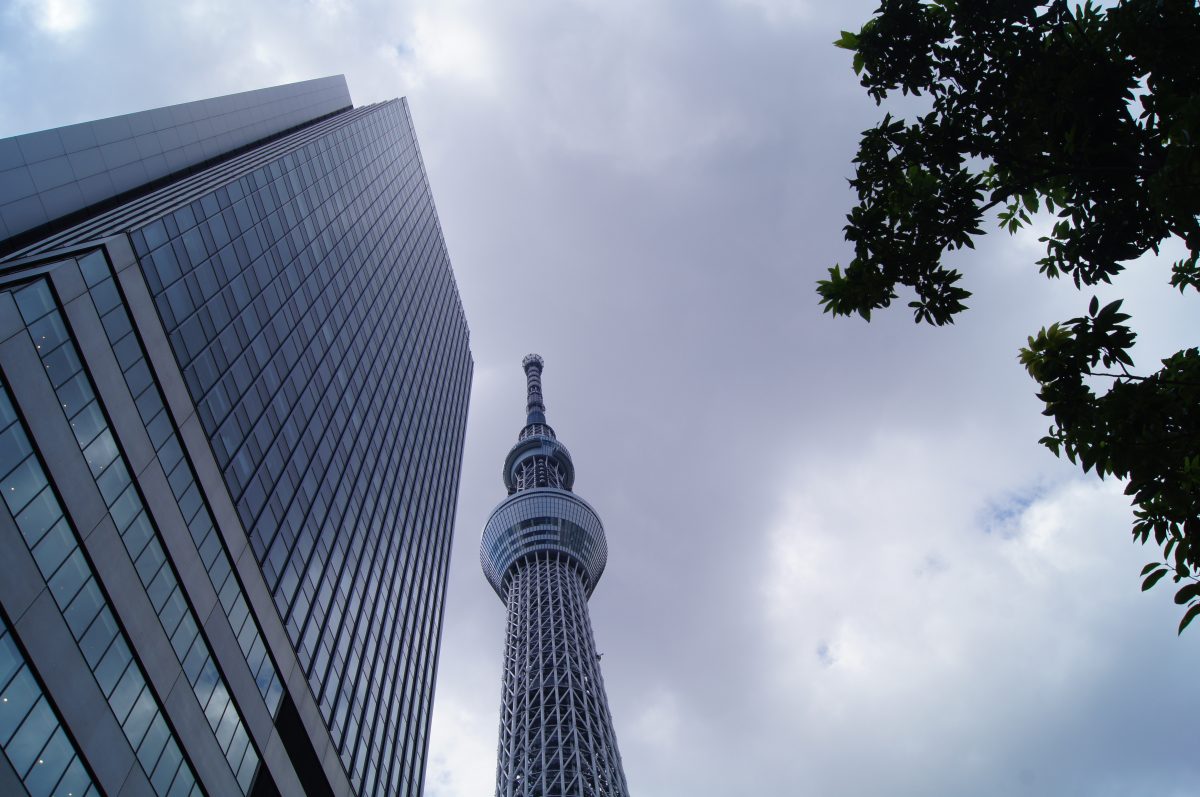
Booking, cancelling and getting in
Buying, changing and cancelling tickets
Buy through the official Skytree ticket site rather than at the tower. You choose a date and an entry slot, and standard tickets go on sale on the first day of the month two months before your visit, so tickets for December go on sale on 1 October. Same-day online sales continue, subject to availability, until 29 minutes after the entry time you choose. Bring the QR code on your phone. A clear screenshot or a printout also works.
Buying online gets you past the ticket queue, though not every queue. There’s no priority admission, so security, admission and the lifts can still mean a wait.
You can’t change the date, time or ticket type after buying. You’d have to cancel and buy again. If someone in your group drops out on the day, that’s a separate partial refund, not a change to the booking. Ask at the tower’s ticket counter that day: provided at least one of you goes in, the unused tickets are refunded minus a handling fee of ¥300 each (¥150 for visitors with a disability and their carers). It only applies to official-site bookings, not Enjoy Packs, and it can’t be used for a booking you’ve already cancelled through My Page.
For tickets bought on the official site, cancelling 31 or more days before your visit is free. From 30 days before until your entry time it costs 20%, and once your entry time has passed you can’t cancel. You also have 59 minutes after buying to cancel free of charge, as long as your entry time hasn’t passed. Cancel through My Page on the booking site, not by phone or email. The cancellation page explains the process. Seven Ticket uses the same percentages with a different process, other sellers set their own terms, and some Enjoy Packs can’t be cancelled at all, the Sumida Aquarium one among them.
Getting there and access needs
Skytree has its own stop, TOKYO SKYTREE Station on the Tobu Skytree Line, about three minutes by Tobu train from Asakusa. The other option is Oshiage (Skytree-mae), on the Hanzomon and Toei Asakusa lines. The official access page has the routes. The main entrance to the decks is on the fourth floor, roughly six minutes’ walk from the west exit of TOKYO SKYTREE Station and seven from its east exit or from Oshiage, so build that into your slot.
Skytree’s rough guide is about an hour for the Tembo Deck and one to one and a half hours for both levels, longer if the lifts are busy. You come down by lift (the emergency stairs aren’t an option), and once you’re back at ground level you can’t go up again.
Both levels are reached by lift. Loan wheelchairs are available but limited and can’t be reserved, there are accessible toilets, and assistance dogs are allowed. Visitors with an officially recognised disability certificate, or Mirairo ID, get a disability rate that also covers the same number of carers, and those tickets don’t carry the ¥500 on-site charge. Skytree also advertises priority lift assistance. Check the accessibility information and the accessible entrance routes before you go, particularly if you’re relying on a document issued outside Japan.
Should you go up?
Yes, if you get a clear day and you’re already in the east of the city. Book the Tembo Deck online for your date and leave the Galleria as a decision for Floor 350, unless the higher level is the whole reason you came. If cloud is sitting on the tower, keep your money: you won’t get it back for a poor view, and Solamachi, the aquarium and the lit-up tower after dark don’t need a deck ticket.
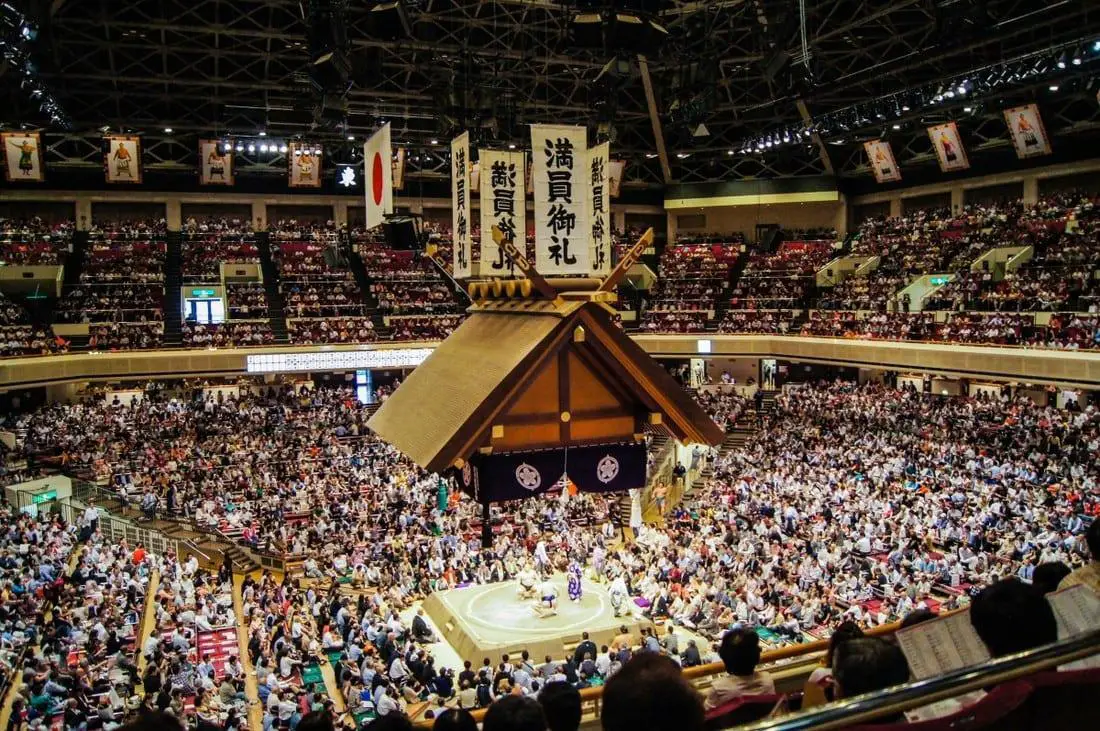
And don’t copy our 2015 day. We fitted Skytree, the aquarium, the Edo-Tokyo Museum and the sumo into one day, and the museum ended up rushed. Our Skytree and Ryogoku day guide fits the area together more sensibly. If you only want to pay for one tower, our Tokyo Tower vs Tokyo Skytree comparison will help you choose, and our five-day Tokyo itinerary shows where this side of the city fits into a longer trip.
Have you been up Tokyo Skytree? Did you stop at the Tembo Deck or carry on to the Galleria?