
Written by Katharina Mungall
Travel writer, photographer and architect
We went up the Tokyo Metropolitan Government Building on our first trip to Japan, to finish a day that had already taken in Shibuya, Harajuku and Meiji Jingu. Entry was free. On a clear day you can see Mount Fuji from up there. We didn’t.
It’s still free, so there’s no ticket price to weigh up. What it costs is time: getting to the west side of Shinjuku and queuing for the lift, with no promise the sky will co-operate once you’re at the top. Whether that’s worth it depends mostly on where else you’re spending the day.
My quick answer: Yes, the Tokyo Metropolitan Government Building observation deck is worth a stop if you’re already in west Shinjuku, the cloud isn’t right down and the lift queue leaves you time upstairs. Skip the cross-city detour on a cloudy day. Entry is free, but the rooms are indoors and Mount Fuji isn’t guaranteed.
We visited on our first Japan trip in September 2015. The personal experience in this article comes from that trip. Current practical details were checked against official information on 1 October 2026.
Free entry, opening hours and the room to use
There are two observation rooms, North and South, and they keep different hours. All times are Tokyo time.
| Practical detail | Current information |
|---|---|
| Admission and booking | Free. There are no advance or group reservations, so you simply join the queue on the day |
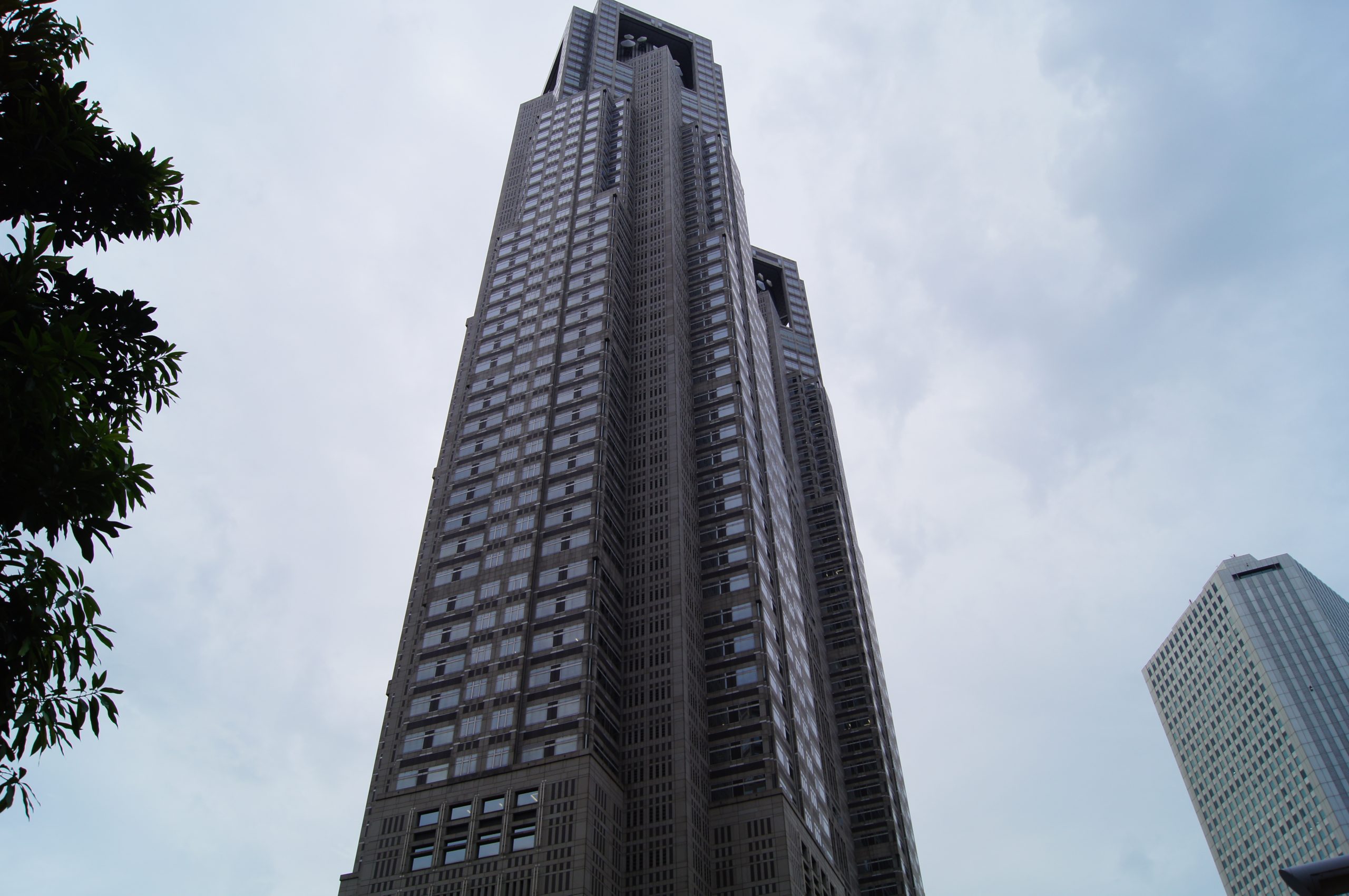
| The viewpoint | Indoor observation rooms on the 45th floor of Main Building No.1, 202m above ground |
| South room | 9.30am–10pm, last admission 9.30pm |
| North room | Usually 9.30am–5.30pm, last admission 5pm. Open until 10pm (last admission 9.30pm) on days when the South room is closed, provided the North room is itself scheduled to open |
| Regular closures | South: first and third Tuesday of the month. North: second and fourth Monday. Closures shift when they fall on a public holiday. Both rooms also close 29–31 December, 2–3 January and on building inspection days |
| Way in | Dedicated observatory lift from the first floor of Main Building No.1, on the west side of Shinjuku (nearest station Tochomae) |
For an evening visit, aim for the South room. It normally stays open until 10pm, while the North room shuts at 5.30pm on an ordinary day. If an older guide tells you North is the late one, go by the current calendar instead. Otherwise, use whichever room is scheduled to be open when you can get there.
The official observatory page has the opening calendar, closure notices and a live queue indicator, and the 2026 planned calendar (PDF) shows each room day by day. Plans can still change. Bad weather can close a room or alter its hours at short notice, and same-day updates go out on the observatory’s X account, @tocho_tenbou. Check on the day before you travel, particularly around public holidays and New Year, when the usual weekday pattern doesn’t hold.
The city view is the reason to go, not a promise of Fuji
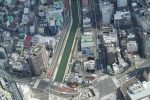
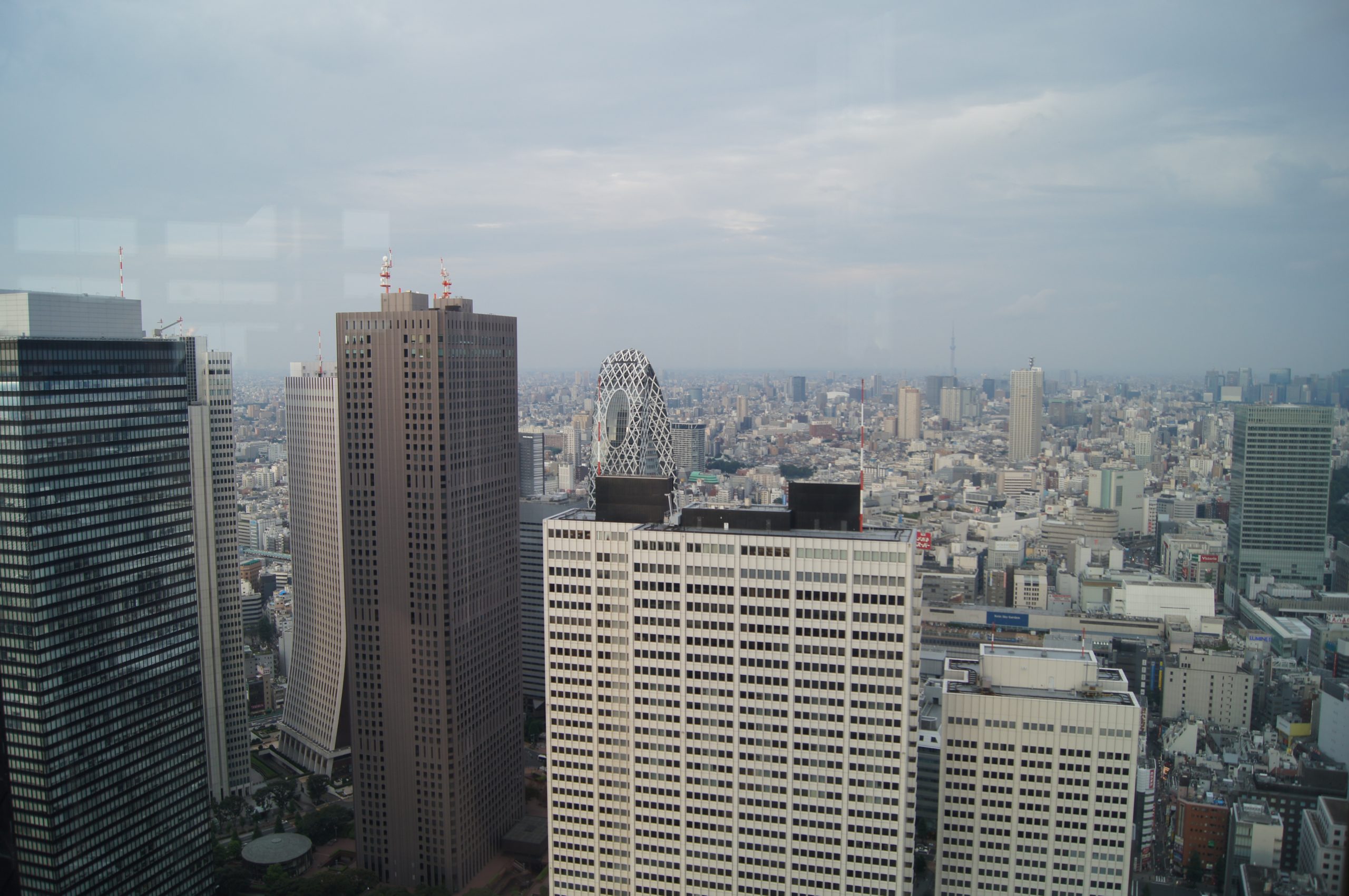
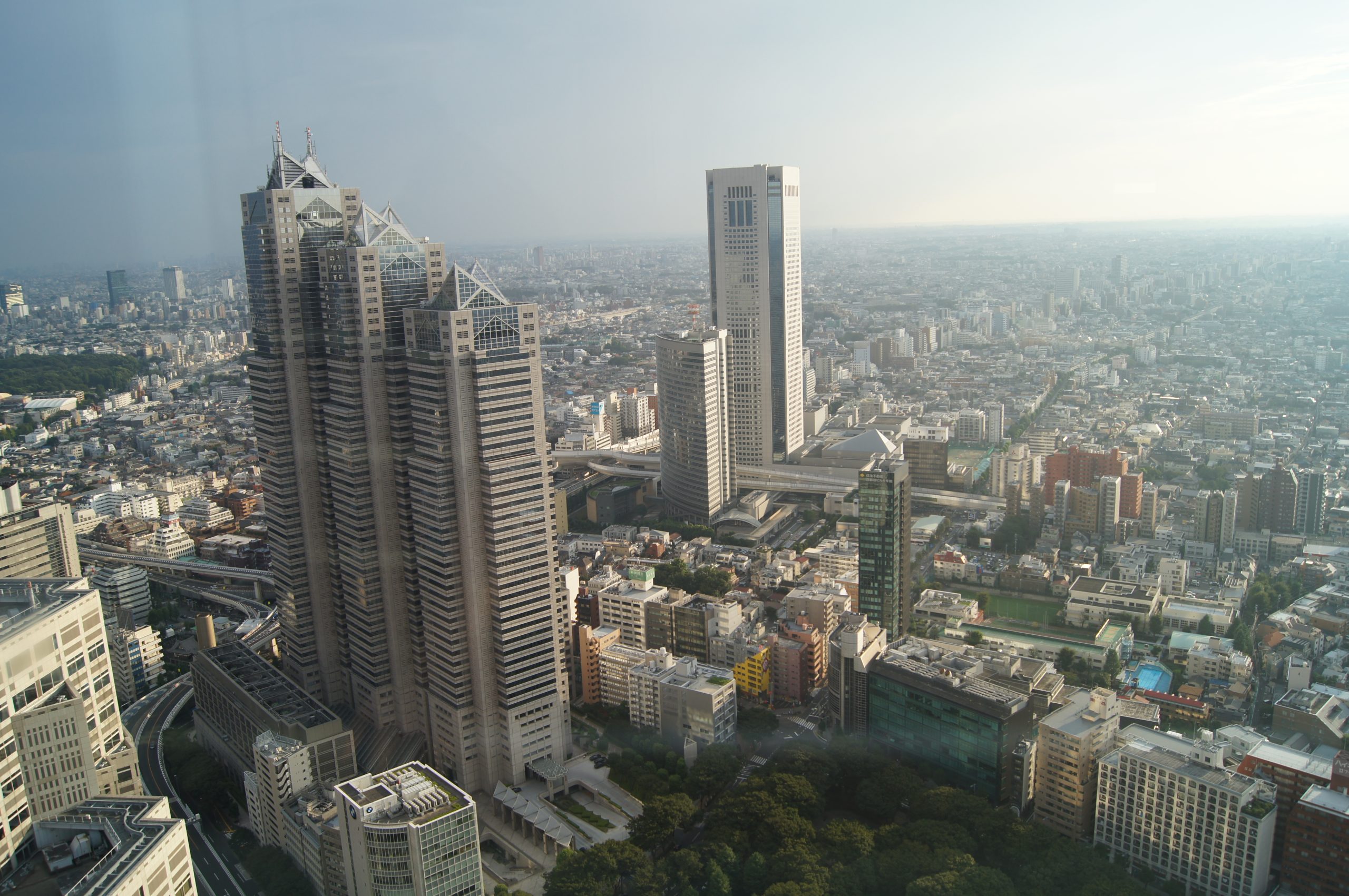
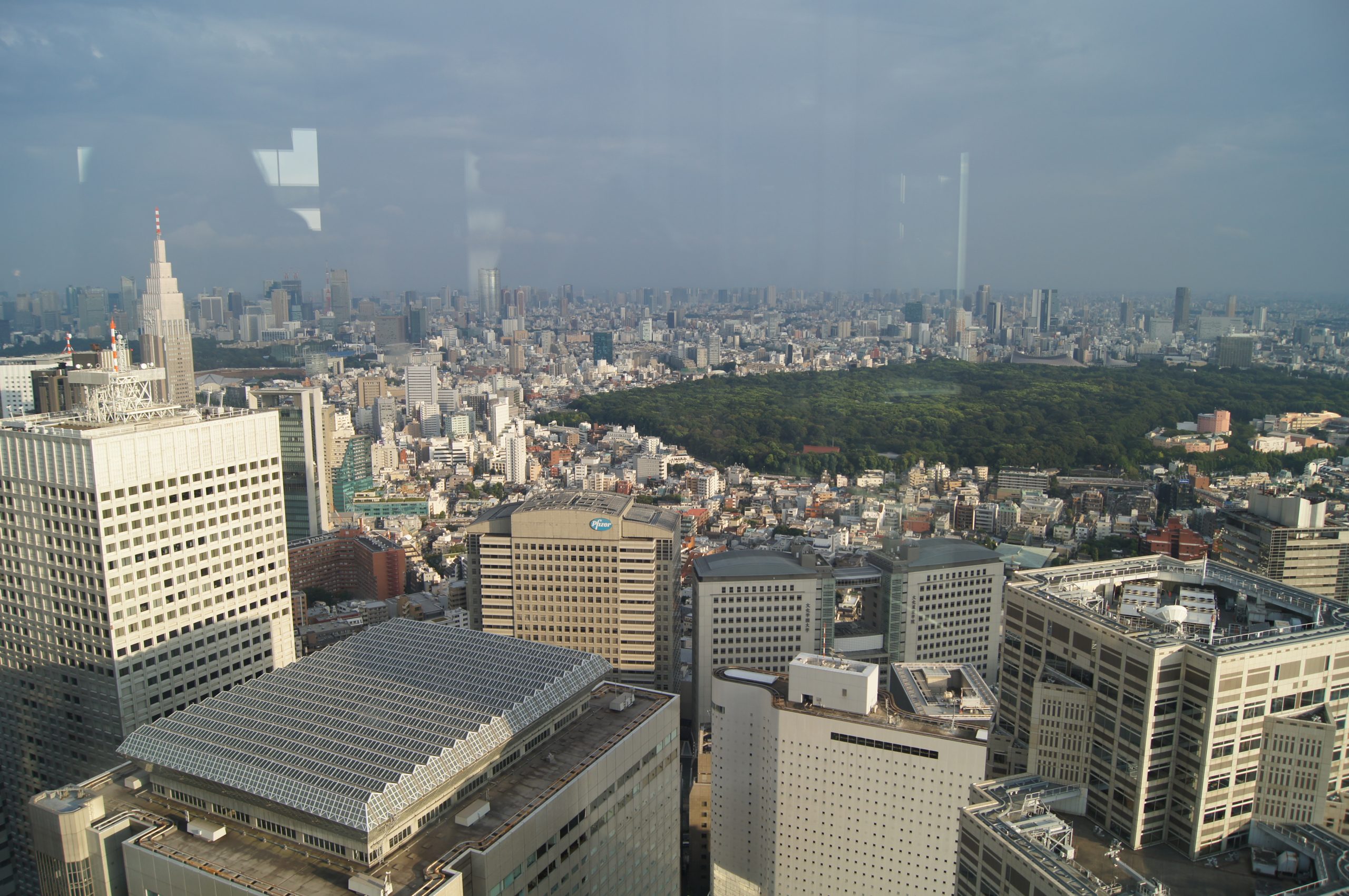
The images in this guide show the view on a hazy day: rooftops, roads and tower blocks running off into the distance, with one big block of green among the buildings. The rooms are indoors, so you’re looking out through windows rather than standing on an open roof, and reflections off the glass can end up in your shots. If photos matter to you, get close to the glass when there’s a gap.
The operator’s own view guide puts Mount Fuji to the west, Tokyo Skytree to the northeast, and Shinjuku Gyoen and Meiji Jingu to the southeast. If you’ve come from Meiji Jingu, as we had, the southeast windows are where to look back for it. On a hazy day the nearer city is most of what you’ll see, and that’s the part that justifies the trip.
Can you see Mount Fuji from the observation deck?
Sometimes, but don’t count on it. The official guidance is that Fuji shows up more often on clear, cold days between December and February. We visited in September and cloud kept it out of sight. Going by that advice, September was never the likeliest month anyway.
If seeing Fuji is the whole point, save the visit for a crisp winter day and check the forecast before you set off. Otherwise, take it as luck if the mountain appears.
Is it a good rainy-day plan? It keeps you dry, and drizzle doesn’t necessarily hide the streets below. But low cloud and heavy rain take away the long-distance view, which is what you came up for, and in properly bad weather the rooms can close at short notice. If the cloud is right down and the view is your reason for going, I’d move it to another day of your trip rather than queue for a grey window.
Timing the visit around daylight and queues
Free doesn’t mean quick. The operator says queues of 20 to 30 minutes are common and vary with the weather and time of day. Its live queue status shows the wait for each room in bands of 0–5 minutes, 5–30 minutes and 30 minutes or more.
Break the visit into its parts when you plan: getting to the building, the queue for the lift, your time upstairs and getting back down again. As a rough planning allowance (my suggestion, not an official figure), give yourself 30 minutes to an hour at the windows, then add the walk and whatever the queue status says.
If you’re crossing Tokyo just for this, look at the queue status before you set off. If you’re already on the west side of Shinjuku, the question is simpler. Does the wait still leave you enough time upstairs, and enough light, to make it worthwhile?
Is sunset worth the wait?
Only if you don’t mind giving part of the evening to a queue. The South room is the one that normally stays open after dark, until 10pm, so it’s the room for a sunset-into-night visit. The North room only joins in on the scheduled days when the South is shut. Arrive with daylight to spare rather than right on sunset, because a 30-minute queue can eat the bit you came for.
If you’re planning night photos, read the rules before you pack. Tripods, monopods, fixed-camera set-ups, reflectors and blackout curtains aren’t allowed, and you’re asked not to block the windows or take over other people’s viewing space. The observatory visitor rules (PDF) cover the rest.
The outdoor projection show is a separate evening stop
TOKYO Night & Light is a free projection show on the east wall of Main Building No.1. You watch it from outside in the plaza, not from the observation rooms, so it’s a separate stop rather than part of the view upstairs. It started in February 2024, long after our visit.
Screenings run every 30 minutes through the evening, except in severe weather, and the start time moves with the seasons. Check the official TOKYO Night & Light site for the day’s timetable and any cancellations rather than relying on times copied elsewhere. If you’re in the South room for the evening anyway, catching a screening on your way out costs nothing but a bit of standing about.
Getting to the lift on Shinjuku’s west side
The government buildings are in the skyscraper district west of Shinjuku station, about a 10-minute walk from the west side of JR Shinjuku. Tochomae station on the Toei Oedo line connects directly to the complex. The address is 2-8-1 Nishi-Shinjuku.
Head for Main Building No.1 and the dedicated observatory lift on the first floor. On weekends and public holidays the second-floor entrances are shut, so use the first-floor entrance. You don’t need the visitor pass that people heading to the offices have to register for.
Building work currently closes off part of the approach from Chuo-dori, but the works don’t shut the observatories. Follow the signs on site and check the current access instructions before you go, as the route may change while the work continues.
If stairs are a problem, ask the security staff for the step-free route to the lift. Wheelchairs can be borrowed from the information or observatory desk, subject to availability, and the official visitor guide lists accessible toilets on every floor.
Pair it with a west-Tokyo day rather than a separate detour
That’s how it fitted into our first trip: Shibuya, then Harajuku and Meiji Jingu, then across to Shinjuku and up to the observatory to finish. It works because the government buildings are on the same side of the city as those stops, and the South room’s late opening makes it an easy last stop. Our Shibuya, Harajuku and Shinjuku day route sets out how to string that day together, and the five-day Tokyo itinerary shows where it sits in a longer stay.
If it’s your last stop of a long day, there are places upstairs to buy a drink or a souvenir: a café and shop in the North room and a gift shop in the South. None of it is compulsory. Eating and drinking are only allowed in the designated areas, and bags, suitcases and buggies stay with you (the operator isn’t responsible for anything lost). The South room also has a public piano that visitors can play at set times on days it’s open, though events can change that.
When a paid Tokyo viewpoint makes more sense
The government building wins on price, and on convenience if you’re already in west Shinjuku. A paid tower makes more sense when going up is the outing itself rather than an add-on, or when a particular deck, or the tower as a landmark, is what you’re after.
We went up Tokyo Skytree later on that same 2015 trip and Tokyo Tower in 2017, and each has its own guide. Is Tokyo Skytree worth visiting? looks at its two decks and whether the higher one earns its extra cost, and Is Tokyo Tower worth visiting? does the same for its decks and for seeing the tower from outside without a ticket. If you’ve decided to pay but can’t choose between them, our Tokyo Tower vs Skytree comparison settles that, including a short note on where to go if you’d rather be outdoors. The government building’s observation rooms are fully indoors, so they won’t give you that.
Would I send you up? If you’re on the west side of Shinjuku with an hour in hand and the queue status isn’t showing 30-plus minutes, yes – it costs nothing to get in and gives you a long look over the city. I wouldn’t cross Tokyo for it on a cloudy day, and I wouldn’t cross it for Fuji at all without a clear winter forecast. We never caught a glimpse of Fuji from up there, and a city view with no mountain is the version to plan for unless the forecast says otherwise.
Have you been up the Tokyo Metropolitan Government Building, and did Mount Fuji show itself for you? Let us know in the comments below.