
Written by Katharina Mungall
Travel writer, photographer and architect
A hire car is most useful if you want to see central or northern Okinawa Main Island independently. For a Naha-only stay, first decide whether it solves a problem you actually have. A car gives you flexibility outside the city; in Naha, it may be more admin than help.
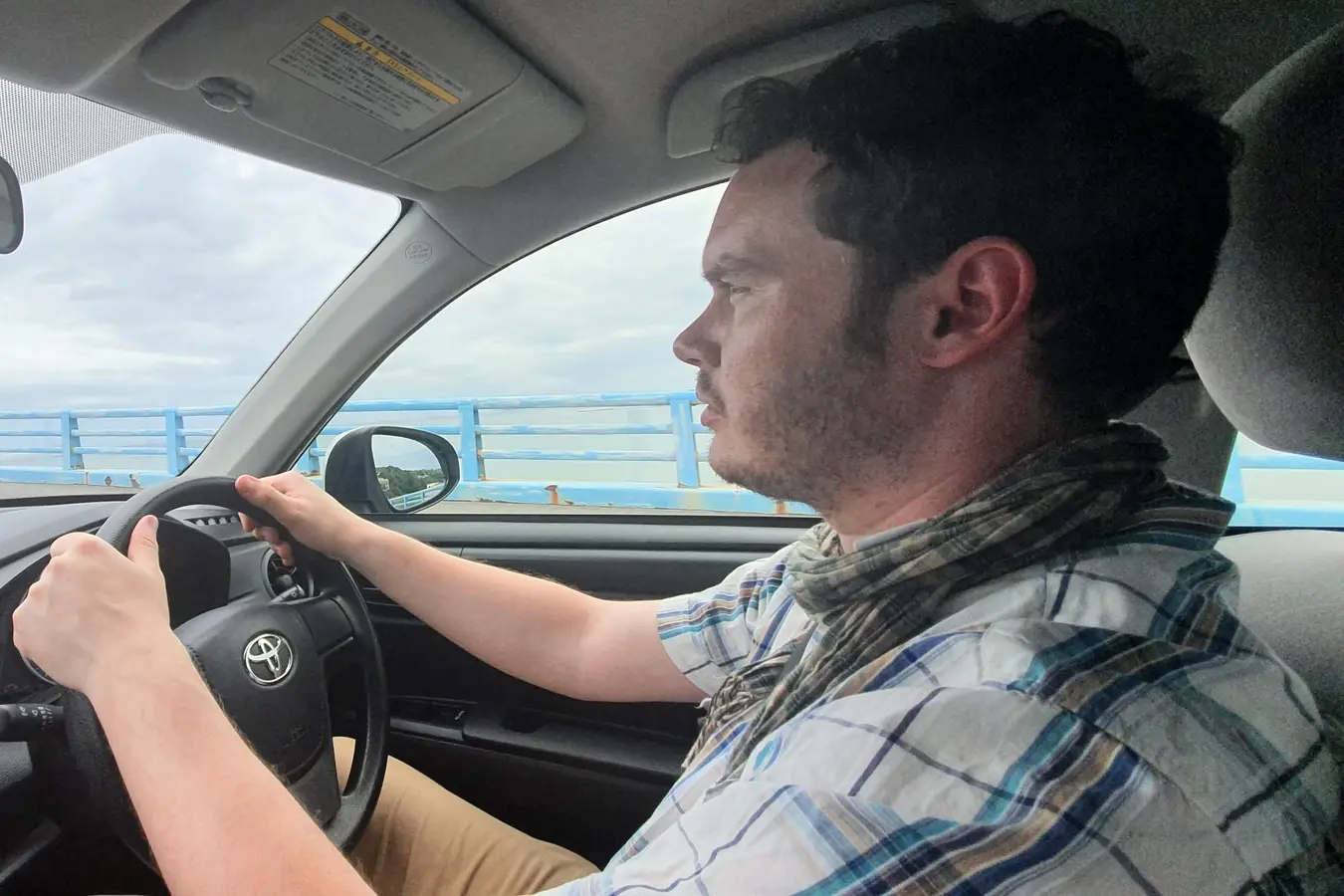
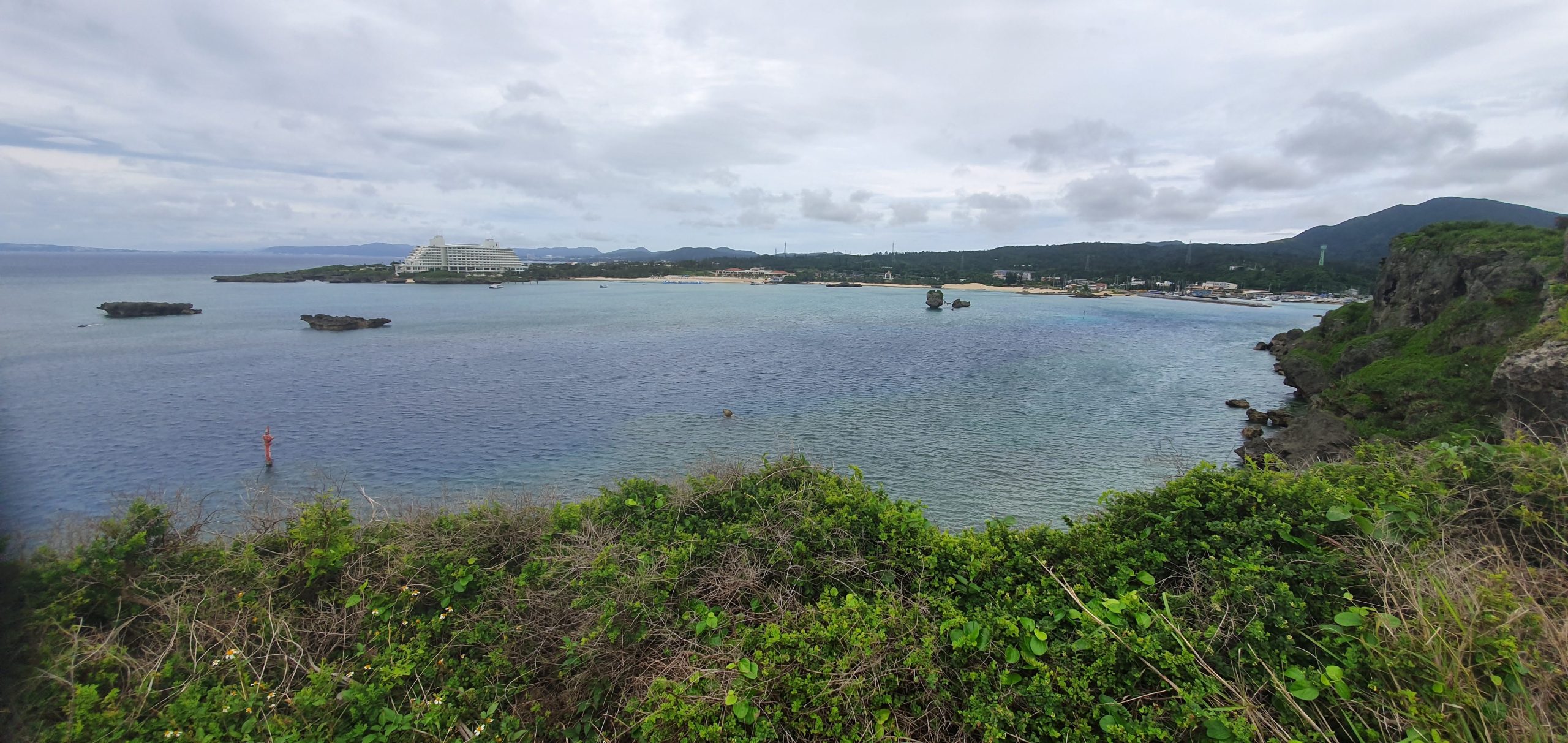
We hired a car on Okinawa Main Island on 17 May 2019, and it was Gary’s first time driving in Japan. On our previous mainland Japan trips, we had travelled by train, bus and metro rather than hiring a car. We headed north from Naha to Ocean Expo Park and Churaumi Aquarium, then along the coast with stops that included Cape Manzamo, Ryukyu Mura and American Village. That day has its own write-up in our Okinawa Main Island road-trip itinerary. This guide is about the practical side: deciding whether to rent a car, arranging the right documents, and dealing with tolls and maps.
We visited Okinawa in May 2019 and did our driving day on 17 May 2019. The personal experience in this article comes from that trip; current practical details were checked against official and specialist sources on 27 September 2026.
The short version for UK drivers
| Question | Current answer |
|---|---|
| Is a UK licence enough? | No. You need a 1949 Geneva Convention IDP as well as your valid UK licence. The 1968 IDP is not accepted in Japan. |
| Where do I get the IDP? | In person at a participating PayPoint store. £5.50 when checked. |
| Which side of the road? | The left. |
| Okinawa Expressway speed limit | 80 km/h, unless signs show lower. |
| Naha to Kyoda toll (standard car) | About ¥1,040 with ETC, about ¥1,610 by cash or card. |
| Child seats | Required for children under six. |
| When to book early | Golden Week, July to September, and New Year. |
When hiring a car makes sense
A car is a good fit if you want to make your own day outside Naha, rather than choose stops around a fixed bus timetable or tour.
For us, it made it possible to travel from Naha to Churaumi Aquarium and then continue along the coast. If that is the sort of day you have in mind, it is worth considering a car. If Churaumi is your priority, our Churaumi Aquarium day trip from Naha covers the visit itself.
| Your plan | Car decision | Why |
|---|---|---|
| Mainly Naha | Often optional | Start with our Naha itinerary without a car and see whether a hire car would add enough to justify it. |
| Central or west coast | Often worthwhile | A car gives you more control over the order of stops and how long you spend at each one. |
| Northern Main Island | Usually worthwhile | Independent travel becomes much easier when the places you want to see are spread out. |
The decision also links to where you stay. If you have not chosen a base yet, read where to stay in Okinawa alongside this guide rather than treating car hire as a separate decision.
What driving in Okinawa was actually like for us
That morning, Gary went to collect the car while I queued in Naha for a famous Spam onigiri with bitter gourd for breakfast. By the time we met up, he had the car and I had the food, and we set off north.
Once we were away from central Naha, Gary found the driving fairly easy. The main part of the journey north was straightforward. It was when we returned towards Naha that the route became harder to follow and the lane choices felt more complicated.
When the sat-nav started shouting
The car’s built-in sat-nav began shouting at us in Japanese on the way to Churaumi Aquarium. We had no idea what it wanted. We tried changing the language settings, at which point it stopped being useful altogether.
We switched it off and used Google Maps on our phone instead. Only later did we realise it had probably been warning us about the toll booths. If your hire car has an ETC reader, ask the rental company to explain what its alerts sound like before you leave.
The air-conditioning problem
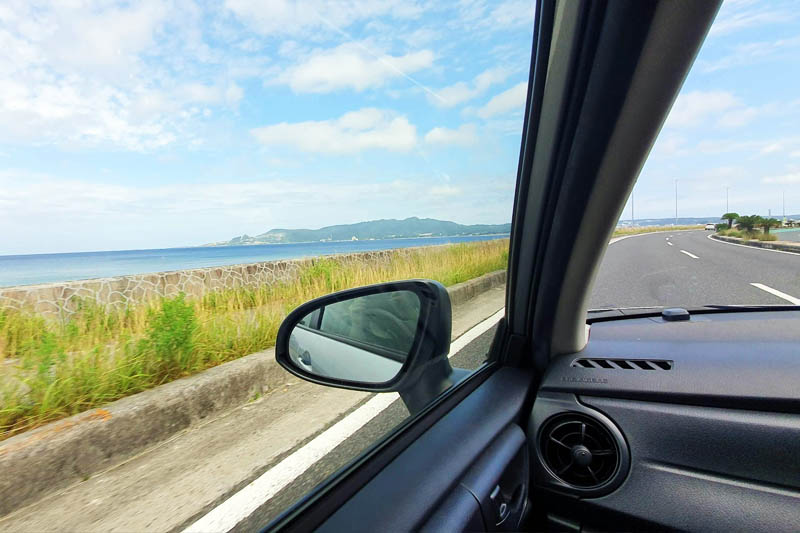
There was one problem we had not expected. Every time we turned on the air conditioning, our skin became intensely itchy. By the end of the drive, we suspected there was some kind of scented or air-freshening product in the ventilation system that we were reacting to, so we kept it switched off.
The UK paperwork to sort before you fly
For Japan, a UK driving licence on its own is not enough. You need a 1949 Geneva Convention International Driving Permit, usually called an IDP, as well as your valid UK licence.
The convention matters. Japan accepts the 1949 IDP, not the 1968 Vienna Convention version. It is a small paper booklet, but it is the part most likely to derail the whole plan if you leave it until the last minute.
GOV.UK says UK IDPs are issued in person through participating PayPoint stores. The listed fee was £5.50 when checked on 27 September 2026. Take the documents listed in the current guidance and ask for the 1949 permit for Japan.
Your rental company will have its own terms as well, so check the named driver’s eligibility before booking. Japan’s legal driving age is 18, but hire companies may set a higher minimum age or add a young-driver charge.
Booking and collecting the car at Naha Airport
If you are travelling during Golden Week, July to September or New Year, book early. Local rental guidance identifies these as periods when cars can become hard to find.
At Naha Airport, the rental car is generally not waiting beside the terminal. The airport’s current map shows the rental-car shuttle outside the first-floor domestic arrivals area. Arrangements can change during airport works, so follow your rental company’s instructions on the day.
Save those instructions before you fly. It is much easier than trying to find an email while standing in arrivals with luggage.
At the desk, make time for the useful questions:
- Is an ETC card included, or does the car only have the reader installed?
- What does the collision cover include?
- Is the Non-Operation Charge covered?
- What should you do after an accident or a breakdown?
- Where do you return the car, and what are the refuelling requirements?
CDW and NOC: two insurance terms worth understanding
The two abbreviations to look for are CDW and NOC.
CDW is Collision Damage Waiver. It concerns the cost of damage to the vehicle.
NOC means Non-Operation Charge. This is separate: it is a charge a rental company may apply if damage means the car cannot be rented out while it is dealt with. Local rental guidance gives typical figures of ¥20,000 where the car is returned to the office under its own power and ¥50,000 where it needs to be towed. Exact terms vary by company.
Do not assume that a booking labelled “insurance included” answers every question. Check whether CDW and NOC cover are both included, what remains excluded and whether there is an excess.
That is not exciting holiday reading. Still, it is better than trying to understand an unfamiliar insurance menu after something has gone wrong.
How driving works on Okinawa Main Island
Japan drives on the left, which gives UK drivers one familiar starting point. The road rules still need attention, especially once you leave the airport area.
Drink-driving rules
Japan has strict drink-driving laws. GOV.UK’s Japan travel advice also warns that passengers can be penalised if they knowingly travel with a driver who has been drinking.
Keep this one simple: if you are driving, do not drink.
Child seats
Japan Automobile Federation guidance says children under six must use a child seat. If you need one, arrange it with the rental company before travel rather than assuming it will be available at collection.
Bus lanes and changing lane arrangements
According to Okinawa Prefectural Police, weekday bus-lane restrictions apply on parts of Routes 58, 329, 330, 507, 29 and 82 between 07:30–09:00 and 17:30–19:00, excluding holidays.
Some roads also have time-dependent centre-line changes during rush hour, including Routes 507, 330 and 29. Follow the signs and road markings in front of you rather than relying on what a map appeared to show earlier.
Expressway speed and wet roads
The maximum speed limit on the Okinawa Expressway is 80 km/h. Signs take priority if a lower limit is displayed.
Local driving guidance also warns that Okinawa’s limestone road surfaces can become slippery in wet weather. Slow down, leave more space and be prepared to change the day’s plan if conditions are poor.
Tolls: ETC, cash and what to ask for
ETC stands for Electronic Toll Collection. It is Japan’s electronic toll-payment system.
There are two separate things: an ETC reader, which is installed in the car, and an ETC card, which is inserted into that reader to pay tolls.
If you expect to use the Okinawa Expressway, ask whether you can rent an ETC card. The official DrivePlaza calculator returned ¥1,610 without ETC and ¥1,040 with ETC for a standard vehicle from Naha to Kyoda on 27 September 2026. Treat that as an example rather than a fixed fare: the route, vehicle class, timing and available discounts can change the result.
Cash and card are still accepted at many Okinawa toll booths, but Japan is gradually moving towards more ETC-only gates. An ETC card should make the toll process easier and may also be cheaper.
Before leaving the depot, confirm that you have the card, not merely the reader.
MAPCODEs and the built-in sat-nav
After our experience with the shouting sat-nav on the drive to Churaumi Aquarium, I would not rely on the built-in sat-nav alone. Have Google Maps or another phone-based option ready before you leave the rental office.
A MAPCODE can make that easier. It is a numerical code, usually nine to 12 digits, that identifies a location for Japanese sat-nav systems. Instead of entering a full address in Japanese characters, you enter the code.
Before a driving day, save the name, address and MAPCODE for each key stop where one is available. It gives you another way to find your destination if the sat-nav’s address search is not being helpful.
For the wider picture, including the other islands and practical planning, start with our Okinawa Travel Guide.
What if you do not want to drive?
You can still plan an Okinawa trip without hiring a car. Naha is the obvious place to begin, and our Naha itinerary without a car is built around that choice.
For longer journeys, compare buses, organised trips and taxis against the places you genuinely want to reach. Official Okinawa tourism guidance gives an indicative shuttle-taxi cost of around ¥19,000–¥23,000 to regional hubs such as Nago, subject to fares and surcharges. That may suit a group sharing the cost; it is harder to justify for one person.
The trade-off is straightforward. A car gives you control over your day. Going without one removes driving, insurance and map worries, but leaves you working around someone else’s timetable.
Driving in Okinawa FAQs
Do UK visitors need an IDP to drive in Okinawa?
Yes. UK drivers need a 1949 Geneva Convention International Driving Permit for Japan, alongside a valid UK driving licence. Japan does not accept the 1968 Vienna Convention IDP.
Where can UK visitors get a Japan IDP?
GOV.UK says IDPs are issued in person at participating PayPoint stores. Check its latest guidance before travelling, including the current fee and documents required.
Is a car worth hiring for a Naha-only stay?
Possibly, but it is not automatic. A car is more useful if you plan to leave Naha for central or northern Okinawa Main Island. For a city-focused stay, begin with a car-free plan.
What is the speed limit on the Okinawa Expressway?
The maximum is 80 km/h, unless signs show a lower limit.
What is an ETC card?
It is the card used with an Electronic Toll Collection reader to pay expressway tolls. The reader and card are different things, so check which one is included with your rental.
Can Okinawa tolls still be paid in cash?
Many Okinawa toll booths still accept cash and card. ETC is still worth considering because the Naha-to-Kyoda example was lower with ETC when checked, and ETC-only gates are gradually expanding in Japan.
What is a MAPCODE?
A MAPCODE is a numerical location code that can be entered into Japanese sat-nav systems. It avoids the need to type a full address in Japanese characters.
Can you see Okinawa without driving?
Yes, with trade-offs. Naha can be explored without a car, and buses, organised trips and taxis can cover some longer journeys, but they offer less freedom than a car.
Would you hire a car in Okinawa, or keep the trip car-free? Let us know in the comments below.