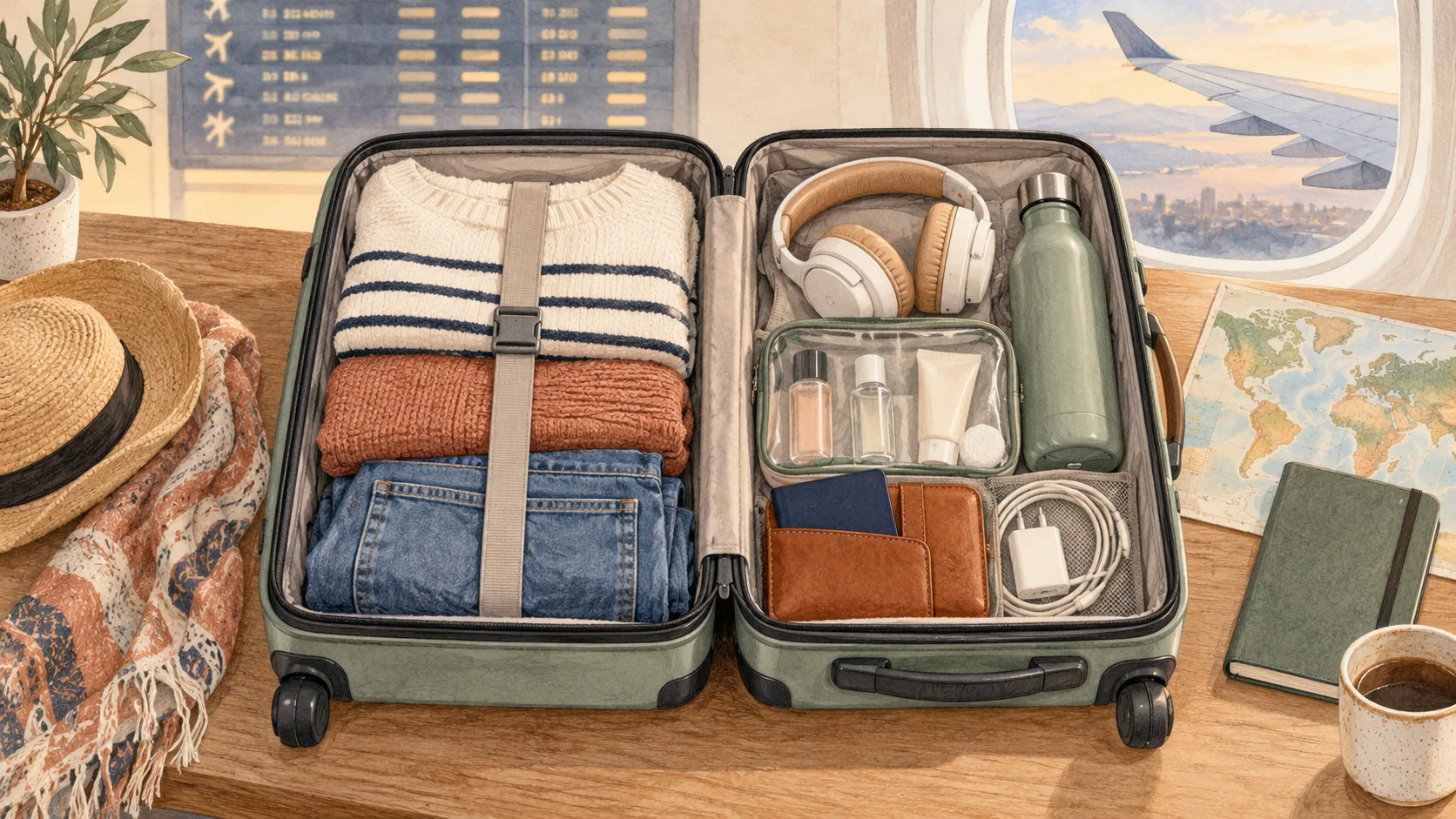
Packing just the right amount is a skill that does not always come naturally. Even after years of travelling, I still get that nagging feeling that I have forgotten something important. The trick is to make your hand luggage work as a small safety net: it should contain the things you need during the journey and the things you would struggle to replace if your checked suitcase went missing.
Whether you are travelling with carry-on only or checking several suitcases, this practical list covers the carry-on essentials I would rather not fly without.
Carry-on essentials: the quick checklist
- Passport, any required travel documents and boarding pass
- Wallet, bank cards and a little backup money
- Prescription medication and supporting paperwork
- Phone, charging cable and an airline-compliant power bank
- Valuable or fragile electronics
- Headphones, a book or downloaded entertainment
- Refillable water bottle, emptied before security
- Snacks that meet the rules for your route and destination
- Travel-sized toiletries in the required clear bag
- A change of underwear, socks and a clean top
- Tissues, hand sanitiser and lip balm
- Glasses, contact-lens supplies and other personal essentials
Important: cabin-bag size, weight, liquids, food, medication and battery rules vary by airline, airport and destination. Treat this as a packing checklist, then check the official guidance for every part of your journey before you leave.
1. Passport, travel documents, money and valuables
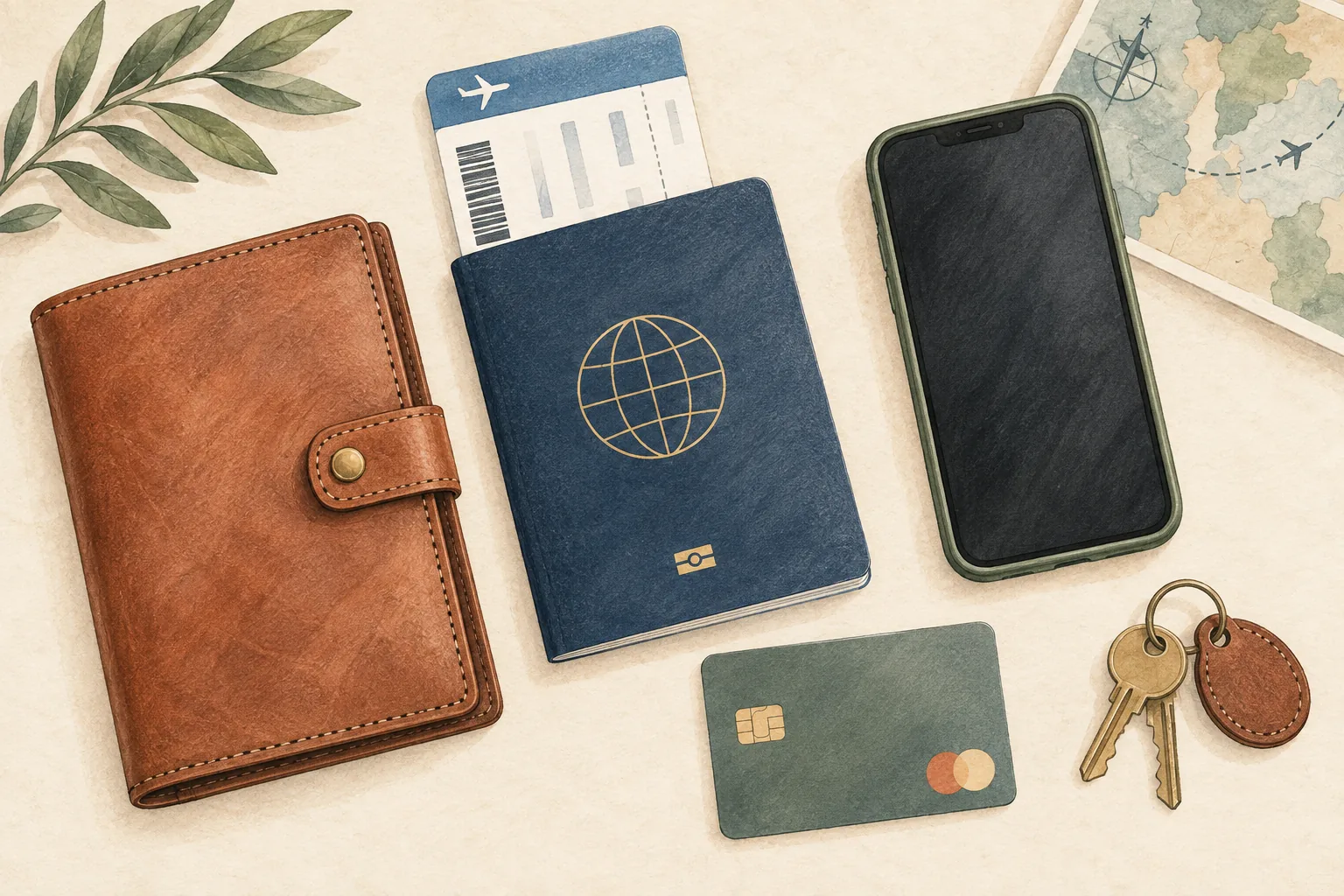
This is obvious right up until the moment it is not: put your passport, boarding pass and any other essential documents in your hand luggage. We keep our passports together at home, and they are the first things I pack when we are about to fly somewhere.
Your wallet, bank cards, expensive jewellery and anything of sentimental value should stay with you too. Checked luggage can be delayed, lost or damaged, and replacing an ID document abroad is the sort of holiday admin nobody wants.
I prefer to keep these items together in a zipped travel wallet or an internal pocket that is easy for me to reach but not easy for somebody else to access. You may need your passport and boarding pass several times between check-in and boarding, so burying them beneath everything else is a recipe for that frantic rummage at the gate.
2. Essential medication
Pack essential medication in your hand luggage rather than your checked suitcase. Take enough for the journey and, where possible, enough to cover unexpected delays. Keep medicine in its original labelled packaging and carry a copy of your prescription or a letter from your doctor when the medication, quantity or equipment could raise questions.
Rules concerning liquid medicines, controlled drugs and needles vary. Check the requirements of your departure airport, airline and destination country well before travelling. A medicine that is commonly prescribed at home may be restricted elsewhere.
I also carry a very small first-aid pouch with a few basics that suit my own needs, such as plasters. Choose any non-prescription medicines based on professional advice and your personal circumstances rather than copying somebody else’s list.
3. Phone, chargers and fragile electronics
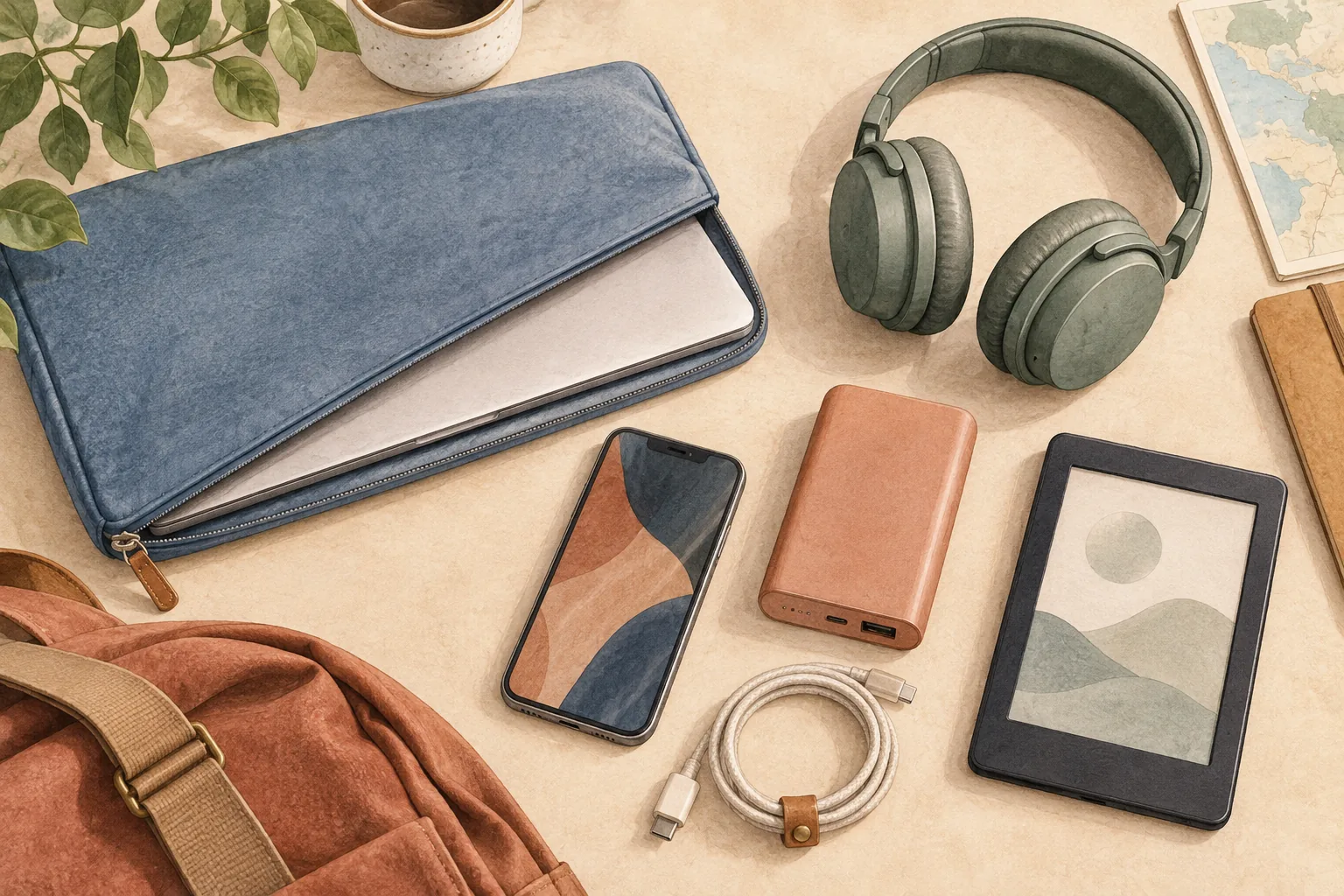
My phone, camera and laptop travel with me in the cabin. They are valuable, fragile and useful at the destination, so I do not want them bouncing around in checked baggage. A padded sleeve protects the laptop, while smaller cables go into one pouch so I am not untangling a nest of wires halfway through the flight.
Pack the charger you will actually need and, if travelling internationally, the correct plug adaptor. Charge your devices before leaving home and download important booking details so that you can reach them even without mobile data or airport Wi-Fi.
Spare lithium batteries and power banks are subject to particular aviation rules and usually need to travel in the cabin, with terminals protected. Capacity limits and airline approval requirements can apply, so check your airline’s battery policy rather than relying on a generic packing list.
4. Entertainment for the flight
I have frequently forgotten to bring something to pass the time and ended up buying entertainment at the airport, so this reminder is for me as much as it is for you. Pack headphones and a book, magazine or e-reader. If you plan to watch something on your phone or tablet, download it before you leave home; airport Wi-Fi is not the moment to discover that your favourite series is unavailable offline.
An e-reader is especially useful when you want a choice of books without the weight. Just remember that every extra device needs enough charge for the journey.
5. Water, snacks and small comfort items
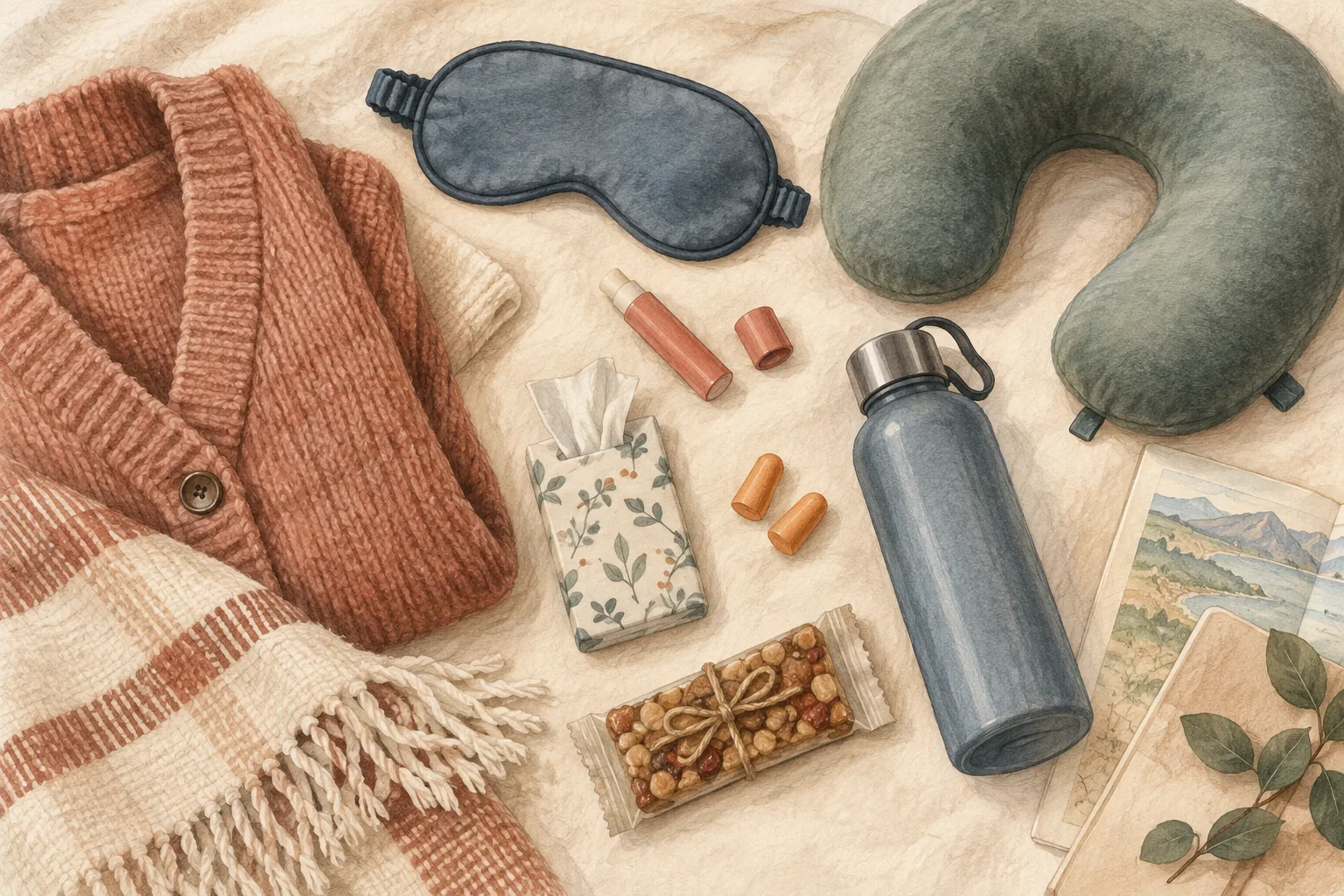
A refillable water bottle is one of my simplest carry-on essentials. Take it through security empty, then fill it afterwards where facilities allow. I also pack a snack for shorter flights or long connections, but food restrictions differ between countries. Eat it before arrival or check what you are allowed to take through customs.
A packet of tissues barely takes up any room and is endlessly useful. Lip balm, hand sanitiser, a warm layer and a pen can also earn their tiny patch of bag space. For a longer or overnight flight, an eye mask and earplugs may make the difference between resting and staring at the seat in front for eight hours.
6. Toiletries for your carry-on
On a long-haul flight I like having a toothbrush, toothpaste and a few basic toiletries with me. Brushing your teeth after hours on a plane feels disproportionately wonderful, and a small wash bag gives you a head start if your checked luggage is delayed.
Only pack what you will genuinely use in transit or during the first day. Liquids, gels, aerosols and pastes may be restricted, and airport screening procedures are not identical everywhere. Put them in the required bag and check official guidance for each airport you will pass through, including connections.
7. One change of clothes
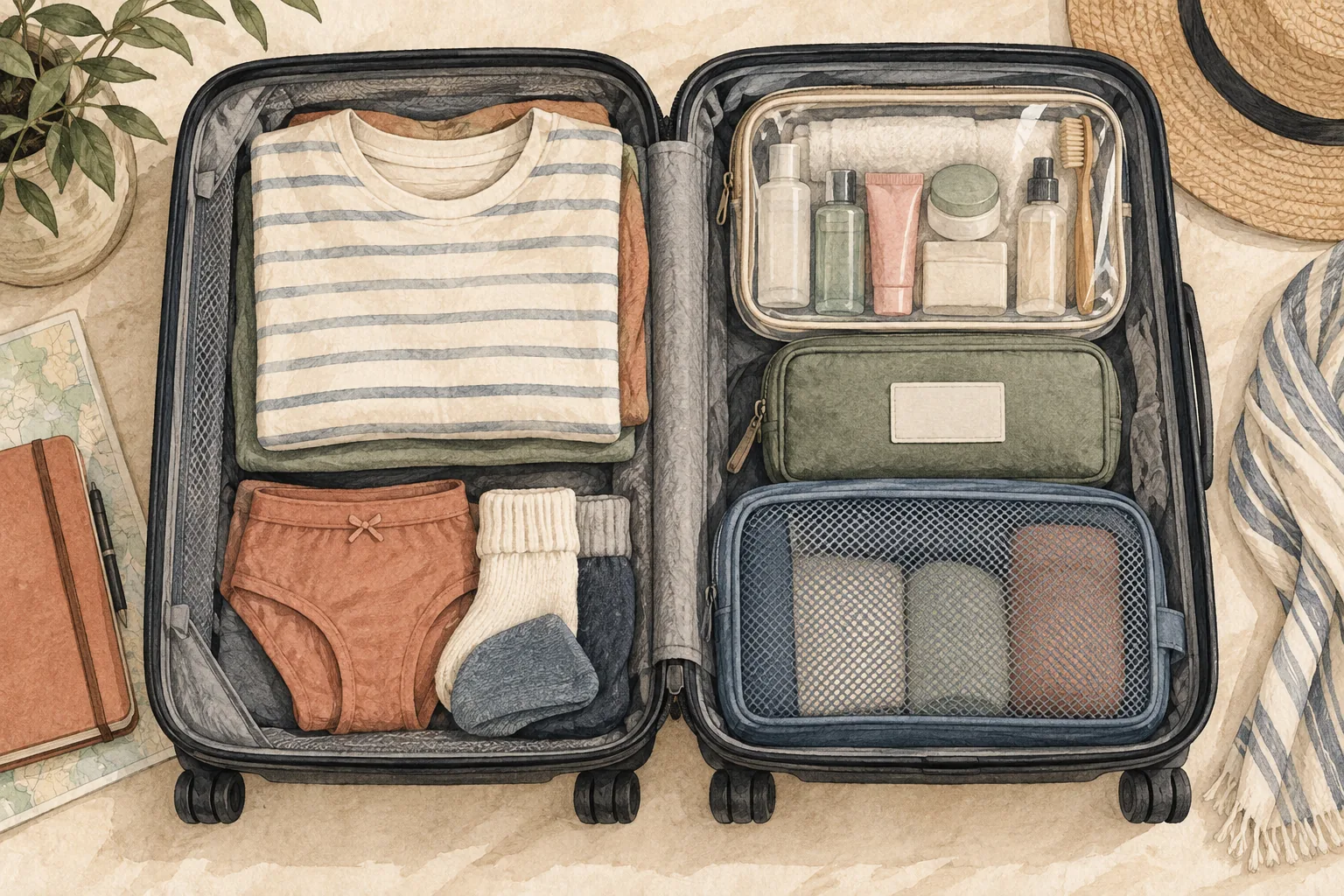
If I am checking a suitcase, I try to fit at least clean underwear, socks and a fresh top into my hand luggage. On our first trip to Japan, our luggage did not reach our hotel until two days after we landed. I had not packed a change of clothes and, needless to say, I felt pretty grim.
A full outfit is useful on a long journey, but even a lightweight change of the basics can save you an urgent shopping trip. If you are travelling with somebody else, you could split a few essentials between your bags so one missing suitcase does not leave one person with nothing.
8. What not to put in your carry-on
Do not assume that an everyday object is permitted in cabin baggage. Sharp items, tools, sporting equipment, large containers of liquid and some foods may be restricted or prohibited. The exact rules depend on where you fly from, where you connect and where you land.
There is also a practical limit: do not pack so much that the important items become impossible to reach. Keep documents and anything needed at security near the top, and place heavier objects low and close to your back if you use a backpack.
Carry-on only or a separate personal item?
Airlines use terms such as cabin bag, hand luggage and personal item differently. A fare may include one small under-seat bag but charge for a larger overhead bag, while another airline may have different measurements or weight limits. Check the allowance attached to your exact ticket, not simply the airline’s general reputation.
If you are travelling with children, your list will naturally grow. My guides to travelling with a toddler and travelling abroad with a baby cover the extra things families may need. If the packing list is only one part of a bigger trip, you may also find my step-by-step travel itinerary guide useful.
My final check before leaving home
Just before I close the door, I do one final check for the things that cannot easily be replaced: passport, wallet, phone, medication and travel documents. Almost everything else can be bought later if necessary. Those five are the difference between a slightly annoying oversight and a genuinely difficult start to a trip.
Once you have checked those, weigh and measure your bag, confirm your airline’s current allowance and make sure your liquids and batteries follow the rules for the whole route. Then zip it up and stop adding “just one more thing”. That is usually how a sensible carry-on becomes a shoulder-destroying brick.
What are your carry-on essentials? Share the one thing you never fly without in the comments.