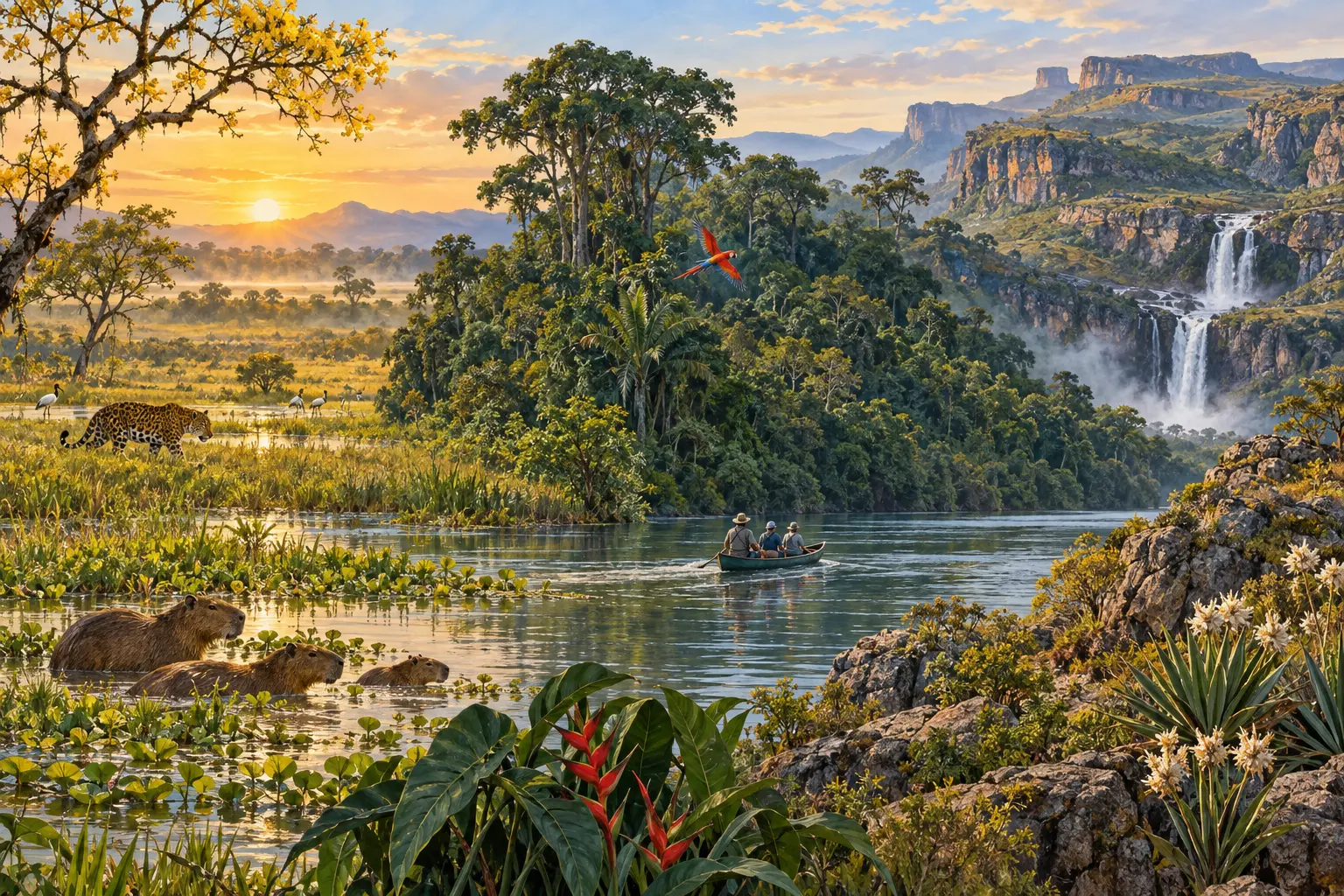
Brazil’s wild landscapes extend far beyond the Amazon. The country also contains the seasonally flooded Pantanal and the mountain grasslands, waterfalls and cerrado habitats of Minas Gerais. Each region offers a very different kind of wildlife journey—and none should be treated as a casual extension to a city break.
This guide compares the Pantanal, the Brazilian Amazon, Jaú National Park, the Mamirauá Sustainable Development Reserve, Serra do Cipó and Serra da Canastra. It preserves the useful destinations from an older article while correcting several inaccurate or overly confident claims. I have not personally visited every place covered, so this is a researched planning guide rather than a first-hand account.
Access, river levels, fire conditions, permits, health advice and tour operations can change. Always confirm arrangements with official park authorities and a reputable local operator before travelling.
Brazil wildlife destinations at a glance
- The Pantanal: seasonally flooded wetland, open landscapes and strong opportunities to observe large animals with a responsible guide.
- The Brazilian Amazon: immense rainforest and river systems where the experience is as much about the ecosystem as individual sightings.
- Jaú National Park: remote black-water rivers and protected forest within the Central Amazon Conservation Complex.
- Mamirauá: a community-connected sustainable development reserve shaped by dramatic seasonal flooding.
- Serra do Cipó: cerrado and rupestrian grasslands, waterfalls, wildflowers and hiking north of Belo Horizonte.
- Serra da Canastra: high plateaux, waterfalls and cerrado habitat associated with species including the maned wolf and giant anteater.
The Pantanal: Brazil’s great wetland
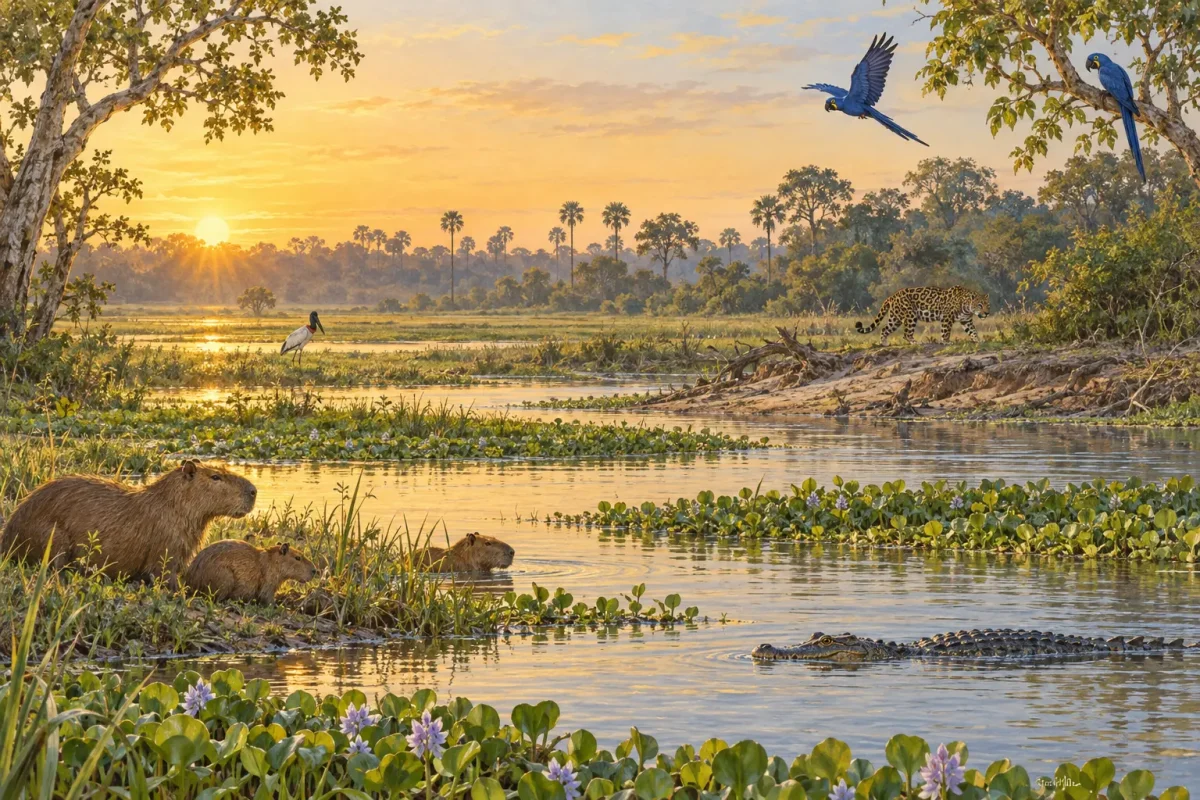
The Pantanal is one of the world’s largest freshwater wetland systems, stretching across Brazil and into Bolivia and Paraguay. Its annual flood pulse creates a mosaic of rivers, grasslands, woodland and temporary lakes. UNESCO’s Pantanal Conservation Area protects 187,818 hectares, but this World Heritage property represents only a small portion of the much wider wetland.
The older article described the Pantanal as covering “over 200,000 square metres”. That is plainly the wrong unit: 200,000 square metres would be only 0.2 square kilometres. Estimates for the wider Pantanal vary according to how its boundaries are defined, but they are generally expressed in roughly 140,000–200,000 square kilometres—not square metres.
What wildlife might you see?
The region supports jaguars, giant otters, giant anteaters, capybaras, caiman, marsh deer, tapirs and an exceptional variety of birds. Hyacinth macaws are among its best-known species. None of these sightings is guaranteed, however, and ethical wildlife watching means allowing animals to control the encounter.
You may see marketing references to a South American “Big Five”. Unlike Africa’s historically established safari term, this is a tourism label rather than a formal ecological category. It can be a useful shorthand, but a rewarding Pantanal journey should not become a frantic hunt for five photographs.
When should you visit the Pantanal?
Broadly, the drier months concentrate wildlife around remaining water and make some roads and trails easier to use. The wetter months transform the landscape and favour travel by boat in some areas. Timing differs between the northern and southern Pantanal, and rain, drought and fire do not follow an identical pattern every year.
July to October is often promoted for wildlife watching, particularly jaguar-focused trips in parts of the northern Pantanal, but this should be treated as a broad planning window rather than a promise. Ask an operator what conditions are normally like in the exact area you will visit.
How to explore responsibly
Boat excursions, raised safari vehicles, walks and horse riding may all be offered, depending on the property and season. Riding with experienced local guides can provide access to wetland ranch landscapes, but it does not make a visitor invisible to wildlife. Avoid operators that crowd animals, bait predators or push boats too close for the sake of photographs.
The Pantanal is also vulnerable to fire, altered water flows, deforestation and other pressures. Tourism is not automatically harmless simply because it is labelled “eco”. Smaller groups, trained guides, locally rooted accommodation and transparent wildlife rules are better indicators than glossy language.
The Brazilian Amazon: forest, rivers and communities
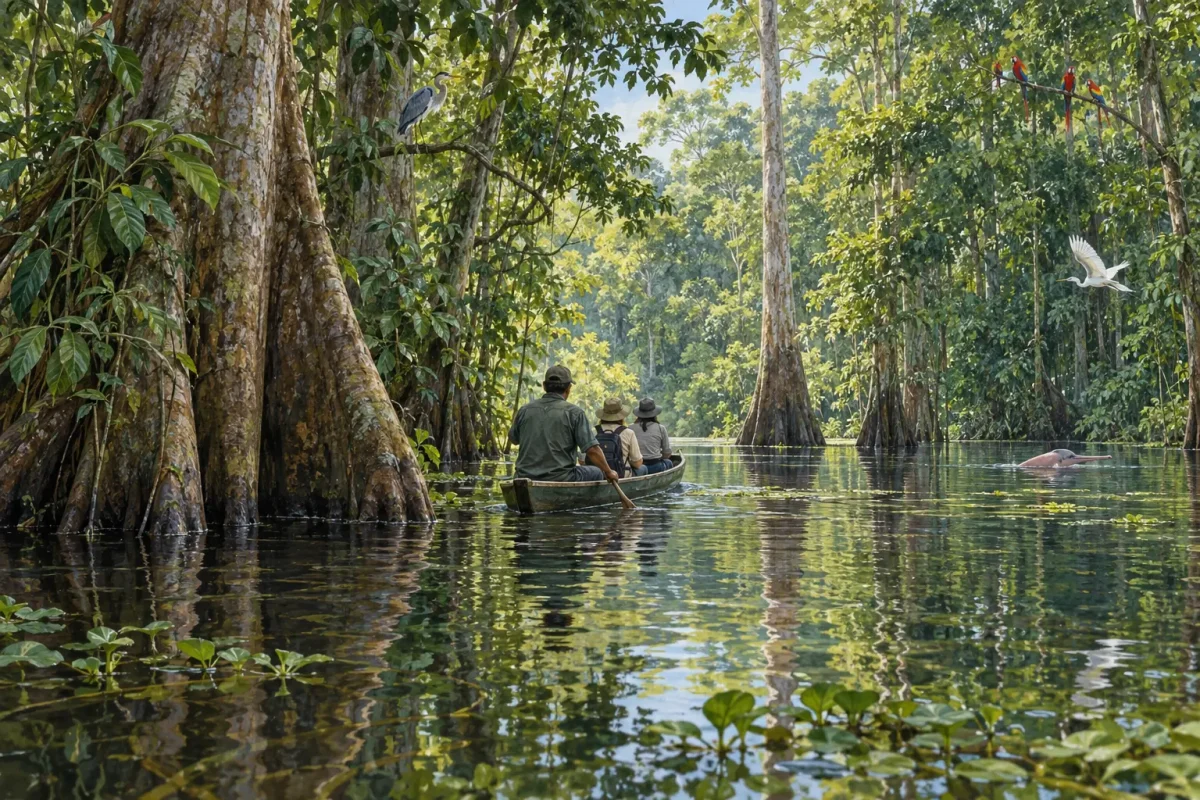
The Amazon is not one attraction or one uniform forest. The Brazilian portion contains huge differences between black-water and white-water rivers, seasonally flooded forest and dryland forest, cities, protected areas and inhabited landscapes. A first visit commonly begins through a gateway such as Manaus or, for the Middle Solimões region, Tefé.
The original article stated that the Amazon River is highest during the dry season. That reverses the basic seasonal relationship: river levels generally rise through the wetter part of the cycle and fall during the drier period, although the timing and scale vary across this enormous basin.
High-water or low-water season?
Neither is universally “best”. Higher water can allow small boats to travel through flooded forest, creating an extraordinary water-level view among the trees. Lower water may expose beaches and concentrate some wildlife, while making certain forest trails accessible. Heat, humidity and rain remain possible in any season.
Ask what activities are realistically available during your dates. A lodge that excels at canoe excursions in flooded forest may offer a very different programme when water levels fall. River conditions can also affect journey times.
What wildlife can realistically be seen?
River dolphins, monkeys, caiman, sloths and abundant birdlife may be possible in suitable areas, but dense vegetation makes many animals difficult to spot. Jaguars live in the Amazon, yet a casual visitor should not expect one to appear conveniently on a riverbank. Good guiding often reveals tracks, calls, plants, insects and ecological relationships that an untrained visitor would miss.
Do not touch wildlife, feed animals or accept staged encounters. Activities involving captive animals require particular caution: an appealing photograph is not evidence that an animal is being kept legally or treated well.
Jaú National Park
Jaú National Park forms part of UNESCO’s Central Amazon Conservation Complex, a vast protected landscape of more than six million hectares when its component areas are considered together. The wider World Heritage site includes black-water rivers, lakes, channels, dryland forest and seasonally flooded ecosystems.
Jaú is remote. Access has traditionally involved river travel, and visits require much more preparation than simply booking a day excursion from Manaus. Current entry procedures, authorised guiding, transport and overnight arrangements should be checked with ICMBio and an experienced operator.
The attraction here is not an amusement-park version of danger. It is the scale and complexity of a protected Amazonian ecosystem. Black caiman, giant otters, river dolphins, Amazonian manatees and many fish and bird species occur within the wider conservation complex, but presence in the ecosystem does not guarantee a sighting on a particular journey.
Mamirauá Sustainable Development Reserve
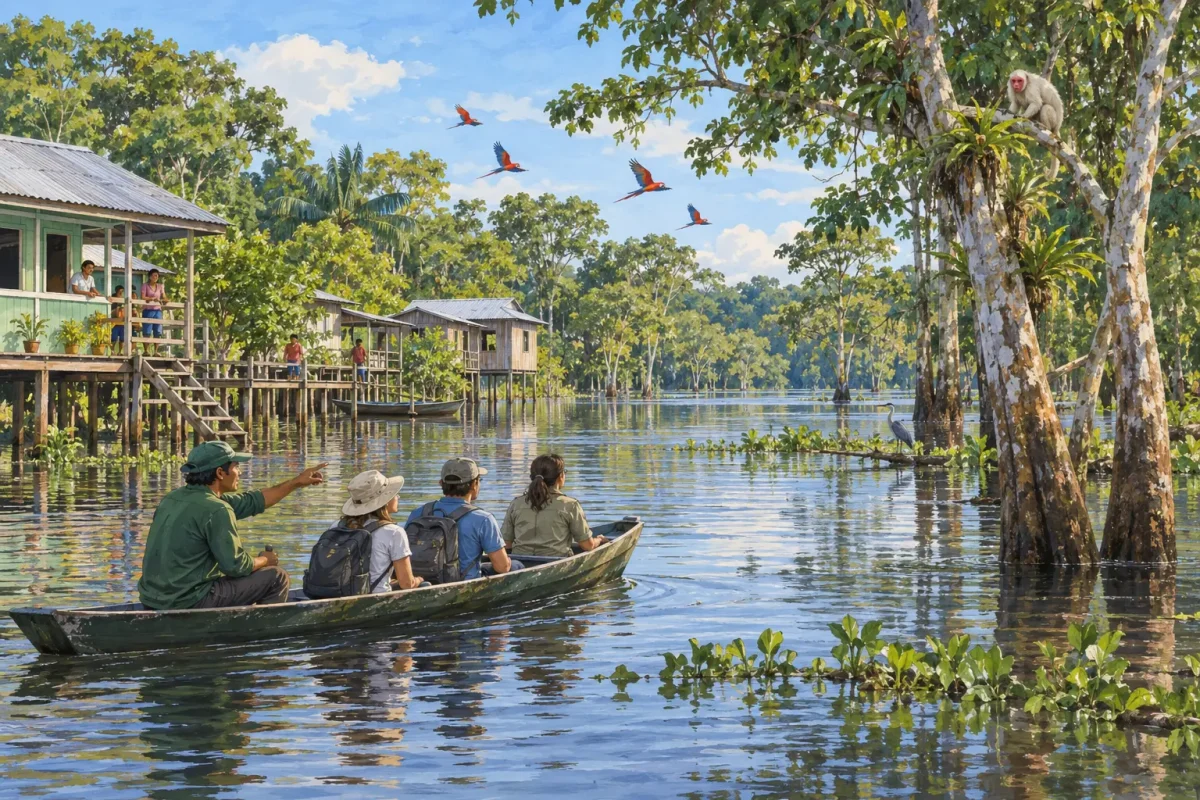
Mamirauá lies in the Middle Solimões region and protects várzea—forest seasonally flooded by nutrient-rich white water. The annual rise and fall of the rivers affects movement, wildlife, buildings and everyday life. It is also a lived-in landscape: local communities are part of the reserve and its conservation model.
The reserve is known for primates including the white uakari, as well as river dolphins, birds and aquatic life. The old claim that it is “the only place in the world” where a visitor can encounter a rare uakari was too absolute. Species distribution and the likelihood of a visitor encounter are not the same thing.
Community-based tourism can connect conservation with local livelihoods when it is genuinely participatory. Look for experiences that employ and involve residents, explain how income is distributed, limit ecological disturbance and treat communities as partners—not scenery.
Planning a Mamirauá visit
Tefé is the usual regional gateway, followed by boat transport. Water levels strongly influence the programme: one season may favour canoe journeys through flooded forest while another provides more walking. This is precisely why generic advice about a single perfect month is unreliable.
Minas Gerais: beyond rainforest and wetland
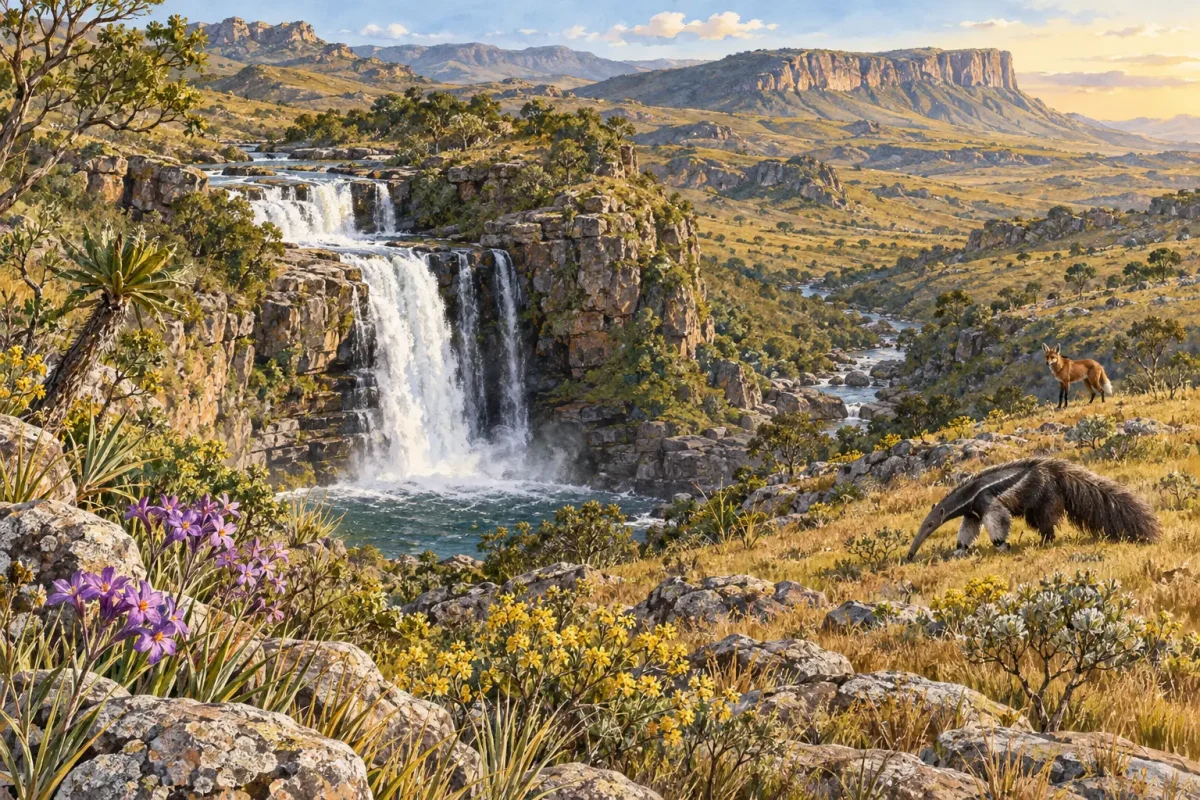
Minas Gerais offers a different side of Brazilian nature. Parts of the state contain cerrado, high-altitude rocky grasslands, river headwaters, cliffs and waterfalls. The wildlife may be less immediately visible than in open Pantanal habitat, but the combination of botany, walking and landscape is compelling.
Serra do Cipó National Park
Serra do Cipó lies north of Belo Horizonte and is celebrated for waterfalls, canyons, cerrado vegetation and campos rupestres—rocky grasslands with high plant diversity and many locally restricted species. Botanists value the region as much as hikers do.
Cachoeira da Farofa is among the best-known destinations, but trail length, river crossings, weather and permitted access need checking. A waterfall described as straightforward in dry conditions may be hazardous after rain. Start early, carry sufficient water and follow local instructions.
Potential fauna includes maned wolves, giant anteaters, deer, small mammals, reptiles and numerous birds. Seeing large mammals on a short walk is far from certain. The flowers, rock formations and wider ecology should be considered central attractions rather than consolation prizes.
Serra da Canastra National Park
Serra da Canastra protects almost 200,000 hectares of cerrado in Minas Gerais and includes dramatic plateau scenery and the upper reaches associated with the São Francisco River. Casca d’Anta, where the river falls from the escarpment, is its most recognisable landmark.
The park is also associated with the maned wolf, giant anteater, armadillos, deer and rich birdlife. Wildlife encounters depend on patience, timing and luck. A long lens and respectful distance are preferable to approaching an animal.
Road conditions vary, and some routes are unsuitable for ordinary vehicles, particularly after heavy rain. Entrances and attractions are spread across a substantial landscape, so accommodation location matters. Check the official park information and do not assume that two points shown within the same boundary are quick to reach.
Pantanal or Amazon: which should you choose?
Choose the Pantanal if your priority is observing larger animals in more open habitat and you are comfortable with a safari-style itinerary. Choose the Amazon if your priority is rainforest ecology, river travel and understanding a vast, layered ecosystem where wildlife sightings may be less predictable.
Choose Minas Gerais if you want hiking, waterfalls, botany and cerrado landscapes alongside wildlife possibilities. Combining regions is possible, but Brazil’s distances are considerable. A focused trip usually provides more depth than racing between ecosystems.
Practical planning
- Use a responsible operator: ask about group sizes, guide training, wildlife-distance rules and community involvement.
- Prepare for insects and heat: obtain personalised travel-health advice before departure and use appropriate clothing and repellent.
- Do not rely on generic seasons: confirm conditions for the exact destination and month.
- Allow for transport time: river journeys, internal flights and difficult roads can consume substantial parts of an itinerary.
- Respect protected areas and communities: follow permits, trail closures, photography expectations and local guidance.
- Check fire and weather conditions: plans may need to change at short notice.
Frequently asked questions
Is the Pantanal better than the Amazon for seeing wildlife?
The Pantanal often provides easier observation of large animals because much of the habitat is more open. The Amazon can offer greater immersion in rainforest and river ecology, but dense vegetation means individual animals may be harder to see.
Can you visit the Pantanal independently?
You can arrange your own transport and accommodation in some gateway areas, but wildlife excursions are best undertaken with knowledgeable local guides. Remote access, seasonal flooding and wildlife safety make improvisation a poor substitute for preparation.
Are jaguar sightings guaranteed?
No. Some Pantanal locations have strong seasonal sighting records, but wild animals are never guaranteed. Treat any operator promising certainty with caution.
How long should a Brazil wildlife trip be?
For one major ecosystem, roughly five to seven nights provides more flexibility than a rushed two- or three-night visit. Combining the Pantanal and Amazon normally deserves considerably longer once flights and transfers are included. This is a planning range, not a fixed rule.
Continue exploring through our South America travel guides, browse the Brazil archive, or compare ideas across our complete destination collection.
This is a researched planning guide and does not claim first-hand experience in every location. Core conservation and geographical information was checked against established official material available before January 2025. Current entry arrangements, health advice, prices, river conditions, fire alerts and operator availability require fresh verification before travel. The original tourist-board images are not used in this updated version.