
Written by Katharina Mungall
Travel writer, photographer and architect
Tokyo has far more museums than anyone can fit into a trip, and this isn’t a list of the four best. It’s the four we’ve genuinely been to, across two trips, in 2015 and 2017: the Tokyo National Museum, the Edo-Tokyo Museum, Miraikan and the Tora-san Museum in Shibamata. Between them they cover Japanese art and history, the story of Tokyo itself, science and technology, and one very specific film world, so the right choice mostly comes down to what you’re curious about.
One thing needs saying before you plan around it. Miraikan is closed for refurbishment from 1 October 2026 to 22 April 2027, and the museum plans to reopen on 23 April 2027. That date could change, and hours, prices, reservation rules and exhibits for the reopened museum haven’t been announced, so check Miraikan’s own website before you build a day around it. Everything below about our visit there is a 2017 memory, not a description of what you’ll find next.
The same goes for the rest. Our visits to the Tokyo National Museum and Edo-Tokyo were in 2015, and Edo-Tokyo has since been refurbished and reopened, so what we remember may not match what’s open or what it costs today. Current details were checked on 4 October 2026.
| Museum | Best for | Fits you if | Where it sits | Scale | Status as checked 4 Oct 2026 |
|---|---|---|---|---|---|
| Tokyo National Museum | Japanese art, history and archaeology | You want depth in one subject and are happy to choose a part of it rather than see everything | Ueno Park | A complex of six buildings, so it rewards a plan | Open, including the Japanese Archaeology Gallery; adult ticket ¥1,000, no reservation needed |
| Edo-Tokyo Museum | The history of Tokyo, told through large-scale models and displays | You want to understand how the city grew, and can give it a calmer slot than we did | Ryogoku | Large; we saw the pre-refurbishment version in 2015 | Reopened 31 March 2026; permanent exhibition ¥800 for adults, no reservation needed |
| Miraikan | Science and future technology | You’re travelling after the reopening and happy to check what’s new | Odaiba | Not confirmed for the reopened museum | Closed 1 Oct 2026 to 22 Apr 2027; planned reopening 23 Apr 2027, subject to change |
| Tora-san Museum | The Otoko wa Tsurai yo film series and its full-scale sets | You already know, or want to know, the Tora-san films | Shibamata | Focused on one subject; the standard ticket also covers the Yamada Yoji Museum next door | Open; ¥500 common ticket, closed on the third Tuesday of each month |
Choose by interest and the Tokyo day you already have
Start with what you actually want to look at, because the four don’t compete much. If it’s Japanese art, objects and history, you’re in Ueno Park. If it’s how Tokyo became Tokyo, that’s Ryogoku. Science and technology point to Odaiba, though not until the closure ends, and anyone with a soft spot for the Tora-san films is heading out to Shibamata, which is a trip in its own right rather than a stop on the way to something else.
Geography is the other filter, and it’s a gentler one. The Tokyo National Museum is in Ueno Park and, once it reopens, Miraikan is in Odaiba. Edo-Tokyo sits in Ryogoku, near the sumo stadium. Being near something else is a reason to consider a museum, but it isn’t proof you have the time for both, and our 2015 itinerary is a good example of what happens when you stack things up.
Tokyo National Museum: for Japanese art, history and archaeology
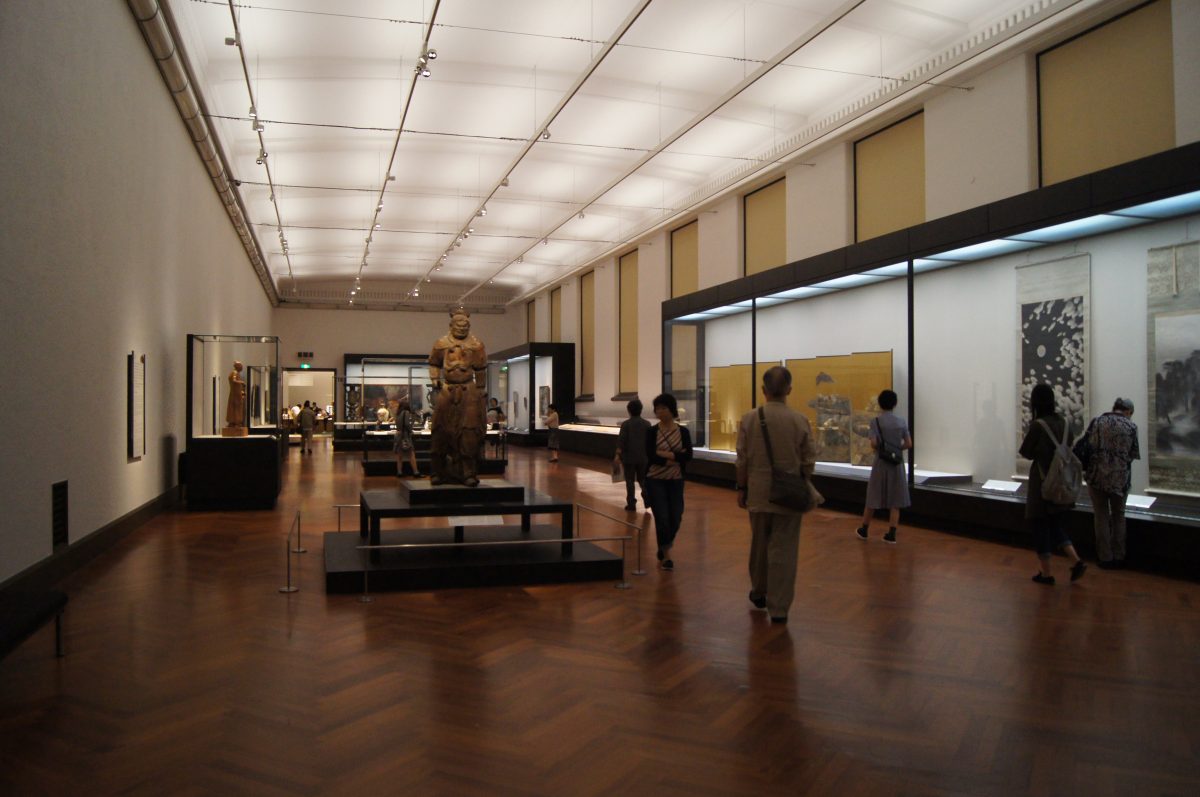
This is the Japanese art and history choice. It’s a large complex of six buildings, each big enough to be a museum in its own right, and that’s the first thing to plan around.
Open 9:30 to 17:00, with Friday and Saturday extended to 20:00. Closed on Mondays. Adult ticket for the regular collection ¥1,000, and no reservation is needed for it. The Japanese Archaeology Gallery is open as of 4 October 2026. It’s in Ueno Park.
We went in 2015, and the day was already full: Asakusa street food, Senso-ji and a cruise to Odaiba were all on the same itinerary. We spent our time in the Honkan, the main building with the art collection, and the visit felt rushed. The archaeology section was closed then, which Gary was properly disappointed about. That closure is history now. As of 4 October 2026 the Japanese Archaeology Gallery is open, so if archaeology is why you’re going, it’s worth glancing at the museum’s own gallery information before you set off, but you don’t need to write it off.
We also tried to go back on 23 May 2019. We walked up to Ueno Park intending to see it again, found a gigantic queue at the entrance, and decided that having already been once, it wasn’t worth standing in. We went to Ueno Zoo next door instead.
The practical advice from all this is simple. With six buildings, pick what you most want to see rather than trying to cover the lot, and if time is short, the Honkan is the part we know. Adult entry to the regular collection is ¥1,000 and no reservation is needed. It’s closed on Mondays, and on Friday and Saturday it stays open later. The Ueno side of the city links up with Asakusa and Odaiba, and our Ueno, Asakusa and Odaiba day plan shows how we’d connect them, though I’d now say the Tokyo National Museum deserves more breathing room than we gave it.
Edo-Tokyo Museum: for how Tokyo grew
This is the choice if you want the history of the city itself.
Open 9:30 to 17:30. Closed on Mondays. Adult ticket for the permanent exhibition ¥800, with no advance reservation. Reopened on 31 March 2026 after refurbishment. It’s in Ryogoku.
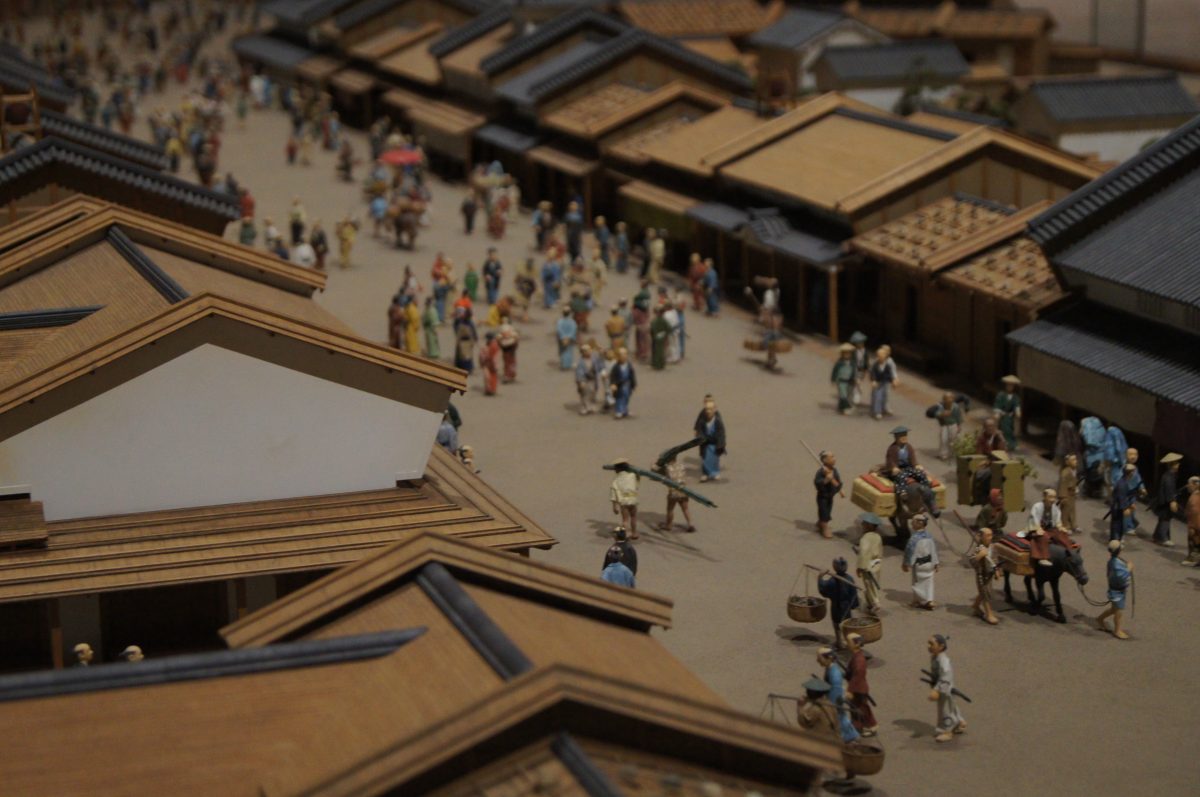
When we visited in 2015, the permanent exhibition was full of carefully made models, life-size figures and vehicles tracing Tokyo from Edo to the modern city, and it’s the kind of museum where you want to stop and look closely.
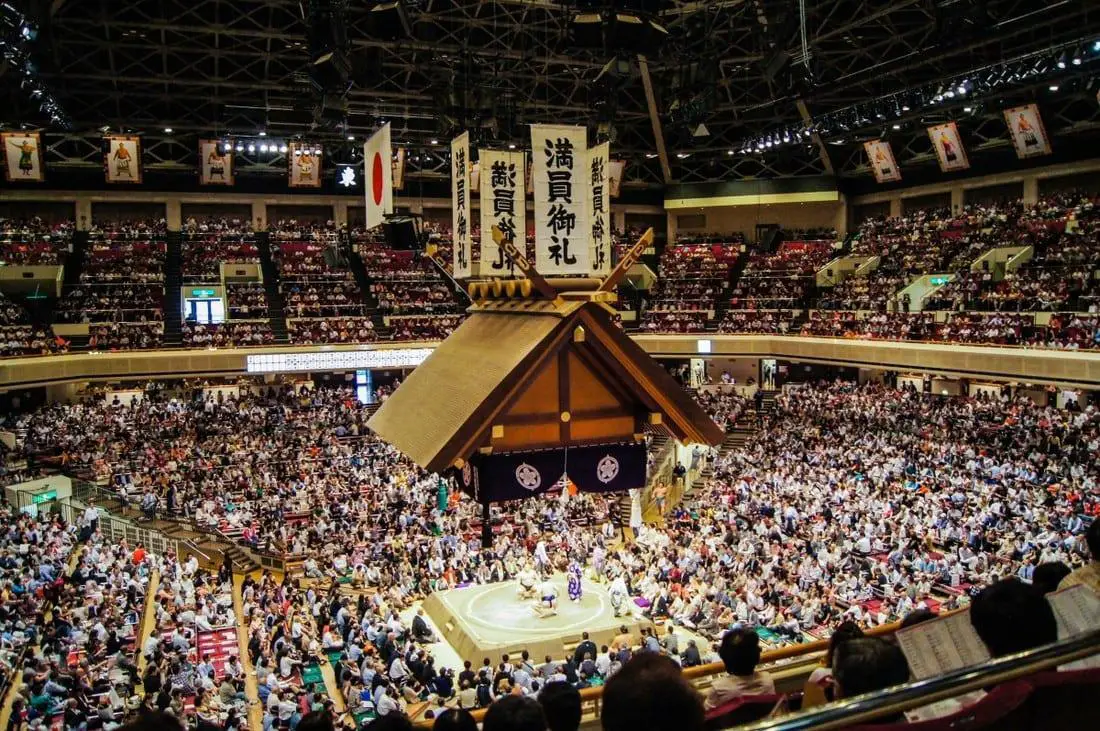
We didn’t. Our day began at Tokyo Skytree, took in Sumida Aquarium, and then we had to be at the sumo stadium in Ryogoku by 4:30 pm for the top-division matches. The museum got whatever time was left, and we rushed it. That was down to the schedule rather than the museum, but it does tell you something useful: this is a place to give a proper slot, not squeeze between a landmark and an appointment.
That visit was also before the refurbishment. The museum reopened on 31 March 2026 and we haven’t been since, so I can’t tell you what the renewed galleries are like. The practical details are current though: the permanent exhibition is ¥800 for adults, you don’t need to reserve, and it’s closed on Mondays. If Edo-Tokyo is the one you’re leaning towards, our full Edo-Tokyo Museum guide goes into the detail, and if you’re planning around Ryogoku, the Skytree and Ryogoku day shows how that part of the city fits together. Just don’t copy our rush.
Miraikan: for science and technology, but not until it reopens
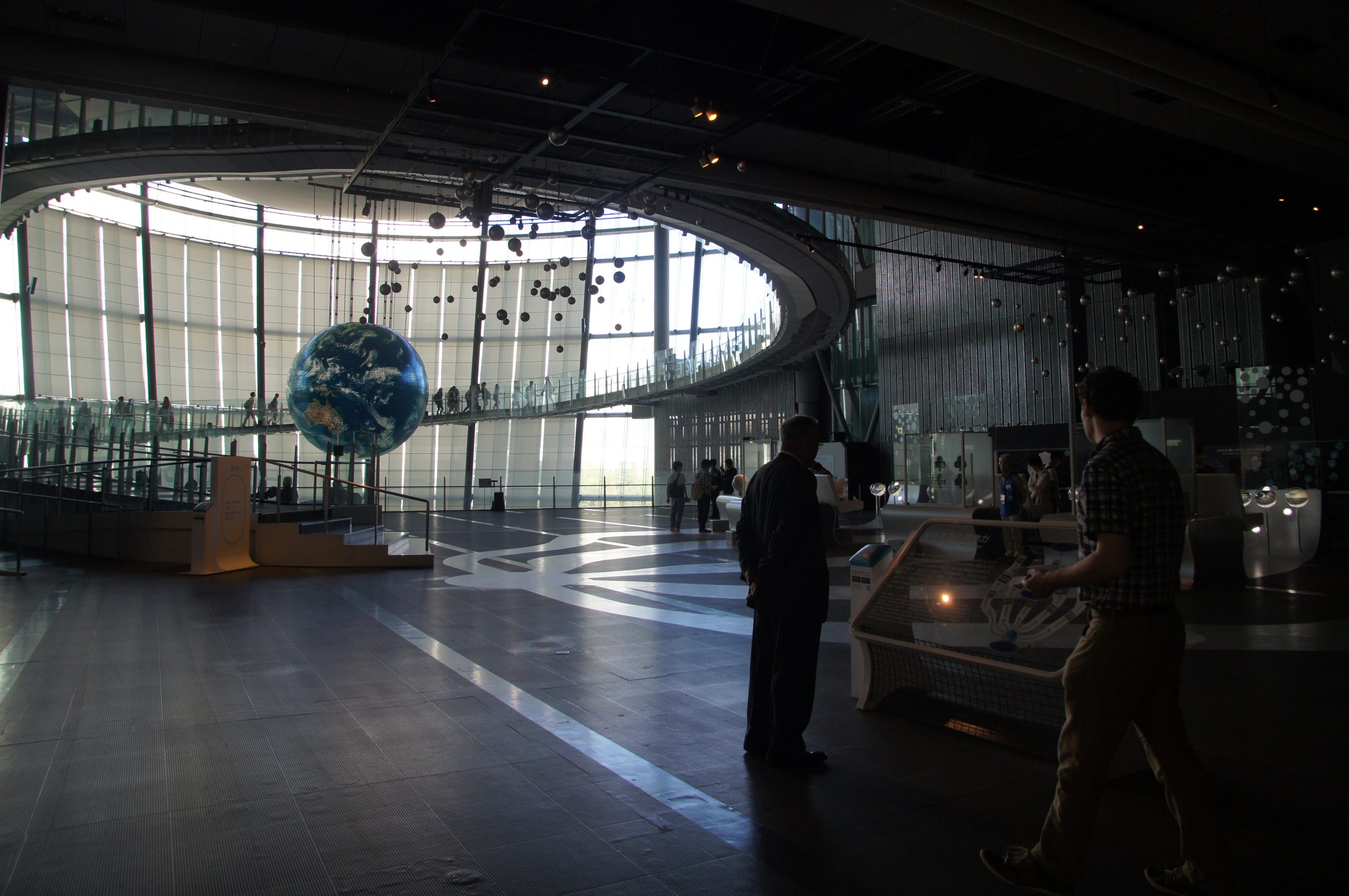
Miraikan is closed for refurbishment from 1 October 2026 to 22 April 2027. It is scheduled to reopen on 23 April 2027, but that date is a plan and may change. Opening hours, ticket prices, reservation rules and exhibits after reopening haven’t been confirmed. If you’re in Tokyo before late April 2027, you can’t visit.
Closed completely from 1 October 2026 to 22 April 2027. Planned reopening is 23 April 2027, subject to change. Opening hours, ticket prices, reservation rules and exhibits after reopening haven’t been confirmed, so earlier hours and prices shouldn’t be assumed to carry over. It’s in Odaiba.
If your dates fall after that, Miraikan is the science-and-technology option among the four, and it’s worth checking the museum’s own website for the reopening date and the new details before you go. If you’re reading this after March 2027, check the official page first, because the closure dates may have moved.
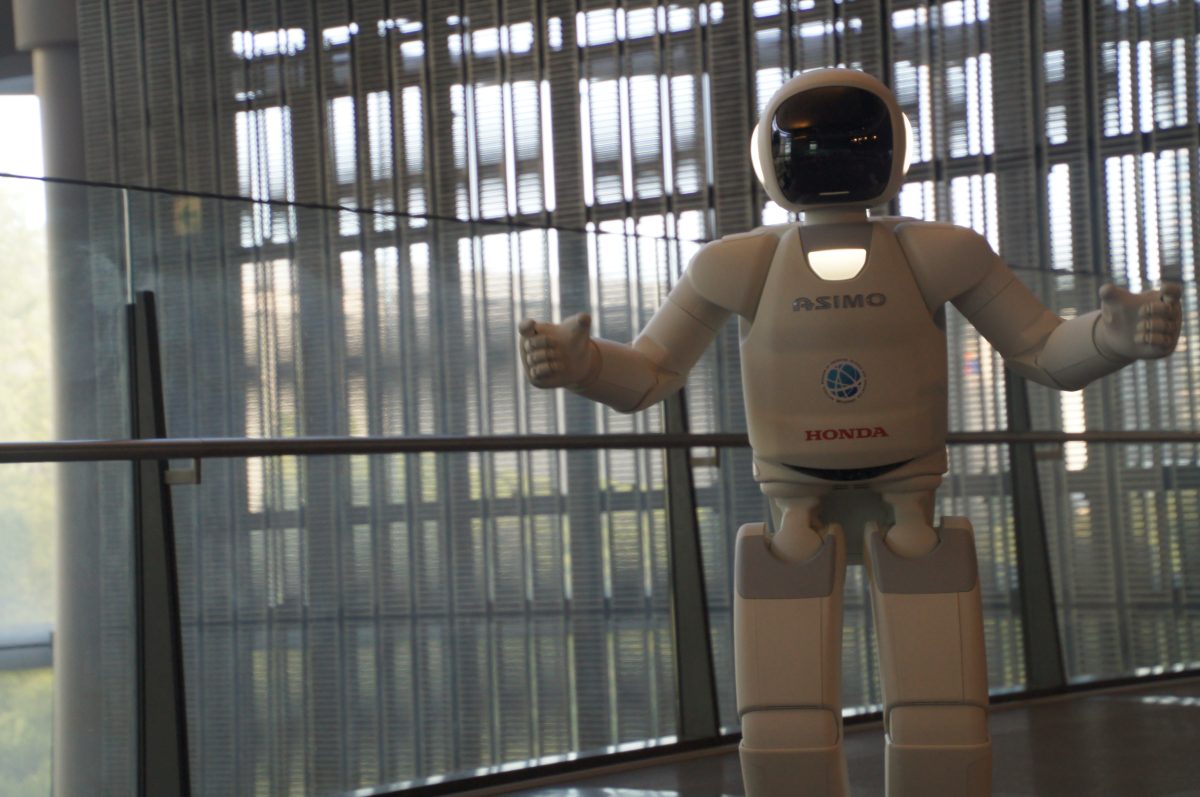
Our visit was on 21 September 2017, in the middle of a very full day in Odaiba that ended up at 23,000 steps. The thing I remember is the ASIMO demonstration, and I felt lucky to have seen it. It was a 2017 moment, though, and a closed chapter now: Honda ended the ASIMO demonstrations on 31 March 2022. It tells you nothing about what the museum will be like when it reopens, so please don’t treat it as a reason to go or not to go.
Odaiba is a day in itself, which is why the Ueno, Asakusa and Odaiba plan is useful for the area, but for now it can’t include Miraikan.
Tora-san Museum: for the film fans, in Shibamata
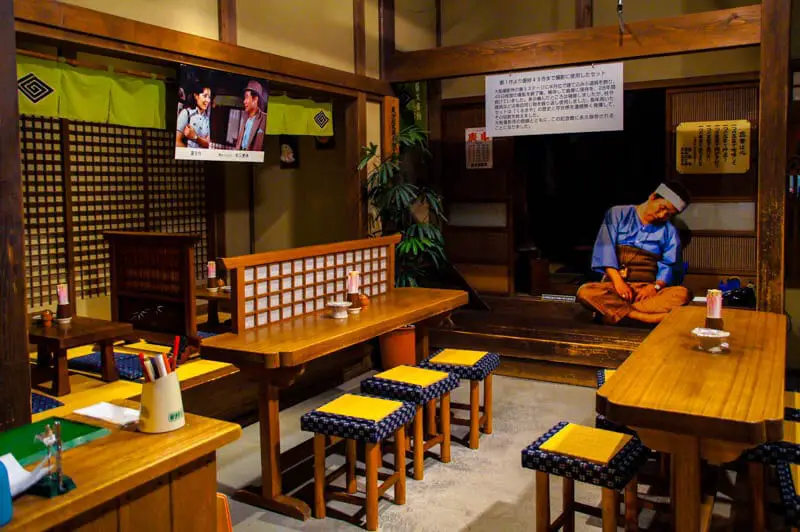
This is the most niche of the four, and the one where knowing the subject matters most. The museum is about the long-running Japanese film series Otoko wa Tsurai yo, and it’s in Shibamata, a trip out from central Tokyo.
Open 9:00 to 17:00. Closed on the third Tuesday of each month. The adult common ticket is ¥500 and includes the Yamada Yoji Museum, and there’s an optional ¥550 joint ticket with Yamamoto-tei.
Gary is a huge fan of the films, so the day was his. It was on 20 September 2017, the day we changed hotels, and he was giddy exploring the full-scale movie sets and came away with a T-shirt. Judging by his reaction, if you share his interest, a museum built around full-scale sets from films you love looks like a place worth the journey. If you don’t know the films, it’s probably the one to leave until last.
As of 4 October 2026 the museum is open. The common ticket is ¥500 and also covers the Yamada Yoji Museum next door, and there’s a joint ticket with Yamamoto-tei for ¥550. It’s closed on the third Tuesday of every month, so check the calendar before you head out. Our Shibamata guide covers the neighbourhood, so you can plan the rest of the day around it.
Which museum should you prioritise?
There isn’t one overall winner, because each of the four answers a different question, and I can only speak for the ones we’ve actually been to. The best one for you is the one that matches yours.
If it’s Japanese art and history, the Tokyo National Museum is the answer, as long as you choose your buildings and don’t try to cover the lot. If it’s how Tokyo became Tokyo, Edo-Tokyo is open again and deserves a proper slot, which is the one thing we didn’t give it. Shibamata is a deliberate trip for people who care about the Tora-san films. And Miraikan is the one to put in the diary for after 23 April 2027, as long as the museum’s own website still says so when you get closer to going.
If you’re working out how a museum fits into a wider trip, our one week in Tokyo itinerary is a good place to see how the days can be shaped.
Which of these museums fits your interests and your Tokyo trip best, and what would you want to see there?