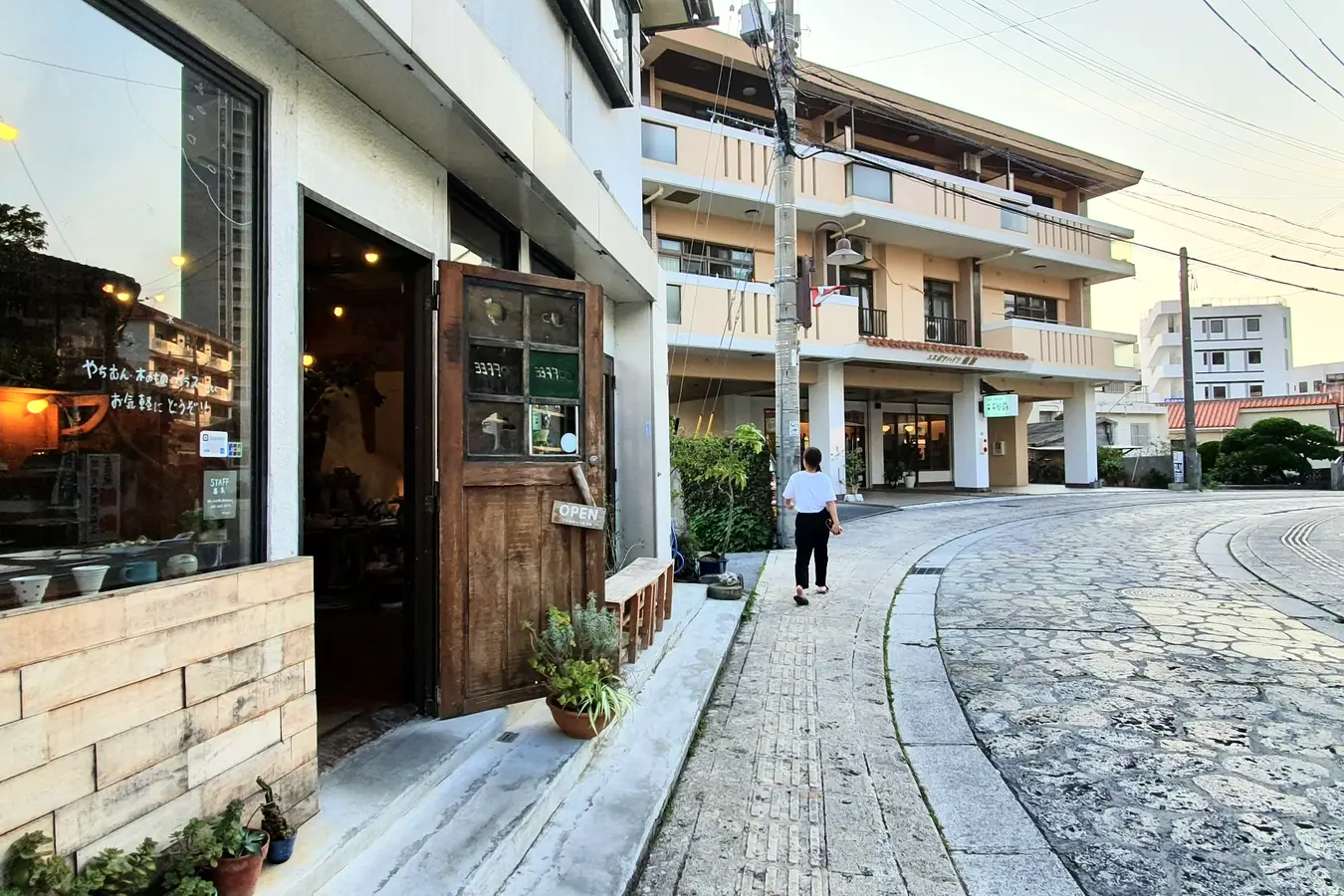
There are holidays when I return with a fridge magnet. There are holidays when I decide that what our luggage really needs—halfway through an island-hopping honeymoon—is a pair of solid black pottery guardians, each larger than Gary’s hand. Tsuboya Yachimun Street was very much the second kind.
We visited Tsuboya’s pottery district during our main sightseeing day in Naha, after the Okinawa Prefectural Museum, lunch near Shuri and a long visit to Shuri Castle. By the time we arrived at around 6 pm, we were too late for the pottery museum and some workshops, but the streets and remaining shops still made a real impression.
This guide explains what we actually saw, what we bought and why I would visit earlier next time. It also covers how Tsuboya fits alongside Kokusai Dori and Makishi Public Market, making it particularly useful if you are following our Naha itinerary without a car.
IS TSUBOYA YACHIMUN STREET WORTH VISITING?
Yes—especially if you like architecture, traditional crafts or bringing home something more meaningful than the contents of an airport souvenir shelf.
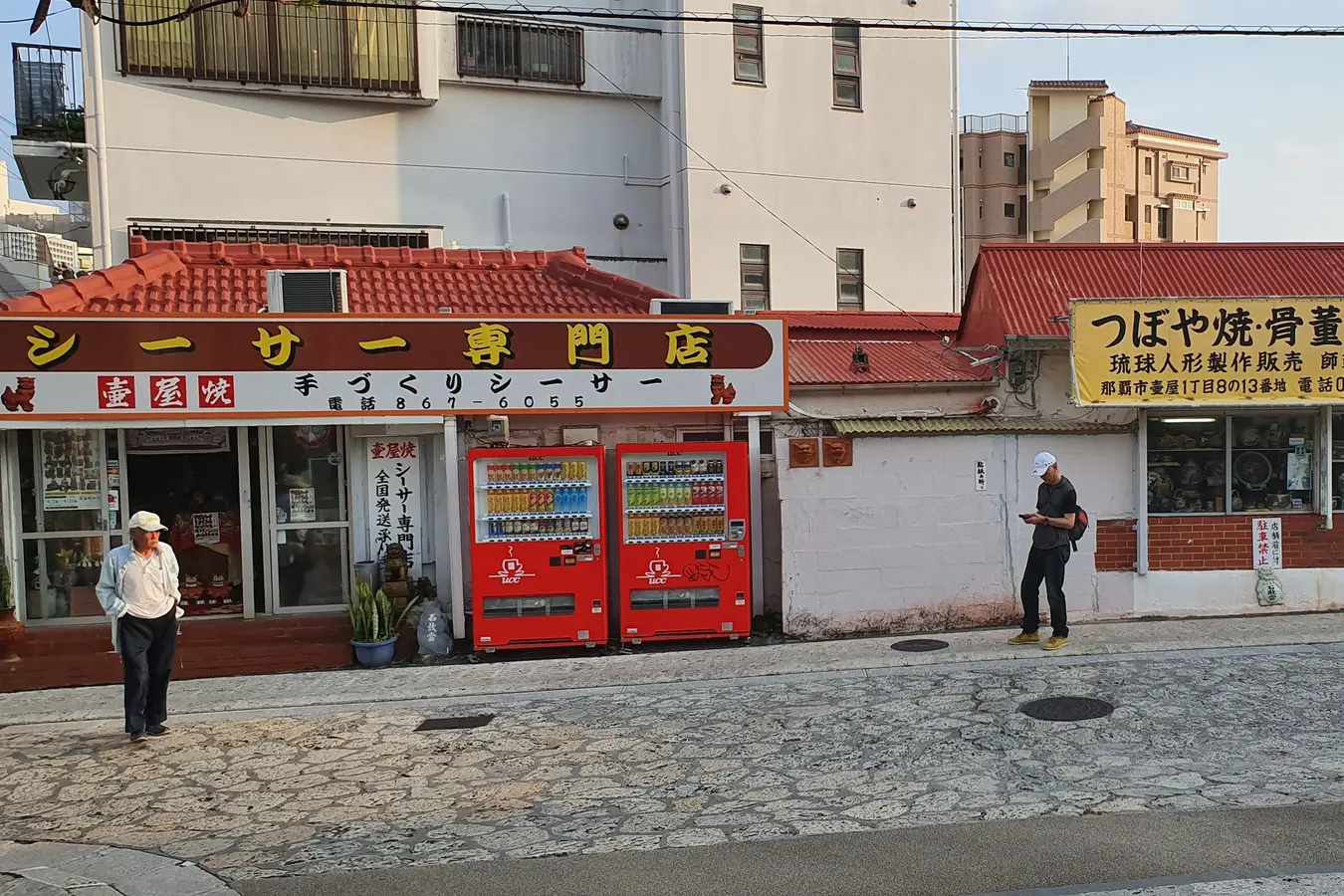
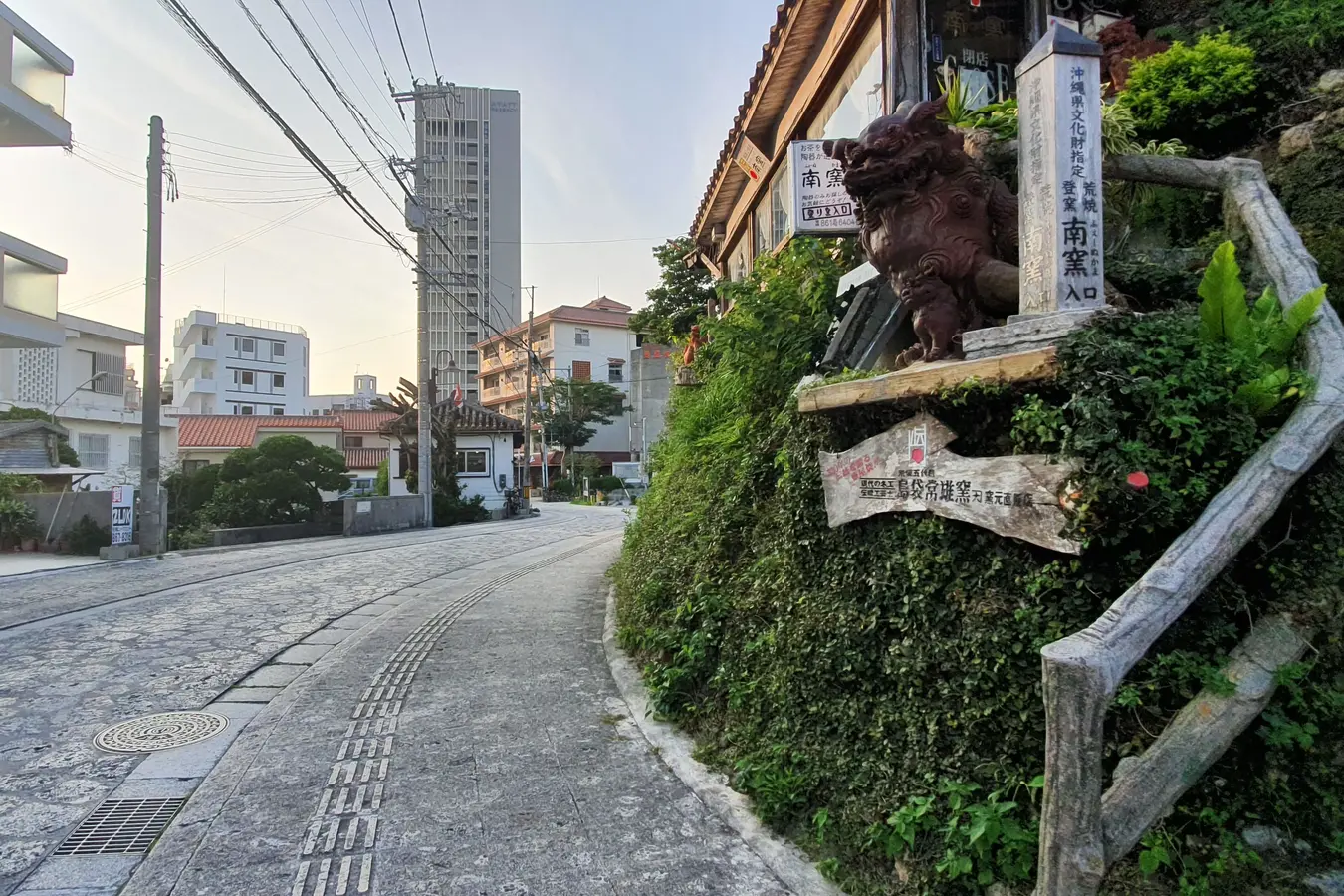
Tsuboya feels noticeably different from nearby Kokusai Dori. The main shopping street is bright, noisy and busy; Tsuboya is smaller, older and more intimate, with limestone paving, narrow lanes, pottery studios and traditional details that reward looking properly. As an architect, this was inevitably catnip to me. Gary enjoys history, and the area gave the craft a physical setting rather than presenting it as something detached behind museum glass.
It is not a vast attraction requiring an entire day. That is part of its usefulness. You can combine it with Kokusai Dori and Makishi Public Market, or make it the slower final stop after visiting Shuri. Just do not copy our timing if browsing the workshops is your priority.
WHAT DOES “YACHIMUN” MEAN?
Yachimun is the Okinawan word for pottery. Tsuboya became Naha’s pottery centre in 1682, when the Ryukyu royal government gathered kilns and potters in one district. The decision was practical as well as cultural: Shuri Castle needed vast quantities of roof tiles after a major fire, while Tsuboya had suitable clay, access to the port and hills on which climbing kilns could be built.
That history explains why the district belongs in a Naha itinerary rather than being merely a photogenic row of souvenir shops. The neighbourhood remains associated with working studios, galleries and shops selling traditional and contemporary ceramics, while parts of its older streetscape survived the destruction experienced elsewhere in Naha during the Battle of Okinawa.
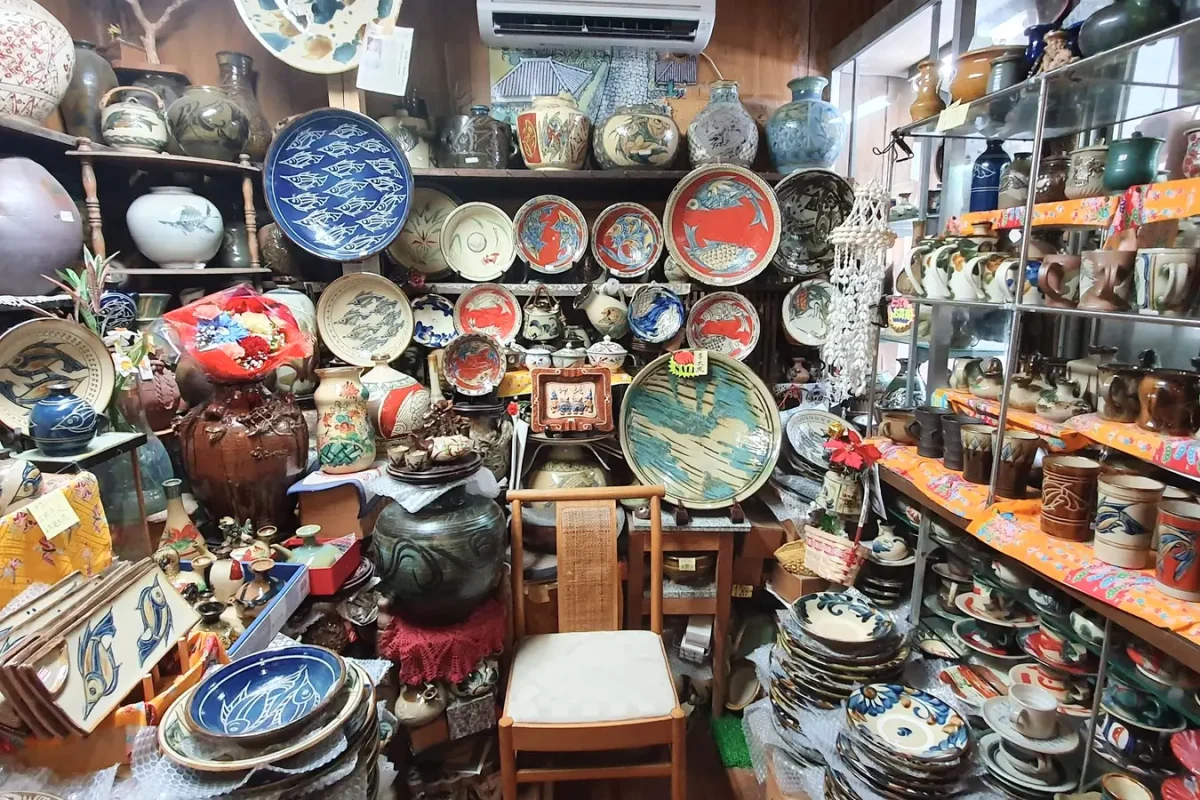
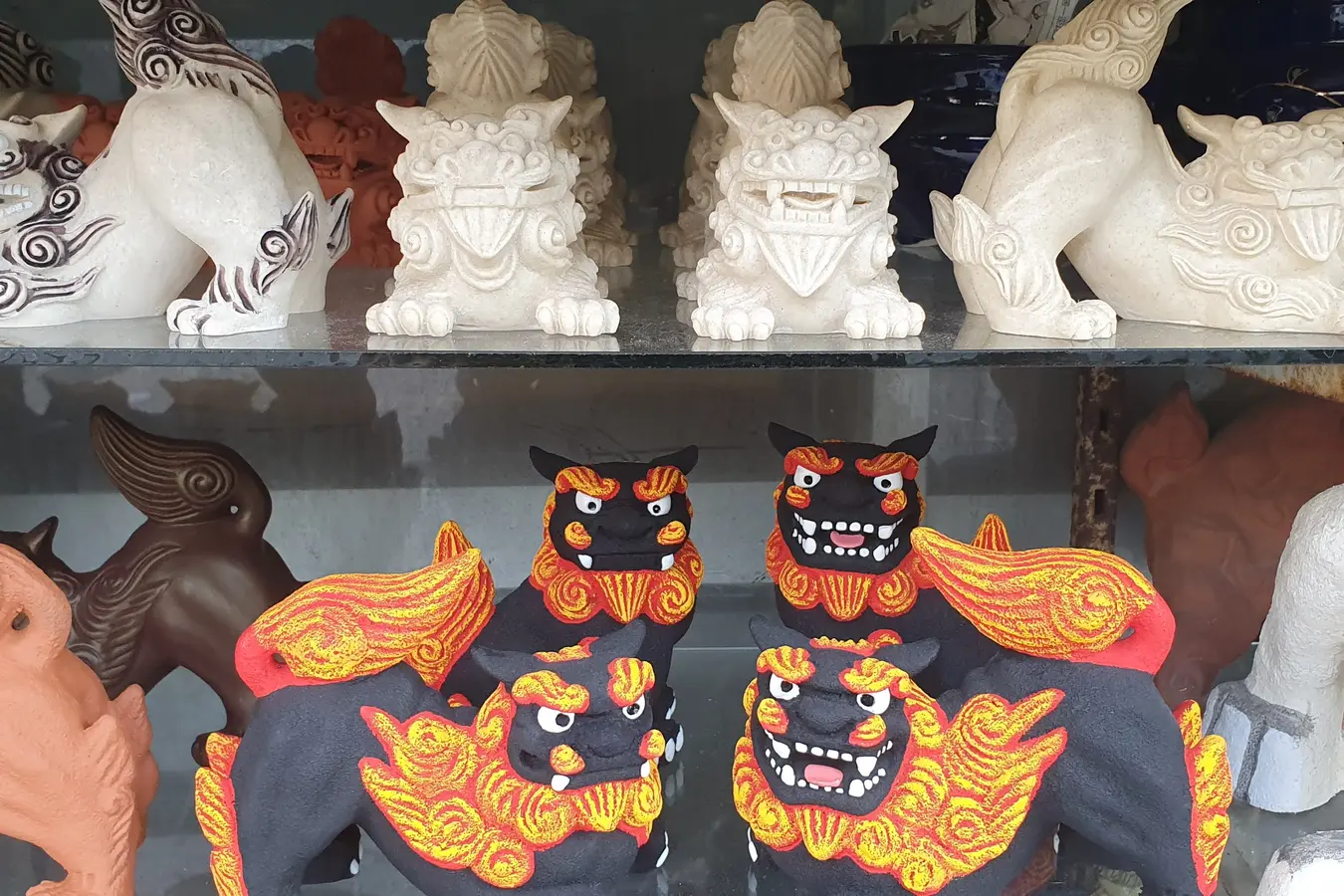
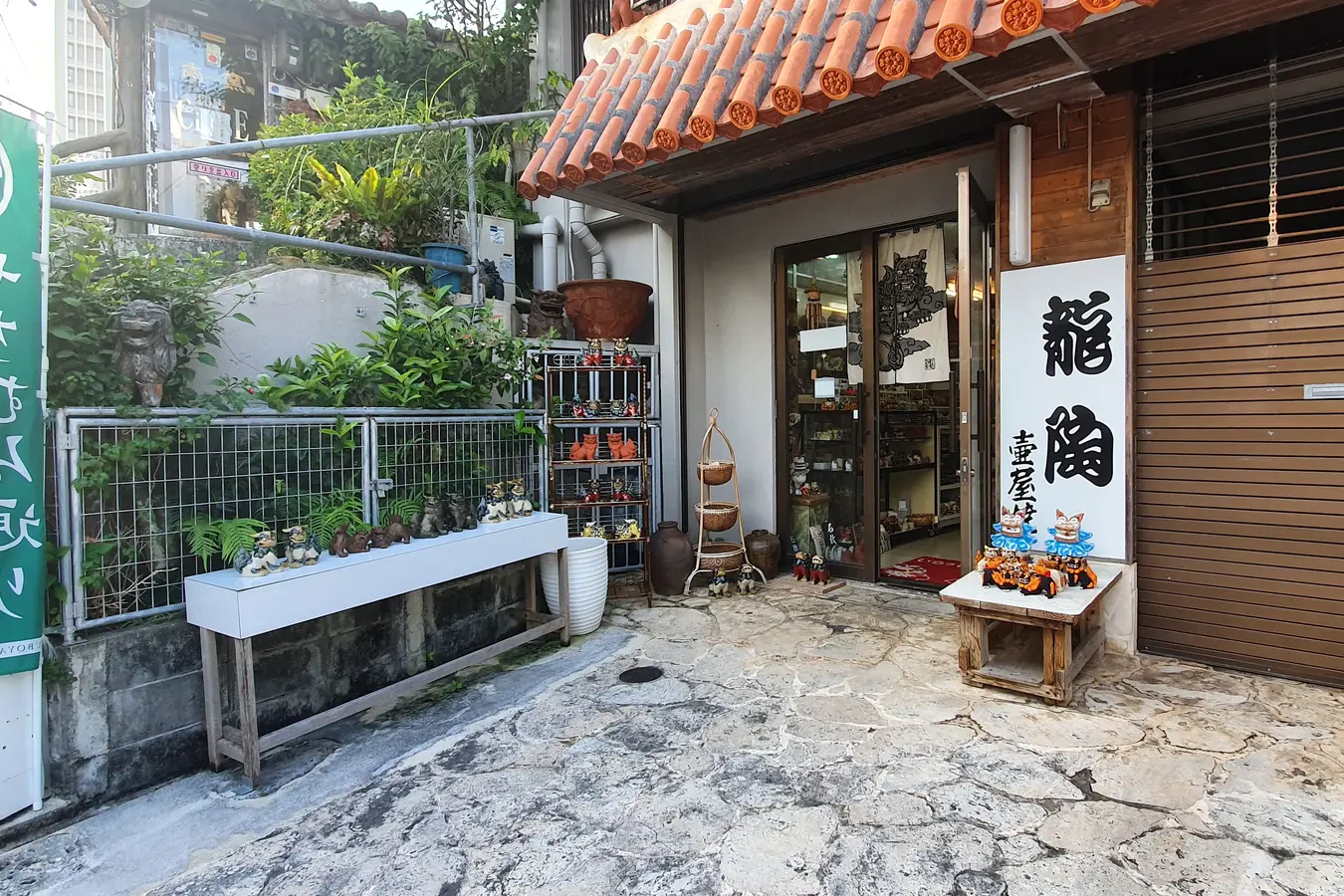
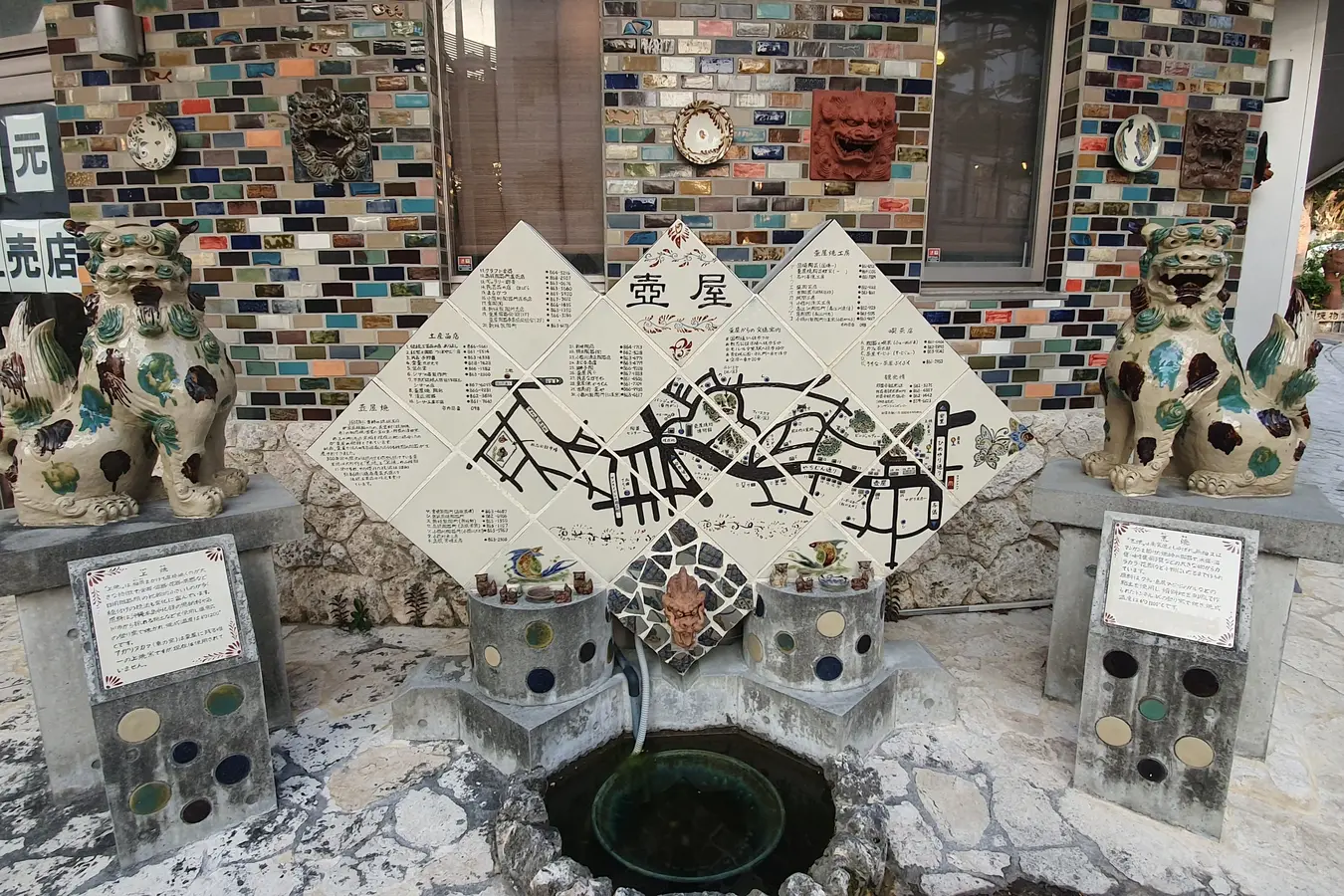
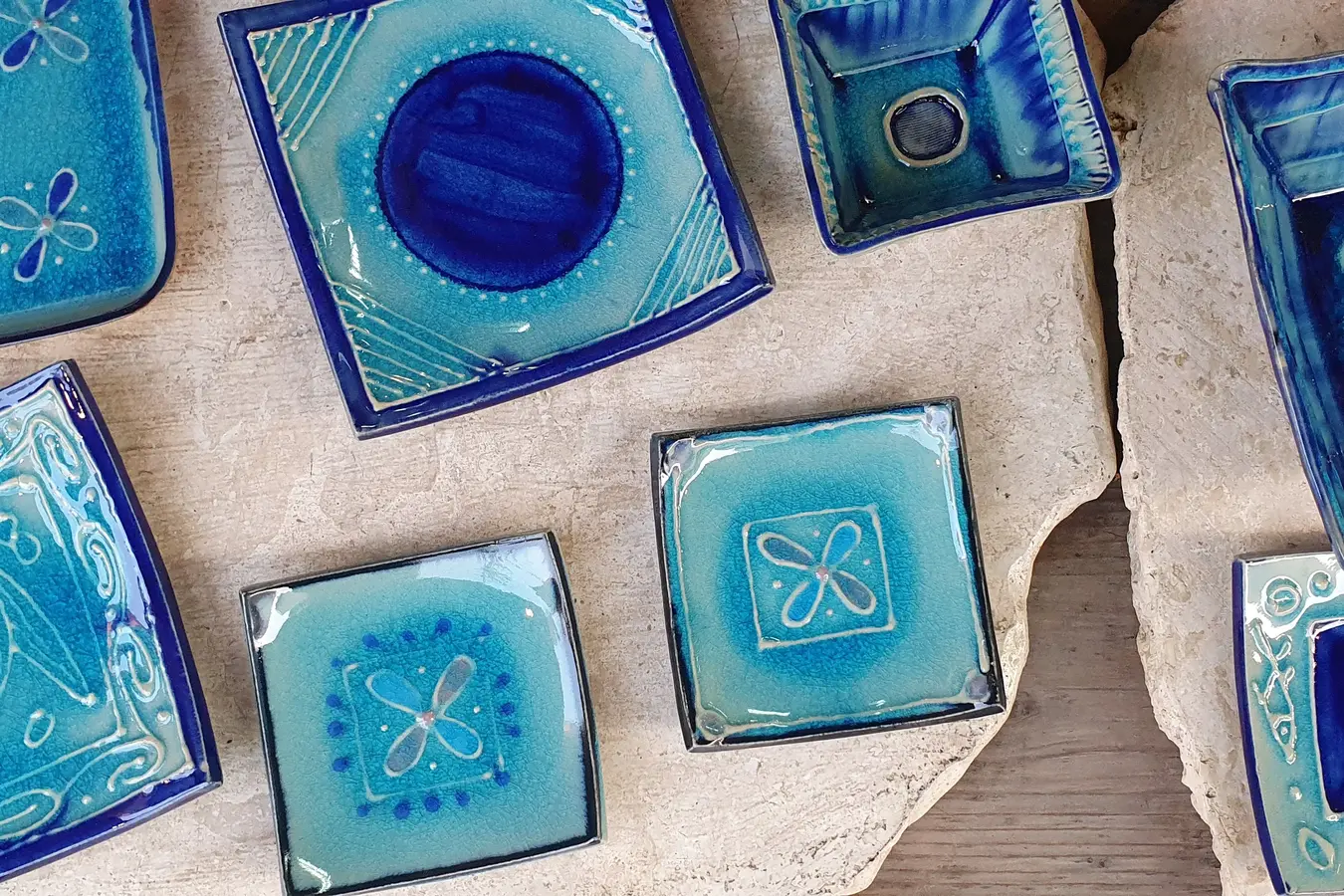
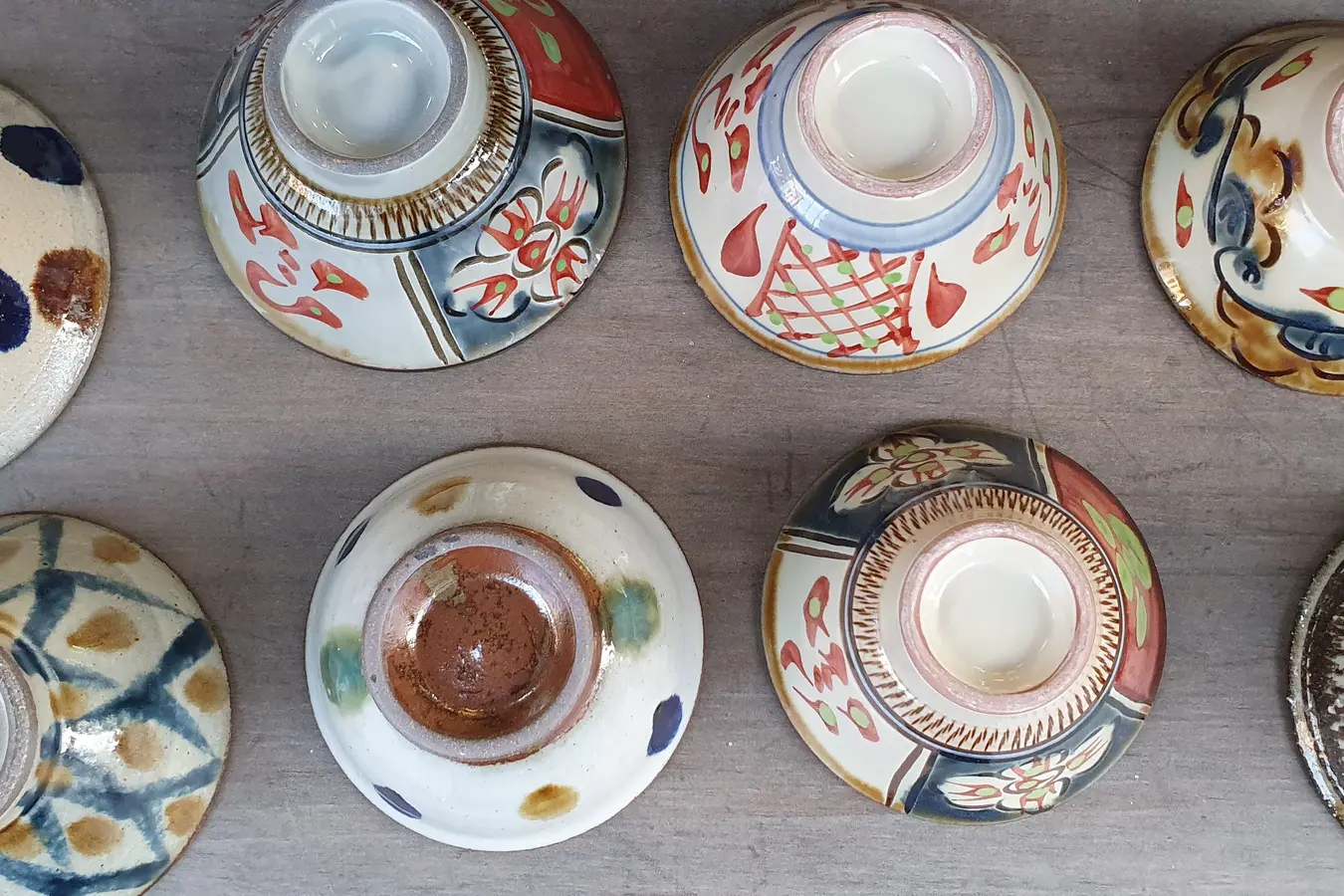
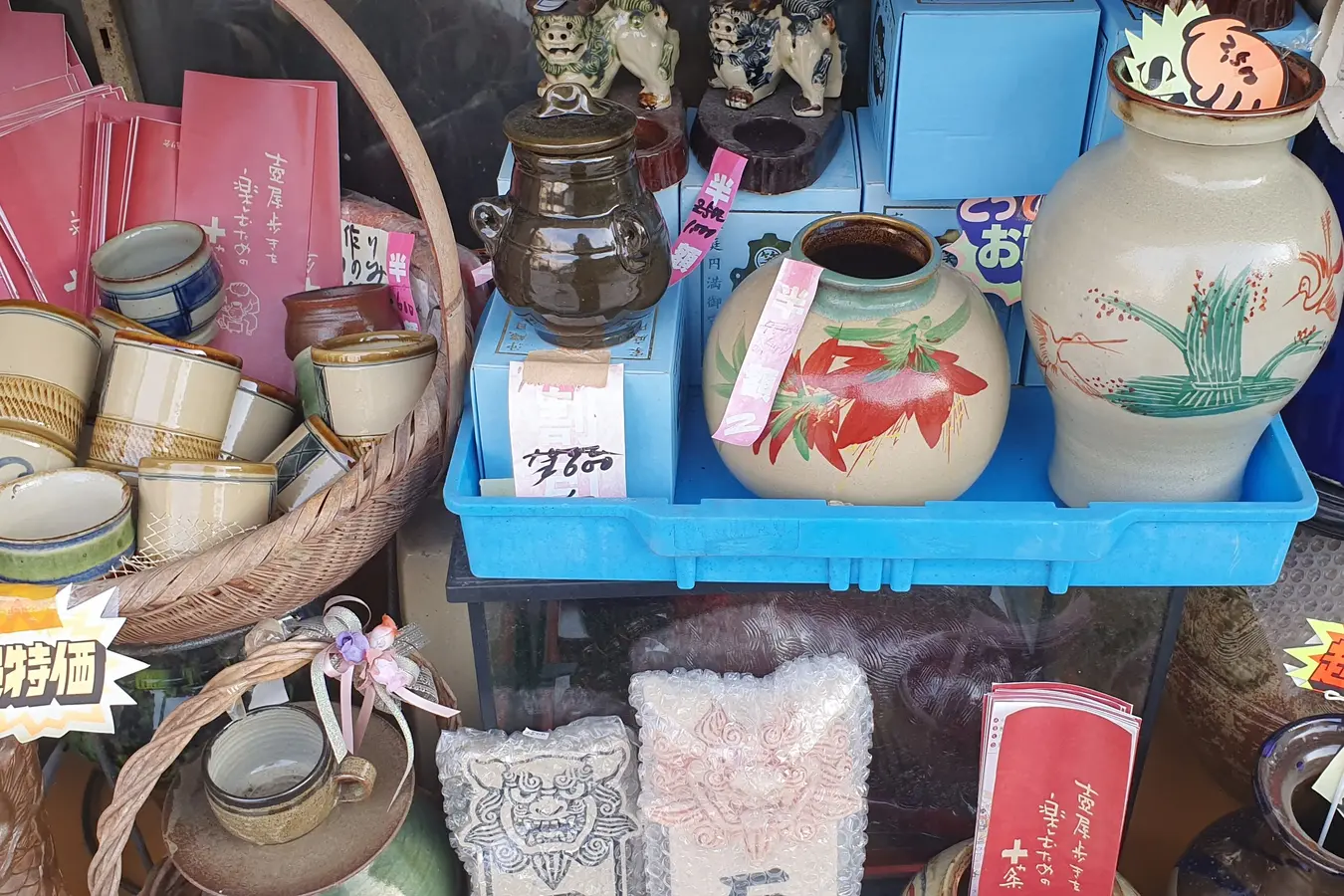
You will see everything from bowls, plates and cups to decorative pieces and shisa—the lion-like guardians found on roofs, gates and entrances throughout Okinawa. The range is enormous. Some are brightly coloured and wonderfully theatrical; others are rougher, simpler and much more restrained.
OUR VISIT TO TSUBOYA POTTERY STREET
Our old itinerary places us in Tsuboya at approximately 6 pm. We had already spent much of the day learning about Okinawan history and architecture, so the pottery district felt like a rather satisfying continuation rather than a random shopping detour.
We wandered through the lanes and looked into the small shops without a tour. I remember the pottery displays, the traditional streetscape and the slightly dangerous realisation that we could, technically, fit something substantial into our luggage.
Arriving late worked well enough for atmosphere, but it limited what we could do. If you want to enter the Tsuboya Pottery Museum, speak to several makers or try a pottery workshop, put Tsuboya earlier in the day and check the individual opening arrangements before setting out. A street can remain pleasant to walk through long after the reason you came has closed its doors.
BUYING OUR SHISA IN TSUBOYA
We eventually chose a matching pair of plain black shisa. They are fairly simple rather than brightly decorated and each is larger than an adult hand. Among shelves crowded with different colours, expressions and sizes, these were the ones that felt right for us.
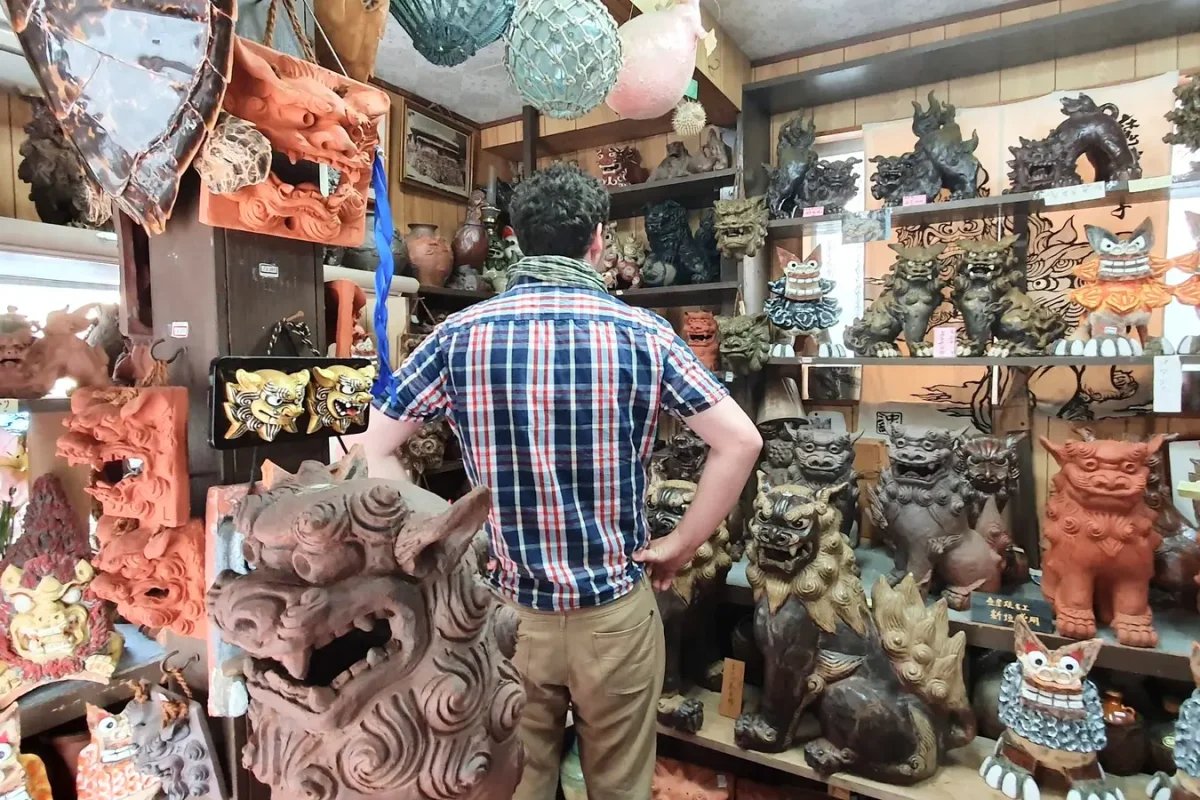
Shisa are Okinawan guardian figures, commonly placed in pairs to protect a home. You will often read that the open-mouthed figure wards off evil while the closed-mouthed figure keeps good fortune safely inside. Descriptions of which is male and which is female are not completely consistent, so I would not treat every souvenir-shop explanation as sacred zoological law.
The shop was small and packaged our pair carefully. I was still convinced they would break. We were only partway through the trip and had several ferries, flights and hotel moves ahead of us, which is not the calmest possible future for two pottery creatures.
They survived the entire journey and now sit on our mantelpiece in Harrogate. Years later, they remain one of the best things we brought home from Japan. They are useful in the way the best souvenirs are useful: not because they perform a practical household task, but because I notice them and immediately remember where we found them.
WHAT CAN YOU DO ON TSUBOYA YACHIMUN STREET?
BROWSE THE POTTERY SHOPS AND STUDIOS
The simplest way to experience Tsuboya is to walk slowly and browse. Look beyond the most obvious souvenir pieces: shops can contain tableware, sake vessels, decorative tiles and work by individual makers as well as shisa.
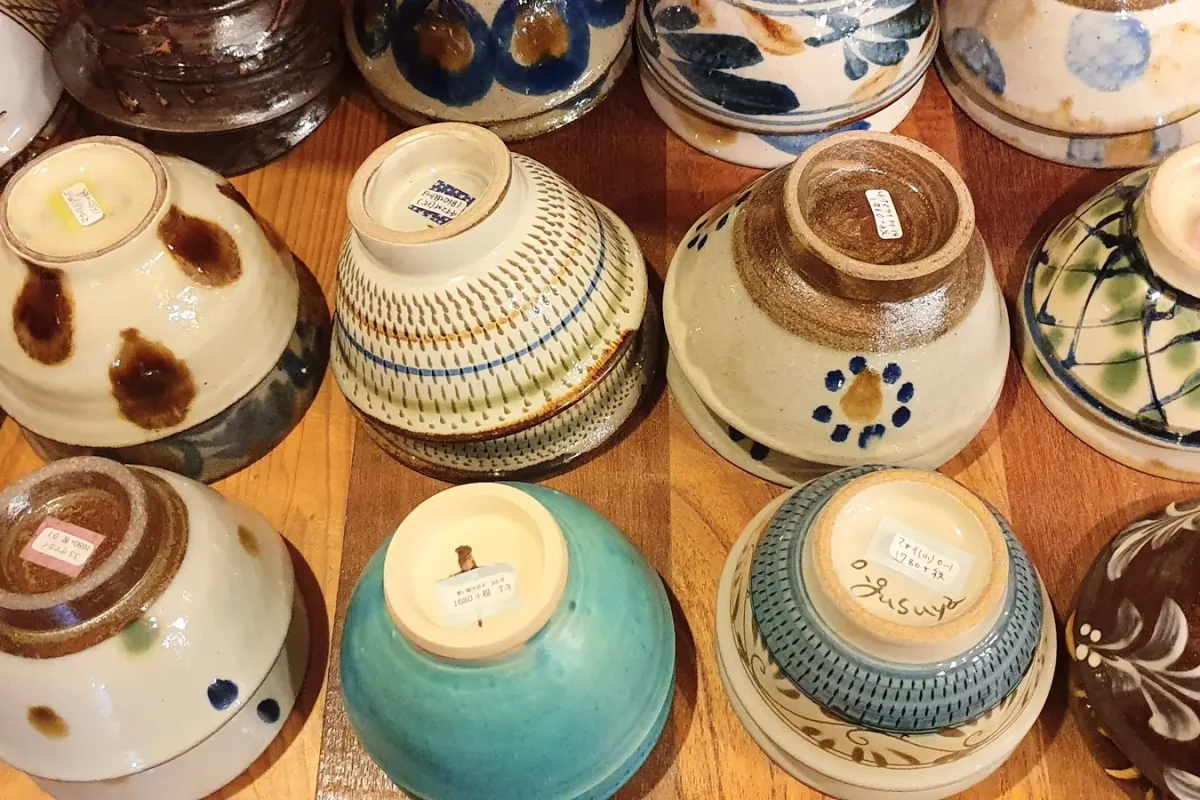
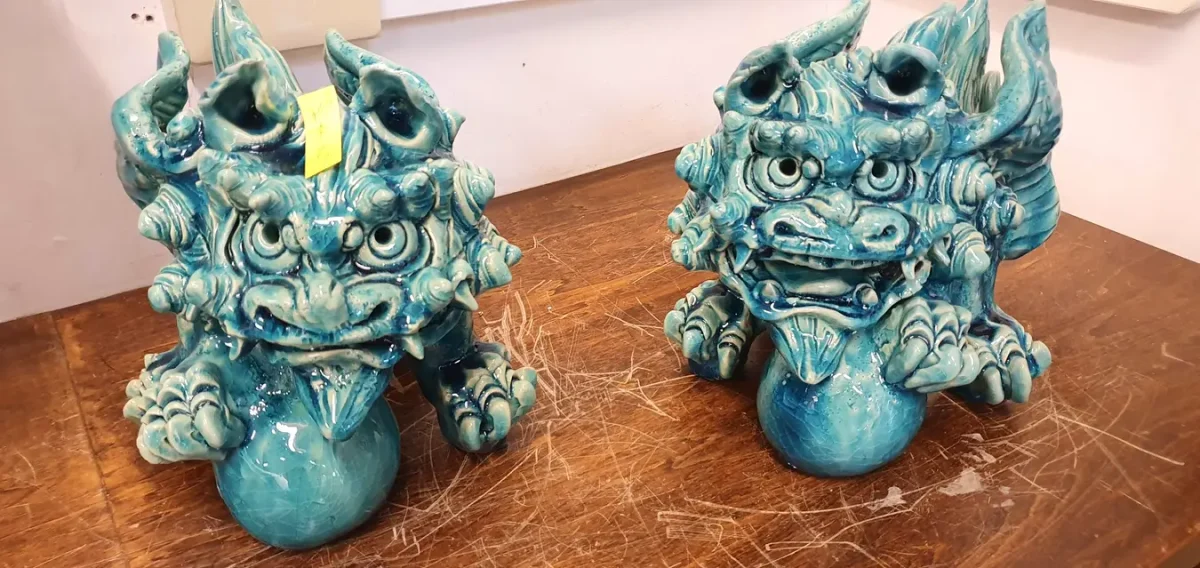
If you intend to buy pottery, allow time to compare. The first appealing guardian is not necessarily the guardian destined to spend the next decade judging your living room.
VISIT THE TSUBOYA POTTERY MUSEUM
The Naha Municipal Tsuboya Pottery Museum explains the development of Okinawan ceramics, the techniques used and Tsuboya’s relationship with the wider history of the Ryukyu Kingdom. We did not enter because we arrived too late, so this is an option for your visit rather than part of our first-hand account.
Check the official Naha tourism information for Tsuboya and the museum’s own information before visiting. Opening days, admission and exhibition arrangements can change.
TRY A POTTERY EXPERIENCE
Some studios offer bookable activities such as shaping or decorating pottery. We did not take a class, and availability varies between workshops. If this is the reason for your visit, arrange it in advance rather than arriving in the evening and hoping a potter has been patiently awaiting your creative awakening.
EXPLORE THE LANES AND ARCHITECTURE
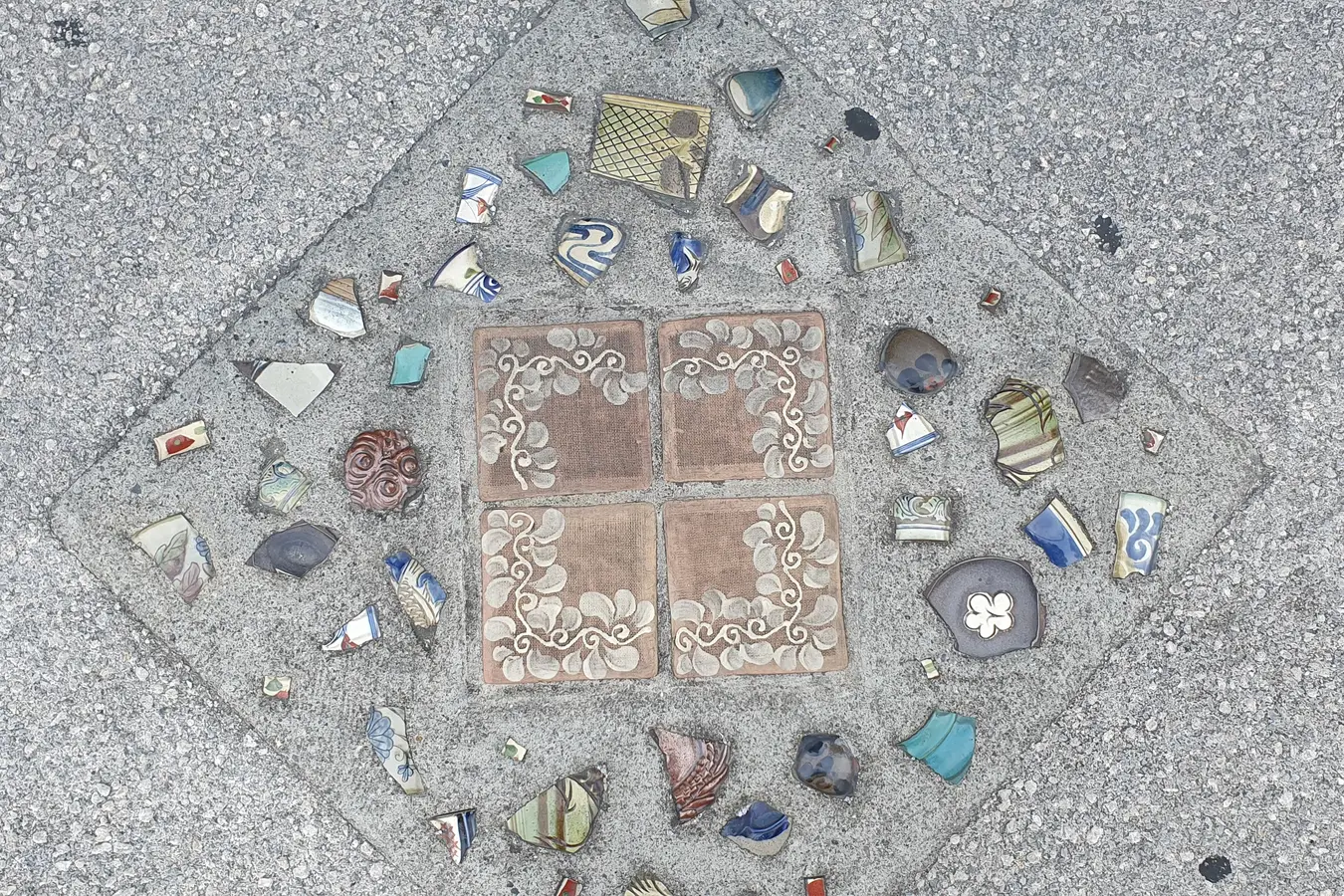
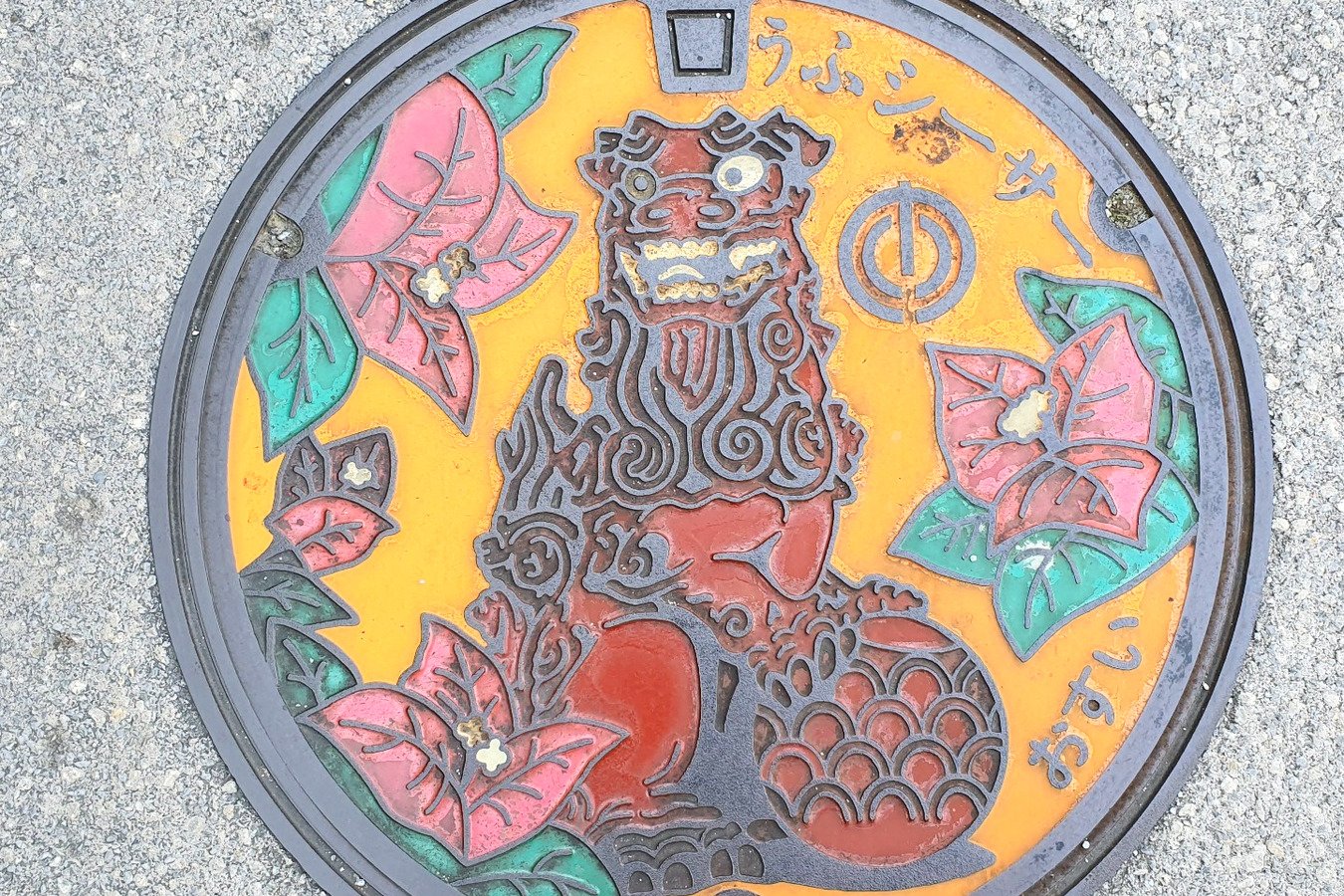
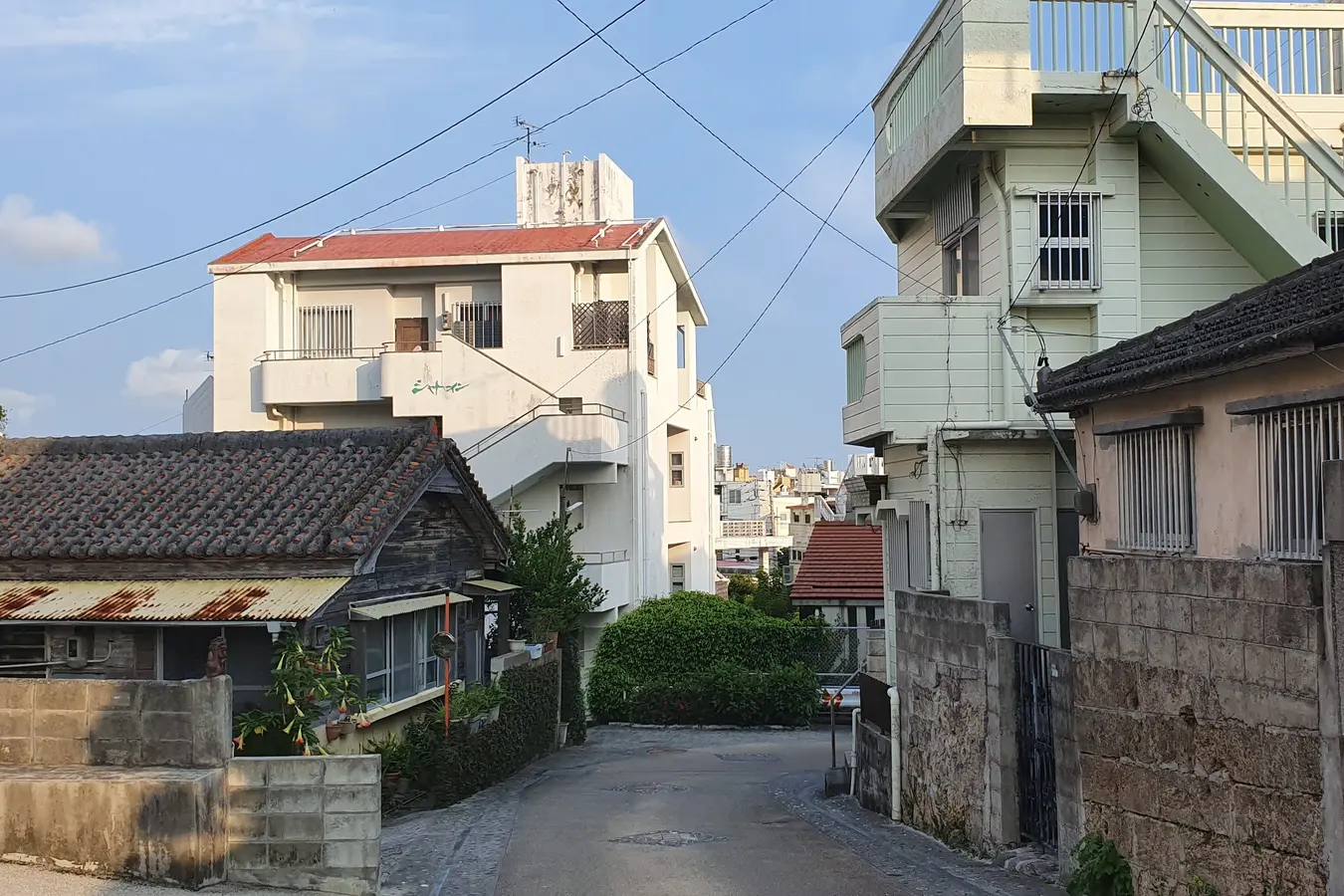
Even without buying anything, the district is worth exploring for its limestone paving, red-tiled details, workshops and shisa peering down from buildings. Step away from the most direct route and look into the smaller lanes, while remembering that this is also a working neighbourhood rather than an outdoor film set.
LOOK FOR THE HISTORIC SOUTH KILN
The preserved South Kiln, or Fē nu kama, is an old hill-climbing kiln on Yachimun Street. We did not knowingly stop here during our late visit, so I am including it as something to look for rather than quietly adding it to our memories. It gives the street’s pottery history a physical presence and is a useful quick stop even if you are not taking a workshop.
HOW LONG DO YOU NEED IN TSUBOYA?
Allow roughly an hour for a straightforward walk and some browsing. Give it closer to two hours if pottery is a particular interest, you want to visit the museum or you are likely to conduct a detailed comparative study of every shisa in Naha.
We spent only the early part of the evening here before continuing towards Makishi. It was enough to make Tsuboya memorable, but not enough to experience everything properly. I would now arrive earlier and protect more time for the shops.
HOW TO GET TO TSUBOYA YACHIMUN STREET
Tsuboya sits within walking distance of Kokusai Dori, Makishi Public Market and the Heiwa Dori arcade. Naha’s official sightseeing route places the pottery museum roughly a seven-minute walk from Makishi Station; approaching from Asato Station takes around ten minutes, depending on your pace and which end of the street you want to reach.
We explored this part of Naha without a car. That is the easier choice for most visitors already staying centrally: the lanes are made for walking, while parking adds a problem that the monorail and your own feet largely avoid.
Wear comfortable shoes, particularly in rain. The historic surfaces are part of the charm, but charm does not prevent stone from becoming slippery.
HOW TO COMBINE TSUBOYA WITH KOKUSAI DORI AND MAKISHI MARKET
Tsuboya works naturally with central Naha’s other evening attractions. Our route continued from the pottery district towards Makishi Public Market, where we browsed the stalls and ate a set meal made up of lots of little dishes. Kokusai Dori was part of both our arrival evening and our wider wanderings around the centre.
A relaxed sequence would be Tsuboya while the studios are open, followed by Makishi and then Kokusai Dori for dinner and evening atmosphere. Our Okinawa food guide explains the dishes and snacks worth watching for when decision fatigue strikes.
If you are attempting our complete Naha day, remember that Shuri Castle deserves priority. Tsuboya is easier to shorten, but arriving after every shop closes rather defeats the purpose. This is why our detailed Naha guide treats the recorded timings as evidence of what we did—not a commandment engraved in limestone.

CAN YOU VISIT TSUBOYA WITH CHILDREN?
We visited as a couple on our honeymoon, so this is not first-hand family advice. The area itself is walkable and visually interesting, and a hands-on pottery activity may appeal to children more than an extended session of adult souvenir deliberation.
There are also shelves full of breakable objects and uneven outdoor surfaces. How relaxing that combination feels will depend rather heavily on the age and temperament of the child involved. I would keep the visit shorter, choose one activity and avoid pretending that browsing ceramics is automatically everyone’s idea of a thrilling afternoon.
WHAT WOULD WE DO DIFFERENTLY?
We would arrive earlier. Tsuboya deserved more than the remaining slice of an already enormous sightseeing day, particularly because the craft and architecture were among the things that made Okinawa feel so different from mainland Japan.
I would still combine it with Makishi and Kokusai Dori, and I would still buy the shisa. I might worry slightly less about them breaking, although that confidence comes conveniently after discovering that they did not.
OUR HONEST VERDICT ON TSUBOYA YACHIMUN STREET
Tsuboya Yachimun Street is not Naha’s largest or loudest attraction. That is precisely why it works. It adds craft, architecture and a sense of place to a city itinerary that can otherwise become a sequence of museums, transport connections and busy shopping streets.
For us, the lasting memory is wonderfully tangible: two black shisa that crossed Okinawa, several more islands and the rest of Japan before reaching our mantelpiece. If you value local craft, arrive before we did and give yourself time to choose something you will still be pleased to see years later.
Continue planning with our complete Okinawa Travel Guide, our five-day Okinawa itinerary and our car-free Naha route.
What would you bring home from Tsuboya—and would you trust it to survive the rest of your trip?
Comment below and let us know!
Did you Enjoy this article?
Share it with your friends and family on FACEBOOK, TWITTER AND PINTEREST